Most Expensive Jan van Eyck Paintings
Jan van Eyck’s paintings occupy some of the highest rungs in the Old Master market, prized not only for staggering hypothetical valuations—ranging from the Ghent Altarpiece’s eye‑watering $500 million–$3 billion estimate to canvases like the Arnolfini Portrait often cited at $300–600 million—but for a combination of rarity, provenance and technical mastery that make them uniquely collectible. Collectors, museums and scholars value van Eyck’s luminous oil technique, extraordinary detail and the historical cachet of works such as the Madonna of Chancellor Rolin (estimated $250–600 million) and the enigmatic Portrait of a Man (commonly valued at $150–350 million). Less monumental but still hotly sought Lucca Madonna and Madonna in the Church (each roughly $100–150 million) and midtier treasures like the Madonna at the Fountain ($30–120 million) or the Madonna of Jan Vos ($20–75 million) command attention for condition, documented patronage and significance within Early Netherlandish painting. Whether measured in headline numbers or cultural capital, van Eyck’s oeuvre remains among the most coveted—where connoisseurship, conservation and scarcity collide to produce some of the art market’s most compelling valuations.
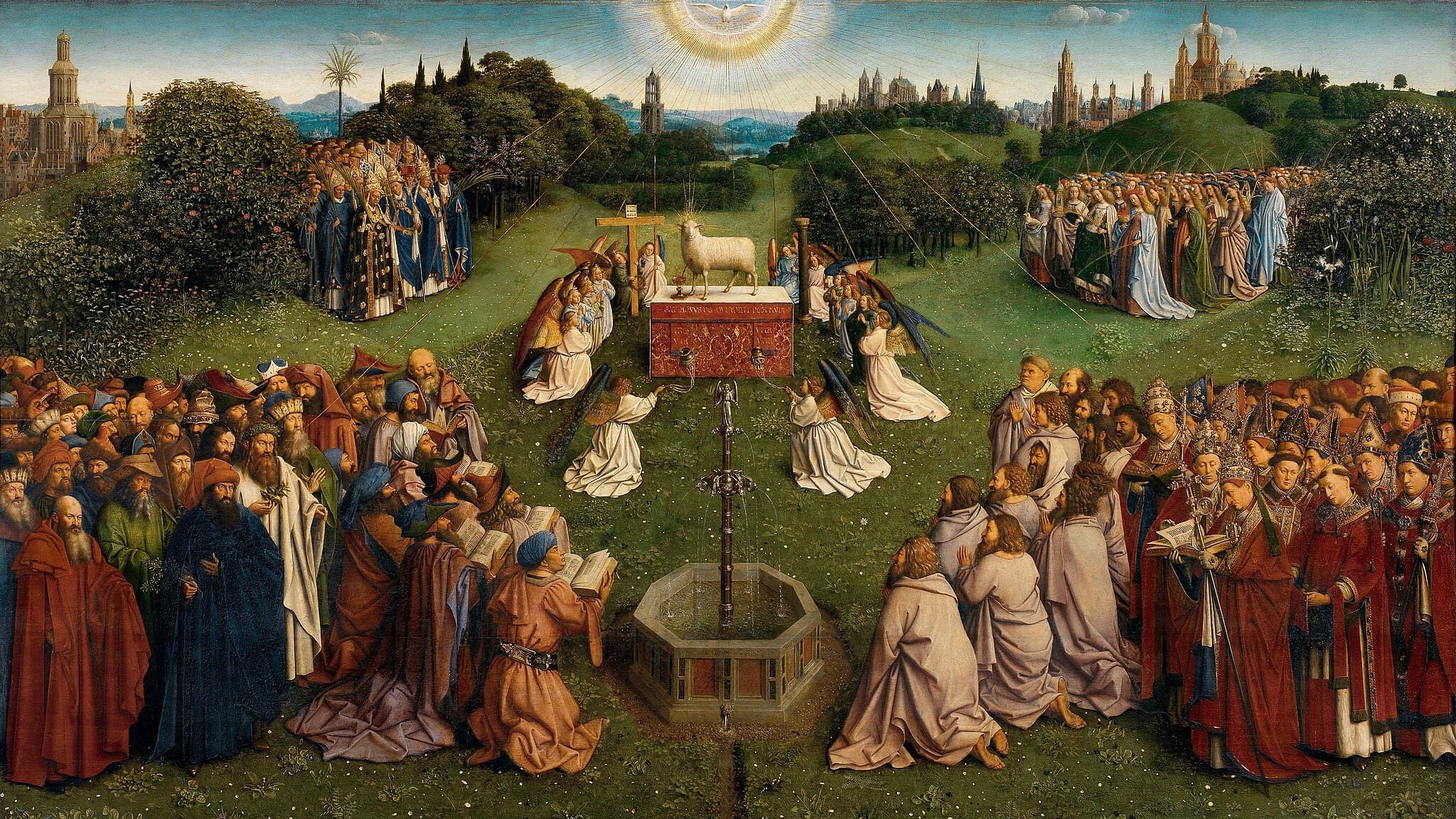
$500 million–$3 billion
Hypothetical $500M–$3B band, anchored to Salvator Mundi‑level comparables, reflects national‑treasure status and the work’s effectively unsellable position under Belgian patrimony protections.
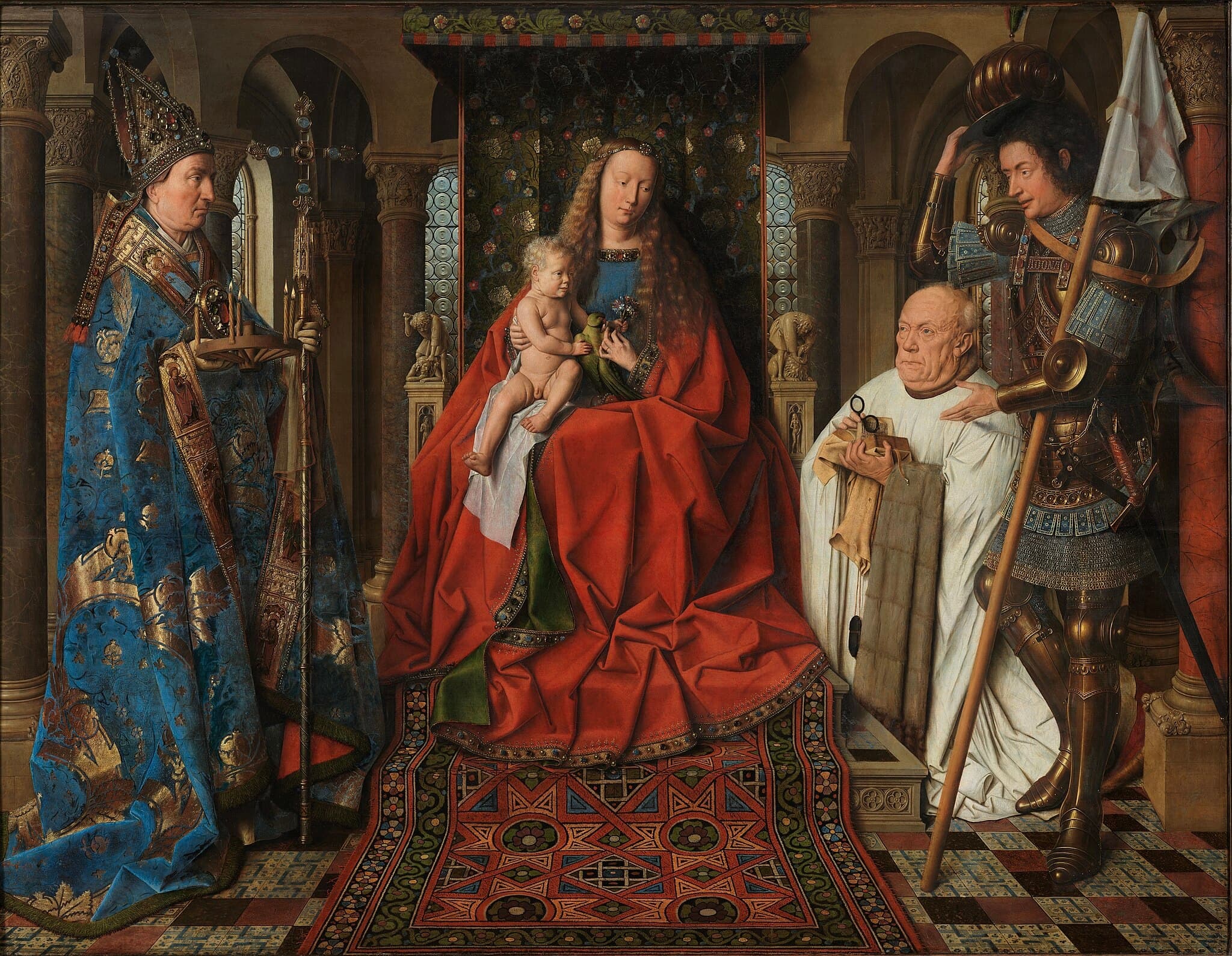
$200-600 million
Estimated $200–600M contingent on secure autograph attribution, excellent condition and an extraordinary, largely theoretical trophy‑sale environment that would enable such pricing.
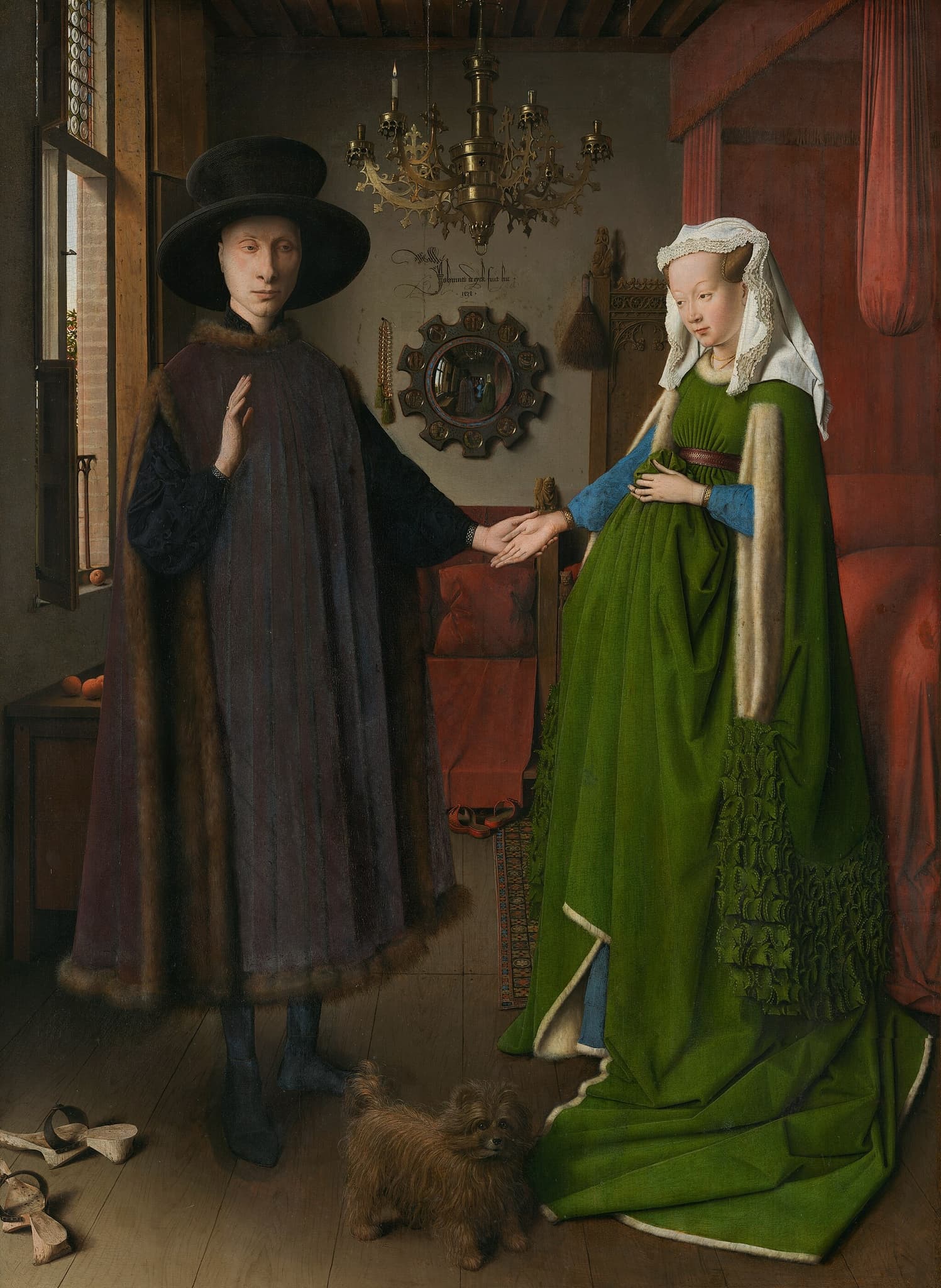
$300–600 million
The $300–600M estimate for The Arnolfini is driven by van Eyck’s extreme scarcity and the upside from potential trophy‑buyer competition despite no modern open‑market sale.
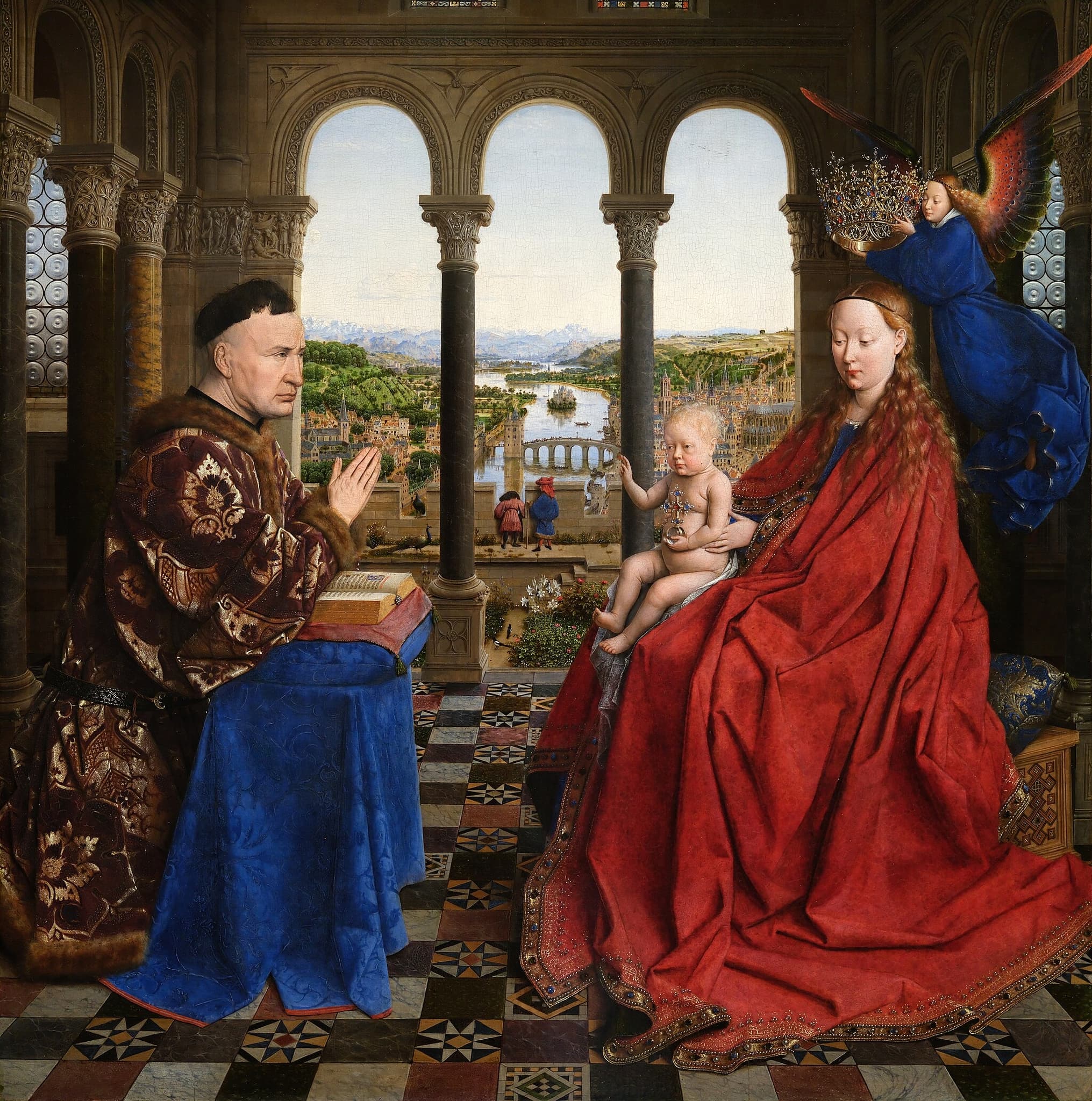
$250-600 million
Louvre‑held with no market sale; the $250–600M notional band is extrapolated from scarce securely attributed van Eyck panels and institutional trophy‑purchase precedents.
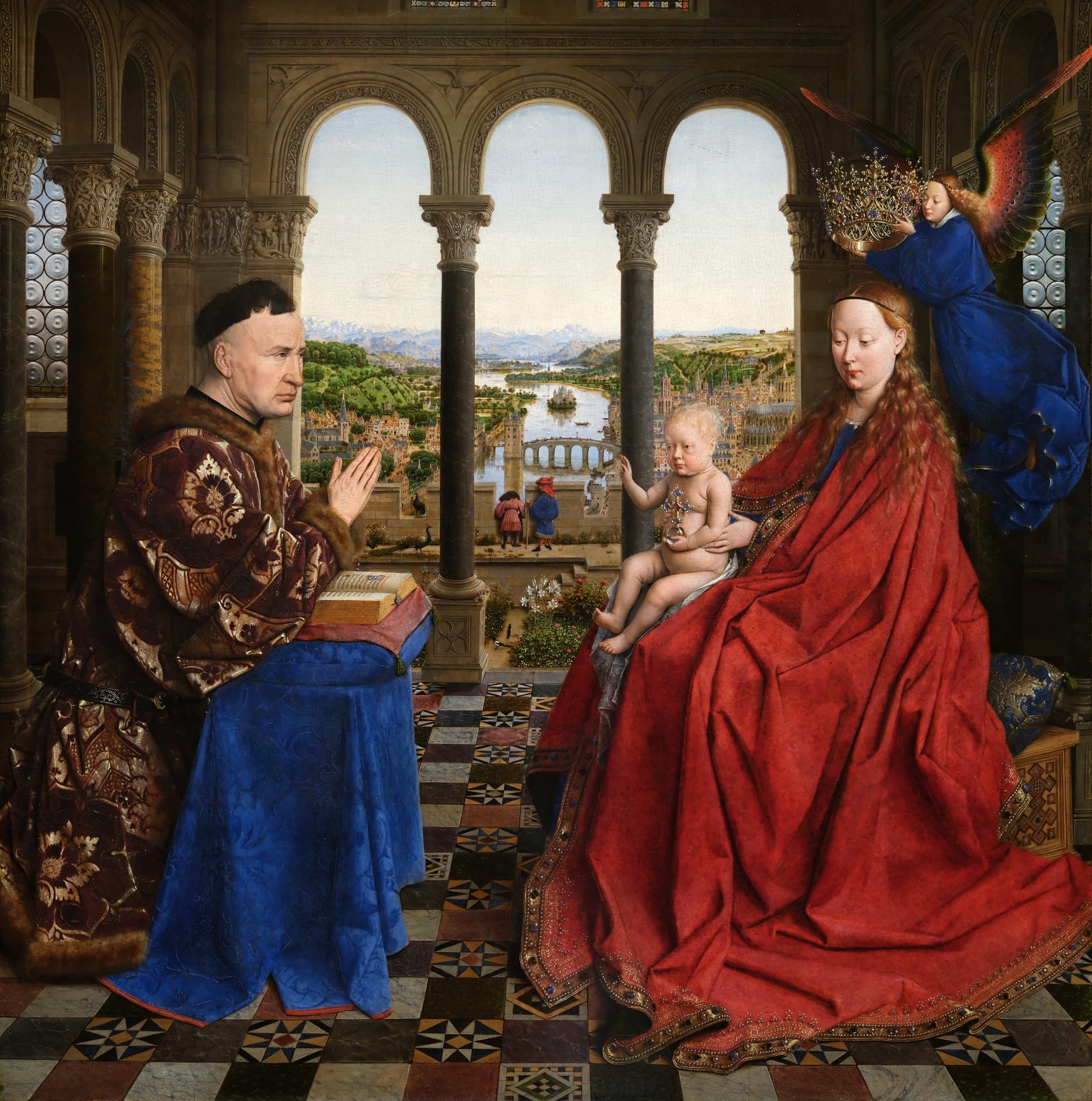
$250-450 million
Jan van Eyck’s Madonna of Chancellor Rolin is a canonical masterpiece of the Northern Renaissance, held by the Louvre and inalienable under French law.
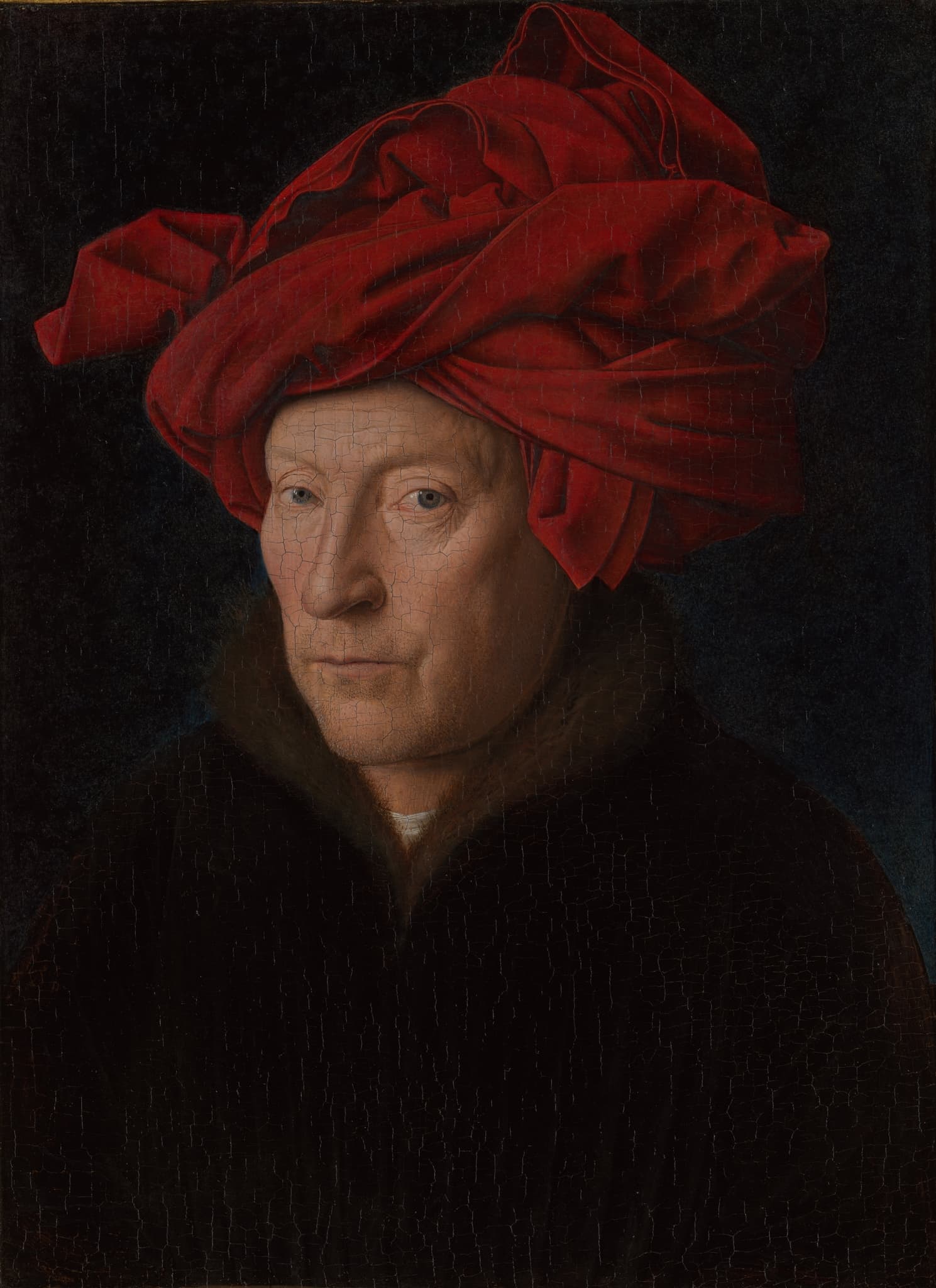
$250-400 million
Estimated open-market value: $250–400 million.
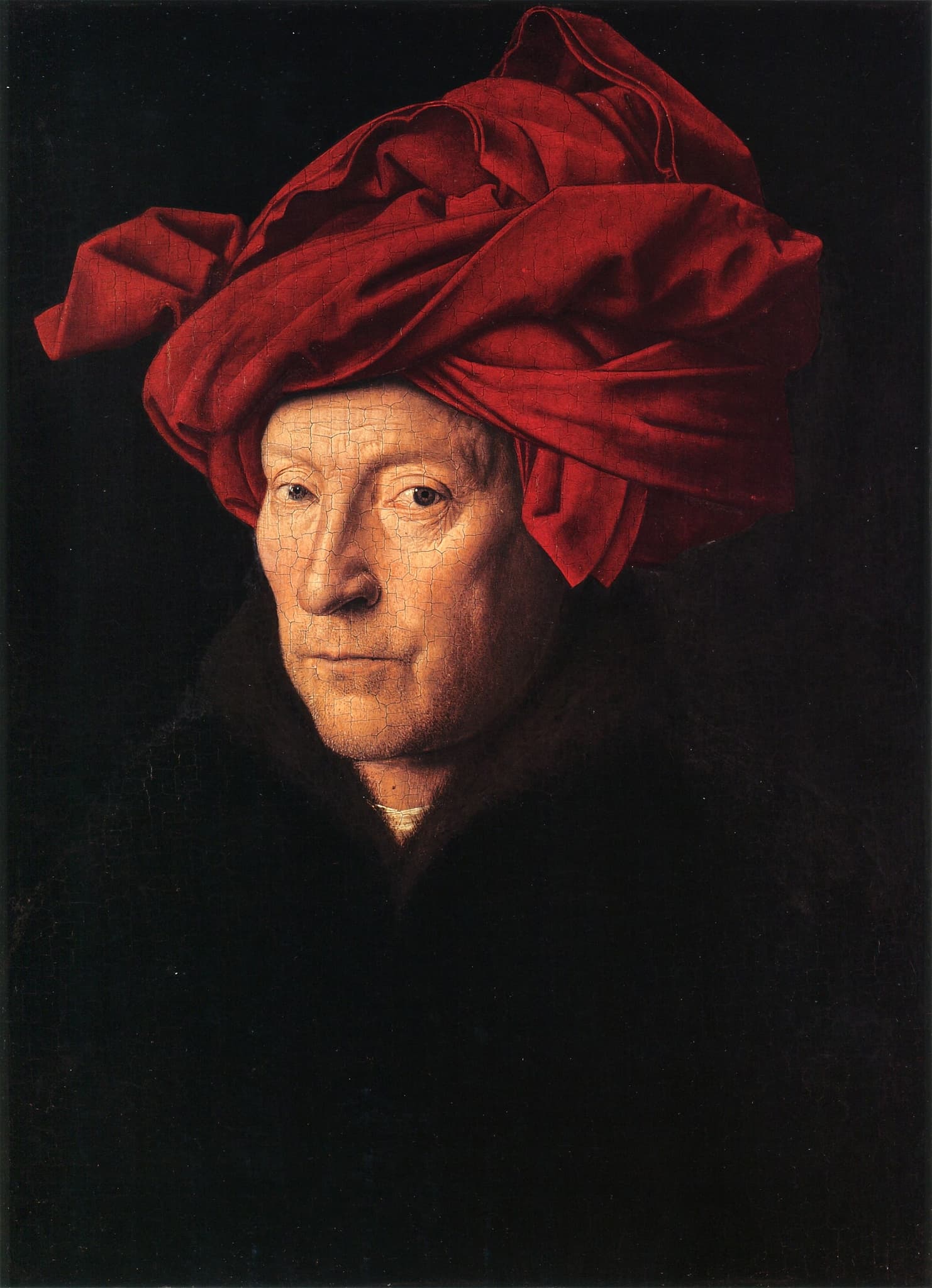
$150-350 million
National Gallery‑held with no sale history; the $150–350M range is a replacement/market estimate derived from trophy comparables and institutional purchase mechanics.
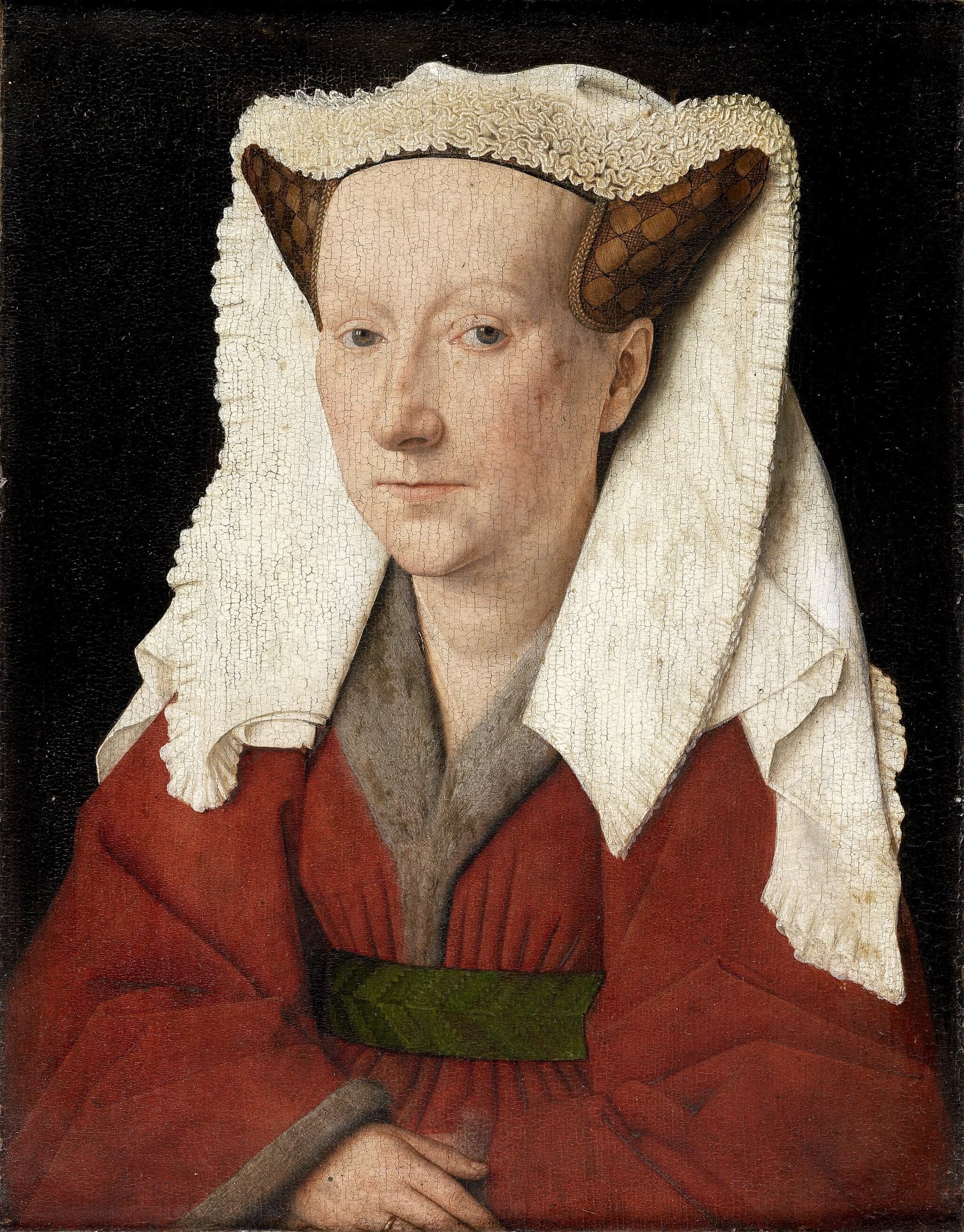
$100-150 million
Groeninge Museum‑held; the $100–150M range assumes exportability, secure autograph attribution and good condition—without those, institutional sale and that price are unlikely.
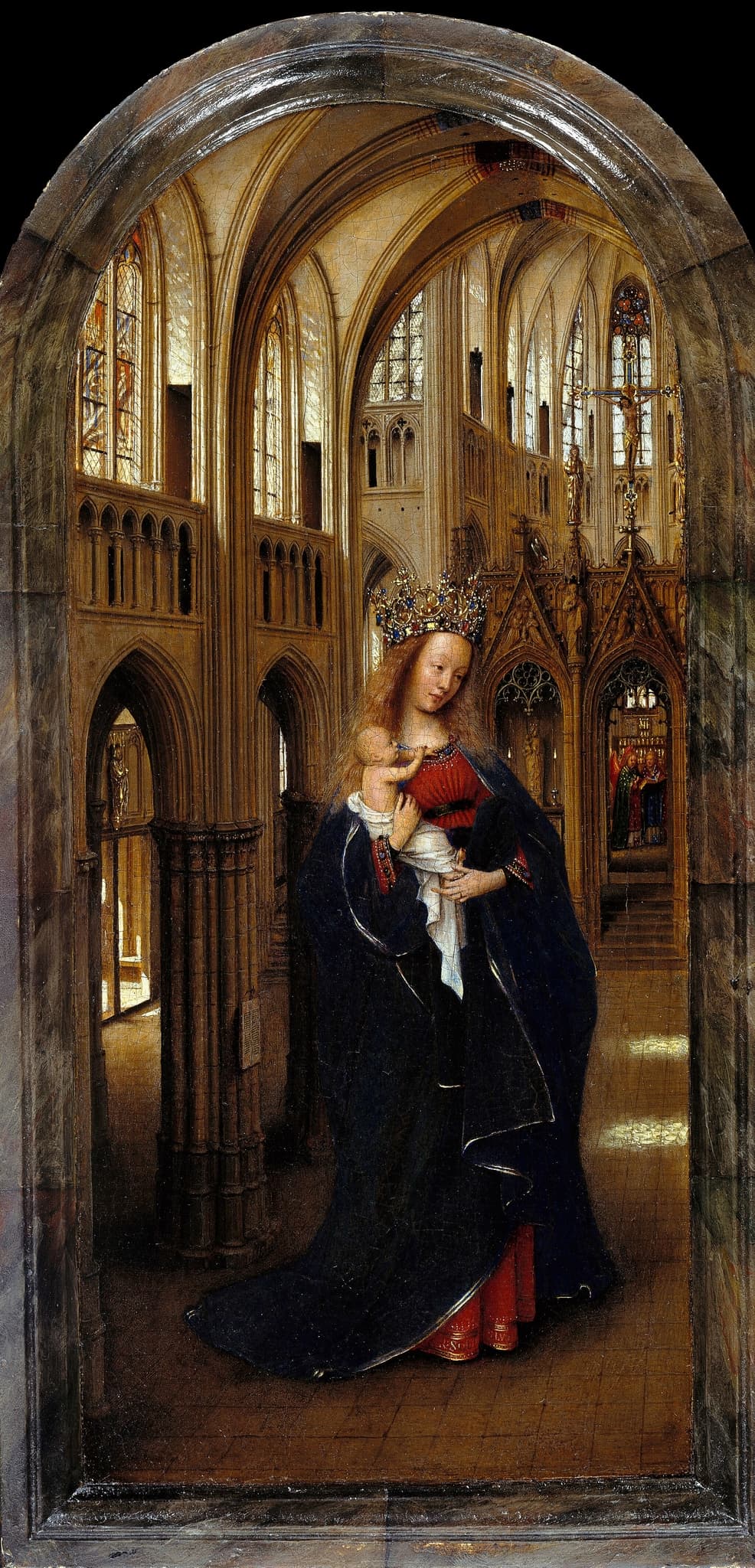
$100-150 million
If accepted as autograph, $100–150M; if downgraded to workshop or heavily compromised, value would likely collapse into single‑digit millions, potentially under $5M.
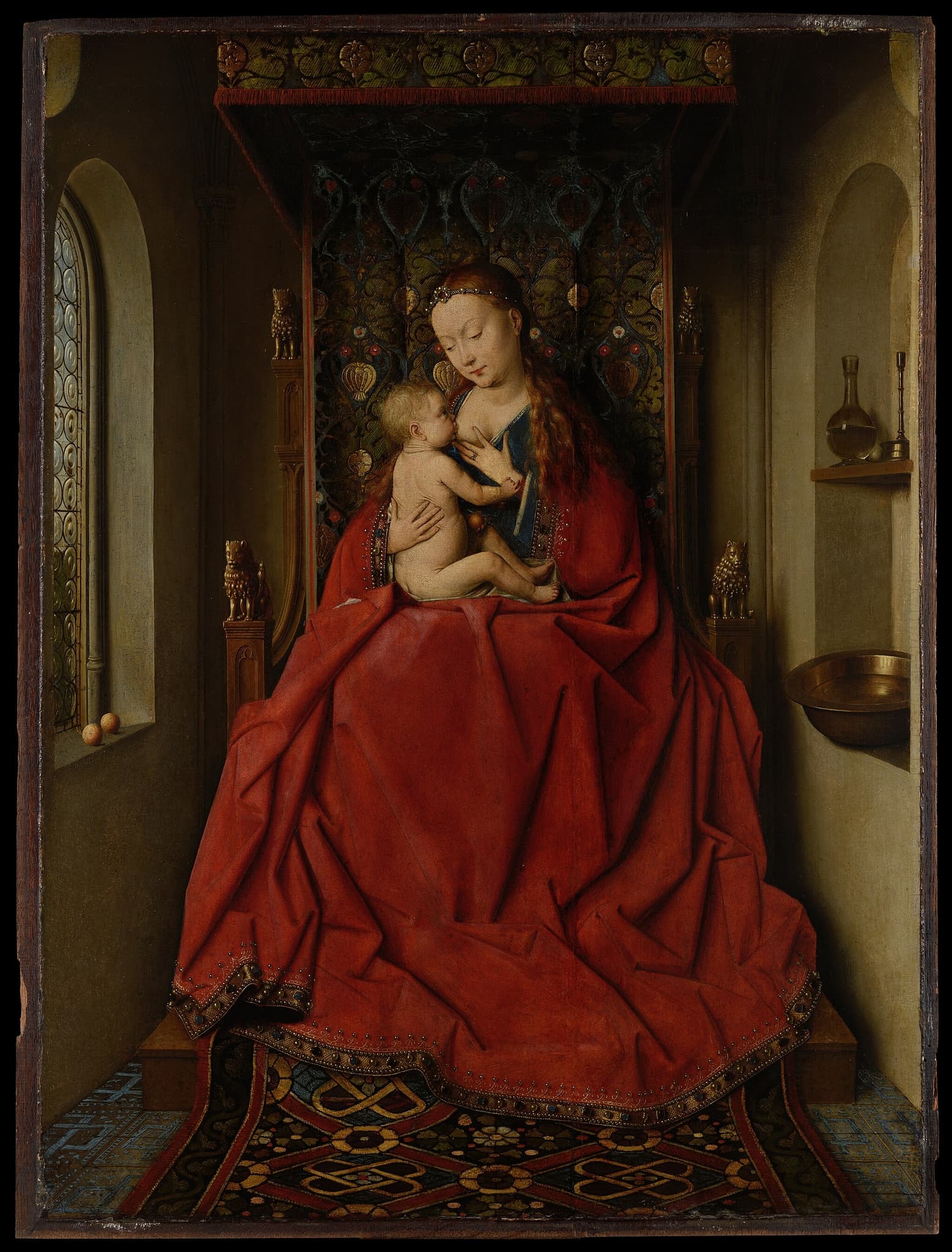
$100-150 million
Städel‑owned and effectively nonexportable; the $100–150M theoretical valuation presumes unquestioned autograph attribution, strong condition and permission to offer it on the open market.
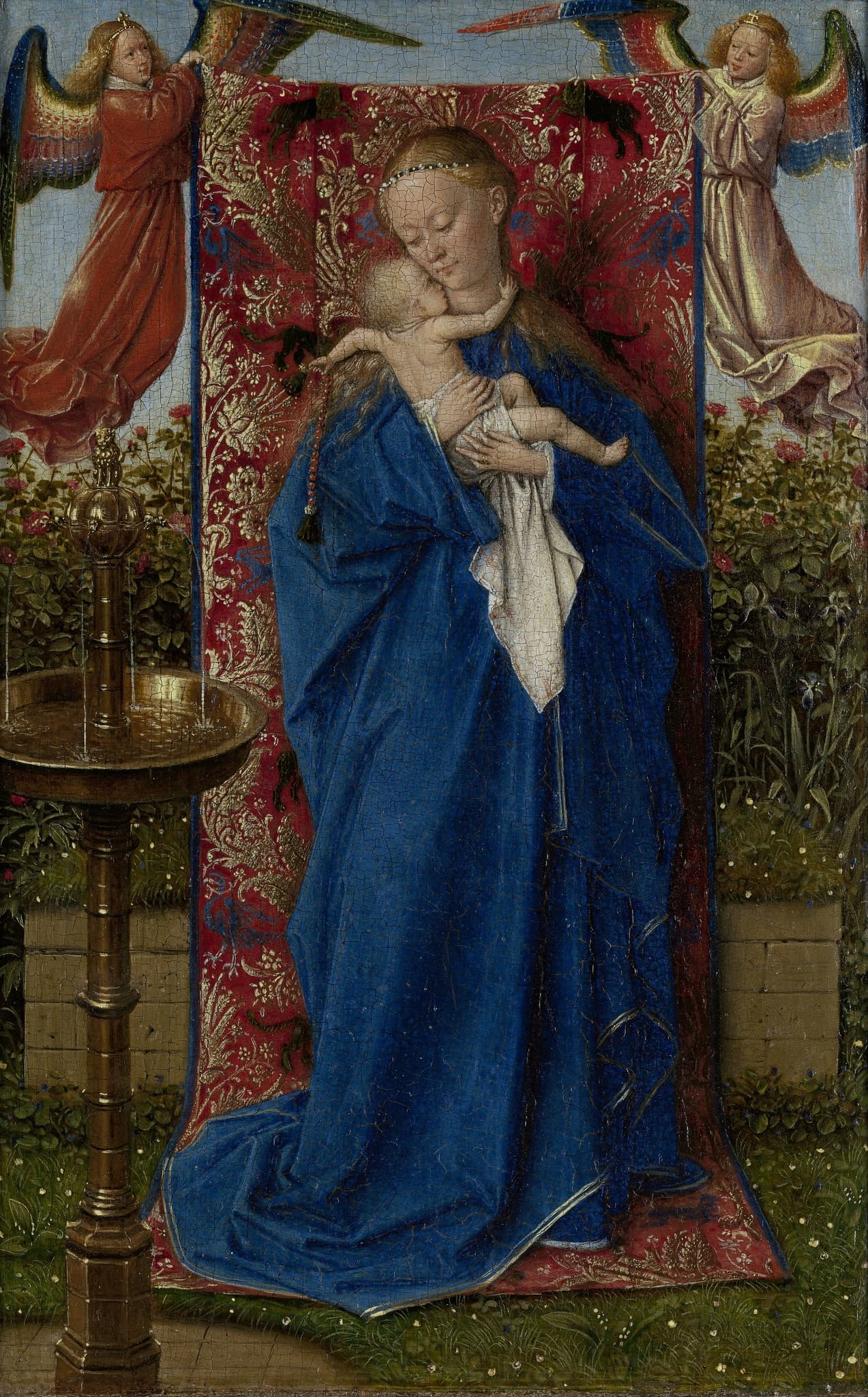
$30-120 million
As a small signed devotional panel in Antwerp, its $30–120M band reflects constrained marketability from scale, possible condition/restoration concerns and a limited buyer pool.
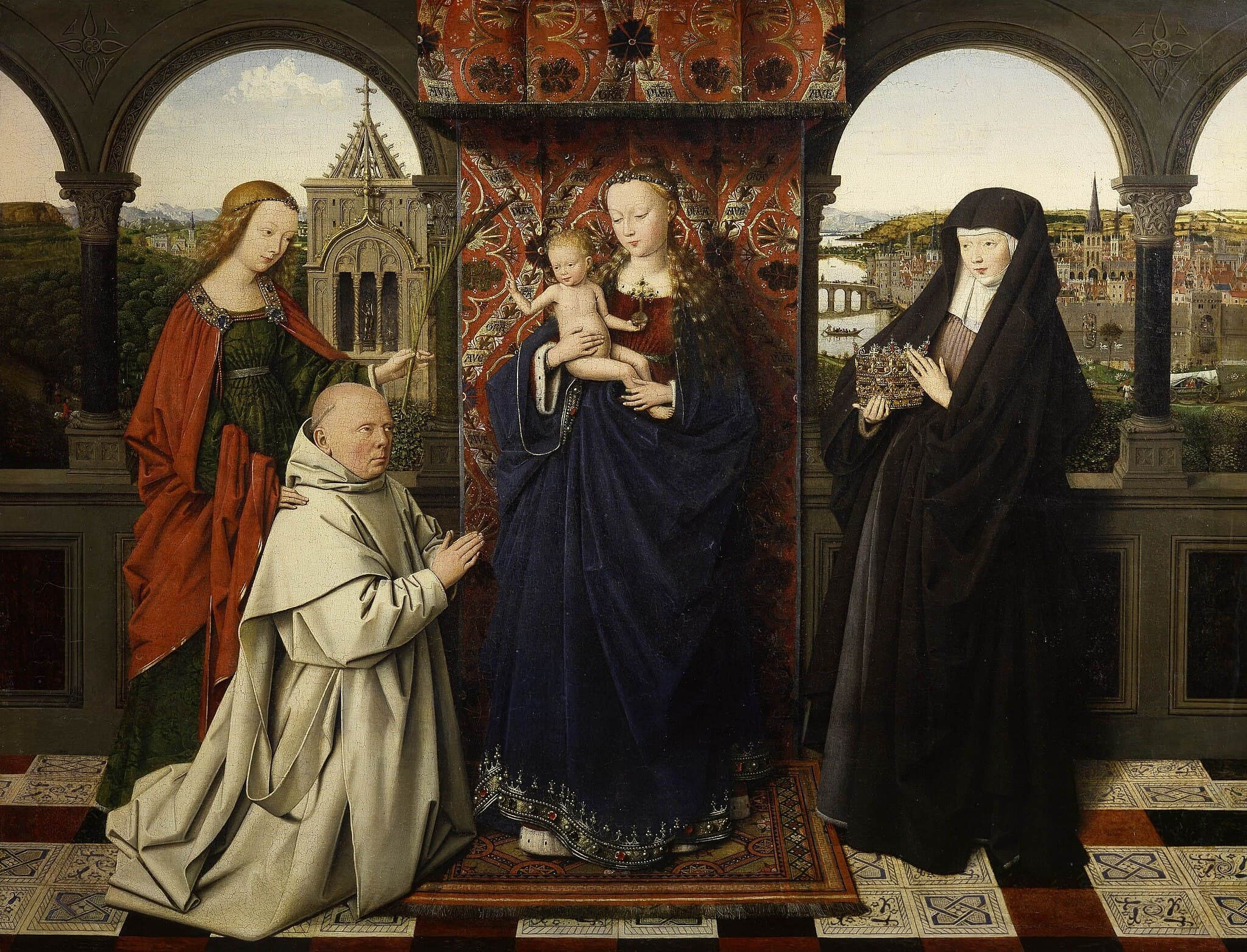
$20-75 million
Frick‑catalogued as 'van Eyck and workshop', the $20–75M market estimate hinges on convincing technical proof of substantial autograph contribution to reach the top end.
Market Context
Jan van Eyck occupies the apex of Early Netherlandish painting, but his securely attributed corpus is tiny and almost entirely museum‑held, so there is effectively no modern auction record for autograph panels; valuations are therefore extrapolated from trophy Old Master sales (e.g., Leonardo $450.3m, Rembrandt pair ~€160m, Botticelli $92.2m) and institutional precedents. Recent market activity shows a selective contraction in 2024 with continued resilience for museum‑quality rarities in 2024–25, driven by major exhibitions, technical research and conservation projects that heighten scholarly and institutional demand. Potential buyers would be museums, donor consortia, UHNW collectors and sovereign‑backed entities; provenance and full technical dossiers are essential. The trajectory is one of concentrated, intensifying institutional competition, high theoretical ceilings and very low practical sale probability.
Study prints from famous works by Jan van Eyck
Curated print bundles pairing the full artwork with a close reading of one meaningful detail.
