How Much Is Portrait of Margareta (Margaret) van Eyck Worth?
Last updated: April 29, 2026
Quick Facts
- Methodology
- comparable analysis
Assuming the Groeninge Museum's Portrait of Margareta van Eyck (1439) is offered on the open market without export constraints and retains its accepted autograph attribution and good condition, a reasoned market valuation is $100–150 million. This range is grounded in trophy Old Master portrait comparables, institutional buying power, and the painting's extreme scarcity and technical confirmation.
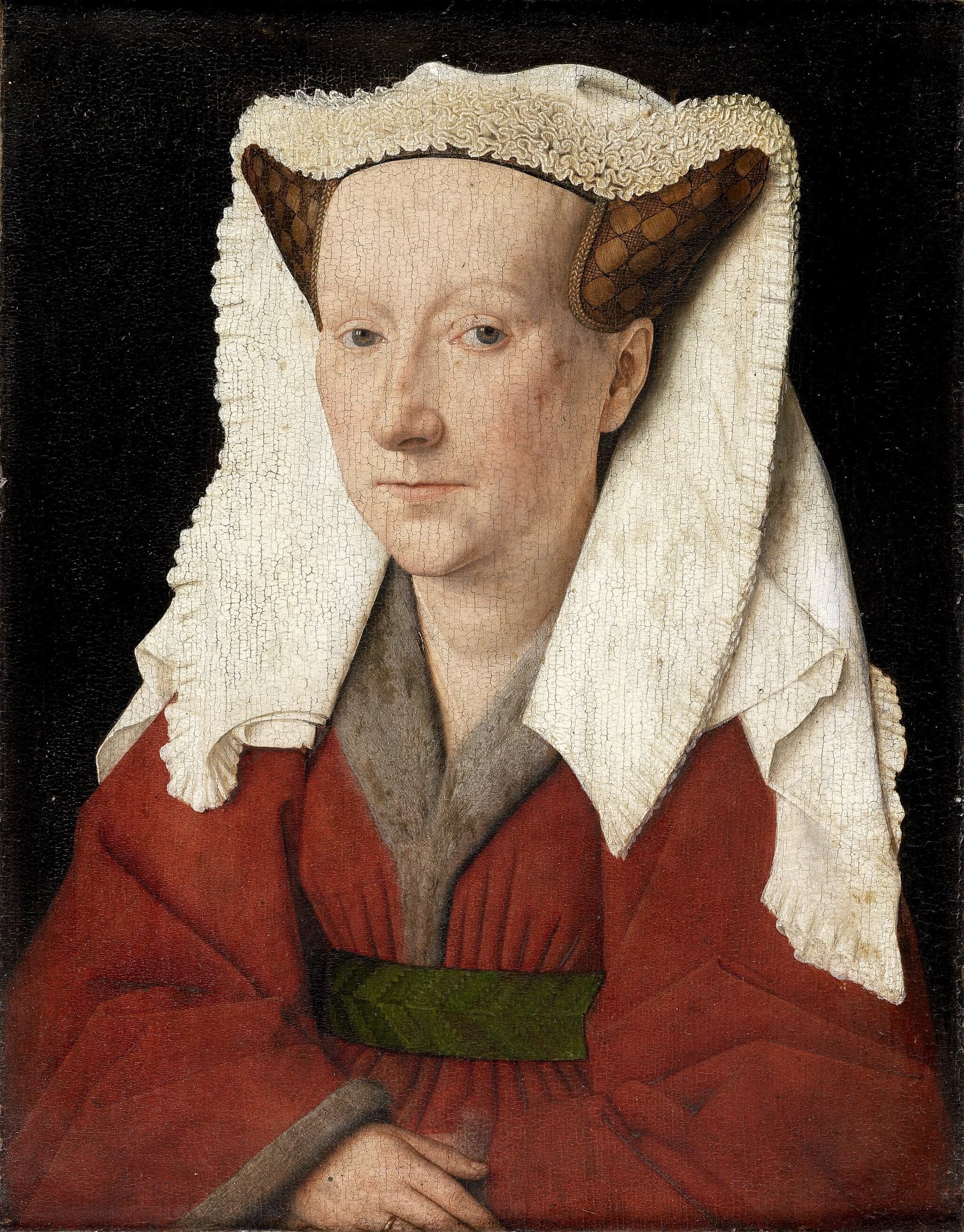
Portrait of Margareta (Margaret) van Eyck
Jan van Eyck, 1439 • Oil on oak panel
View more by Jan van Eyck →Valuation Analysis
Valuation conclusion: Based on comparable high‑end Old Master portrait transactions, museum demand for canonical Early Netherlandish works, and the painting's documented technical pedigree, I place the market value of Jan van Eyck's Portrait of Margareta at approximately $100–150 million under a best‑case, saleable scenario. This estimate assumes clear exportability, an uncontested autograph attribution and that the panel would be offered via private treaty or to a small set of institutional buyers.
Context and authentication: The panel is held by the Groeninge Museum (Musea Brugge) and has been the subject of technical study and conservation in connection with major loans and scholarship; these institutional treatments materially strengthen confidence in attribution and in marketability [1]. The combination of dendrochronology-compatible panel dating, infrared reflectography evidence of underdrawing and documented pentimenti are the exact kinds of technical verifications that move an Early Netherlandish work from scholarly interest to trophy‑level market significance.
Comparables and market anchors: There are few direct market comparables because secure van Eyck panels are almost entirely museum‑held. Therefore I anchor the range to recent trophy Old Master portrait sales and rare private museum purchases: the modern auction ceiling for pre‑19th‑century work (Leonardo Salvator Mundi) and nine‑figure private museum purchases (Rembrandt pendants) establish market capacity at the nine‑figure scale; high‑quality Renaissance portraits sold at public auction (e.g., Botticelli) show where open auction demand can sit [2]. Against those anchors, a securely attributed van Eyck portrait of the artist's wife—while a small, intimate work—commands a premium because of the artist's canonical status and the extreme scarcity of autograph panels.
How the range was derived: The lower bound ($100M) is conservative relative to the highest public auction results for comparable Renaissance portraits and reflects likely discounts for market friction, sale mechanism and subject scale. The upper bound ($150M) reflects a competitive private treaty purchase by a major museum or ultra‑high‑net‑worth collector prepared to pay a premium for a unique, securely attributed van Eyck portrait. Condition, continuity of provenance, and absence of legal export hurdles would push the result toward the upper end; unresolved attribution or heavy restoration would lower realizations substantially below this band.
Risks and next steps: Principal risks are legal/exit restrictions (national patrimony), any unresolved provenance gaps, and new technical findings that could alter attribution. To refine value materially, obtain full conservation reports, complete provenance documentation, and solicit confidential market interest from leading Old Master specialists at major auction houses or museums.
Key Valuation Factors
Art Historical Significance
High ImpactA dated, personally identified portrait of the artist's wife has outsized art‑historical importance relative to its physical size. Even as an intimate portrait rather than a monumental altarpiece, an autograph van Eyck portrait would be unique in the market of Early Netherlandish works: canonical artist, confirmed date (1439), and direct biographical relevance. Museums and leading private collectors prize works that materially rewrite or deepen an artist’s documented oeuvre; because so few van Eyck panels survive, the piece’s intrinsic scholarly value directly translates into trophy market demand and a substantially elevated price band.
Attribution & Technical Authentication
High ImpactAttribution certainty (supported by dendrochronology, pigment analysis, infrared reflectography and documented underdrawing/pentimenti) is decisive for value. When technical analysis demonstrates period materials and an autograph hand consistent with van Eyck, buyer confidence—and therefore price—rises sharply. Conversely, any unresolved technical anomalies or attributional disputes would reduce the buyer pool to dealers and speculative collectors and dramatically depress estimated value. Published institutional technical reports materially improve marketability and reduce bidder hesitation.
Condition & Conservation
High ImpactPanel stability, the integrity of original paint surface, the extent and quality of past restorations, and the presence/absence of heavy overpainting are central. A well‑preserved, properly documented conservation history supports top‑tier pricing; substantial losses, retouches, or uncertain restorations reduce price and institutional interest. Publicly reported conservation work in connection with museum loans (cleaning, consolidation, imaging) increases transparency for buyers and therefore positively impacts the valuation.
Provenance & Exhibition History
High ImpactContinuous, documented provenance—especially early archival references and long‑standing municipal or museum custody—greatly mitigates title risk and increases institutional willingness to bid. Provenance that traces the panel through the Bruges guild, municipal collection and documented museum loans and exhibitions (catalogue entries, major loans) elevates price certainty. Significant provenance gaps, contested ownership claims, or unresolved wartime histories materially depress the bid level and can trigger legal or reputational constraints on sale.
Market Scarcity & Demand
High ImpactAuthorship scarcity (very few accepted autograph van Eyck panels) and a concentrated buyer base (major museums and ultra‑high‑net‑worth collectors) create a trophy market dynamic. When an autograph work becomes available, demand is institutionally led and can produce private treaty prices well above auction estimates. However, market liquidity is low: actual sale requires targeted outreach, confidentiality, and often museum cooperation; export restrictions or acquisition priorities can limit the pool of eligible purchasers and influence realized value.
Sale History
Portrait of Margareta (Margaret) van Eyck has never been sold at public auction.
Jan van Eyck's Market
Jan van Eyck occupies a canonical position in Northern Renaissance art with a tiny corpus of securely attributed panels, nearly all held by major museums. This extreme scarcity removes him from routine auction cycles and places any genuine autograph panel in the trophy category. Market transactions are hypothetical and driven by museum budgets, national acquisition priorities and a small set of ultra‑wealthy private buyers. Scholarly consensus and technical verification are primary determinants of market value rather than short‑term auction trends.
Comparable Sales
Salvator Mundi
Leonardo da Vinci (attributed)
Modern auction ceiling for a pre-19th-century masterpiece; an extreme outlier but establishes the upper trophy-market willingness to pay for a rare, canonical Renaissance portrait.
$450.3M
2017, Christie's, New York
~$587.0M adjusted
Maerten Soolmans and Oopjen Coppit (pendant portraits, pair)
Rembrandt van Rijn
Museum-level, nine-figure private purchase of two canonical portraits by a major Old Master; closely relevant as it demonstrates institutional willingness to pay at the top end for rare, museum-quality portrait pairs.
$177.0M
2016, Private treaty — joint acquisition by the Rijksmuseum (Amsterdam) and the Louvre (Paris)
~$236.0M adjusted
Portrait of a Young Man Holding a Roundel
Sandro Botticelli
Auction sale of a rare, securely attributed Renaissance portrait reaching the high-eight/low-nine-figure band; a useful auction-market comparable for portrait format, market appetite and realized prices for high-quality Renaissance portraits.
$92.2M
2021, Sotheby's, New York
~$109.4M adjusted
Current Market Trends
The broader Old Masters segment has shown recovery and renewed institutional interest following a 2023–24 correction; specialist dealers and museums have been active buyers. Buyers remain risk‑averse and prize well‑provenanced, technically verified works. Given constrained supply of canonical Early Netherlandish panels, demand remains concentrated and prices for truly rare, museum‑quality works can reach nine figures in private transactions.