How Much Is Madonna in the Church (The Virgin in the Church) Worth?
Last updated: April 29, 2026
Quick Facts
- Methodology
- extrapolation
If the Gemäldegalerie panel is accepted as an autograph Jan van Eyck, exportable and in good condition, a conservative market estimate is US$100–150 million. This is an evidence‑based extrapolation from trophy Old Master outcomes and recent high‑quality Netherlandish institutional purchases, adjusted for van Eyck’s extreme rarity, museum ownership and market liquidity constraints. If downgraded to workshop/follower, value would fall into single‑ or low‑double‑digit millions; if demonstrably non‑autograph or heavily compromised, under US$5 million.
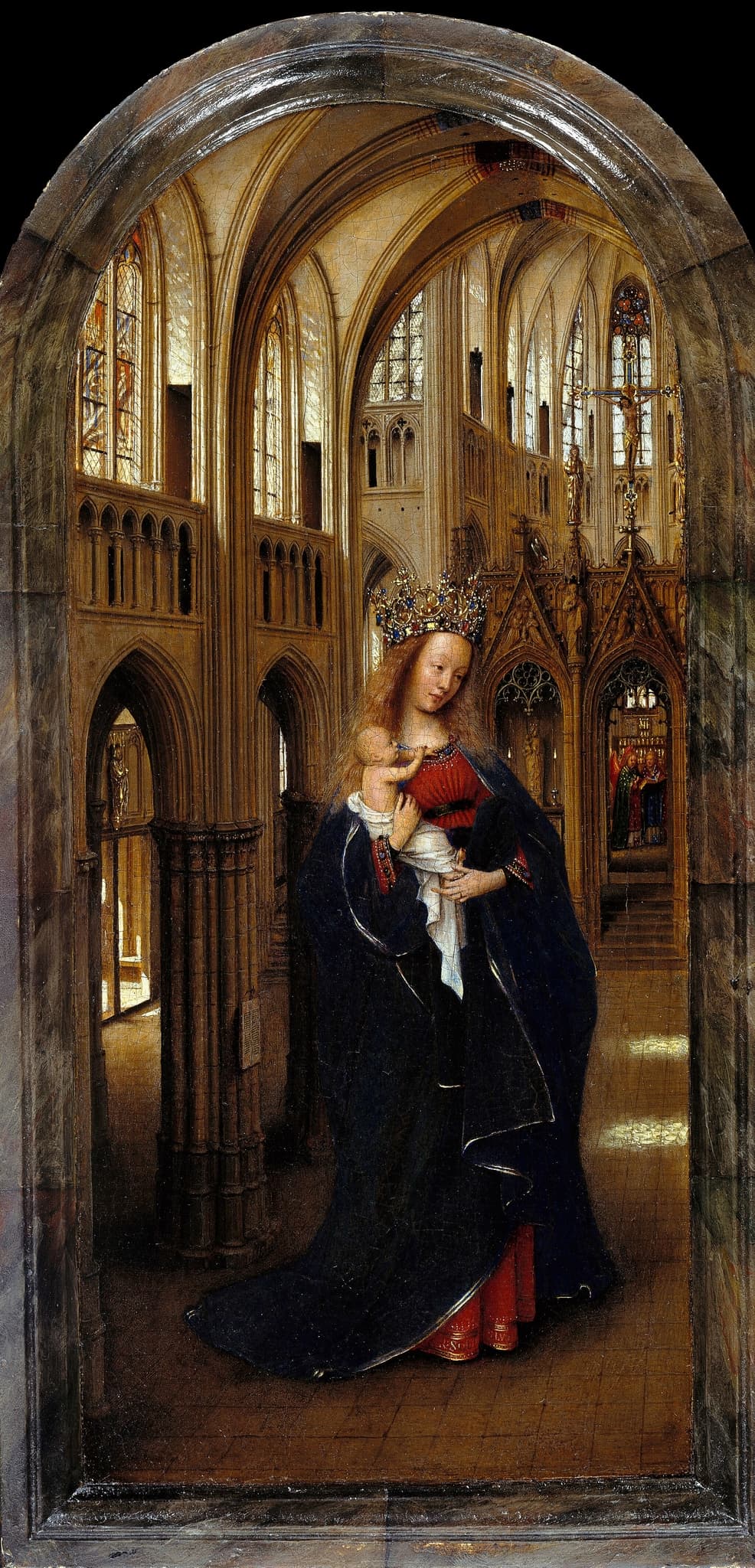
Madonna in the Church (The Virgin in the Church)
Jan van Eyck • Oil on oak panel
View more by Jan van Eyck →Valuation Analysis
The painting known as 'Madonna in the Church (The Virgin in the Church)' is held by the Gemäldegalerie, Staatliche Museen zu Berlin and is catalogued there as associated with Jan van Eyck; it entered that public collection in 1874 and has not been offered in the modern auction market, so there is no arms‑length sale record to anchor a price [1]. Because the corpus of securely attributed van Eyck panels is extremely small and almost entirely museum‑held, any market valuation must be scenario based and built by extrapolating from the market's top trophies and the most relevant Netherlandish comparables.
Methodology and benchmarks: the absolute auction ceiling for a uniquely marketed canonical Old Master is illustrated by the 2017 sale of Leonardo's Salvator Mundi at Christie’s (US$450.3M including premium), which demonstrates what a highly publicised, contested masterpiece can achieve under exceptional circumstances [2]. For a nearer‑term, regionally relevant signal, recent museum purchases of high‑quality Netherlandish works indicate that institutions will pay mid‑to‑high tens of millions for marketable pieces, but they also show that institutional buying, export rules and provenance concerns often channel sales away from open auction dynamics [3]. I therefore use a conservative trophy‑extrapolation approach: scale down the absolute trophy ceiling to reflect van Eyck’s different market profile, the practicalities of institutional ownership, and the limited buyer pool.
Why US$100–150M? That band assumes: (a) the panel is confirmed as autograph by up‑to‑date technical study (dendrochronology, infrared reflectography, pigment/medium analysis) and by leading van Eyck specialists; (b) condition is sound or restorable with well‑documented conservation; and (c) there are no legal encumbrances, restitution claims or export prohibitions. Under those conditions the painting would be competing in the very top tier of Old Masters—a trophy for a national museum, sovereign buyer or ultra‑high‑net‑worth collector prepared to resolve legal/export logistics. The band is intentionally conservative relative to the theoretical auction ceiling because (i) van Eyck works rarely appear for sale, (ii) institutional retention and legal constraints are common, and (iii) buyer competition may be limited compared with the exceptional commercial marketing campaign that surrounded Salvator Mundi.
Downside scenarios and contingencies: if technical analysis or connoisseurship places the panel in the workshop/follower category, a realistic market expectation would be roughly US$5–50M depending on quality, provenance, and condition. If it proves a later copy, fragmentary or heavily restored, market value could fall below US$5M. To firm this estimate the next steps are: obtain the museum’s full object and conservation file, commission or obtain technical imaging and dendrochronology, secure written expert opinions from recognized van Eyck scholars, and consult Old Masters departments at major auction houses for market positioning.
Key Valuation Factors
Art Historical Significance
High ImpactJan van Eyck is a foundational figure of Early Netherlandish painting; any securely attributed autograph panel by him is exceptionally important to scholarship, museums and cultural heritage. 'Madonna in the Church'—as ascribed in the Berlin catalogue—sits within a very small corpus of fifteenth‑century works tied to van Eyck, and that rarity drives outsized cultural and market value. Institutional custodianship (long museum ownership and exhibition history) increases scholarly visibility but can also make commercial transfer improbable. In market terms, art‑historical primacy elevates the painting into the trophy category: if marketable it commands institutional and sovereign interest that can push price into nine figures, but such significance also attracts legal/ethical scrutiny.
Attribution & Technical Evidence
High ImpactAttribution is the single most important driver of value for fifteenth‑century Northern painting. Confirmatory technical data—dendrochronology consistent with a 15th‑century support, infrared reflectography revealing underdrawing methods characteristic of van Eyck, pigment and binder analysis matching documented practice—can materially increase the estimate and enable market acceptance of an autograph attribution. Conversely, workshop underdrawing, later overpainting or materials inconsistent with the period would demote the picture to 'workshop/follower' and reduce value sharply. Written, published opinions by recognised van Eyck specialists and complete technical reports are prerequisites for achieving the high valuation band.
Condition & Conservation
High ImpactCondition affects buyer confidence, insurability and realized price. A well preserved paint surface with original glazes and minimal, documented retouching supports premium pricing; major losses, structural panel instability, or invasive restorations materially reduce marketability and price. A full conservation history and an independent condition report are essential: stable, reversible conservation treatments and a demonstrably sound oak support mitigate risk. If significant conservation work is required, potential buyers will factor in restoration cost and risk, often lowering offers or limiting the buyer pool to institutions willing to underwrite restoration.
Provenance & Legal Status
High ImpactClear, continuous provenance substantially increases marketability. The Berlin accession via the Suermondt group (1874) and public exhibition history strengthen title, but any provenance gaps, wartime questions or restitution claims would be major deterrents to sale and could render a transaction impracticable. Export controls and cultural patrimony laws in European jurisdictions can prevent legal export or force sale to domestic institutions. Clean title and absence of legal encumbrances are therefore essential to reach the nine‑figure band. In practice, many works of this profile are retained in public collections precisely because of these constraints.
Market Liquidity & Buyer Pool
High ImpactLiquidity for an undisputed van Eyck is extremely limited; likely buyers are national museums, sovereign collectors or a handful of ultra‑high‑net‑worth private collectors. That small pool both elevates theoretical prices (competition among deep‑pocket buyers) and increases uncertainty because institutional priorities, legal limits and donor politics often determine outcomes. The absence of modern auction comparables for autograph van Eyck panels increases price dispersion and reliance on bespoke private treaty negotiations or institutional acquisitions rather than standard evening‑sale dynamics. Consequently, valuation must account for constrained liquidity and idiosyncratic sale mechanics.
Sale History
Madonna in the Church (The Virgin in the Church) has never been sold at public auction.
Jan van Eyck's Market
Jan van Eyck sits at the apex of Early Netherlandish painting; his technical achievements and the small number of securely attributed autograph panels make his works among the most coveted pre‑1500 objects. Most canonical van Eyck paintings are museum‑held and have not been offered on the modern market, so there is no continuous auction series to provide standard comps. Market valuations therefore depend heavily on attribution confirmation, technical research and institutional appetite. When authentic van Eyck panels become available they attract intense institutional interest and may trade via private treaty, guarantees or intergovernmental arrangements rather than typical auction channels.
Comparable Sales
Salvator Mundi
Leonardo da Vinci
Trophy sale of a unique, canonical Old Master masterpiece that demonstrates the outer market ceiling for a single‑signature, museum‑quality painting sold at auction. Not the same artist or school, but the best available market precedent for how the market prices canonical works when they do appear.
$450.3M
2017, Christie's New York
~$584.1M adjusted
Venice, the Return of the Bucintoro on Ascension Day
Canaletto
Recent high‑value Old Masters auction lot (July 2025) showing renewed appetite and realized prices for marquee Old Master pictures in 2025. Useful as a contemporary demand indicator for top‑end Old Masters, though Canaletto is later and regionally different from van Eyck.
$43.8M
2025, Christie's London
Early‑16th‑century Netherlandish Virgin & Child (museum acquisition via Sotheby's)
Anonymous / Netherlandish workshop
Directly regionally and thematically relevant (Netherlandish Virgin & Child altarpiece). Represents a recent museum acquisition price for high‑quality Netherlandish work — a closer comparandum in subject, geography and buyer type than general Old Master trophy sales.
$21.9M
2025, Sotheby's (transaction / sale to National Gallery, reported 2025)
Current Market Trends
The Old Masters market weakened in 2023–24 but saw a selective rebound in 2025 driven by a small number of headline lots and renewed museum acquisitions. Demand is increasingly selective: top‑quality, well‑provenanced works attract institutional and trophy buyers, while mid‑market liquidity remains constrained. Scholarly restorations and technical publications have reanimated interest in Early Netherlandish painting, but van Eyck autographs remain essentially off‑market and subject to heritage constraints—supporting strong theoretical valuations but preserving substantial saleability risk.
Sources
- Gemäldegalerie, Staatliche Museen zu Berlin — object entry: Madonna in the Church
- Christie's press release: Christie’s sells Leonardo da Vinci's 500‑year‑old 'Salvator Mundi' (2017)
- Sotheby's article: Public Treasures — a Netherlandish altarpiece takes pride of place (coverage of 2025 institutional acquisition)