How Much Is Portrait of a Man (Man in a Red Turban / Self-portrait?) Worth?
Last updated: April 29, 2026
Quick Facts
- Methodology
- comparable analysis
Hypothetical market valuation for Jan van Eyck’s Portrait of a Man (Man in a Red Turban), 1433 (NG222) is USD 150–350 million. The painting is museum‑held with no modern sale history; this range is a replacement/market estimate derived from trophy comparables, institutional purchase precedents, and scarcity considerations.
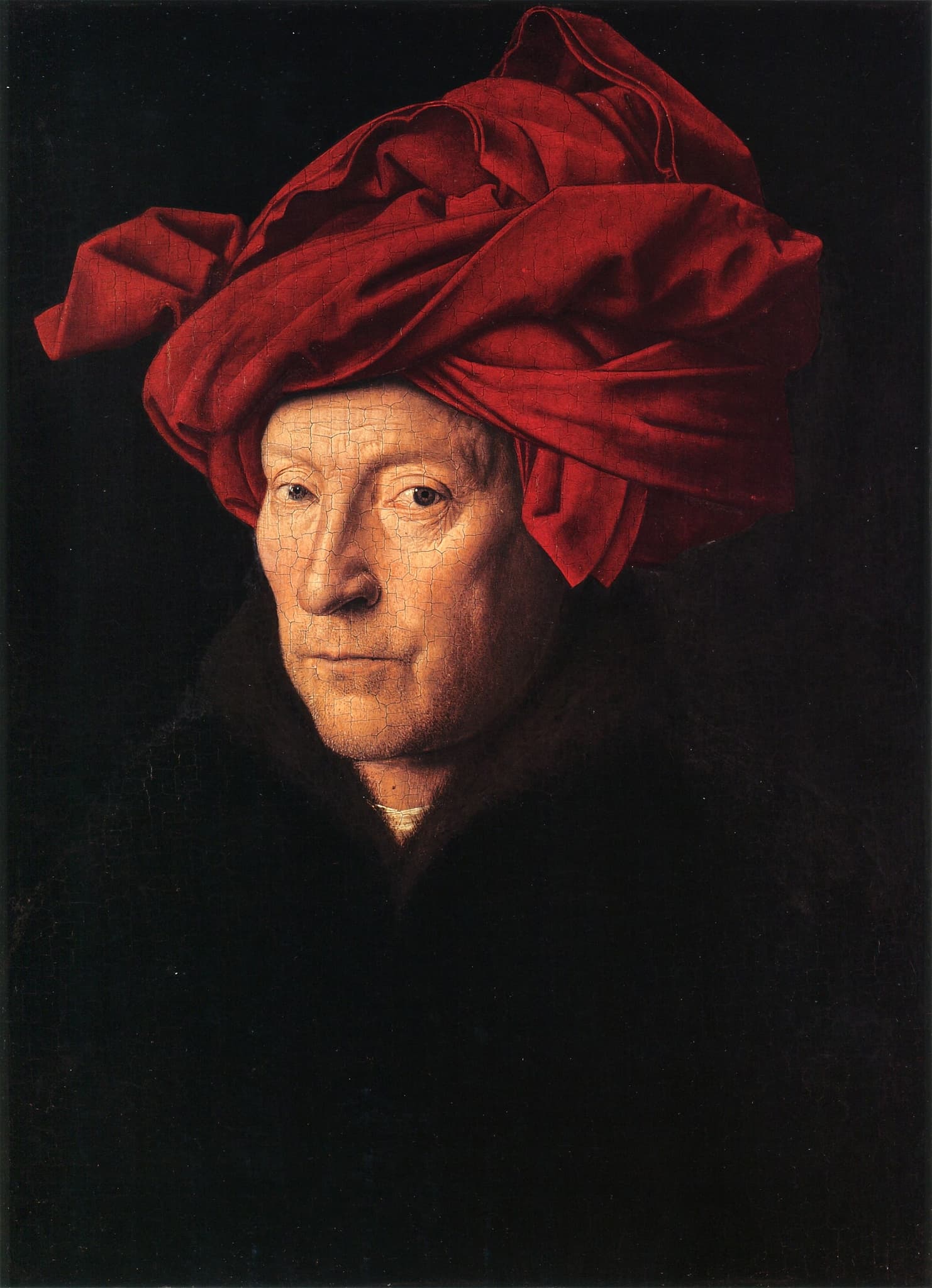
Portrait of a Man (Man in a Red Turban / Self-portrait?)
Jan van Eyck, 1433 • Oil on oak panel
View more by Jan van Eyck →Valuation Analysis
This appraisal provides a hypothetical market valuation range of USD 150,000,000–350,000,000 for Jan van Eyck’s Portrait of a Man (Man in a Red Turban), 1433. The painting is a canonical, museum‑held masterpiece (National Gallery, London, inv. NG222) and has no modern public‑sale record; therefore this figure represents a replacement/sale estimate derived from trophy comparables, institutional purchase precedents, scarcity, and market dynamics [1].
The upper and lower anchors for this range are drawn from high‑profile one‑off sales and institutional acquisitions. Leonardo’s Salvator Mundi (Christie’s, 2017) establishes an extreme auction ceiling at $450.3m and therefore a notional upper bound for trophy masterpieces [2]. A more directly relevant Old Master anchor is the 2016 joint purchase of two Rembrandt portraits by the Louvre and Rijksmuseum (reported at €160m), which demonstrates that institutions will commit mid‑hundreds of millions for uniquely important early modern portraits [3]. These transactions frame what motivated buyers have paid for irreplaceable works.
Van Eyck’s Red Turban portrait is a signature work in the Early Netherlandish canon: a frequently reproduced, technically ambitious oil portrait often discussed as a self‑portrait. The artist’s securely attributed oeuvre is extremely small and almost entirely museum‑held; supply is therefore effectively nil. That scarcity, combined with the painting’s recognized art‑historical importance, creates structural upward pressure on any hypothetical market price.
Sale mechanics and buyer composition materially affect realized price. An open, heavily publicized auction with multiple international bidders could drive price toward the upper bound, while a private institutional acquisition — the more plausible mechanism given the painting’s National Gallery status — would likely result in pricing similar to the Rembrandt institutional anchor. Practically, deaccession constraints and national patrimony rules make a real sale highly improbable.
Valuation is sensitive to condition, conservation history, provenance completeness, and attribution certainty. Up‑to‑date technical reports (infrared reflectography, dendrochronology, pigment analysis) are prerequisites for a transactable valuation; recent public debates over attribution methodologies, including AI analyses reported in 2026, underscore the need for rigorous technical confirmation before approaching top‑end pricing [4].
Accordingly, USD 150–350 million is a defensible working range: the lower bound reflects a cautious institutional/private buyer scenario anchored to documented Old Master purchases; the upper bound reflects the trophy‑sale ceiling discounted for institutional market realities, attribution risk, and the practical barriers to transfer. This is a hypothetical market valuation for benchmarking, insurance or academic purposes, not an indication that NG222 will be offered for sale.
To refine to a transactable appraisal, obtain the National Gallery's internal/replacement valuation and conservation file, current technical imaging and provenance documentation, and confidential opinions from Old Masters specialists at major houses or fine‑art insurers.
Key Valuation Factors
Art Historical Significance
High ImpactPortrait of a Man (Man in a Red Turban) is one of van Eyck's most recognized works and is frequently considered a potential self‑portrait. Dated 1433, the panel exemplifies early mastery of oil technique, subtle surface modeling, and meticulous detail—technical qualities that underpin much of Northern Renaissance scholarship. The work functions as a canonical image taught and reproduced internationally, which increases intangible cultural value and institutional interest. That prominence converts into economic premium in hypothetical market contexts because buyers (museums, sovereigns, private collectors) prize academically validated rarity and works that carry outsized public and scholarly recognition.
Rarity / Supply
High ImpactVan Eyck's securely attributed autograph corpus is exceptionally small and concentrated in public collections, effectively eliminating supply for the commercial market. When authentic examples are non‑fungible and unavailable, conventional auction price discovery is inapplicable and appraisals rely on cross‑category trophy transactions and institutional purchase precedents. This structural scarcity elevates theoretical replacement values and creates both upside potential (if multiple eligible buyers compete) and valuation volatility (because transactions are episodic and driven by institutional priorities rather than open market depth).
Provenance & Legal / Ownership
High ImpactNG222’s long‑standing ownership by the National Gallery (acquired 1851) places it under institutional stewardship and legal exposures that make legitimate commercial transfer highly unlikely. UK patrimony controls, donor conditions, and museum deaccession policies create significant obstacles to sale. While clear museum provenance enhances buyer confidence and supports premium valuation when a sale is feasible, these legal and ethical frameworks materially constrain liquidity and tend to make any valuation hypothetical rather than transactional.
Condition & Technical Attribution
High ImpactThe painting’s physical condition, restoration history and technical signatures are decisive for price. Confirmatory scientific evidence—infrared reflectography revealing underdrawing typical of van Eyck, dendrochronology consistent with the period, and pigment analyses matching fifteenth‑century materials—substantially support top‑end pricing. Conversely, heavy overpainting, structural instability, or unresolved conservation issues will depress buyer confidence and value. The recent prominence of AI and other attribution tools increases market sensitivity and makes current technical dossiers essential for any serious valuation.
Market Demand & Buyer Pool
High ImpactThe credible buyer pool for an undisputed van Eyck is extremely limited—major national museums, a small group of ultra‑high‑net‑worth collectors, and occasionally sovereign or consortium purchasers. Demand from this group is deep but infrequent; pricing outcomes depend heavily on whether multiple eligible buyers compete and on the sale mechanism. Competitive public auctions can push prices toward the trophy ceiling, while private or institutional transactions may anchor closer to documented high‑end Old Master private purchases.
Sale History
Portrait of a Man (Man in a Red Turban / Self-portrait?) has never been sold at public auction.
Jan van Eyck's Market
Jan van Eyck occupies an exalted position in art history and his securely attributed works are few and predominantly museum‑held. As a market actor, van Eyck generates extraordinary cultural capital but almost no modern auction frequency, meaning there is no direct contemporary price series for autograph panels. Valuations therefore depend on cross‑category trophy comparables, institutional purchase precedents, and qualitative assessment of rarity, condition, and provenance. This combination yields a high theoretical value but low market liquidity; realizations would likely be exceptional, privately negotiated, or institutionally mediated.
Comparable Sales
Salvator Mundi
Leonardo da Vinci
Record auction ‘trophy’ sale for a single masterpiece — sets the effective ceiling for one‑off, iconic paintings and demonstrates the upper bound collectors/institutions will reach for uniquely important works.
$450.3M
2017, Christie's, New York
~$584.1M adjusted
Pendant portraits of Maerten Soolmans and Oopjen Coppit
Rembrandt van Rijn
High‑end Old Masters institutional purchase (two canonical Rembrandt portraits) — a directly relevant Old Masters anchor showing institutions will pay mid‑hundreds of millions for uniquely important early modern portraits.
$174.2M
2016, Private/joint acquisition (facilitated by Christie’s) — Louvre & Rijksmuseum
~$230.8M adjusted
Les Femmes d’Alger (Version O)
Pablo Picasso
Blue‑chip modern trophy auction result — useful as a high‑end auction comparand and to illustrate cross‑category price ceilings achievable for unique, iconic single‑lot masterpieces.
$179.4M
2015, Christie's, New York
~$240.7M adjusted
Current Market Trends
Current market conditions favour historically secure, well‑provenanced Old Masters while broader economic caution has dampened speculative buying. Trophy auctions and institutional consortium purchases remain exceptional and set theoretical ceilings; the Salvator Mundi sale is an outlier and the Rembrandt joint acquisition a more directly relevant institutional precedent. The 2026 public debate over AI and technical attribution has increased short‑term scrutiny on Early Netherlandish works and elevated the premium on comprehensive technical dossiers. Overall demand for undisputed icons is concentrated and deep but transactional opportunities are rare.