How Much Is The Apotheosis of Homer Worth?
Last updated: April 18, 2026
Quick Facts
- Methodology
- comparable analysis
Ingres’s 1827 Apotheosis of Homer (Musée du Louvre, inv. 5417) is a canonical, museum‑held masterpiece effectively outside the trade. If legitimately marketable, a reasoned comparable‑analysis valuation range is USD 30–80 million, reflecting trophy‑value premiums, institutional provenance, legal protections and proxy sales of rare, monumental 18th–19th‑century canvases.
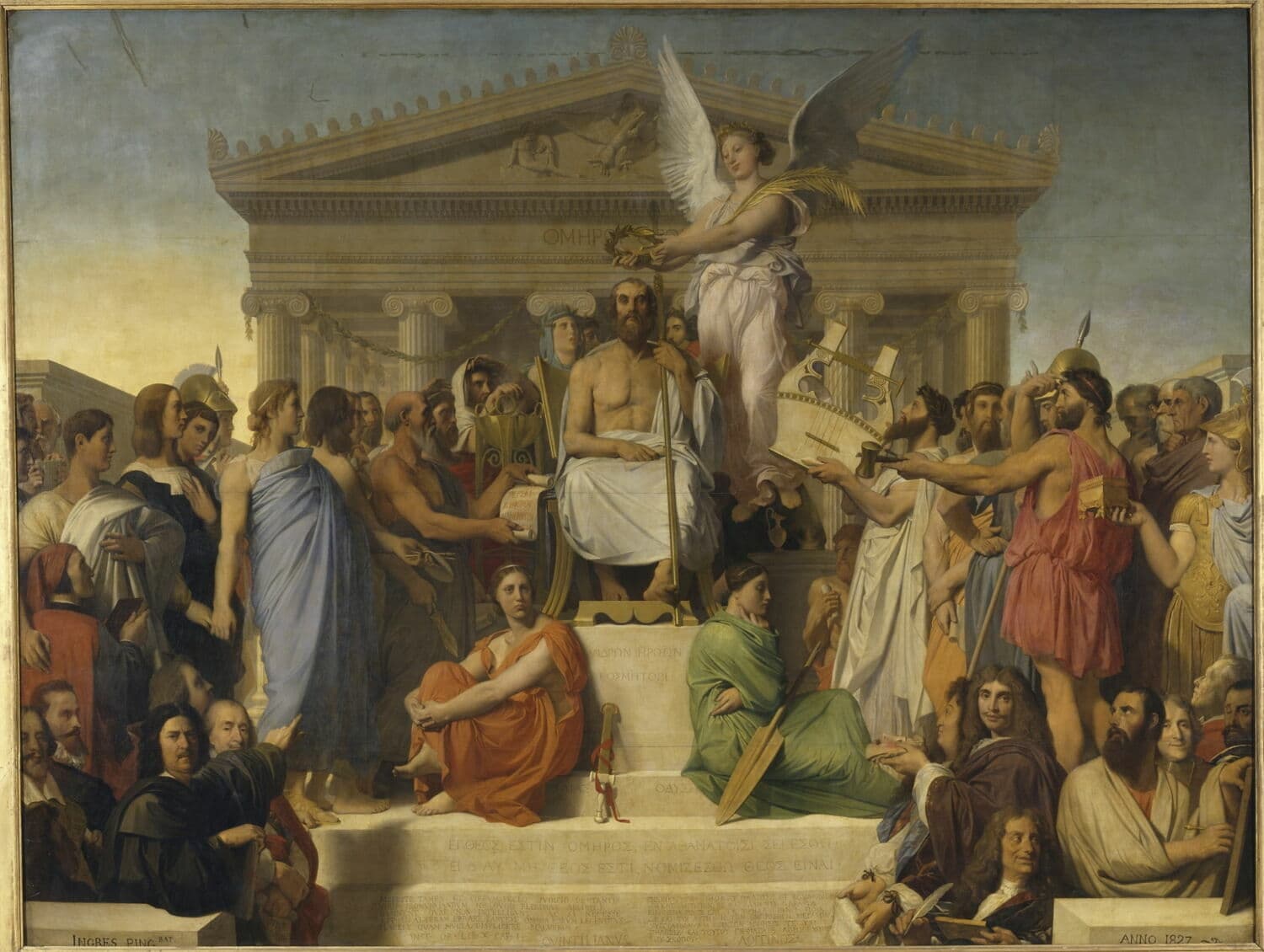
The Apotheosis of Homer
Jean-Auguste-Dominique Ingres, 1827 • Oil on canvas (large allegorical composition)
View more by Jean-Auguste-Dominique Ingres →Valuation Analysis
The 1827 "Apotheosis of Homer" by Jean‑Auguste‑Dominique Ingres (Musée du Louvre, inv. 5417) is a canonical, museum‑held masterpiece with no recorded modern public‑auction sale history. Because it is in the Louvre and treated as a national collection piece, it is effectively non‑circulating; however, for the narrow hypothetical scenario in which it were legitimately offered to the market, a reasoned valuation range is USD 30,000,000–80,000,000. This conclusion is based on a conservative comparable‑analysis approach that models the trophy demand for rare, monument‑scale 18th–19th‑century canvases and then adjusts for artist‑specific liquidity and legal constraints [1].
Methodology: with no direct sale precedent for this specific canvas, I used proximate public precedents for large museum‑quality historical works (notably high profile sales of canonical 18th–19th‑century pictures) to benchmark market capacity, then applied upward or downward adjustments for provenance, condition and transferability risk. Examples of relevant proxies include major museum‑quality sales that demonstrate buyer capacity for monumental European canvases in the high‑single to low‑double‑digit millions [3][2]. Ingres’s public‑auction record for works that do appear (drawings, small oils, occasional portraits) is materially lower because the best Ingres oils are overwhelmingly institutional, which depresses direct auction comparables.
Why the range: the lower bound (~USD 30M) is a conservative trophy premium above the best public proxies and reflects a situation with solid interest from institutions but limited private competition or minor condition/transferability issues. The upper bound (~USD 80M) describes an exceptional confluence: pristine condition, exhaustive provenance and exhibition history, clear exportability (no legal obstacle), and active, competitive interest from multiple major museums or well‑funded private purchasers prepared to pay a premium for a canonical Ingres history canvas. Such an outcome would be rare but within market capacity for a once‑in‑a‑generation museum grade lot.
Key value modifiers: the painting’s Louvre ownership and the French patrimony framework significantly restrict marketability and are the single greatest determinant of whether any valuation can be realized — transfers will typically be inter‑institutional, state‑approved or politically negotiated rather than open competitive auctions [1][4]. Condition and conservation history will materially affect realization: structural or restoration problems would depress value, while a documented, excellent conservation record supports the high end. Finally, the buyer universe (primarily museums and a few collector‑philanthropists) and the chosen sale mechanism (private treaty vs auction) will change timing, fees and likely price outcomes.
Practical next steps to refine or convert this range into a formal market valuation: confirm current legal/export status and any formal designation; obtain a full provenance and exhibition/publication report; commission a condition and technical report; and solicit preliminary, confidential interest from major institutional buyers and specialist dealers/auction departments. Until those steps are completed, the USD 30–80 million window should be treated as an illustrative, market‑condition contingent range rather than a transactional guarantee [1][2][3][4].
Key Valuation Factors
Art Historical Significance
High ImpactThe Apotheosis of Homer is one of Ingres’s major large‑scale allegorical statements: a salon‑scale, densely populated composition that articulates his academic‑classical ideals and occupies a central place in his oeuvre. As a canonical masterpiece it carries outsized cultural capital and scholarly attention, which elevates its desirability for major museums and high‑end collectors. Canonical status supports a sustained premium because it defines the work as a ‘collection‑making’ object—museums and leading collectors prize these works for institutional completeness and art‑historical narrative. That premium is the structural basis for the valuation ceiling and is therefore a primary driver of estimated market value.
Institutional Ownership & Legal Restrictions
High ImpactThe painting’s presence in the Musée du Louvre means it sits within the French national collections and under the legal framework that governs public‑domain cultural assets. French patrimony protections, export controls and potential 'trésor national' designation make sale highly constrained and often require government approval; museums can exercise preemption on lots and export licences can be withheld. These restrictions shrink the pool of eligible buyers, steer transactions toward inter‑institutional or state‑sanctioned channels, and materially affect price discovery. In practical terms, legal/institutional status is the single most important determinant of whether this valuation can be realized.
Market Rarity & Comparables
High ImpactBecause grand Ingres canvases rarely change hands, valuation must rely on proximate comparables: rare, monumental 18th–19th‑century works that have traded at auction or by private treaty. These comparables demonstrate that museum‑quality masterpieces in this sector can reach high‑single to low‑double‑digit millions, and they establish the market capacity for trophy purchases. The absence of direct Ingres oil precedents in public sales increases uncertainty but also supports a scarcity premium: when a canonical canvas does come to market, institutions and deep‑pocket private buyers can lift price materially above routine Ingres results.
Condition & Conservation
Medium ImpactA large 19th‑century oil’s physical state is a decisive value modifier. Issues such as structural weakness, tears, past heavy restoration, or varnish degradation can depress value sharply by increasing conservation costs and reducing insurability. Conversely, an excellent technical dossier (infrared/x‑ray documentation, limited, well‑documented interventions) reduces buyer risk and supports the high end of the estimate. Museums particularly demand robust conservation records before committing funds, so condition is a material but not overriding driver—an important limiter of final realization.
Buyer Demand & Market Context
Medium ImpactThe likely buyer universe is narrow: major public museums, a handful of global private collectors with museum‑grade collecting profiles, and specialist institutions. Institutional competition can push prices upward, but reputational and legal considerations often deter aggressive private bidders. Market cycles, institutional acquisition budgets, and the media/legal sensitivity of deaccessioning can either accelerate or stifle sale. Current trends—selective top‑end demand and active institutional purchasing—favor a stable to positive outlook for canonical works, but the constrained buyer pool tempers the pace and openness of price discovery.
Sale History
The Apotheosis of Homer has never been sold at public auction.
Jean-Auguste-Dominique Ingres's Market
Jean‑Auguste‑Dominique Ingres is an established, canonical 19th‑century French master whose market is characterized by high scholarly esteem and limited public‑market turnover at the top tier. Drawings and small studies are the most frequently traded material and commonly realise mid‑five to low‑six figures; by contrast, Ingres’s greatest salon canvases are predominantly museum‑held, producing a thin, trophy‑driven market when they do surface. This supply scarcity, combined with strong institutional demand, supports elevated valuations for any legitimately marketable major oil, but the lack of direct auction precedents injects uncertainty into precise pricing.
Comparable Sales
Madonna of the Rosary with Angels
Giovanni Battista Tiepolo
Large, museum-quality 18th-century altarpiece; demonstrates demand and price-capacity for rare monumental canvases comparable in scale/genre to Ingres's Apotheosis.
$17.3M
2020, Sotheby's New York
~$21.9M adjusted
Le melon entamé (The Melon)
Jean-Baptiste-Siméon Chardin
Rare canonical French masterwork sold in Paris (2024); useful upper-end proxy for what a museum-quality French painting can fetch at auction.
$28.8M
2024, Christie's, Paris
~$29.6M adjusted
Portrait de la comtesse de La Rue
Jean-Auguste-Dominique Ingres
One of the largest publicly reported Ingres auction results; indicates the public-market ceiling for Ingres works that actually appear in the open market (portrait, not a monumental history canvas).
$2.7M
2009, Christie's, Paris (Yves Saint Laurent / Pierre Bergé sale)
~$4.0M adjusted
Étude pour le Christ Enfant du Vœu de Louis XIII (oil study)
Jean-Auguste-Dominique Ingres
Directly connected oil study for a major composition; demonstrates realized prices for Ingres's oil studies and active museum preemption at Paris sales.
$102K
2024, Christie's, Paris (Maîtres Anciens sale)
~$105K adjusted
Study of a nude young man with a halo (study)
Jean-Auguste-Dominique Ingres
Example of the active market for Ingres drawings/studies (mid-five-figures); useful to show market tiers below large museum canvases.
$38K
2023, Christie's, New York
~$41K adjusted
Current Market Trends
Current market conditions favor best‑in‑class, museum‑quality works while supply remains constrained—especially for 19th‑century European masterpieces. Institutions continue to be active buyers and sometimes exercise preemptive rights, reducing availability on the open market. Collectors at the top end are selective; trophy purchases still occur but under heightened due diligence and cultural‑heritage scrutiny. For a Louvre‑held Ingres, these trends support strong theoretical demand but realistic barriers to sale and narrower actual buyer pools.
Sources
- Musée du Louvre — Collections: Homère déifié (L'Apothéose d'Homère), Inv. 5417
- Christie's press release — Maîtres Anciens: Peintures‑Sculptures (sale coverage, June 12 2024; Chardin headline)
- Sotheby's press release — Sotheby's Masters Week, New York (example Tiepolo sale)
- French Ministry of Culture — Museums and French cultural heritage (context on museums and patrimony law)