How Much Is Flatford Mill (Scene on a Navigable River) Worth?
Last updated: May 4, 2026
Quick Facts
- Methodology
- comparable analysis
Tate Britain holds Flatford Mill (Scene on a Navigable River) (acc. N01273), so there is no modern sale record and any market price is hypothetical. Based on comparable Constable results (museum-quality six‑foot canvases at the top end and strong mid‑six‑figure pricing for studio sketches), a defensible conditional auction range if this Tate-quality, autograph canvas were offered today is roughly USD 5,000,000–15,000,000.
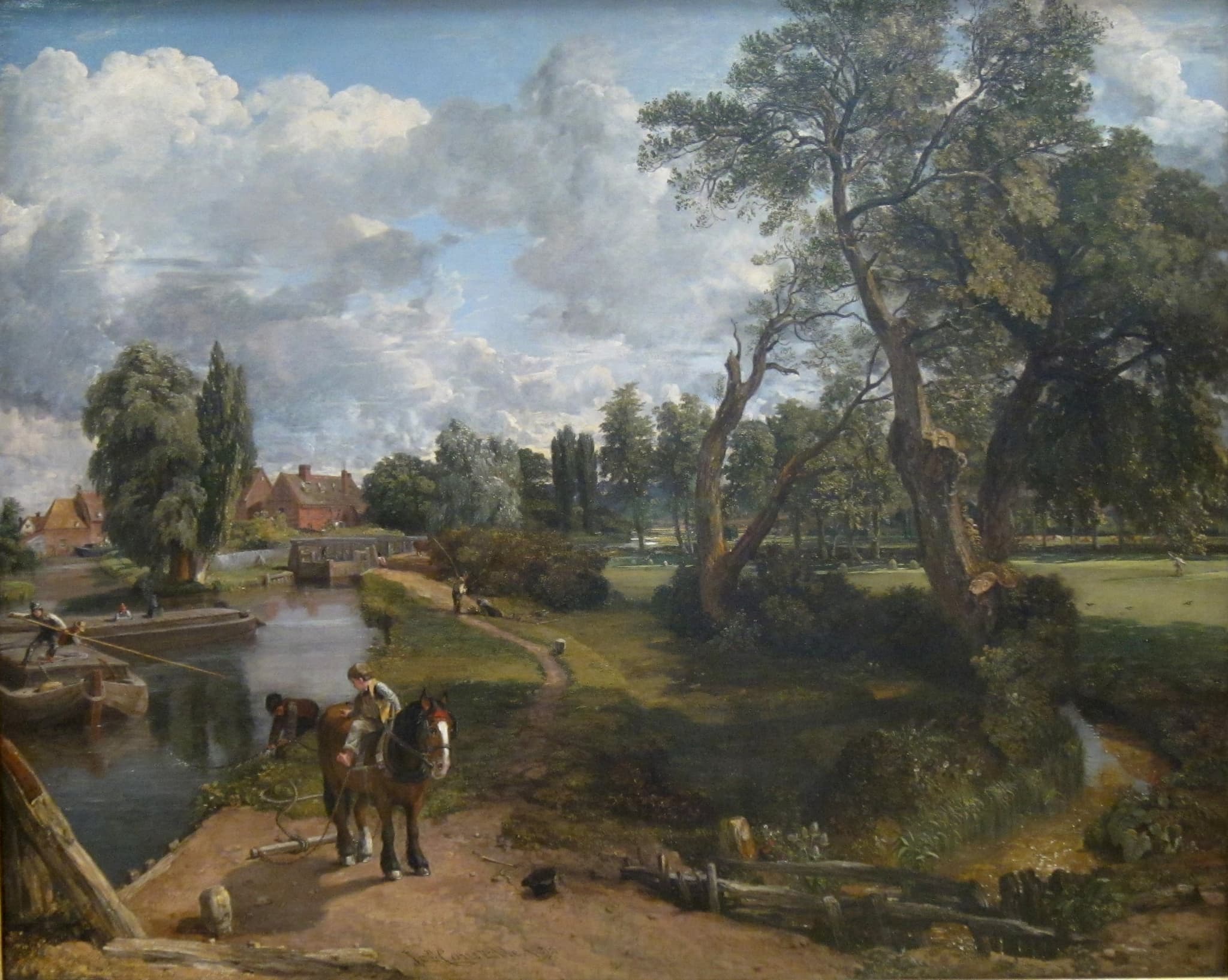
Flatford Mill (Scene on a Navigable River)
John Constable • Oil on canvas
View more by John Constable →Valuation Analysis
Identification and market status. Flatford Mill (Scene on a Navigable River) corresponds to the Tate Britain painting (accession N01273) and was bequeathed to the nation by Isabel Constable in 1888; as a museum-held work it has not been offered at auction in the modern market and therefore carries no realised sale price.[1] Any monetary figure below is a conditional, hypothetical market valuation that assumes the painting is an autograph, finished oil of exhibition scale and quality and that it were legally and practically available to a buyer.
Comparables and anchoring. The market ceiling for a rare, museum-quality Constable is anchored by The Lock (Christie’s, London, July 2012), which sold for £22,441,250 (reported ~USD 35.2M) and demonstrates the top‑end potential for a large, canonical Constable canvas.[2] At the other end, high-quality oil sketches and cloud studies have continued to attract competitive bidding in specialist and regional sales, routinely trading in the mid‑six‑figure USD band — recent examples demonstrate how rediscovered studio works can outperform expectations.[3] These two poles — scarce, large, autograph finished canvases and active demand for sketches — frame a realistic market band for Flatford-subject works.
Why USD 5–15 million. If the picture is a large, autograph, museum-quality oil with robust provenance, catalogue and exhibition history, it would sit toward the upper part of the range because institutions and blue‑chip private collectors place a premium on canonical Constable works. If instead the work is a smaller studio picture, later variant, or a work of uncertain attribution or with condition issues, value would be materially lower. The USD 5–15M band reflects those two outcomes: it is conservative relative to the absolute top‑lot benchmark but represents realistic expectations for an important, saleable Flatford that is comparable to other high‑quality, market‑grade Constables.
Key uncertainties and next steps. Attribution, physical scale and finish, conservation status, and documentary evidence (catalogue raisonné entry, exhibition and publication history) are the decisive variables. To refine or convert this conditional valuation into a sale estimate would require high‑resolution recto/verso images, a conservation report, technical imaging (X‑ray/IRR), pigment/canvas analysis, and specialist input from senior Old Master/British painting specialists at Christie’s or Sotheby’s. Because the Tate painting is institutional property, practical market relevance is limited unless a different, privately held variant is identified.
Conclusion. The Tate Flatford Mill is of high cultural and scholarly value and, if hypothetically placed on the open market as an autograph, museum‑quality canvas, a defensible conditional auction range is USD 5,000,000–15,000,000. The estimate should be treated as conditional pending technical confirmation of authorship, measurement, conservation status and formal provenance documentation.[1][2][3]
Key Valuation Factors
Art Historical Significance
High ImpactThe Flatford/Dedham Vale group is central to John Constable's reputation and to the 19th‑century British landscape tradition. While this specific composition is less instantly famous than The Hay Wain, it belongs to the canonical Flatford cycle that scholars and curators treat as foundational to Constable's mature approach to natural light, cloud study and rural composition. Museum ownership (Tate accession) amplifies scholarly interest and institutional demand, which in a market scenario would attract both museum‑level buyers and deep‑pocketed private collectors. That cultural weight translates into a material market premium for autograph, finished canvases with documented provenance and exhibition history.
Attribution & Authenticity
High ImpactA decisive variable is whether the work is an autograph Constable, a studio variant, or a later copy. Autograph status elevates value by orders of magnitude compared with works by followers or workshop assistants. Technical verification (infrared reflectography, X‑radiography, pigment analysis) and connoisseurship, plus inclusion in authoritative catalogue raisonné entries, are essential to establish authenticity. Without these certainties, buyer confidence and institutional interest diminish sharply and the price drops accordingly; a verified autograph with catalogue/curatorial backing sits at the top of the stated band.
Provenance & Exhibition History
High ImpactProvenance materially affects market value. The Tate accession (bequeathed by Isabel Constable, 1888) provides exceptional institutional provenance and a transparent ownership history that strongly supports authenticity and scholarly recognition. Exhibition loans, catalogue citations and published literature further enhance marketability and premium. For private‑held works, continuous, well‑documented provenance and inclusion in exhibition catalogues drive demand; gaps or unverified histories reduce value and can lengthen time to sale.
Condition & Conservation
Medium ImpactPhysical condition is a practical determinant of market value. Original, stable paint surfaces and minimal historic restoration support higher prices; heavy overpainting, aggressive relining or structural instability materially reduce desirability and buyer confidence. A museum‑conserved canvas such as the Tate picture typically benefits from ongoing professional care, which preserves market replacement value; however, an independent conservation condition report is required to quantify any premium or discount in a sale scenario. Conservation interventions that improve legibility without compromising originality can raise realised prices.
Market Demand & Comparables
High ImpactConstable's market shows a bifurcation: extremely rare, museum‑quality finished canvases (top‑lot benchmark: The Lock) command multi‑million sums, while high‑quality sketches and studies more commonly trade in the mid‑six‑figure band. Recent rediscoveries and specialist sale successes illustrate sustained appetite for authentic Constable material. The balance of scarcity (large canvases rarely appear) and collector/institutional demand underpins the chosen conditional range. Comparable recent results and the 2012 Christie's benchmark were used to calibrate the USD 5–15M estimate.
Sale History
Flatford Mill (Scene on a Navigable River) has never been sold at public auction.
John Constable's Market
John Constable is a blue‑chip, canonical 19th‑century British landscape artist. The artist's auction record is anchored by The Lock (Christie’s, London, 2012 — £22.44M / ~USD 35.2M), which defines the upper market ceiling; conversely, rediscovered oil sketches and cloud studies have fetched mid‑six‑figure prices in specialist and regional sales, demonstrating active demand at that tier. Institutional interest, scholarship and exhibition programming consistently support long‑term value, but realized prices depend heavily on attribution, scale, condition and provenance. Supply of large autograph canvases is very limited, which concentrates buyer interest and supports premium valuations for fresh examples.[2][3]
Comparable Sales
The Lock
John Constable
Large, museum-quality finished Constable canvas and the artist's auction record; serves as the top-end benchmark for major autograph six-foot works.
$35.2M
2012, Christie's London (Old Master & British Paintings, 3 July 2012)
~$45.8M adjusted
Cloud Study
John Constable
High-quality small study by Constable; indicates active market demand and pricing for studies/cloud sketches, useful for valuing smaller works on the Flatford subject.
$886K
2022, Sotheby's London (29 June 2022)
~$930K adjusted
Dedham Vale (plein-air sketch)
John Constable
Small sketch of the Dedham Vale/Flatford area—close subject relevance though smaller scale and finish; a recent market example for rediscovered regional sketches.
$415K
2025, Tennants, Leyburn (15 March 2025)
Rediscovered oil sketch (Guernsey find)
John Constable
Example of a small rediscovered Constable oil sketch sold in a regional specialist sale; shows how attribution/rediscovery can generate strong interest and outsized prices for small works.
$245K
2023, Martel Maides (September 2023)
~$252K adjusted
Current Market Trends
Demand is currently concentrated at two ends: rare, museum‑quality finished canvases (infrequently offered) and high‑quality studio sketches/drawings that appear more often and trade in the mid‑six‑figure range. Rediscoveries and anniversary/exhibition programming boost short‑term interest. Overall, the market is selective but robust for canonical Constable material; timing (major exhibitions) and clear attribution materially affect outcomes.