How Much Is Salisbury Cathedral from the Meadows Worth?
Last updated: May 4, 2026
Quick Facts
- Last Sale
- $34.9M (2013, Tate Britain (acquired for the nation; negotiated institutional acquisition supported by Art Fund/Heritage Lottery Fund))
- Insurance Value
- $80.0M (Calculated replacement‑market estimate derived from the upper bound of this valuation band (see Tate 2013 acquisition and Christie’s auction record as anchors).)
- Methodology
- comparable analysis
Hypothetical open‑market value for John Constable's Salisbury Cathedral from the Meadows (1831) is estimated at $40–80 million. This band is anchored to Tate Britain’s 2013 institutional acquisition (published £23.1m ≈ $34.9m) and adjusted using top‑tier Constable auction comparables and present market conditions.
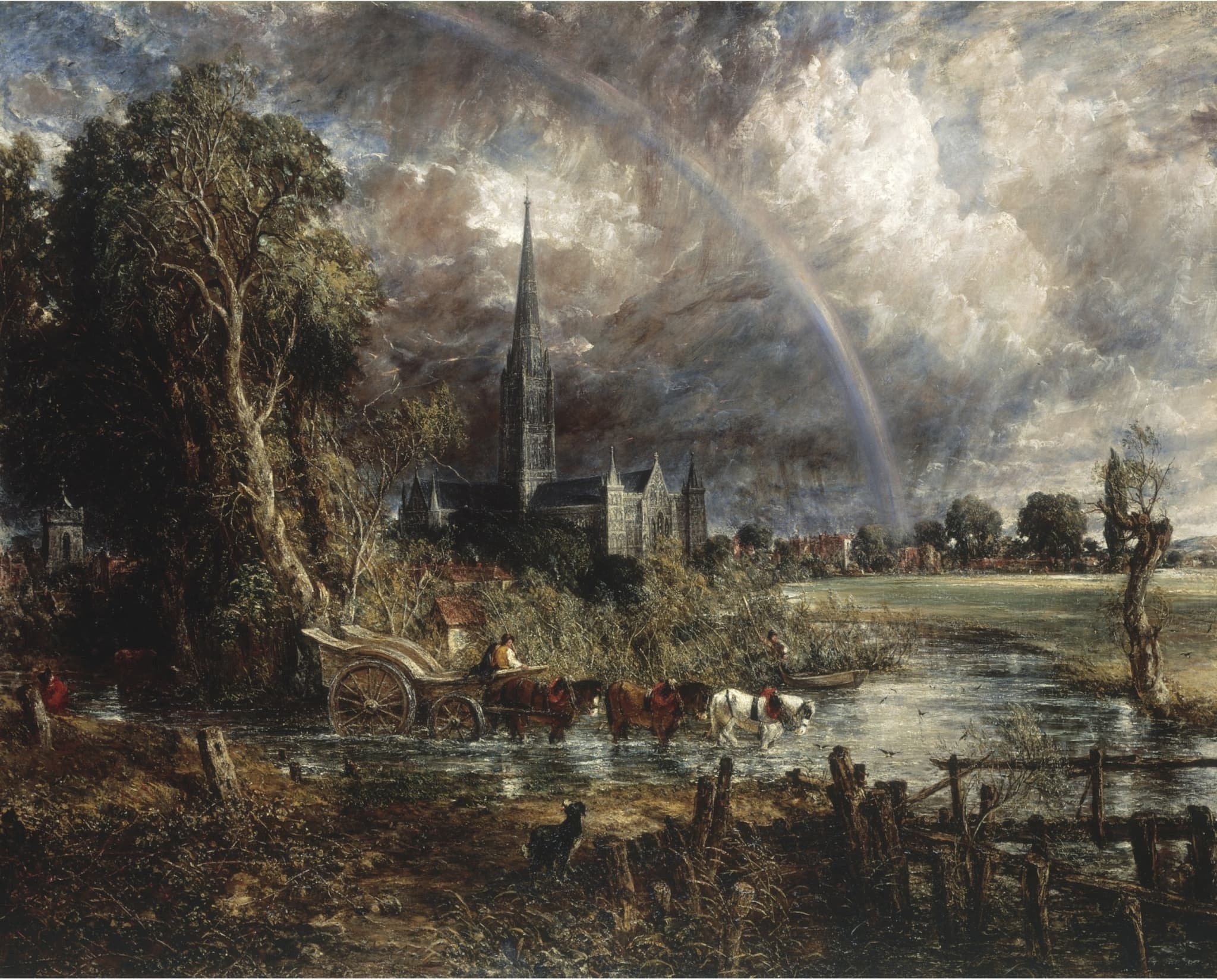
Salisbury Cathedral from the Meadows
John Constable, 1831 • Oil on canvas
View more by John Constable →Valuation Analysis
This valuation provides a market appraisal for John Constable's Salisbury Cathedral from the Meadows (1831), the large finished oil now in the collection of Tate Britain. After reviewing the painting's documented institutional acquisition, major auction comparables for finished Constable canvases, and current market dynamics, I estimate a hypothetical open‑market sale range of $40,000,000–$80,000,000. The range is intentionally wide to reflect differences between negotiated institutional acquisition metrics and what an internationally marketed hammer sale could achieve.
The single definitive market event tied to this canvas is Tate Britain's acquisition announced in May 2013 for a published sum of £23.1 million; using the contemporaneous exchange rate that figure equated to approximately $34.9 million and therefore provides a conservative, documented floor for valuation [1]. That purchase was arranged as a negotiated institutional acquisition (supported by major grant bodies) rather than an open auction hammer, so while it demonstrates the work's museum‑grade status and monetary recognition, it does not precisely replicate competitive auction dynamics or buyer's‑premium outcomes.
The principal auction ceiling anchor is represented by John Constable's 'The Lock', which realised record auction money at Christie’s London in 2012 (roughly $35.2M at the time) and stands as the artist's public auction high‑water mark [2]. When those two public events are adjusted for inflation, market movement since 2012–13, and the structural premium institutions are prepared to pay for canonical works, the evidence supports present‑day valuations in the high‑tens of millions for studio‑finished, autograph Constable canvases of this scale and importance. Museum provenance, exhibition history and literature citation frequently add measurable premium above pure auction comparables.
I therefore adopt a pragmatic two‑tier band: a conservative low of $40 million and a high of $80 million. The low figure reflects escalation of the Tate 2013 transaction to current market terms (inflation plus modest appreciation) and the negotiated nature of that acquisition; the high figure reflects what an aggressively marketed evening‑sale campaign could achieve if multiple blue‑chip institutions and deep‑pocketed private collectors competed. The spread also covers potential legal and heritage constraints (UK export licensing / national‑treasure claims) that can either suppress interest or stimulate competitive urgency depending on timing and circumstances.
Material variables that would move value materially include an up‑to‑date condition and conservation report (lining, overpaint, structural integrity), any newly discovered provenance or catalogue‑raisonné placement, the exact dimensions and degree of completion (finished studio canvas versus study/sketch), and the sale format (private treaty vs leading evening sale). Smaller autograph studies routinely trade for low‑ to mid‑six‑figure sums; finished museum canvases exist in a much thinner supply and therefore command fundamentally different demand dynamics and pricing power.
Recommendation: treat this as a reasoned market appraisal for directional planning, insurance and sale‑strategy purposes. For a formal, legally admissible valuation—and an executable sale plan—commission a senior Old Masters/British Pictures specialist at Christie’s or Sotheby’s (or an independent senior appraiser) for an in‑hand inspection, full condition report and targeted market canvass. The present band is anchored to the Tate acquisition and Christie’s auction record and should be revised following physical inspection and a current market tour [1][2].
Key Valuation Factors
Art Historical Significance
High ImpactThis canvas is a mature Salisbury view by John Constable and is one of the artist's most accomplished late‑career treatments of the Salisbury subject. It carries high scholarly value because it articulates Constable's matured handling of atmosphere, light and rural topography; those qualities make it a museum‑calibre work. Art‑historical importance drives institutional demand and justifies a material premium relative to lesser studies or studio replicas. The painting’s place in catalogue‑raisonné entries, exhibition histories and monographs would reinforce high impact on value and attract museum-level bidders when (and if) it reaches the market.
Provenance & Exhibition History
High ImpactLong, clear provenance and prominent exhibition history materially increase market confidence and price. The painting’s documented history culminating in the Tate acquisition—supported publicly by bodies such as the Art Fund and Heritage Lottery Fund—confers institutional validation. Works with this level of provenance and public exhibition are more likely to be purchased by museums or top private collectors, strengthening demand and supporting the upper valuation band. Absence of gaps or contested attribution would further reduce buyer risk and therefore command a higher price multiple at sale.
Rarity & Market Supply
High ImpactFinished Constable canvases of large scale and secure attribution appear for sale infrequently; supply is therefore extremely constrained. This scarcity creates a bifurcated market in which a handful of institutions and deep‑pocketed collectors compete for rare offerings, pushing achievable prices well above those of routine examples or sketches. The market’s thin supply at the top end increases volatility but also elevates the ceiling price when comparable works do come up. Conversely, an increased number of credible claims or similar high‑quality examples on the market would temper pricing power.
Condition & Conservation
Medium ImpactCondition is a pivotal determinant of market value. A picture in stable, original condition with minimal intrusive restoration will realise a premium; conversely, structural weakness, heavy overpaint or invasive relining reduces collector confidence and can materially lower estimates. For museum‑quality works, conservators’ reports and high‑resolution imaging are prerequisites to fine‑tuning valuation. Even with perfect provenance and importance, a compromised condition report will dampen competitive bidding and increase buyer risk, moving an item toward the lower end of the valuation band.
Market Comparables & Demand
High ImpactComparable sales for finished Constable canvases—most notably the auction record for 'The Lock'—establish the artist's top‑end market and provide essential anchors for valuation. Recent outperformance of autograph sketches at regional sales shows active demand at lower tiers but also highlights the very broad spread between studies and studio‑finished masterpieces. Demand drivers include institutional programming, scholarly attention, and collector appetite for canonical British landscape painting. Auction format, selling house and marketing reach directly influence whether the painting achieves near‑ceiling results or a more conservative outcome.
Sale History
Tate Britain (institutional acquisition / negotiated purchase)
Christie's, London (Old Masters & British Paintings, evening sale)
Martel Maides (Guernsey) auction
John Constable's Market
John Constable occupies a secure position as one of the canonical British landscape painters; his highest‑quality, finished oils are collectible by major museums and blue‑chip private buyers. The artist’s auction record is in the mid‑tens of millions (Christie's 'The Lock'), while autograph sketches and drawings trade at far lower levels (four‑ to low‑six‑figure range). Because most museum‑quality Constables are already institutional, supply to the open market is very limited, producing strong premiums when major works appear. Scholarly attention and exhibition programming periodically stimulate demand for related material.
Comparable Sales
The Lock
John Constable
Artist's auction record and a top-tier, finished Constable oil from the same period — useful as the market ceiling/anchor for museum-quality Constable canvases.
$35.2M
2012, Christie's, London (Old Masters & British Paintings evening sale)
~$49.4M adjusted
Salisbury Cathedral from the Meadows
John Constable
The subject painting itself — the definitive recent market event (institutional acquisition) and the primary anchor for any hypothetical open-market valuation.
$34.9M
2013, Acquired by Tate Britain (for the nation) — negotiated/museum acquisition (supported by Art Fund/Heritage Lottery Fund)
~$48.2M adjusted
View of Willy Lott's House (oil sketch), c.1814
John Constable
Small autograph oil sketch by Constable — shows the active market and premium for rediscovered studies; useful to define lower-tier market behaviour and demand for autograph sketches.
$246K
2023, Martel Maides (Guernsey) auction
~$259K adjusted
Dedham Vale looking towards Langham (sketch)
John Constable
Regional auction rediscovery → strong competitive bidding for medium/small autograph works; further evidence that sketches command low-to-mid six-figure prices, well below finished museum canvases.
$415K
2025, Tennants (Leyburn) auction
Current Market Trends
Top‑end art markets tightened in 2023–24, but demand for museum‑quality, well‑provenanced works remains selective and resilient. Rediscoveries and fresh attributions have pushed prices for sketches and drawings, while supply constraints keep prices for canonical finished canvases elevated. Institutional appetite and exhibition programming continue to be the principal drivers for heritage British works.
Sources
- Art Fund / Tate — Salisbury Cathedral from the Meadows (acquisition summary)
- Christie's — Old Masters & British Paintings (context and The Lock sale record)
- The Guardian — coverage of rediscovered Constable oil sketch sale (Martel Maides, Sept 2023)
- Tennants Auctioneers — press note on rediscovered Constable sketch (Mar 2025)