How Much Is The Cornfield Worth?
Last updated: May 4, 2026
Quick Facts
- Methodology
- comparable analysis
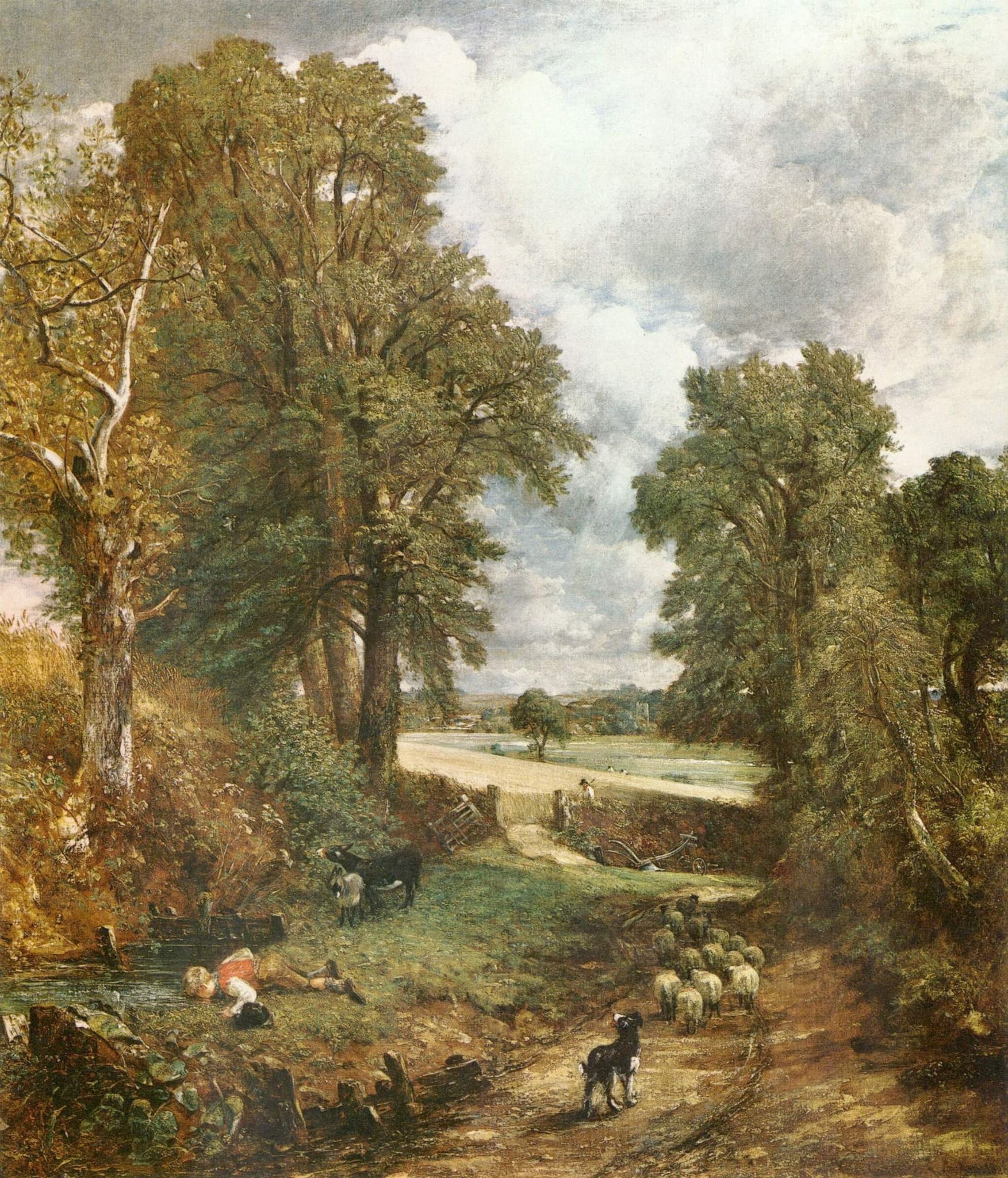
The Cornfield (1826) is a museum‑held, mature Constable (National Gallery, NG130) and therefore not market‑available. If hypothetically offered, a market‑based, conservative working estimate is USD 10,000,000–30,000,000, based on major Constable auction benchmarks, rarity, and institutional ownership.
Valuation Analysis
Overview and conclusion: The Cornfield (1826), accessioned at the National Gallery (NG130), is a museum‑grade Constable and has no modern auction history; any market figure is therefore hypothetical and contingent on an extraordinarily unlikely deaccession [1]. Using the artist’s strongest recent auction comparables and the painting’s institutional stature, a cautious working sale range is USD 10,000,000–30,000,000.
Comparable evidence: The top public benchmark for Constable is Christie’s sale of The Lock (1824), which realised £22,441,250 in July 2012 and established the modern auction ceiling for this artist’s finished large works [2]. Other major full‑scale studio works and six‑foot sketches have sold in the mid‑to‑high millions while important oil sketches have realised mid‑single‑millions. These outcomes demonstrate that the market will support multi‑million prices for museum‑quality Constables, but the exact placement within that band depends on condition, documentation and the competitive environment.
How the band is derived: The lower bound (≈USD 10M) reflects a conservative scenario in which buyer competition is muted (domestic retention pressures, restricted export, or unforeseen condition/attribution issues). The upper bound (≈USD 30M) reflects a contested sale environment—marquee evening auction, strong international bidder interest, exceptional exhibition/publication history and clean technical/condition reports—without presuming the extraordinary premium required to exceed the artist’s known public ceiling in GBP. The range therefore brackets realistic market outcomes while acknowledging that outlier circumstances could push a final price outside it.
Key contingencies: The single largest variables are museum ownership/deaccession policy (which normally prevents market entry), UK cultural‑property and export controls, and a full condition/conservation report. Provenance and exhibition history materially affect institutional demand and private‑buyer confidence. Transactional costs (buyer’s premium, commissions), currency moves and the venue (evening sale vs. private treaty) also affect net realisations.
Practical next steps to refine value: confirm National Gallery accession and provenance, obtain a full condition/conservation report, assemble exhibition/publication history and soliciting confidential market feedback from leading salerooms or institutional appraisers. With those inputs the working band can be tightened or adjusted upward or downward.
Key Valuation Factors
Art Historical Significance
High ImpactThe Cornfield is a mature, fully realised pastoral composition from Constable’s prime (painted Jan–Mar 1826) and is widely reproduced in scholarship and exhibition material. It sits just below the artist’s single most iconic image (The Hay Wain) but is nonetheless a canonical example of his late‑mature landscape idiom: careful handling of light, textured impasto in foliage, and a complex, lived‑in rural narrative. Works of this quality carry strong curatorial and market weight because they exemplify the artist’s mature technique and subject matter; that standing supports a high impact on valuation, especially when paired with early institutional acquisition and continuous public visibility.
Rarity / Market Availability
High ImpactMajor finished Constable oils of museum quality rarely appear on the open market because many were acquired by public collections in the 19th and early 20th centuries. The Cornfield has been in the National Gallery since 1837, making deaccession a remote probability. Scarcity raises potential value if offered, but institutional custody simultaneously eliminates routine market evidence and means any price is hypothetical. When true blue‑chip examples do come up, they attract concentrated institutional and private capital, often producing competitive bidding that lifts realisations above what smaller, more frequent categories (sketches, drawings) achieve.
Comparable Auction Results
High ImpactAuction benchmarks set the numerical frame: The Lock (1824) realised a record price for Constable at Christie’s in 2012 and demonstrates the market ceiling for the artist’s best finished canvases. Other large studio works and full‑scale sketches have achieved mid‑to‑high millions, while important oil sketches can sell for mid‑single‑millions. These public results form the principal empirical basis for the USD 10–30M working range, with the caveat that house, sale format and timing (and buyer interest) cause meaningful dispersion around those anchors.
Condition & Conservation
Medium ImpactCondition is a determinative but variable factor. Museum care strongly suggests stable condition and documented conservation, which supports higher valuations; nonetheless, specific conservation history (historic retouching, relining, varnish degradation) can necessitate discounts. Because the painting has been in institutional custody since the 19th century, the presumption is of well‑recorded interventions, but a precise valuation requires review of a current technical dossier (X‑radiography, IRR, pigment analysis and conservation reports) to confirm structural and surface integrity.
Legal & Institutional Constraints
High ImpactUK legal frameworks, museum deaccession policies and cultural‑property considerations create powerful constraints. Even if a museum considered deaccession, public scrutiny, export licensing and potential national‑treasure interventions can limit international bidding and lower competitive tension. Conversely, constrained supply can increase bidder urgency among eligible buyers. These legal and institutional realities therefore have a high impact on marketability and on whether any hypothetical valuation could be realised in practice.
Sale History
The Cornfield has never been sold at public auction.
John Constable's Market
John Constable is a canonical 19th‑century British landscape painter whose top public auction results are concentrated in a few rare, large finished canvases and full‑scale sketches. The artist’s auction ceiling was established by a single marquee sale in 2012; subsequently, rediscovered sketches and drawings have produced volatile, frequently out‑of‑estimate results in the mid‑six‑figure to low‑million range. Institutional ownership of many major works keeps supply very thin, meaning that when museum‑quality Constables appear they can command multi‑million dollar prices, but the market is driven by a small number of comparables and is therefore episodic and sensitive to context.
Comparable Sales
The Lock (1824)
John Constable
Artist's modern auction record; large finished six‑foot picture and the market ceiling for major Constables — directly relevant for top‑tier valuation.
$35.2M
2012, Christie's, London
~$47.5M adjusted
View on the Stour near Dedham (full‑scale six‑foot sketch)
John Constable
Large full‑scale (six‑foot) Constable sold at major evening sale — closest market analogue in scale and period, showing the strong demand for six‑foot studio/final works.
$18.9M
2016, Christie's, London
~$22.3M adjusted
Salisbury Cathedral from the Meadows (oil sketch)
John Constable
Important oil sketch of a major subject realised at mid‑single‑millions — useful to calibrate expectations for significant sketches and rediscovered oils below the six‑foot finished tier.
$5.2M
2015, Sotheby's, New York
~$6.2M adjusted
Dedham Vale looking towards Langham (previously unrecorded sketch)
John Constable
Recent rediscovered sketch that outperformed estimates — shows strong market appetite for fresh attributions/provenance but at a much lower price scale than major oils.
$415K
2025, Tennants, Leyburn
Willy Lott's House / related oil sketch (regional sale)
John Constable
Rediscovered oil sketch in a regional sale — another data point showing mid‑to‑upper six‑figure outcomes for sketches vs. multi‑million results for large finished works.
$245K
2023, Martel Maides, St Peter Port
~$257K adjusted
Current Market Trends
As of mid‑2026 the market shows renewed interest in Constable driven by anniversary programming and rediscoveries; works on paper and oil sketches have been especially liquid and headline‑making. Top‑tier finished oils remain scarce, keeping the ceiling intact but making realized prices highly dependent on single‑lot dynamics, institutional interest, and the timing/venue of a sale.
Sources
- National Gallery — The Cornfield (NG130) object entry
- Christie’s — The Lock (1824) sale record, 3 July 2012
- Christie’s press — View on the Stour near Dedham (full‑scale sketch) results, 30 June 2016
- Forbes coverage — Sotheby’s / rediscovered Old Masters (includes Salisbury Cathedral from the Meadows report), Jan 2015