How Much Is The Lock Worth?
Last updated: May 4, 2026
Quick Facts
- Last Sale
- $35.2M (2012, Christie's London)
- Methodology
- comparable analysis
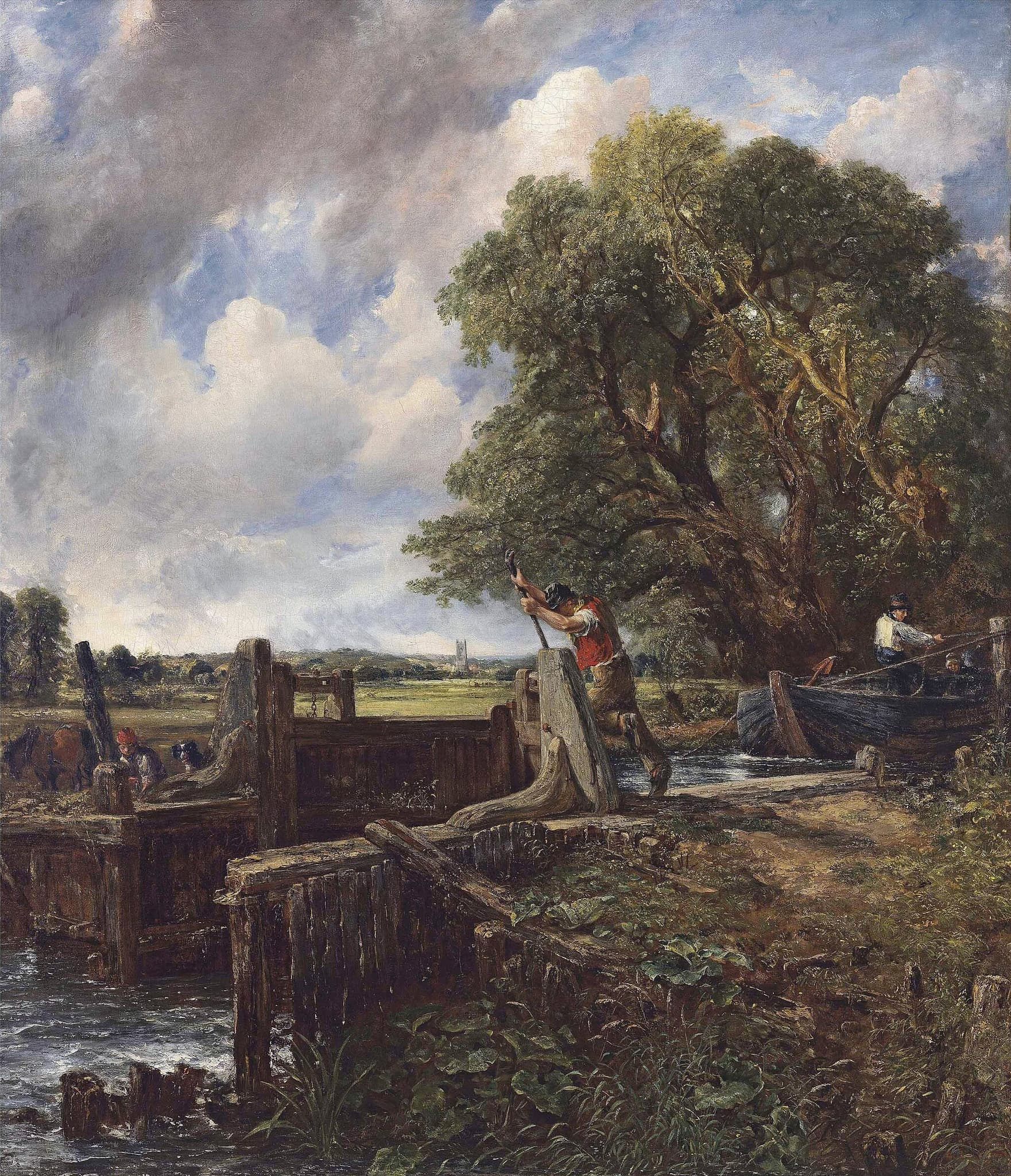
Based on direct auction comparables for Constable’s composition The Lock and current market context, a finished museum‑quality six‑footer with secure attribution and strong provenance is reasonably estimated at $20,000,000–$40,000,000. Variants, studies or works with uncertain provenance/condition fall well below this band.
Valuation Analysis
Valuation conclusion: Using a comparables‑based approach, I estimate a present market value for a finished, museum‑quality six‑footer of John Constable’s The Lock at $20,000,000–$40,000,000. This band assumes a securely attributed, large finished oil from c.1824 with good condition, catalogue raisonné entry and a solid provenance/exhibition record; materially different circumstances (smaller scale, study, heavy restoration or unclear attribution) will place the work outside this range.
The principal market anchor is the Morrison/Thyssen vertical version that established the artist’s auction record when it sold at Christie’s London on 3 July 2012 for £22,441,250 (reported ≈ $35.21M). That sale demonstrates the top‑end capability for a museum‑quality, well‑provenanced finished Lock and therefore functions as a ceiling case for directly comparable objects [1]. The 2012 lot carried exceptional provenance (bought from the 1824 Royal Academy exhibition by James Morrison) and a long museum loan history; both factors materially elevated its realised price.
A second high‑quality finished version, the so‑called Foster picture, sold at Sotheby’s London in December 2015 for £9,109,000 (reported ≈ $13.7M). That result shows finished mature variants without the Morrison provenance still command multi‑million sums in the low‑to‑mid tens of millions when condition and documentation are strong [2]. By contrast, oil sketches, small studies and copies consistently trade in the low six‑figure to low‑seven‑figure bands.
Synthesis: the mid‑point of the $20–$40M band recognises the 2012 record as a direct precedent but moderates it to reflect (a) market volatility since 2012, (b) the importance of confirmed attribution and technical integrity, and (c) the fact that only a very small buyer/institutional pool will compete at the very top. If the work presented is the Morrison/Thyssen canvas itself or a canvas of truly equivalent size, provenance and state, offers at the top of this band (and in some cases above) are plausible; if it is a high‑quality but secondary finished version a price near the lower half of the band is more likely.
Next steps to refine the estimate: supply high‑resolution recto/verso photographs, exact dimensions, a recent condition/conservation report, full provenance and exhibition/publication citations, and any available technical imaging (infrared/UV/X‑ray). With those materials a specialist at Christie’s or Sotheby’s or an independent Constable curator can provide a firm presale/insurance estimate and advise on the optimal market channel.
Key Valuation Factors
Art Historical Significance
High ImpactThe Lock is a composition from Constable's mature period (c.1824), a phase responsible for his largest and most celebrated canvases. Works of this period have outsized cultural and museum significance within British Romantic landscape painting; large, finished 'six‑footers' are treated as exhibition centrepieces and often receive permanent institutional acquisition. If the object is the exhibited 1824 canvas or an equivalent finished version, that status confers a clear premium in both institutional and private markets. For collectors the picture is not merely decorative but emblematic of Constable's mature practice, elevating competitive bidding when a well‑provenanced example becomes available.
Provenance & Exhibition History
High ImpactProvenance is decisive. The Morrison/Thyssen picture’s direct purchase from the 1824 Royal Academy and its long museum loan history materially increased buyer confidence and drove the 2012 record. Secure chains of ownership, early sale documentation, and prominent exhibition citations in major institutions and catalogues raisonnés translate directly into both higher estimates and stronger sale outcomes. Conversely, gaps in provenance or late, ambiguous attributions produce meaningful discounts and can relegate a work to specialist channels rather than the evening sale market. Publication in scholarship and inclusion in high‑profile exhibitions are strong value multipliers.
Condition & Technical State
High ImpactTechnical integrity is a value pivot. Relining, heavy restoration, inpainting, lifted craquelure or invasive overpainting materially reduce market value and buyer competition; conversely, original paint surfaces with conservative conservation history, strong craquelure patterns and stable supports support top prices. Infrared and x‑ray imaging that confirm an original composition, established pentimenti or characteristic technique increase attribution certainty and market confidence. Auction houses and institutions will base presale estimates heavily on a recent conservator’s report and technical imaging, so condition findings can move an estimate by tens of percent.
Comparable Auction Evidence
High ImpactAuction history supplies the objective framework. The 2012 Christie’s Morrison/Thyssen result (~$35.2M) is the direct top comparable and demonstrates the potential ceiling for a finished, museum‑quality Lock [1]. The 2015 Sotheby’s Foster sale (~$13.7M) illustrates a lower but still robust market for other finished versions [2]. Recent regional rediscoveries and sketch results show active demand but in much lower bands. Together, these comparables justify a valuation band where exceptional provenance and condition can approach the top end and lesser finished variants sit nearer the lower half.
Rarity & Supply Dynamics
Medium ImpactSupply of top‑quality Constable six‑foot oils is extremely limited because major examples reside in public collections or long‑term private holdings. Scarcity supports strong prices when suitable examples appear, but it also concentrates buyers to a small institutional/private pool; this can cause price volatility between sales depending on which buyers are active. Market appetite is enhanced by exhibitions and scholarship cycles, but the infrequency of offerings makes timing and marketing critical to achieving top prices.
Sale History
Royal Academy exhibition (London)
Sotheby's London (Walter Morrison picture settlement)
Christie's London (Old Master & British Paintings Evening Sale)
Sotheby's London (Old Master & British Paintings Evening Sale)
John Constable's Market
John Constable is a canonical figure of British Romantic landscape painting; his most important oils are museum mainstays and seldom appear on the market. When top‑quality finished canvases do come up they attract institutional interest and can set multi‑million results—the artist record was set by The Lock (Christie’s, 2012). At the same time, studies, sketches and rediscoveries trade more frequently and usually in the low six‑figure to low seven‑figure range. Overall demand is strong for secure attributions and well‑documented works, and scarcity of blue‑chip canvases supports outsized prices for top examples.
Comparable Sales
The Lock (Morrison / Thyssen vertical version)
John Constable
Principal Morrison/Thyssen version — identical composition, top provenance (bought 1824 by James Morrison), long museum loan history; this is the artist's auction record and the primary direct comparable.
$35.2M
2012, Christie's London (Old Master & British Paintings Evening Sale)
~$48.3M adjusted
The Lock (Morrison version — earlier sale)
John Constable
Same Morrison picture sold previously; useful for showing historical pricing and appreciation for the identical work — a direct historical comparable.
$16.7M
1990, Sotheby's London (Walter Morrison picture settlement, lot 128)
~$40.3M adjusted
The Lock (Foster version)
John Constable
Different but closely related finished vertical version by Constable with strong provenance (William Orme Foster) and museum‑quality; good secondary comparable for other finished versions of the composition.
$13.7M
2015, Sotheby's London (Old Master & British Paintings Evening Sale)
~$18.2M adjusted
Dedham Vale looking towards Langham (oil sketch) — Tennants
John Constable
Recent rediscovered oil sketch by Constable sold strongly in 2025; indicates active demand for studies and sets a lower-tier market reference for non-finished works.
$415K
2025, Tennants (Leyburn) - regional auction
View of the back of Willy Lott's House (oil sketch) — Martel Maides
John Constable
Rediscovered small oil study sold above expectations in 2023; supports market evidence for sketches/rediscoveries and helps define the low end of Constable pricing.
$245K
2023, Martel Maides (Guernsey) - regional auction
~$252K adjusted
Current Market Trends
The Old Masters and high‑quality 19th‑century market has shown selective recovery in 2025–2026, with renewed institutional programming for Constable boosting attention. Buyers are cautious at the extreme top end but active for museum‑grade works; provenance, condition and publication now drive premium outcomes. Rediscoveries at regional houses continue to attract competitive bidding in the lower bands, reinforcing demand across tiers.
Sources
- Christie's press release and lot material: John Constable's The Lock (Christie's London, 3 July 2012)
- Sotheby's catalogue entry: The Lock (Foster version) — Old Master & British Paintings Evening Sale (9 December 2015)
- Observer: coverage of Constable sales and provenance discussion (background on Morrison provenance and market context)
- ArtDaily: report on Sotheby's 2015 sale (Foster version) and market commentary
- Yorkshire Post: example regional rediscovery and recent market behaviour for Constable sketches (Tennants, 2025)