How Much Is The Valley Farm (Willy Lott's House) Worth?
Last updated: May 4, 2026
Quick Facts
- Methodology
- comparable analysis
Assuming an authentic, privately held oil on this subject (not the 1835 Tate canvas), I estimate a market range of $1,000,000–$6,000,000. The band reflects sales of comparable Constable studio sketches and mid‑rank finished works; size, condition and provenance will drive final placement within the range.
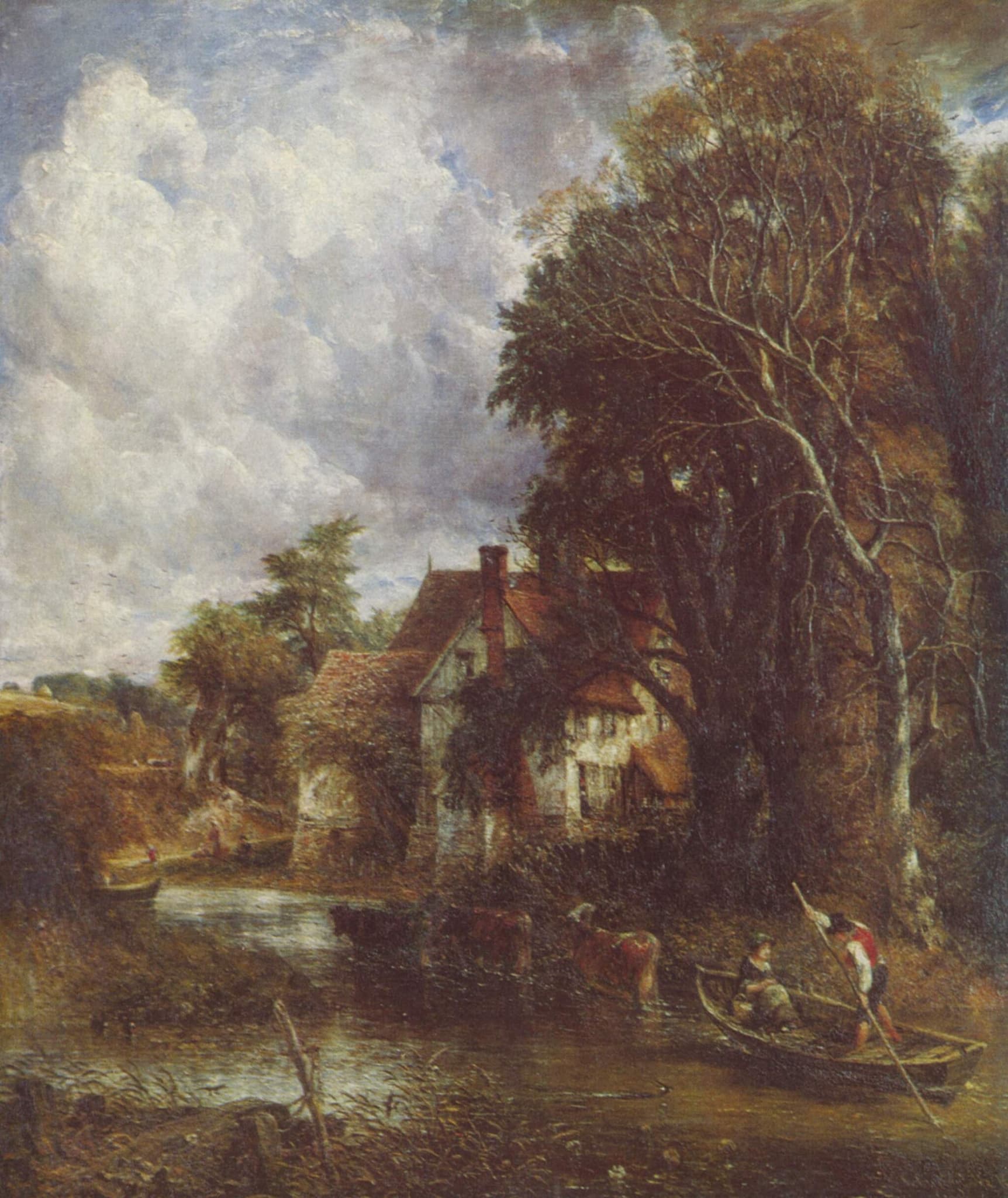
The Valley Farm (Willy Lott's House)
John Constable, 1835 • Oil on canvas
View more by John Constable →Valuation Analysis
Valuation conclusion: For an authentically attributed John Constable oil titled "The Valley Farm (Willy Lott's House)" held privately (i.e., not the 1835 canvas in Tate Britain), the defensible market range is approximately $1,000,000–$6,000,000. This estimate is based on a comparables‑driven approach that weights recent auction outcomes for Constable sketches and mid‑level finished works, adjusted for the well‑known scarcity premium on museum‑quality large canvases.
Context and anchors: The large 1835 Valley Farm canvas is museum‑held and not market‑available, which removes it as a sale comparator but confirms the motif’s cultural prominence and museum demand [1]. At the top end, Constable’s finished “six‑footer” canvases set the ceiling for the artist (Christie’s sale of The Lock is the modern benchmark) and show that truly exceptional exhibited works can reach tens of millions [2]. At the opposite end, authenticated small oil studies and plein‑air sketches of Willy Lott’s House have sold in the low six‑figure band at regional houses, providing a practical lower bound for market activity [4][5].
Comparable evidence: Recent rediscovered preparatory sketches by Constable have reached the low single millions at major houses (Sotheby’s 2015 Salisbury sketch is a primary example) while smaller studio sketches at regional auctions have realised several hundred thousand dollars [3][4][5]. Those results create a tiered market: (a) small sketches—low six figures; (b) substantial, well‑provenanced studio/finished oils—mid‑six‑figures to low single millions; and (c) museum‑quality exhibited canvases—multi‑million to tens of millions. Our $1M–$6M band sits across tiers (b) and the lower part of (c) and therefore assumes an authentic, finished oil of reasonable scale with at least partial provenance or exhibition history.
Key value drivers and risk: Authentication (catalogue raisonné inclusion and technical backing), complete provenance and exhibition history, and condition are the single largest determinants of sale price. A small sketch with weak provenance will typically sit near the low end; a well‑documented finished work (not a six‑footer) can push into the upper half of the band. Only with exceptional provenance, exhibition history and confirmed autograph status would a Valley Farm canvas approach the artist’s highest realizations [2][3].
Next steps to refine value: obtain high‑resolution front/verso images, exact dimensions, a conservator’s condition report and any provenance/exhibition documentation; search catalogues raisonnés and auction archives; and arrange an in‑person inspection by a specialist (auction house or museum curator). With that information the range can be materially narrowed and a presale estimate or insured value provided.
Key Valuation Factors
Art Historical Significance
High ImpactConstable’s Willy Lott’s House motif is one of his most recognisable subjects because of its central role in The Hay Wain and related works. A painting titled The Valley Farm carries inherent iconographic weight; if it is an autograph, exhibited, or late canonical example (e.g., the 1835 Royal Academy painting), that status elevates both scholarly interest and institutional demand. However many variants, studio replicas and preparatory studies exist, so the artwork’s place in Constable’s catalogue—its catalogue raisonné citation, exhibition citations and scholarly discussion—will be decisive. In short: the motif confers importance, but only demonstrable autograph/exhibition credentials convert that importance into top‑tier market value.
Provenance & Exhibition History
High ImpactA clear, continuous provenance that links the painting to reputable collectors, galleries, or exhibitions materially increases buyer confidence and price. Museum or high‑profile private provenance, loans to exhibitions, or inclusion in period catalogues are particularly powerful value multipliers. Conversely, undocumented provenance, gaps, or appearance in secondary markets without scholarly endorsement depress realizability. Provenance also affects export/loan permissions and potential institutional interest; paintings with documented exhibition histories attract both museums and deep‑pocketed private collectors who are prepared to pay a premium for cultural legitimacy and displayability.
Authentication & Condition
High ImpactTechnical authentication—pigment analysis, X‑radiography, dendrochronology (for panel supports), and conservation reports—can make or break a Constable sale. Confirmed autograph status in a leading catalogue raisonné or endorsement by respected Constable scholars significantly raises value. Condition issues (heavy relining, overcleaning, large inpainted losses or unstable varnish) materially reduce the market price and may narrow buyer interest to specialist dealers rather than institutions. A clean, original surface with minor retouching will realise substantially more than a heavily restored work with questionable authorship.
Market Comparables & Scarcity
High ImpactThe market for Constable is tiered and scarcity‑driven. Museum‑quality, large, exhibited canvases are rare and command very high prices (Christie’s record sale sets the ceiling), while studio sketches and smaller oils appear more frequently and generally occupy the mid‑to‑low bands. Recent rediscoveries that were well attributed have outperformed estimates, demonstrating market appetite for fresh‑to‑market Constable material. Therefore comparable auction evidence—regional sketch sales, Sotheby’s rediscovery examples, and the occasional major six‑footer—must be used together to triangulate a realistic estimate for any given Valley Farm picture.
Size, Medium & Presentation
Medium ImpactSize and medium are straightforward but powerful value drivers: large finished oils (the so‑called six‑foot canvases) are the most valuable category, while small plein‑air studies and oil sketches typically sell for much less. Support (canvas vs panel), original frame, and presentation condition also affect buyer perception and price. A substantial, well‑presented oil with original stretcher/frame and intact varnish is more saleable to institutions and high‑end collectors than a small, unframed study, even if both are autograph works.
Sale History
Christie's, London
Sotheby's, New York
Martel Maides, Guernsey
Tennants, Leyburn
John Constable's Market
John Constable (1776–1837) is among the most important British landscape painters; his major exhibited oils are held by institutional collections and command strong prices when they appear on the market. Because canonical large canvases are scarce in private hands, the secondary market is dominated by oil sketches, preparatory studies and occasional finished works—these segments attract collectors and dealers but show a wide price dispersion. Rediscovered, well‑provenanced sketches have recently achieved mid‑to‑high six‑figure to low‑single‑million results, while the rare, museum‑quality six‑footers remain at the multi‑million to tens‑of‑millions ceiling.
Comparable Sales
The Lock
John Constable
Large, museum-quality 'six-footer' finished Constable; establishes the top-end market ceiling for major exhibited canvases.
$35.2M
2012, Christie's, London
~$48.8M adjusted
Salisbury Cathedral from the Meadows (preparatory oil sketch)
John Constable
High-quality, rediscovered preparatory sketch by Constable that sold into the low single millions; useful comparator for studio sketches/studies with strong attribution.
$5.2M
2015, Sotheby's, New York
~$7.0M adjusted
View of the back of Willy Lott's House with Log-cutter (small oil sketch, inscribed June 1814)
John Constable
Direct subject match (Willy Lott's House) but a small oil sketch sold at a regional house; provides a lower-bound market indicator for small, authentic subject studies.
$307K
2023, Martel Maides, Guernsey
~$320K adjusted
Dedham Vale looking towards Langham (oil sketch)
John Constable
Recent rediscovered Constable oil sketch sold in 2025; supports the mid-to-high six-figure band for good-quality sketches on the market today.
$414K
2025, Tennants, Leyburn
Current Market Trends
Recent years show active interest in rediscovered Constable sketches (mid‑six figures into low millions) while the top market for finished large canvases remains thin but strong when quality and provenance align. The Old Masters/19th‑century segment is selective: well‑documented, exhibition‑quality works outperform; weaker provenance or condition reduces liquidity. Institutional programming (anniversaries, retrospectives) can temporarily uplift demand.
Sources
- Wikipedia — The Valley Farm (Constable) / Tate Britain context
- Christie's press release — Record sale: The Lock (2012)
- Sotheby's — Salisbury Cathedral (preparatory oil sketch) sale (2015)
- Martel Maides — View of the back of Willy Lott's House with Log‑cutter (lot page, 2023)
- Yorkshire Post — Tennants rediscovery sale (2025)