How Much Is The White Horse Worth?
Last updated: May 4, 2026
Quick Facts
- Methodology
- extrapolation
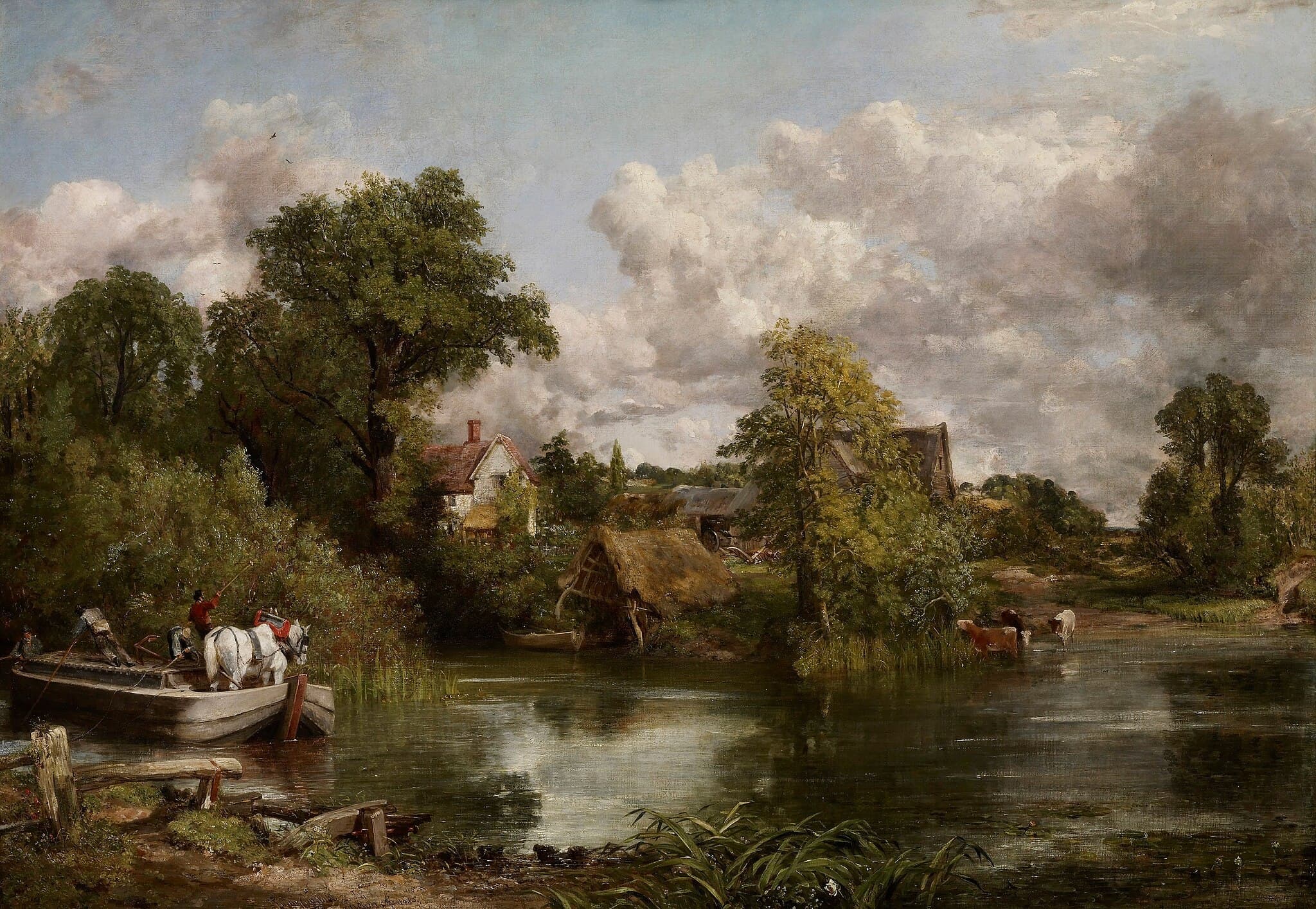
The finished oil The White Horse (1819) by John Constable — a museum-held, well‑provenanced six‑footer — has a hypothetical market value of approximately USD $5,000,000–$35,000,000 if it were ever offered publicly. The range reflects strong provenance and institutional standing tempered by the rarity of comparable Constable oils appearing at auction and sensitivity to condition and sale circumstances.
Valuation Analysis
Valuation conclusion: Based on the painting's museum ownership, exhibition and provenance history, and available market comparables, a defensible hypothetical market range for John Constable's finished oil The White Horse (1819) is USD $5,000,000–$35,000,000. This is a theoretical market valuation: the work is currently held by The Frick Collection and therefore has no modern public‑auction sale record; the figure is an extrapolation from comparable Constable six‑foot works, major sale records and the prices fetched by related studies and sketches [1].
The painting was exhibited at the Royal Academy in 1819 and has an early sale to John Fisher (100 guineas), later re‑acquisition by Constable, and eventual entry into Anglo‑American collections before becoming part of The Frick's holdings — a strong provenance and exhibition history that materially supports value but also makes a market appearance unlikely [1]. A full‑size oil sketch related to this composition is in the National Gallery of Art, Washington, DC, demonstrating the subject's significance within Constable's practice and providing scholarly comparanda [2].
Market comparables: Constable's highest public‑auction result in recent memory is the sale of The Lock (1824) at Christie’s in 2012 (£22,441,250 / approx. $35M at the time), which serves as a high‑water mark for museum‑quality six‑foot works by the artist [3]. By contrast, preparatory studies and smaller oil sketches tied to his major compositions have sold in the hundreds of thousands to low millions (e.g., relevant lots offered at Sotheby’s and other houses), indicating a steep premium for finished, mature works versus studies [4]. From those datapoints, a major finished six‑footer in strong original condition can command sums toward the top of the band; works with condition issues, uncertain attribution, or thin provenance fall toward the bottom.
Key upward drivers: pristine original paint, complete exhibition/publication history and a major‑sale evening sale with institutional and private competition. Key downward drivers: heavy restoration/overpaint, a weak or interrupted provenance, or sale through a secondary/specialist channel with a limited buyer pool. Export licences, museum retention policies, and the practical improbability of a Frick‑owned masterpiece entering the market further widen the theoretical range. Recommended next steps to firm the number: secure high‑resolution recto/verso photography, a conservation/technical report (IR/UV/X‑ray, pigment analysis), and a formal pre‑sale valuation from a leading nineteenth‑century specialist at Christie’s or Sotheby’s.
Bottom line: the USD $5M–$35M range is a reasoned hypothetical reflecting the painting's high art‑historical standing and strong provenance, anchored to the best available market evidence but correctly treating the work as effectively off‑market unless exceptional circumstances arose.
Key Valuation Factors
Art Historical Significance
High ImpactThe White Horse is a mature‑period Constable composition exhibited at the Royal Academy in 1819 and is closely associated with the artist's major landscape production of the 1810s–1820s. While not as universally iconic as The Hay Wain, it is a finished, large‑scale oil with demonstrable importance in scholarship and exhibitions. That art‑historical weight gives the painting a premium over sketches and studies: buyers (especially institutions) pay substantially for canonical works that illustrate key moments in an artist's development. The work's museum provenance further amplifies its scholarly value, making it attractive to institutional and high‑end private collectors.
Provenance & Exhibition History
High ImpactA clear, documented provenance dating to an 1819 sale and early exhibition at the Royal Academy materially raises market confidence. Provenance that ties the painting to named 19th‑century collectors and subsequent reputable ownership (and inclusion in major exhibitions and catalogues) reduces attribution risk and increases buyer competition. The painting’s presence in The Frick Collection both confirms its pedigree and simultaneously makes an actual market sale unlikely, which means any valuation is theoretical and must be treated as an extrapolation from comparable sales.
Condition & Technical State
Medium ImpactCondition is a decisive value factor. Original, stable paint with minimal lining, inpainting or heavy varnish removal will support valuations at the upper end of the band. Conversely, extensive restoration, structural problems (split canvas, degraded ground, or extensive overpaint), or uncertain authenticity issues will depress achievable price materially. A full technical report (IRR, UV, X‑ray, cross‑section/pigment analysis) is required to move from hypothetical to marketable valuation: such a report can add confidence for institutional buyers and substantially narrow the estimate.
Market Rarity & Comparables
High ImpactFinished large oils by Constable are rare on the open market because key works are held in museums; when they do appear they can command multiples of what sketches fetch. The Lock’s 2012 sale (Christie’s) established a high‑water mark and demonstrates the ceiling for top examples, while studies and preparatory works have sold for far less, often in the hundreds of thousands to low millions. The narrow supply of high‑quality six‑foot paintings and continued institutional interest creates potential for competitive bidding, but also means valuations rely heavily on individual sale dynamics.
Sale History
Private sale to John Fisher (following Royal Academy exhibition)
Frick Collection (museum holding)
John Constable's Market
John Constable occupies the top tier of 19th‑century British landscape painters. His market is characterized by strong institutional ownership (major works in national galleries), limited market supply of key finished oils, and sporadic, high‑value sales when prime pictures appear. The artist’s auction high‑water mark (e.g., major evening sale results) sets the ceiling; mid‑market finished works and large studies typically trade in the low‑to‑mid millions. Overall demand is steady among museums and advanced private collectors who prize authenticity, provenance and condition.
Current Market Trends
As of mid‑2024 the market for historic British landscapes is stable but selective: museums remain active buyers for canonical works, while private demand is concentrated among institutions, specialist collectors and a small number of deep‑pocketed buyers. Macroeconomic volatility can compress prices for non‑top‑tier works, but scarcity of museum‑quality Constables supports resilience at the upper end. Sale channel and timing (major evening sales vs specialist sales) materially affect outcomes.
Sources
- The Frick Collection — guide / catalogue (entry for The White Horse)
- National Gallery of Art — Full‑size oil sketch for The White Horse (object entry)
- Coverage of Christie’s sale of John Constable’s The Lock (2012) — market high‑water mark
- Sotheby’s catalogue — Study for The White Horse (example of related study offered at auction)