How Much Is View on the Stour near Dedham Worth?
Last updated: May 4, 2026
Quick Facts
- Last Sale
- $18.8M (2016, Christie's, London)
- Methodology
- comparable analysis
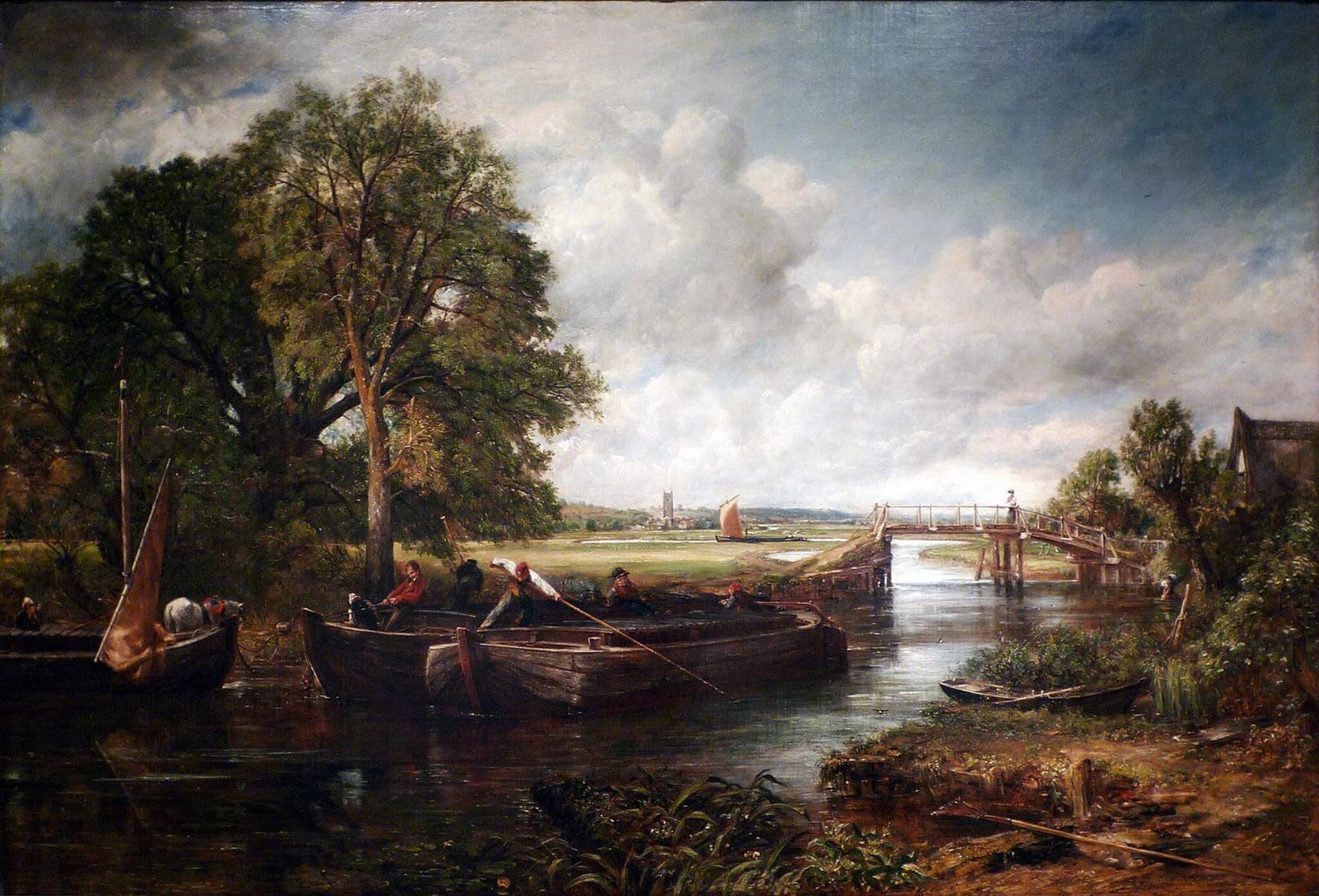
Assuming an autograph, museum‑scale 'View on the Stour near Dedham' (c.1821–22) in good condition with solid provenance, I estimate the market value at $12–30M. The principal market benchmark is the full‑scale Constable sketch sold at Christie’s in 2016 (≈$18.8M) and the auction ceiling for Constable 'six‑footers' (e.g. The Lock) informs the upper bound.
Valuation Analysis
Valuation conclusion: Based on a comparable‑driven analysis, an autograph, museum‑scale oil of "View on the Stour near Dedham" (c.1821–22) with strong provenance and sound condition would reasonably be estimated in the range of $12–30 million on today’s market (2026). This band reflects recent high‑quality comparables for Constable 'six‑foot' works and the demonstrated willingness of collectors and institutions to pay at the upper end for scarce, exhibition‑quality canvases.
The primary market anchor is the full‑scale six‑foot sketch of the same composition sold by Christie’s London in June 2016 for £14,082,500 (including premium), roughly $18.8M at the time — a direct and highly relevant benchmark for the composition and scale [1]. The auction record for Constable’s top finished pictures (notably The Lock) and other high‑profile rediscoveries demonstrate that exceptionally important, well‑provenanced 'six‑footers' can push into the tens of millions and above, providing the rationale for the upper bound of this range [2].
Key contingencies: attribution, size and whether the work is the finished exhibition canvas or a full‑scale preparatory sketch drive most of the value variance. If this object is the documented finished Huntington composition or an equivalent autograph exhibition painting with Royal Academy exhibition history and institutional provenance, price expectation sits at the upper half of the band (and could exceed it in extremely strong market conditions). If it is the full‑scale sketch comparable to the 2016 lot, expect pricing in the mid‑teens of millions (adjusted for market movement). If it is a smaller study, studio variant, later copy or of uncertain attribution, value falls sharply (often to the low six‑figures or below).
Practical next steps to firm this valuation: obtain high‑resolution recto/verso photographs, precise dimensions and support information, a full provenance chain and exhibition/publication citations, and a conservator’s condition report with technical imaging. Secure scholarly opinion (catalogue raisonné entry and leading Constable specialists) and, if appropriate, approach a major London sale room for pre‑sale vetting and a formal estimate or dealer market interest. Those actions will typically narrow the band materially and convert this market estimate into a sale strategy.
Sources and rationale: this estimate is driven by secondary‑market realizations for the same composition and for comparable Constable 'six‑foot' canvases, tempered by standard adjustments for condition, provenance, and attribution risk. See Christie’s 2016 lot and major finished‑canvas comparables for the price anchors used here [1][2].
Key Valuation Factors
Art Historical Significance
High ImpactConstable’s views of the River Stour and Dedham Vale are central to his mature oeuvre and to 19th‑century British landscape painting. A c.1821–22 'View on the Stour near Dedham' sits at the heart of Constable’s most collectible subject matter — the same visual territory as The Hay Wain and other canonical works. That intrinsic art‑historical importance increases institutional demand and the willingness of high‑net‑worth collectors to compete at auction or privately, particularly for large, finished, exhibition‑quality canvases tied to documented exhibitions and contemporary critical reception.
Attribution & Authentication
High ImpactWhether the picture is an accepted autograph by John Constable is the single largest price driver. A confirmed autograph entry in the recognised catalogue raisonné and endorsements by leading Constable scholars will typically multiply value many times over a work described as 'after' or 'studio'. Technical analysis (pigment, ground, IR/Radiography), signature verification and stylistic connoisseurship are essential: doubts or unresolved attribution materially depress liquidity and estimate levels.
Provenance & Exhibition History
High ImpactA continuous, documented provenance (especially early ownership, links to 19th‑century exhibitions such as the Royal Academy, or acquisition by notable collections and dealers) strongly supports higher valuation. The Christie’s 2016 sketch benefitted from traceable provenance and exhibition citations; equivalently strong documentation for a finished canvas or sketch increases buyer confidence and can shift a lot into a higher competitive bracket with institutional bidders.
Condition & Conservation
Medium ImpactCondition can be a decisive commercial factor: severe relining, heavy overpaint, or unstable paint will reduce value; sympathetic conservation that preserves original paint and surface can preserve or even enhance marketability. Comprehensive condition reporting (including any historic restorations) and technical imaging are essential both for accurate valuation and for minimizing uncertainty among high‑end buyers.
Market Comparables & Liquidity
High ImpactRecent high‑profile sales of Constable 'six‑foot' works and important sketches show strong bidder appetite and set concrete price anchors (Christie’s 2016 full‑scale sketch, The Lock 2012). However, supply of top‑quality, museum‑scale Constables on the market is limited, which can create volatile results: properly vetted, rare examples attract competitive bidding and institutional interest, while uncertain or lesser works face thin markets and discounting.
Sale History
Christie's, London
Christie's, London
Sotheby's, New York
John Constable's Market
John Constable is a canonical figure in British art whose market is characterised by steady global demand for his major oils, strong institutional interest, and premium pricing for large, well‑provenanced 'six‑footer' canvases. The market’s upper tier (museum‑quality works with exhibition history) has produced multi‑million and, in exceptional cases, high‑tens‑of‑millions results; smaller studies and sketches trade across a wide band depending on attribution and provenance. Collectors are primarily museums and deep‑pocketed private buyers, and top lots typically sell in London or New York at major houses.
Current Market Trends
As of the mid‑2020s the market for high‑quality 19th‑century British landscape paintings remains resilient but selective: scarcity of top works and institutional collecting priorities support values at the high end, while macroeconomic volatility can temper buyer appetite. Well‑documented, exhibition‑quality Constables continue to attract competitive bidding, and major auction houses can secure premium results where scholarship and provenance reduce attribution risk.
Sources
- Christie's — View on the Stour near Dedham, lot page (Defining British Art sale, 30 June 2016)
- The Guardian — 'Constable: The Lock sells for £22.4m' (auction record context)
- The Huntington Library — Spotlight: View on the Stour near Dedham (finished c.1822 canvas in the Huntington collection)
- Forbes coverage — rediscovered Constable preparatory works sold at Sotheby's (market context)