How Much Is Wivenhoe Park, Essex Worth?
Last updated: May 4, 2026
Quick Facts
- Methodology
- comparable analysis
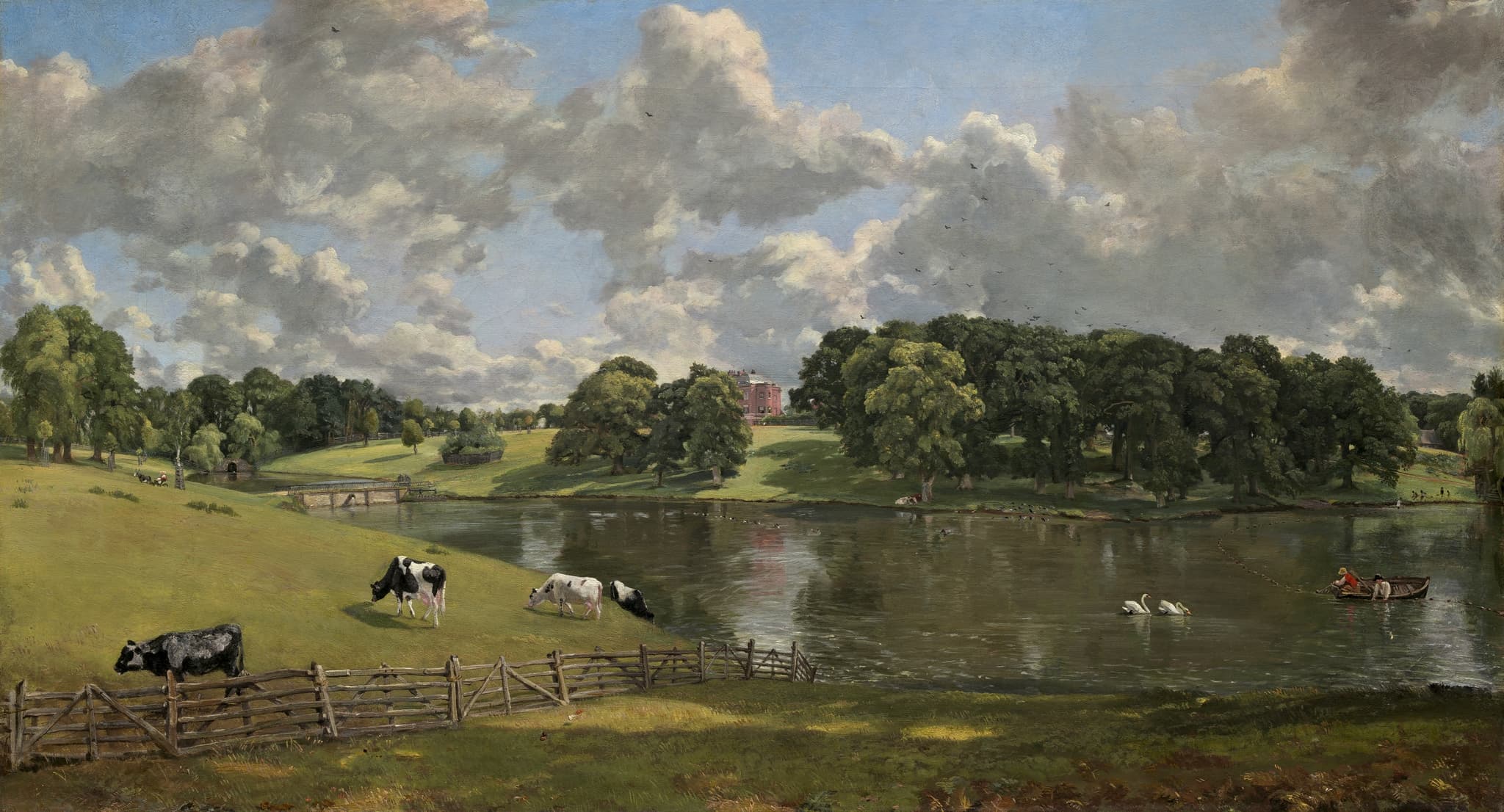
Notional market valuation for John Constable’s Wivenhoe Park, Essex (1816; National Gallery of Art, accession 1942.9.10) is USD $3,000,000–$15,000,000. The painting is museum‑held and not for sale; this range is a notional insurance/market bracket derived from comparable major Constable sales, the work’s moderate dimensions, provenance and current market dynamics.
Valuation Analysis
Painting identification and context: Wivenhoe Park, Essex (1816) by John Constable is the finished presentation canvas painted for Major‑General Francis Slater Rebow and is in the National Gallery of Art (accession 1942.9.10) [1]. Because the NGA canvas is a museum‑held, historically documented presentation work, any figure below is a notional market or insurance range rather than an observable auction result.
Method and key comparables: This valuation uses a comparable‑analysis approach drawing on three types of market evidence: (a) top‑end finished Constable sales that establish the upper market for exceptional, fresh‑to‑market works (e.g., The Lock at Christie’s, 2012) [2]; (b) full‑scale preparatory 'six‑footers' and large studies which have realised multi‑millions (Christie’s, 2016); and (c) rediscovered oil sketches and smaller studies which typically trade in the mid‑six‑figure to low‑seven‑figure band depending on provenance and condition [2][3][4]. The NGA painting is a finished country‑house portrait but of moderate dimensions (56.1 × 101.2 cm), which places it below the scale and market prominence of the largest Constable trophies.
Why $3M–$15M: The lower bound ($3M) reflects a conservative market scenario where a museum‑quality Constable of moderate size and well documented provenance is valued in the mid‑single‑digit millions if offered privately or used for an insurance/replacement estimate in a cautionary market. The upper bound ($15M) accounts for a strong institutional or competitive private‑buyer environment where provenance (Rebow → Widener → NGA), exhibition and literature history, and peak buyer demand push value toward the high single‑digit to low‑double‑digit millions—still below the very largest six‑footer market highs but reflecting scarcity and institutional interest [2][3].
Primary caveats & next steps: The work is not market‑available, so this range is hypothetical. To refine the estimate to a formal insurance or sale appraisal you need (1) a full condition and conservation report; (2) confirmation of catalogue‑raisonné entry and literature citations; (3) technical imaging (IRR/X‑ray/pigment analysis) to corroborate autograph status; and (4) dialogue with senior specialists at Christie’s/Sotheby’s or a senior museum registrar for a named notional replacement value. These steps would materially tighten the bracket and could move a final insured valuation within or beyond the present range [1][2].
Key Valuation Factors
Art Historical Significance
High ImpactWivenhoe Park is a documented 1816 presentation canvas executed for the Rebow family and occupies an established place in Constable’s oeuvre as a commissioned country‑house portrait. While it is not on the same iconic level as The Hay Wain or some of his six‑foot demonstrations, it is nonetheless an important example of his early mature landscape practice and studio technique. That status increases demand from institutions and informed private collectors who place value on works that are both representative of an artist’s celebrated period and linked to identifiable historic patrons. Museum provenance and exhibition history further elevate its cultural value and therefore its market/insurance standing.
Attribution & Authorship
High ImpactThe most decisive single factor is whether the canvas is an autograph Constable (finished presentation) or a workshop copy/variant or later replica. Authorship certainty materially alters market value: authenticated finished Constable oils command premium prices, whereas studio copies and later reproductions are substantially discounted. Technical analysis (infrared reflectography, X‑radiography, pigment analysis) together with connoisseurship and catalogue‑raisonné confirmation is essential. Any unresolved questions on attribution will reduce marketability and lower the realisable price by a wide margin.
Provenance & Exhibition/Publication History
High ImpactThis painting benefits from a strong and continuous provenance (Rebow family → early 20th‑century purchase → P.A.B. Widener gift to NGA) and documented exhibition/publication history at a major national institution. Museum ownership and clear provenance are powerful price enhancers because they remove title risk for buyers and confirm scholarly acceptance. Conversely, gaps or contested ownership episodes would depress value. For an insurance or hypothetical market valuation a continuous, high‑quality provenance can shift the estimate toward the upper end of the range.
Condition & Conservation
Medium ImpactCondition affects immediate saleability and insurer willingness to place high valuations. Typical issues—canvas relining, varnish discoloured, overpaint, craquelure or previous restorations—can reduce the price materially. A painting conserved to museum standards with minimal intrusive restoration preserves market confidence. Conversely, significant restoration or structural instability will reduce value and may restrict market interest to specialist buyers. A formal written condition report is therefore a prerequisite to any firm valuation or market offering.
Market Demand & Comparables
High ImpactDemand for Constable is concentrated at institutions and high‑net‑worth collectors who prize scarce, museum‑quality oils. Recent comparables show a wide range: artist records for top works (The Lock) and high prices for rediscovered large studies, while smaller sketches range from mid‑six figures to low‑millions. The painting’s moderate scale places it below the highest trophy band but still within the reach of deep‑pocketed institutional buyers. Market sentiment, major exhibitions and the timing of supply (few finished works coming to market) will therefore determine whether value lands near the lower or upper bound.
Sale History
Wivenhoe Park, Essex has never been sold at public auction.
John Constable's Market
John Constable is a top‑tier British artist whose museum‑quality oils are scarce on the market and attract strong institutional and private interest. His auction record is set by The Lock (Christie’s, 2012) and select large studies have achieved multi‑million results in recent seasons. That said, much of Constable’s market comprises sketches, studies and works on paper that trade in lower bands; prices are therefore volatile across the spectrum and heavily dependent on size, provenance and attribution.
Comparable Sales
The Lock
John Constable
Artist auction record; major finished, museum-quality Constable — useful as the upper-bound benchmark for a top presentation canvas.
$35.2M
2012, Christie's, London
~$49.1M adjusted
View on the Stour near Dedham (full-scale sketch)
John Constable
Full-scale preparatory 'six-footer' by Constable — similar scale/subject to Wivenhoe Park though a sketch rather than finished presentation canvas.
$18.9M
2016, Christie's, London
~$25.1M adjusted
Salisbury Cathedral (oil sketch, rediscovered)
John Constable
Rediscovered oil sketch with strong provenance/attribution that reached multi-million dollars — illustrates demand for high-quality studies related to major compositions.
$5.2M
2015, Sotheby's, New York
~$7.0M adjusted
Dedham Vale looking towards Langham (rediscovered sketch)
John Constable
Recent regional sale of a rediscovered Constable sketch (2025) — shows market for smaller/lesser-known rediscoveries (mid-six-figure band for this example).
$415K
2025, Tennants, UK
Current Market Trends
The Old Masters/19th‑century market is currently selective: institutional exhibitions, rediscoveries and strong provenance drive competitive bidding, while undistinguished or poorly documented lots are price‑sensitive. Anniversary programming and recent high‑profile shows have increased attention for Constable, but broader market caution remains and buyer demand concentrates on well‑documented, museum‑quality works.
Sources
- National Gallery of Art — Wivenhoe Park, Essex (Constable) — Collection Entry
- Christie’s — Post‑Sale Release: Old Master & British Paintings Evening Sale (The Lock, 2012)
- Christie’s / Press: View on the Stour near Dedham (full‑scale sketch), London sale (2016)
- Forbes coverage of Sotheby’s sale (Salisbury Cathedral oil sketch, 2015) — rediscovered sketch sold in New York
- Artnet News — recent rediscovered Constable sketch sale (Tennants, 2025) demonstrating market appetite for rediscoveries