How Much Is Autumn Leaves Worth?
Last updated: May 11, 2026
Quick Facts
- Methodology
- comparable analysis
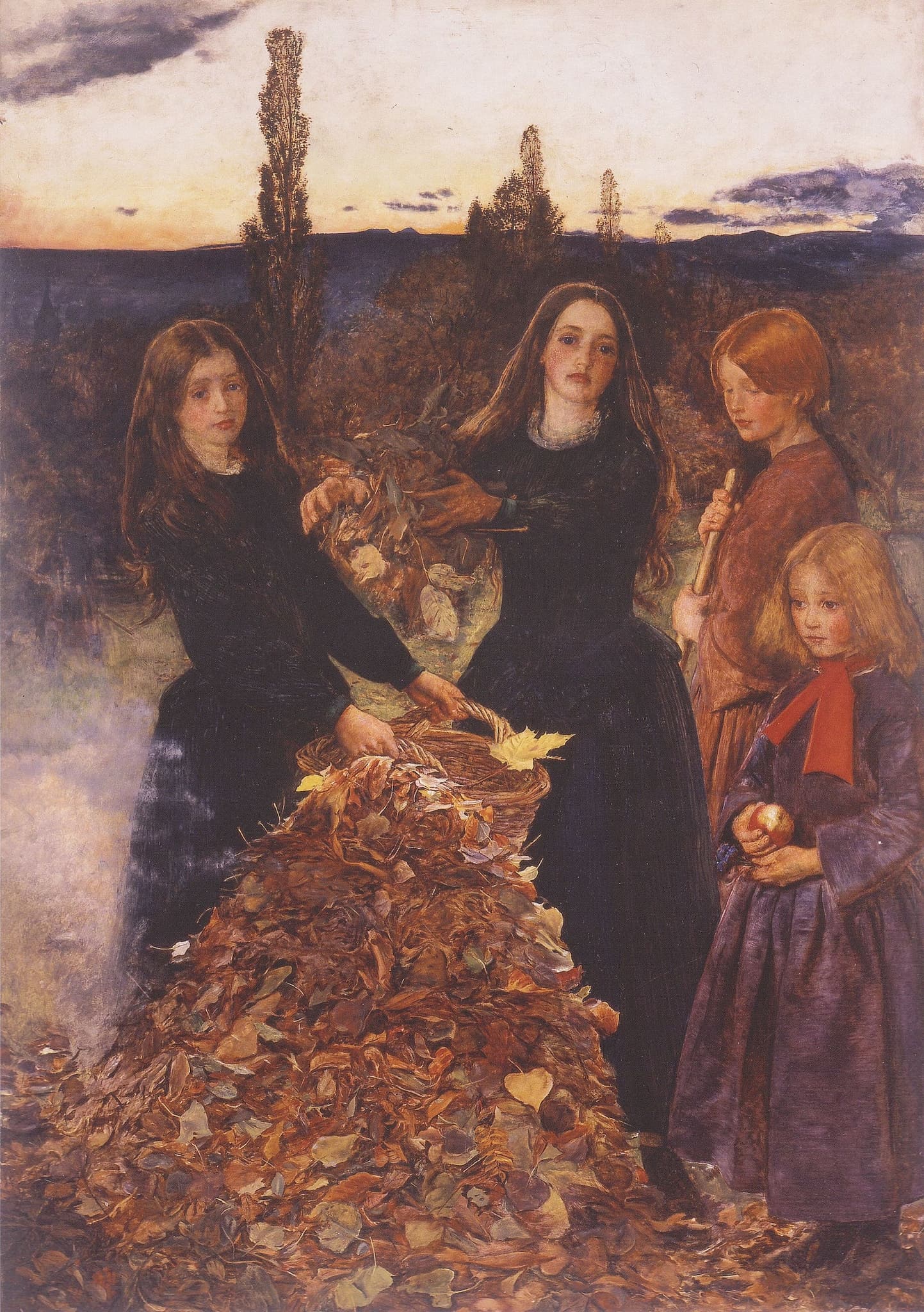
Autumn Leaves (c.1855–56) by John Everett Millais is held by Manchester Art Gallery (accession 1892.4) and has not been offered on the open market. Based on recent auction comparables for finished mid‑career Millais oils, combined with the painting’s long institutional provenance and exhibition history, a realistic market valuation if it were offered today is approximately $500,000–$3,000,000, assuming good condition and standard documentation.
Valuation Analysis
Valuation conclusion: Autumn Leaves (c.1855–56) by Sir John Everett Millais is in Manchester Art Gallery (accession 1892.4) and therefore is not market‑fresh or available for public sale from private hands [1]. If hypothetically placed on the market with museum provenance, sound original surface and no major structural or restoration issues, the appropriate market band is approximately $500,000 to $3,000,000. That range reflects the cross‑section of recent public auction realizations for Millais finished oils, the painting's exhibition pedigree and the premium that institutional provenance typically confers on prospective buyers.
Comparables and anchors: The top end of the band is informed by high‑quality, museum‑grade Millais works which can reach multiple millions; the artist auction record (Sisters) at Christie’s (2013) demonstrates this ceiling for an exceptional group portrait by the artist [2]. More typical finished small‑to‑medium Millais oils have traded in the low‑to‑mid six figures in recent specialist sales — for example Bonhams’ 2023 sale of Forget‑Me‑Not (realised £302,700) and Sotheby’s 2022 example of Milking Time (realised in the c.£176k range) provide concrete mid‑market anchors and justify the lower‑to‑middle portion of the proposed band [3][4].
Provenance and exhibition effect: The painting’s continuous public ownership since its 19th‑century accession materially reduces attribution and provenance risk, which in turn supports buyer confidence and value. Institutional ownership and a Royal Academy exhibition entry (1856) would be expected to elevate the painting above the open‑market floor for comparable studio works or poorly documented variants. That said, museum ownership typically results in the work being offered through carefully structured transactions (private treaty or guaranteed sale) rather than standard hammer auctions, which can affect realised price dynamics.
Condition, size and attribution caveats: This valuation presumes a finished oil on canvas of moderate to large dimensions in generally good condition. If a condition report reveals significant lining, overpainting, heavy retouching or structural instability, the value would move materially toward or below the low estimate. Conversely, a large, exceptionally finished canvas with strong visual impact, published scholarship or recent high‑profile loans would push valuation toward the top of the band. Because the painting is institutionally held and has not been offered publicly in modern times, a conservator’s report, high‑resolution imagery and confirmatory catalogue‑raisonné citation would be required to convert this market estimate into a formal, insured valuation.
Methodology and confidence: The estimate uses direct comparable analysis of recent auction results for Millais, adjusted for date, subject, condition assumptions and the painting’s institutional provenance. It is a market‑scenario appraisal, not an insured replacement value. Key sources used in deriving this range include the Manchester Art Gallery collection entry and representative recent auction results from Christie’s, Bonhams and Sotheby’s [1][2][3][4].
Key Valuation Factors
Art Historical Significance
High ImpactJohn Everett Millais is a founder and central figure of the Pre‑Raphaelite movement and his mid‑1850s output is widely collected and exhibited. Autumn Leaves, dated c.1855–56 and recorded in the Royal Academy exhibition history, sits squarely within Millais’s mature Pre‑Raphaelite phase. While not one of the handful of canonical masterpieces that drive the absolute top of the market, a well‑executed, fully finished Millais from this period carries significant historical interest and curatorial appeal. That art‑historical significance supports a premium versus unattributed studio work and is a principal reason a museum‑quality example would be placed in the mid‑to‑upper range of the estimate.
Provenance & Exhibition History
High ImpactThe painting’s long institutional ownership (Manchester Art Gallery accession 1892.4) and recorded exhibition entry dramatically reduce buyer risk on attribution and provenance. Museum provenance typically increases market confidence and attracts both institutional and advanced private buyers, who are prepared to pay a premium for works with secure histories and exhibition records. This factor shifts the likely achievable price upward relative to equivalent works with uncertain provenance or those emerging from private estates without documentary support.
Condition & Conservation
Medium ImpactCondition is a determinative physical factor but is unknown here; the valuation presumes sound structural integrity and an original surface with only routine conservation. Major issues (lining, heavy restoration, unstable paint, or extensive overpainting) would depress value sharply, while excellent original condition would materially support achieving the higher estimate. A museum‑held work often benefits from documented conservation history, but a formal conservator’s report is required to certify condition and quantify uplift or discount.
Comparable Market Evidence
High ImpactPublic auction results for Millais provide the primary empirical basis for this valuation. The artist’s auction record (Sisters, Christie’s 2013) establishes the upper bound for exceptional works, while recent specialist sales (Bonhams 2023, Sotheby’s 2022 and other cabinet‑picture sales) populate the mid‑market band and justify the lower threshold. These comparables demonstrate a wide dispersion in Millais pricing driven by size, subject and quality—making comparable selection and condition adjustment essential to arrive at a defensible estimate.
Size & Medium
Medium ImpactSize and medium materially affect liquidity and price: large, fully worked oils attract institutional bidders and command a multiple of small cabinet pictures or studies. Without exact dimensions, the valuation assumes Autumn Leaves is a finished oil of moderate to large size typical of Millais figure pictures of the period; if it were a small cabinet picture the likely realisation would sit well below the stated band, while a large, high‑impact canvas would justify the top end.
Sale History
Autumn Leaves has never been sold at public auction.
John Everett Millais's Market
Sir John Everett Millais (1829–1896) is among the most important British 19th‑century painters and a founding figure of the Pre‑Raphaelite movement. His major works are museum staples; top examples have achieved multi‑million public auction results, while high‑quality mid‑career oils commonly realise low‑to‑mid six figures at specialist sales. Collector demand is concentrated among UK institutions and specialist private collectors; market supply of high‑quality finished Millais oils is relatively limited, which supports value for well‑provenanced, museum‑quality canvases.
Comparable Sales
Sisters
John Everett Millais
Same artist; mid‑career/group portrait of young women — a high‑quality, museum‑grade Millais that sets the top‑end benchmark for the artist.
$3.5M
2013, Christie's London
~$4.7M adjusted
The Violet's Message
John Everett Millais
Same artist; small finished cabinet picture with highly desirable Pre‑Raphaelite subject matter — useful for valuing small/high‑quality Millais oils.
$802K
2016, Christie's London
~$1.0M adjusted
Forget‑Me‑Not
John Everett Millais
Same artist; recent mid‑market Millais sale (2023) — good comparator for finished small/medium works in the current market window.
$373K
2023, Bonhams London
~$396K adjusted
Milking Time (The Farmer's Daughter)
John Everett Millais
Same artist; rural genre scene with a female figure — representative of lower–mid range results for finished oils when offered at auction.
$210K
2022, Sotheby's London
~$231K adjusted
Current Market Trends
The Pre‑Raphaelite/Victorian market remains specialist and selective: institutional interest and occasional strong results for top works continue, but the global high end has been more cautious since 2022–24. Buyers are discriminating, and houses increasingly employ guarantees and private‑sale routes for high‑value niche works. This environment favors well‑documented, museum‑quality material while putting pressure on lesser works.
Sources
- Manchester Art Gallery — Autumn Leaves (accession 1892.4)
- Christie’s press — Important Victorian, British & Impressionist Art: results (Sisters by Millais, 11 July 2013)
- Bonhams press release — Millais, Forget‑Me‑Not (29 March 2023)
- Sotheby’s lot page — Milking Time (The Farmer's Daughter) (auction closed 13 July 2022)