How Much Is Mariana (in the Moated Grange) Worth?
Last updated: May 11, 2026
Quick Facts
- Methodology
- comparable analysis
If the object is the autograph, full‑scale 1851 oil 'Mariana (in the Moated Grange)' by John Everett Millais, an open‑market estimate is approximately $3,000,000–$10,000,000. If it is a study, reduced version, or workshop copy the value falls sharply (autograph studies typically $150k–$1.2M; later copies often $5k–$50k). This preliminary range is based on the 1999 in‑lieu benchmark, modern Millais auction comparables, and current market dynamics.
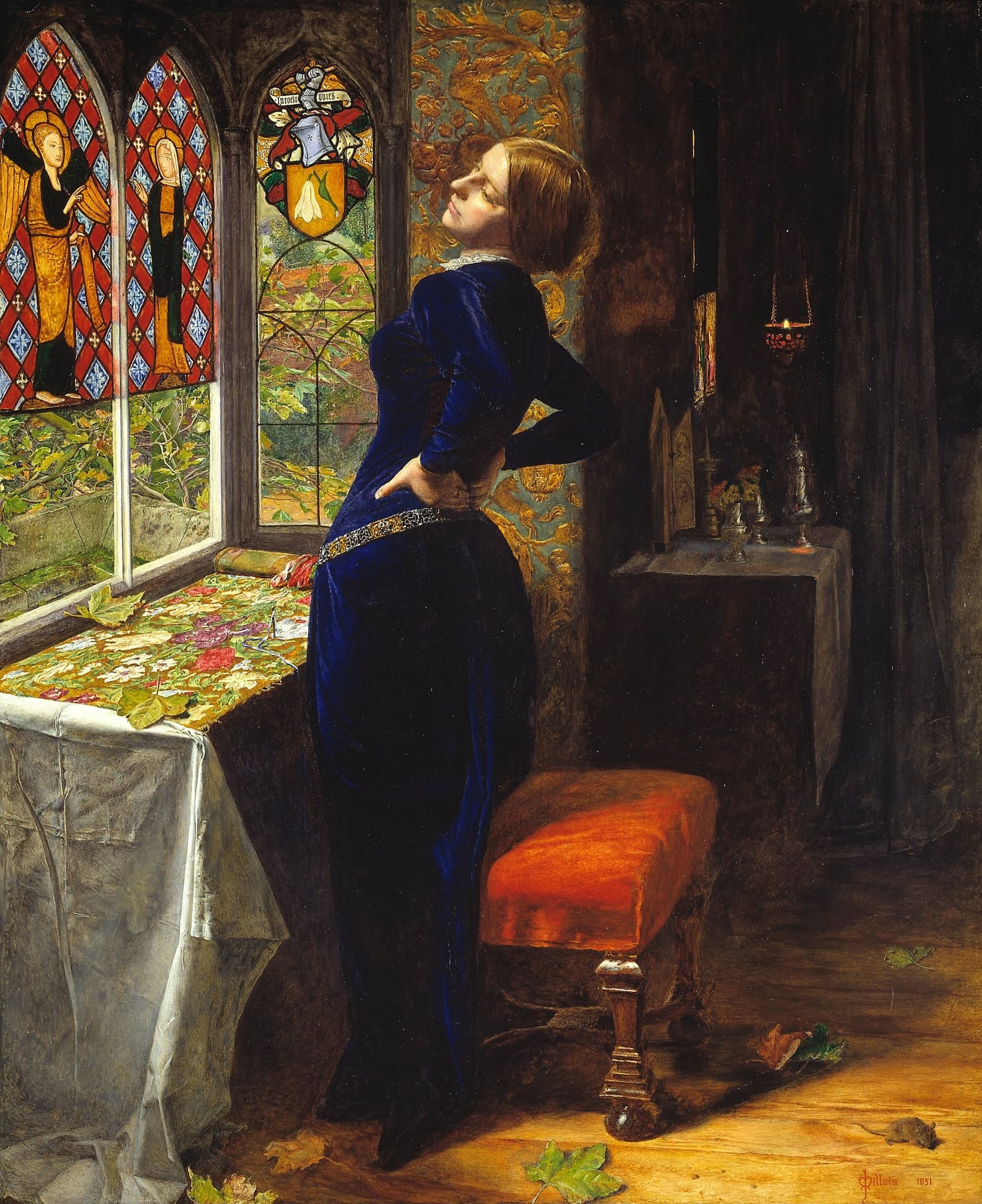
Mariana (in the Moated Grange)
John Everett Millais, 1851 • Oil on canvas
View more by John Everett Millais →Valuation Analysis
Bottom line: If the object before you is the autograph, full‑scale oil "Mariana (in the Moated Grange)" by John Everett Millais (the canonical 1851 work now in the national collection), an open‑market estimate is approximately $3,000,000–$10,000,000. The canonical painting is publicly held after being accepted in lieu of inheritance tax and therefore lacks a modern hammer price; that statutory valuation and subsequent reporting provide a primary anchor for market expectations [1][2]. This preliminary range assumes confirmed attribution, favourable condition and solid provenance.
Comparables and market anchors: Modern auction evidence for top Millais oils is limited because major works are museum‑held, but useful touchstones exist. Christie’s sale of "Sisters" in 2013 (realized ~£2.3m / ~$3.48m) is the strongest recent open‑market benchmark for a museum‑quality Millais on the 1850s canonical axis; more routine Millais oils have realized in specialist houses at several hundred thousand dollars (Bonhams examples such as the 2023 "Forget‑Me‑Not" and the 2025 Guy Bailey online sale illustrate a robust mid‑market at roughly $250k–$375k realized) [3][4]. The 1999 in‑lieu valuation (reported at £4.2m) sits above these auction comparables and supports a multi‑million valuation if a canonical Mariana were legitimately offered [2].
Variant valuation scenarios: Attribution is decisive. A fully autograph, finished 1851 Mariana with excellent condition, published provenance and exhibition record commands the top of the range. An autograph study or reduced preparatory oil by Millais would typically be valued in the low‑to‑mid six‑figures (~$150,000–$1,200,000). Workshop copies, later studio replicas or after‑Millais works commonly trade in the low‑to‑mid five‑figures, depending on quality and market interest.
Key determinants and caveats: Final value depends on: (1) successful technical and connoisseurship verification (X‑ray/IRR and pigment/ground analysis to confirm mid‑19th‑century materials and Millais’s hand); (2) a complete provenance chain and literature/exhibition citations; and (3) condition and restoration history. The 1999 in‑lieu figure is a statutory tax valuation and not a realized sale — it is an important reference but cannot substitute for a fresh market test under current conditions [2]. Sale mechanics also matter: a guaranteed auction, high‑profile single‑owner sale or discreet private treaty can materially affect the final price and could push the outcome beyond the stated top end if multiple institutional and private bidders compete.
Recommended next steps: Provide high‑resolution recto/verso photography, full measurements, any labels/inscriptions and provenance documents; commission a specialist condition report and targeted technical tests; and submit the dossier to Victorian/Pre‑Raphaelite specialists at Christie’s, Sotheby’s or Bonhams for a confidential opinion. With those verifications complete the estimate can be narrowed and a sale plan proposed.
Key Valuation Factors
Art Historical Significance
High ImpactMillais's 'Mariana' is an established work from his early Pre‑Raphaelite period and is frequently cited in scholarship on mid‑19th‑century British painting. While not as universally iconic as 'Ophelia', Mariana is nevertheless an important subject in Millais’s oeuvre — a well‑documented autograph painting would therefore command premium collector and institutional interest. The painting’s place in canonical literature, its role within the Pre‑Raphaelite narrative, and its exhibition history materially increase desirability; these scholarly credentials underpin the higher end of the valuation range because they attract institutional buyers and well‑capitalized private collectors.
Provenance & Exhibition History
High ImpactA continuous, documented provenance that links the picture to known collections, exhibition entries and catalogue references is a primary value driver. The canonical Mariana’s acceptance in lieu to the Tate and any associated collection history provide powerful provenance credentials. Conversely, gaps, uncertain ownership transfers, or absence from standard catalogues raisonné materially reduce market confidence and thus price. Exhibition loans, catalogue entries and scholarly citations not only validate authenticity but also expand the buyer pool (museums, foundations and well‑informed private collectors), which can increase the achievable price significantly.
Condition & Technical Authentication
High ImpactTechnical verification (X‑ray, infrared reflectography, pigment and ground analysis) and a detailed condition report are essential. Evidence of Millais’s hand in underdrawing or characteristic pigment choices will strongly bolster an autograph attribution. Conversely, heavy overpainting, poor conservation, or extensive restoration can depress value substantially. A clean technical dossier confirming mid‑19th‑century materials and Millais’s working practice will convert market interest into competitive bids; unresolved conservation issues or invasive restoration will push the work toward the lower end of any price band.
Market Scarcity & Demand
High ImpactMost of Millais’s major Pre‑Raphaelite oils are held in public collections, which reduces available supply on the market and can elevate prices when museum‑quality works appear. Demand remains concentrated among a relatively small set of institutional and private buyers who focus on 19th‑century British painting. Scarcity at the top end, combined with occasional strong interest from international collectors and dealers, supports multi‑million valuations for canonical works; however, market appetite is nuanced and subject to sale mechanics (guarantees, single‑owner consignments, timing, and competing institutional interest).
Attribution Risk / Variant Type
Medium ImpactThe single largest source of valuation variance is attribution: whether the picture is an autograph finished oil, an autograph study/reduced version, a studio replica, or a later copy after Millais. Each classification sits in a distinct market segment and price band. Studies and reduced versions by the artist trade at significantly lower values than canonical full‑scale works, and workshop or later copies command a small fraction of autograph prices. Reducing attribution risk through expert opinion and technical testing is therefore pivotal to realizing the higher estimate.
Sale History
Accepted in lieu by HM Government; allocated to Tate Britain
John Everett Millais's Market
John Everett Millais is a principal figure of the Pre‑Raphaelite movement and remains well represented in major museums and important private collections. On the secondary market his works trade across a wide band: mid‑six‑figure results are common for solid, marketable oils while the best exhibited, well‑provenanced 1850s masterpieces can command multi‑million prices when they appear with institutional backing or in high‑profile single‑owner sales. Market demand is steady but selective; sale outcomes depend heavily on attribution, provenance and sale mechanics.
Comparable Sales
Sisters
John Everett Millais
Best recent open-market auction benchmark for Millais; full-scale, high-quality 1850s-era oil and the strongest concrete auction result available for the artist in modern sales.
$3.5M
2013, Christie's London (Important Victorian & British Impressionist Art)
~$4.7M adjusted
Forget‑Me‑Not
John Everett Millais
Representative mid‑market Millais result (2023) showing typical pricing for well‑provenanced, good‑quality works sold in specialist Victorian/19th‑century sales.
$373K
2023, Bonhams (19th Century & British Impressionist Art, London)
~$388K adjusted
Il Penseroso
John Everett Millais
Recent 2025 sale of a signed Millais work in a specialist sale—useful as a current-market snapshot at the lower-to-mid tier for the artist.
$246K
2025, Bonhams (Guy Bailey Collection, online sale)
Mariana (accepted in lieu of inheritance tax; allocated to Tate)
John Everett Millais
Direct official valuation of the exact canonical Mariana (1851). Not a hammer sale, but the 1999 in‑lieu figure (£4.2m) is the single most relevant market reference for this specific painting.
$6.8M
1999, Accepted in lieu by HM Government; allocated to Tate Britain (official in‑lieu valuation, not a public auction sale)
~$13.0M adjusted
Current Market Trends
The market for 19th‑century British art has shown a two‑tier behavior: a healthy mid‑market (works in the $50k–$500k range) with regular trade, and rare, trophy‑level results for museum‑quality masterpieces. Recent years show solid interest but fewer top‑tier consignments; private sales and guaranteed auctions can materially alter final prices when a canonical work becomes available.