How Much Is The Blind Girl Worth?
Last updated: May 11, 2026
Quick Facts
- Methodology
- comparable analysis
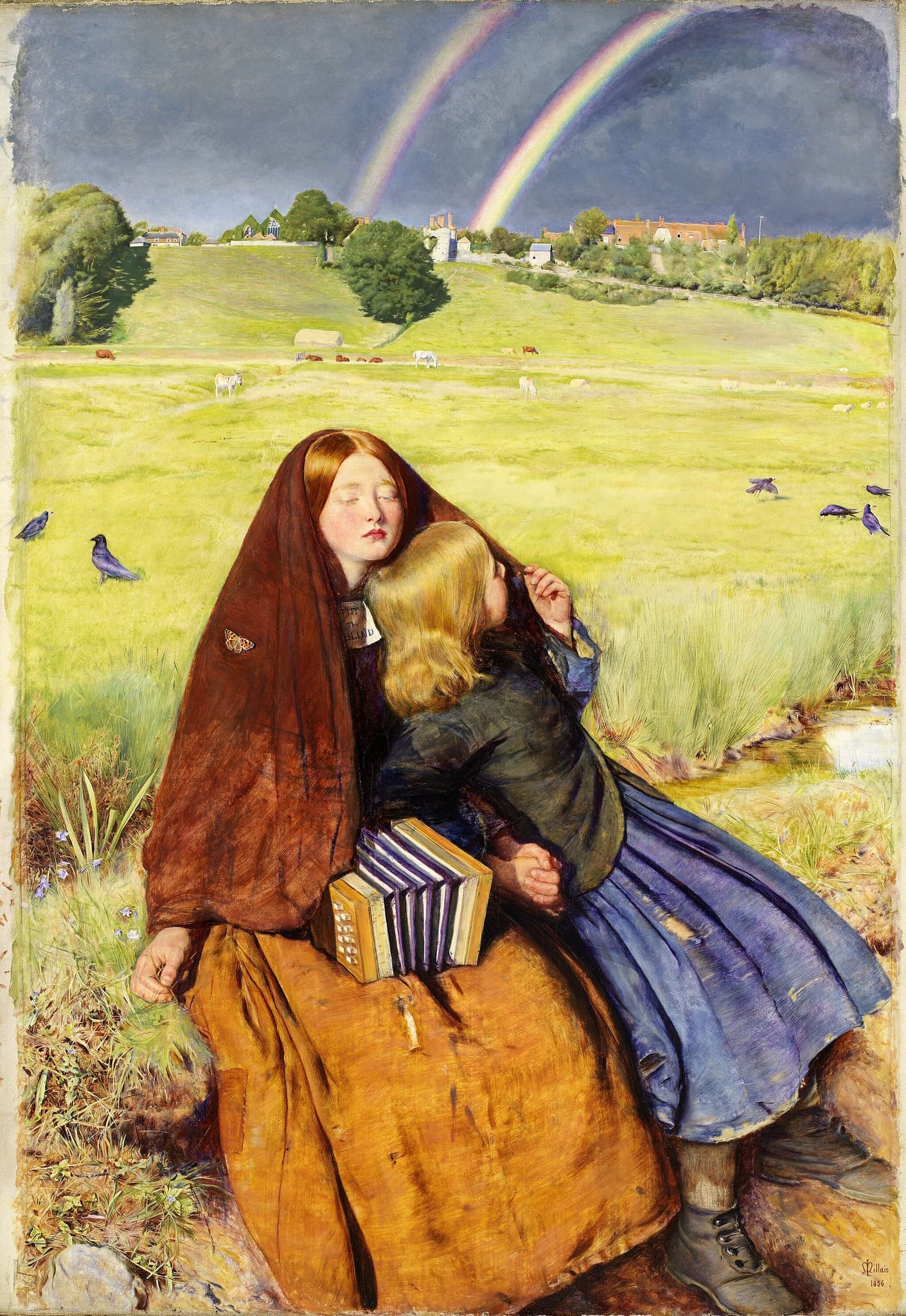
Hypothetical market value for John Everett Millais’ The Blind Girl (1856), currently accessioned at Birmingham Museum & Art Gallery (1892P3), is estimated at USD 1,000,000–4,000,000 if the work is an autograph, full‑scale, well‑conditioned oil with solid provenance and literature. If the work proves to be a study, reduced version, workshop replica, or of uncertain attribution, expect a mid‑six‑figure valuation (approximately USD 100,000–700,000).
Valuation Analysis
Overview. The Blind Girl (1856) is held in the Birmingham Museum & Art Gallery collection (accession 1892P3), and there is no modern public auction record for this canvas, so any market valuation is hypothetical and conditional on attribution, condition and provenance [1]. Because major Millais canvases are frequently museum held, comparable public‑sale evidence is limited and individual sale results are highly sensitive to quality and historic importance.
Method & comparables. This valuation uses a comparable‑analysis approach anchored to the best‑available auction evidence for Millais: notably Christie’s modern high‑water mark for the artist ("Sisters", July 2013) and recent mid‑market results at Bonhams and Sotheby’s. Christie’s 2013 lot establishes a practical ceiling for major, museum‑quality Millais on the open market [2]. Bonhams and Sotheby’s examples from 2022–2023 demonstrate the frequent mid‑market band for good secondary‑market Millais canvases.
Why the USD 1,000,000–4,000,000 range. If The Blind Girl is confirmed as an autograph, full‑scale oil by Millais in good to excellent condition, with clear provenance and at least some exhibition/literature history, it would likely sit in the USD 1M–4M zone. The lower bound reflects conservative pricing for high‑quality but non‑iconic Millais canvases; the upper bound recognizes that when a museum‑quality Millais does appear, institutional and deep‑pocketed private bidders can push prices into the low millions. If technical study or provenance research identifies workshop contribution, later retouching, or uncertain attribution, the appropriate market band falls to roughly USD 100k–700k.
Practical issues and adjustments. Because the picture is museum‑held, deaccessioning hurdles, export/heritage controls and institutional interest can materially affect realizable price and the likelihood of an open auction. Condition issues (overpaint, relining, structural instability) or gaps in provenance require discounting; conversely, strong exhibition history and literature citations justify premium positioning. Selling costs, buyer’s premium and taxes also reduce net proceeds; auction house pre‑sale estimates will incorporate these practicalities.
Next steps to refine the estimate. Obtain a high‑resolution photo set, a formal condition/conservation report, and technical analysis (infrared, x‑radiography, pigment study). Commission provenance research and secure written pre‑sale estimates from two leading Victorian/Pre‑Raphaelite specialists at major houses. With those inputs the provisional USD 1,000,000–4,000,000 band can be narrowed to a marketable pre‑sale estimate.
Key Valuation Factors
Art Historical Significance
High ImpactThe Blind Girl sits within Millais’s productive mid‑1850s Pre‑Raphaelite phase and thus carries genuine scholarly and institutional interest. While it is not as universally iconic as Ophelia, a securely attributed, well‑executed mid‑1850s Millais figure painting is considered an important example of his technique and thematic concerns. Institutional buyers and major private collectors prize works that illustrate key phases of an artist’s development; such art‑historical stature supports higher price ceilings. In short, confirmed significance in Millais’s oeuvre increases buyer interest, narrows the buyer pool to specialist institutions and collectors, and justifies premiums relative to routine Victorian genre pictures.
Attribution/Authenticity
High ImpactAttribution is the single most decisive value driver. An uncontested autograph Millais will be priced very differently to a studio piece, later replica, or work by a follower. Authentication relies on documentary provenance, signature and cataloguing, and technical analysis (underdrawing, brushwork, pigments). Where provenance and technical imaging confirm an autograph hand, market appetite and institutional interest rise sharply; if evidence is equivocal, buyers will treat the work as a study or copy and apply significant discounts. Therefore a firm technical and provenance dossier is essential to realize top‑end estimates.
Condition & Conservation
High ImpactCondition has immediate and quantifiable effects on market value. Original paint layer integrity, varnish state, presence of major restorations, relining history and structural stability determine both aesthetic impact and conservation costs. Significant overpainting, unstable supports or previous aggressive restoration will reduce marketability and can require substantial conservation before sale — typically lowering bids or causing pre-sale withdrawal. A favourable condition report (minor, well‑documented restorations) preserves value; poor or uncertain condition can reduce realizable price by tens of percent and discourage institutional bidders.
Provenance & Exhibition History
High ImpactDocumented provenance and exhibition/publication history materially enhance market value. Long‑term museum ownership (Birmingham accession 1892P3) demonstrates curatorial recognition but also means the work has not been market tested; if provenance back to important private collections or early exhibitions can be demonstrated, that will support top‑end estimates. Literature citations and inclusion in significant exhibitions increase bidder confidence and attract institutional buyers. Conversely, gaps or uncertain ownership history create downward pressure and necessitate further research to justify higher estimates.
Market Liquidity & Comparable Sales
Medium ImpactThe secondary market for Millais is polarized: a few museum‑quality canvases fetch multi‑million sums while most works trade in the low‑to‑mid six‑figure band. Comparable sales (Christie’s high‑end examples and Bonhams/Sotheby’s mid‑market lots) provide the basis for scaling value. However, liquidity is constrained because many top works are institutionally held; when a major Millais appears it can draw competitive bids, but most sales reflect selective collector interest. Expect relatively narrow active buyer pools for a museum‑quality Millais and modest liquidity for uncertain attributions.
Sale History
The Blind Girl has never been sold at public auction.
John Everett Millais's Market
John Everett Millais is a blue‑chip 19th‑century British artist and founding Pre‑Raphaelite whose best works are museum anchors and can achieve seven‑figure results when they appear. The public auction record is limited by the fact that many of his leading canvases remain institutionally held, which makes headline results episodic. Recent decades show a stratified market: top examples attract international institutions and deep‑pocketed private buyers, while the majority of Millais works on the open market settle in the low‑to‑mid six‑figures. Scholarly reassessment and museum exhibitions sustain long‑term institutional demand.
Comparable Sales
Sisters
John Everett Millais
Top-end, museum-quality Millais figurative work from the same 19th-century Pre‑Raphaelite period; establishes the artist's ceiling when a major canvas reaches the open market.
$3.5M
2013, Christie's, London
~$4.6M adjusted
Forget‑Me‑Not
John Everett Millais
Recent mid‑market Millais sale (smaller/less iconic work); useful for gauging demand/pricing for good secondary‑market examples that are not masterpiece scale.
$373K
2023, Bonhams, London (online sale)
~$392K adjusted
Milking Time (The Farmer's Daughter)
John Everett Millais
Mid‑range Millais genre painting sold at a major house; comparable in subject (rural figure), indicating the lower–middle market band for secondary‑market Millais canvases.
$210K
2022, Sotheby's, London
~$231K adjusted
Current Market Trends
The Pre‑Raphaelite/Victorian market is currently selective: blockbuster exhibition programming and scholarly attention have boosted interest at the top end, but the category remains polarized. Institutional demand and a limited supply of museum‑quality Millais canvases support strong outcomes for the best works; mid‑tier pieces face more muted demand and price variance. Timing (exhibitions, anniversaries) and clean technical/provenance dossiers are key to achieving premium results.
Sources
- Birmingham Museums Trust – collection entry / accession details for The Blind Girl (John Everett Millais)
- Christie's press/results — Important Victorian, British & Impressionist Art (July 2013) — 'Sisters' result (Millais)
- Bonhams press — 'Forget‑Me‑Not' (Millais) sale/result, 29 March 2023
- Sotheby's lot listing / sale summary — 'Milking Time (The Farmer's Daughter)' (Millais), July 2022