How Much Is The Order of Release, 1746 Worth?
Last updated: May 11, 2026
Quick Facts
- Methodology
- comparable analysis
Held by Tate Britain (accession N01657) and therefore not market‑tested, Millais' The Order of Release (1853) would, if brought to market with clear title and in good condition, be expected to realise approximately $3.0–$6.0 million at auction. This range is grounded in direct Millais comparables and current demand for museum‑quality Pre‑Raphaelite narrative oils, with upside to about $8.0 million in exceptionally competitive institutional/private bidding.
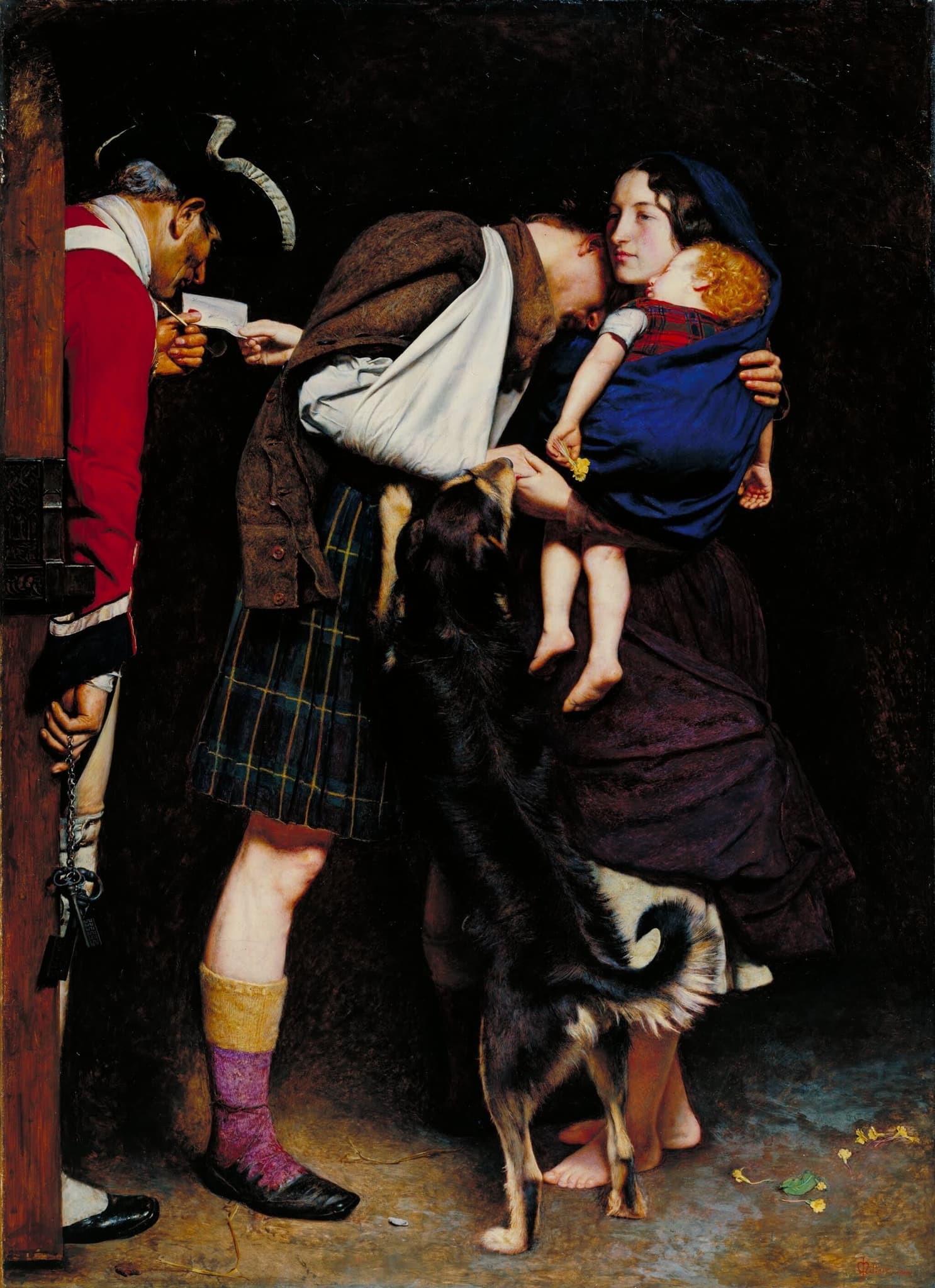
The Order of Release, 1746
John Everett Millais, 1853 • Oil on canvas
View more by John Everett Millais →Valuation Analysis
Conclusion and headline estimate. On a hypothetical market offering with full title, no legal encumbrances, documented provenance and exhibition history, and sound condition, The Order of Release (1853) by John Everett Millais would realistically be expected to hammer in the region of $3,000,000 to $6,000,000, with a conceivable premium to c. $8,000,000 in exceptional sale circumstances involving multiple competing institutions or deep private bidders. The work is in the Tate Britain collection (accession N01657) and therefore has not been tested in the modern open market; the museum holding both supports the scholarly importance of the picture and removes recent realised‑price data for the same object [1].
Why this range? The estimate is derived by analysing recent auction outcomes for Millais narrative oils and comparable Pre‑Raphaelite works, adjusted for scale, provenance and museum‑level significance. Leading Millais oils offered in prime condition with strong provenance have sat in the low single‑digit millions at major houses (for example, Christie’s sale of Sisters in 2013 provides an upper‑market anchor), while numerous Millais works continue to trade in the mid‑to‑low six‑figure band at established salerooms, providing the lower‑market context [2][3]. Because The Order of Release is a substantial finished narrative canvas with long exhibition and literature history, it commands a premium relative to routine studio works.
Key assumptions and sensitivities. This appraisal assumes: (1) the painting is offered with a clear legal title and established provenance (the painting was bought from Millais in 1853 and later presented to Tate by Sir Henry Tate); (2) the canvas is in sound condition or can be conserved without loss of original paint; and (3) the sale takes place through a major London or New York sale series actively marketed to institutions and specialist private collectors. Major variables that would lower the estimate are significant condition issues, gaps or disputes in provenance, or a weak auction climate; conversely, a fresh scholarly exhibition, a high‑profile catalogue entry or institutional bidding could push the realised price above the stated range [1][2].
Comparables and market context. Christie’s 2013 high‑quality Millais oil (Sisters) realised in the low millions and functions as a practical upper anchor for premium, museum‑grade Millais canvases; by contrast, Bonhams results for works described as less iconic demonstrate the mid/low six‑figure market for many Millais paintings today [2][3][4]. The broader Pre‑Raphaelite market has shown selective strength with museum acquisitions and focused exhibitions increasing competition for top‑quality works; however, supply of true museum‑quality Millais oils is limited because many of the artist’s key pictures are institutionally held, which both constrains supply and reduces frequency of market testing [5].
Recommended next steps. To convert this hypothetical appraisal to a definitive presale estimate: obtain a current written condition/conservation report, secure full provenance and exhibition documentation from Tate (or relevant custodians), and commission a formal valuation from the Victorian/British Pictures specialists at Christie’s or Sotheby’s who can review the work in person and propose a sale strategy. With those inputs the estimate can be narrowed and firm presale estimates provided.
Key Valuation Factors
Art Historical Significance
High ImpactThe Order of Release (1853) is an important early narrative Pre‑Raphaelite oil by Millais that demonstrates his storytelling, colourism and technique at a formative moment. While it is not as publicly iconic as Ophelia, it is well regarded in scholarship and appears in exhibition histories and standard monographs; that status raises institutional and collector interest above typical studio pictures. Museum‑level importance translates to stronger demand from institutions and specialist collectors when such works surface, because these buyers prioritise canonical or pedagogically useful pieces that anchor exhibitions and publications.
Provenance & Exhibition History
High ImpactDocumented early purchase from the artist (bought 1853 by Joseph Arden) and later presentation to the Tate by Sir Henry Tate give this painting exceptionally robust provenance and a deep exhibition/publication record. Museum provenance materially increases perceived trust and scholarly value, making the work more attractive to institutional and high‑end private buyers; conversely, long public ownership means the work is untested in the modern market, so the appraisal is hypothetical unless deaccession occurs. Provenance continuity and literature/exhibition citations are primary positive price drivers.
Condition & Conservation
High ImpactCondition is a determinative factor for 19th‑century oils. Varnish discoloration, relining, losses, inpaint or structural stresses can materially reduce value; careful, well‑documented conservation can mitigate discounting. Because the painting is in a major museum, conservatorship is likely professional, but a detailed condition report is essential for a firm presale estimate. Any evidence of invasive restoration, major overpaint or structural weakness would push the realised price to the lower end of the range or below.
Market Supply & Demand
Medium-high ImpactSupply of top‑tier Millais narrative oils is very limited—many are in permanent museum collections—so when a comparable museum‑quality canvas does come to market it can attract institutional competition. Demand for Pre‑Raphaelite works has been selectively strong in recent seasons, supported by focused exhibitions and institutional acquisitions. However, the category is price‑selective: institutionally desirable masterpieces can outperform, while good but less singular works trade in the mid‑six‑figure band. Global buyer reach (UK, US, Asia, Gulf) benefits exceptional lots.
Sale Context & Legal/Export Issues
Medium ImpactBecause the work is held by a UK public institution, any hypothetical sale would face political, ethical and legal hurdles (deaccession policies, national heritage considerations, export licensing). Marketability is also affected by sales channel choice—major evening sales with museum outreach and specialist cataloguing typically achieve the best results. Restrictions, contested ownership or export barriers materially narrow the buyer pool and depress competitive bidding, while a strategically marketed sale can attract institutional partnerships and premium prices.
Sale History
The Order of Release, 1746 has never been sold at public auction.
John Everett Millais's Market
John Everett Millais is a blue‑chip name within the Pre‑Raphaelite movement and 19th‑century British art. His very top works are overwhelmingly museum‑held (Ophelia, et cetera), which limits market supply and raises the rarity premium for any comparable painting that appears. Auction records for Millais show a spread from mid‑six figures for studio or later works to low single‑digit millions for top narrative oils; realised prices depend heavily on provenance, condition and exhibition history. Specialist institutions and dedicated collectors remain the strongest demand sources for Millais canvases.
Comparable Sales
Sisters
John Everett Millais
Same artist; top‑quality mid‑Victorian narrative oil and a confirmed artist auction record — useful as an upper‑market anchor for Millais oils.
$3.5M
2013, Christie's, London
~$4.8M adjusted
Forget‑Me‑Not
John Everett Millais
Same artist; recent mid‑six‑figure sale at a major UK house — representative of the typical market for non‑trophy Millais works and a mid‑market anchor.
$373K
2023, Bonhams, London
~$394K adjusted
Il Penseroso
John Everett Millais
Same artist; recent single‑owner/trade sale showing active demand at the lower‑six‑figure level for Millais studio/genre works — useful lower‑market anchor.
$241K
2025, Bonhams (Guy Bailey single‑owner sale / online)
Current Market Trends
The Pre‑Raphaelite and Victorian 19th‑century market has seen a selective rebound: major exhibitions and institutional acquisitions over recent seasons have increased buyer interest, particularly for museum‑quality canvases. The market is nevertheless stratified—top works perform strongly when they come to market, while lesser examples can underperform. Currency movements and geopolitical buyer activity continue to influence hammer prices for high‑value British 19th‑century works.
Sources
- Tate Britain — The Order of Release, 1746 (John Everett Millais), accession N01657
- Christie's press/results — Important Victorian & British Impressionist Art (Millais 'Sisters' sale, 11 July 2013)
- Bonhams press — Millais 'Forget‑Me‑Not' sale result (29 March 2023)
- Bonhams — The Guy Bailey Collection of Victorian Art (Il Penseroso, Feb 2025 lot listing)
- Christie's — market context and category ceiling (Pre‑Raphaelite benchmark sales overview)