How Much Is Red Square (Painterly Realism of a Peasant Woman in Two Dimensions) Worth?
Last updated: May 18, 2026
Quick Facts
- Methodology
- comparable analysis
For an authenticated, autograph 1915 oil-on-canvas by Kazimir Malevich in good condition with clean, museum‑quality provenance, my conservative market range is USD 8,000,000–40,000,000. The absolute auction ceiling for top Suprematist oils is materially higher (shown by rare blockbuster sales), but reaching that level requires exceptional provenance, exhibition/literature history and pristine condition.
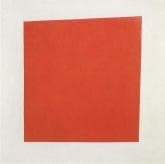
Red Square (Painterly Realism of a Peasant Woman in Two Dimensions)
Kazimir Malevich, 1915 • Oil on canvas
View more by Kazimir Malevich →Valuation Analysis
Valuation conclusion: For an autograph, oil-on-canvas by Kazimir Malevich dated 1915 and supported by clean, documented provenance and good condition, my conservative market range is USD 8,000,000–40,000,000. This range is anchored in auction comparables for canonical Suprematist oils and reflects market concentration at the top end of Malevich’s oeuvre; the empirical ceiling for a museum-quality masterpiece is higher but requires exceptional provenance and literature/exhibition history to realize at auction.
The upper extreme of the market has been demonstrated by a handful of museum‑quality Suprematist lots: Christie's 2018 sale of a Suprematist Composition established a modern auction ceiling for Malevich oils and shows what a fully authenticated, historically pivotal canvas can achieve [1]. More modest but closely dated 1915–16 sales through major houses traded in the mid‑ to high‑seven figures, demonstrating a realistic comparables band for important but not singular canvases [3]. Because "Red Square" exists as a canonical title in museum collections, direct market precedents for the exact canvas are absent; therefore valuation must rest on analogous 1915–16 Suprematist oils rather than on a sale history for this particular object [2].
Key caveats: the canonical 1915 "Red Square" is held by the State Russian Museum and therefore lacks a modern public‑sale price; if the canvas you are evaluating is that museum work, it is not marketable on the open market and institutional replacement valuation follows different rules [2]. If the work under consideration is a privately held but authentic 1915 autograph, the estimate above applies; if it is a later studio version, workshop replica or copy, value falls dramatically (potentially to the low six figures up to ~USD 2 million depending on quality and market interest).
Provenance gaps, unresolved export or restitution risk (an important issue for Russian‑linked works post‑2022), or outstanding legal claims will materially depress buyer interest and achievable prices—recent seizures and investigations into Russian avant‑garde material have made buyers and institutions more cautious and increased due diligence demands [4]. Technical verification (pigment analysis, X‑radiography, infrared reflectography and canvas‑weave analysis) and a catalogue‑raisonné citation are decisive value drivers.
Recommended next steps to refine value: assemble full provenance and exhibition documentation; commission high‑resolution photography and technical/condition reports from a recognized conservation laboratory; consult leading Malevich scholars and the relevant catalogue raisonné editors; and engage an Impressionist & Modern specialist at a major auction house for a formal pre‑sale opinion. With that evidence the range above can be tightened and, if warranted, a presale estimate prepared for market placement.
Practical expectation: treat USD 8–40M as a working band for an authenticated 1915 autograph in good condition and marketable title, with upside into the higher tens of millions only with museum‑quality provenance and documented exhibition/literature pedigree. Any sign of later dating, significant restoration, or provenance/title issues will push the value to the lower end of the spectrum or below.
Key Valuation Factors
Art Historical Significance
High ImpactMalevich’s 1915 Suprematist work and the "Red Square" motif occupy an important place in early abstraction and the artist’s development. While the "Black Square" is the most iconic single image, the Red Square title and related canvases are inseparable from Malevich’s Suprematist theory and thus carry intrinsic scholarly and curatorial value. A canvas demonstrably executed by Malevich in 1915 with ties to early exhibitions or key collectors is therefore prized by institutions and advanced private collectors. That conceptual standing supports strong demand among top collectors when the work is clearly authentic, well documented and in good condition.
Provenance & Exhibition History
High ImpactProvenance is the single most powerful price mover after authentication. Continuous ownership back to a reputable early collection, documented exhibition history (period shows, major retrospectives) and appearances in catalogue raisonnés or authoritative scholarship materially increase market value and buyer confidence. By contrast, gaps in provenance, links to problematic wartime transfers, or absence from the scholarly record will depress estimates and increase the time and cost necessary to place a work at auction or with a museum. For Russian‑linked works, clear export and title documentation is essential to unlock top‑end prices.
Authentication & Technical Analysis
High ImpactScientific and technical evidence (pigment analysis consistent with period chemistry, canvas weave/format matching Malevich’s known supports, X‑radiography and infrared reflectography revealing underdrawing or compositional changes) strongly influence attribution and market value. A favourable technical dossier that corroborates a 1915 dating and an autograph hand will support an estimate in the mid‑ to high‑millions; inconclusive or adverse test results (modern pigments, later ground layers, extensive overpainting) can convert a high‑value work into a low‑value studio/period copy or forgery.
Condition & Conservation
Medium ImpactCondition issues (major retouching, heavy relining, flaking, significant inpainting, or loss of original paint surface) reduce buyer competition and can materially lower realized prices. A well‑documented conservation history, reversible interventions and a stable paint film preserve value; extensive invasive restoration or structural instability will require visible discounting. Condition also affects marketability to museums, which drive the upper echelon of prices for Malevich canvases.
Rarity & Market Demand
High ImpactCanonical, museum‑quality Suprematist oils by Malevich are rare and command concentrated demand; a small number of collectors and institutions dominate willingness to pay at the highest levels. This scarcity supports high price ceilings (as shown by blockbuster sales) but also creates volatility—many works with weaker attribution or provenance trade in far lower bands. Market appetite is strong for authenticated masterpieces but cautious where due diligence is incomplete.
Sale History
Red Square (Painterly Realism of a Peasant Woman in Two Dimensions) has never been sold at public auction.
Kazimir Malevich's Market
Kazimir Malevich is a cornerstone of the Russian avant‑garde and a blue‑chip modernist. The market is strongly tiered: a very small number of authenticated, museum‑quality Suprematist oils command multi‑million to tens‑of‑millions prices (a rare blockbuster sale established the modern ceiling), while attributed works, studio variants and works on paper typically trade at much lower levels. Since 2018 the market has seen both record prices for top works and increased buyer conservatism driven by provenance/authenticity controversies; successful high‑end transactions now require exhaustive documentation and technical corroboration.
Comparable Sales
Suprematist Composition
Kazimir Malevich
Large, museum‑quality Suprematist oil by Malevich (1916). This lot established the modern auction ceiling for Malevich oils and therefore defines market potential for top‑tier works.
$85.8M
2018, Christie's, New York (Impressionist & Modern Evening Sale)
~$110.9M adjusted
Suprematist Composition
Kazimir Malevich
Earlier high‑water mark for Malevich (1916). Useful as a second top‑end datapoint showing sustained demand for canonical Suprematist oils.
$60.0M
2008, Sotheby's, New York (Impressionist & Modern Evening Sale)
~$90.0M adjusted
Suprematist Composition with Plane in Projection
Kazimir Malevich
Important 1915 Suprematist oil (same year as Red Square) that sold in the high seven figures; therefore a closely dated and medium‑matched comparable for a hypothetical 1915 autograph oil.
$21.2M
2017, Sotheby's, Impressionist & Modern Evening Sale (2017)
~$27.9M adjusted
Suprematist Composition (pencil on paper, sheet)
Kazimir Malevich
Recent realized price for a Malevich work on paper; illustrates the market's two‑tier structure (top oils versus drawings/works on paper) and the much lower liquidity/price band for paper media.
$133K
2021, Sotheby's, Russian Pictures
~$155K adjusted
Current Market Trends
Current conditions show a two‑tier market: strong, durable demand for top authentic Suprematist canvases but heightened buyer caution and greater due diligence after recent provenance disputes and seizures. Supply of prime Malevich oils at major houses is limited, which supports prices for market‑ready masterpieces, while smaller works and uncertain attributions trade more modestly. Geopolitical and legal factors affecting Russian‑linked works add underwriting complexity and can narrow the pool of potential buyers.
Sources
- Christie's – discussion of Suprematist Composition (2018) and auction precedent
- Wikipedia – Red Square (painting) / State Russian Museum entry (canonical 1915 canvas)
- Sotheby's – example 1915 Suprematist sale (mid/high‑seven figure comparable)
- The Art Newspaper – reporting on seizures/provenance/legal actions affecting Russian avant‑garde works (market due diligence implications)