How Much Is Self-Portrait Worth?
Last updated: February 22, 2026
Quick Facts
- Insurance Value
- $10.0M (Assistant estimate (indicative replacement schedule based on rarity and market benchmarks))
- Methodology
- comparable analysis
Based on rarity, prime date (1878), and market benchmarks for museum-caliber Cassatt works on paper, the Met’s Self-Portrait is estimated at $6–10 million fair market value. The range sits alongside the artist’s standing auction record for a prime-period work on paper and reflects a rarity premium tempered by paper/condition considerations.
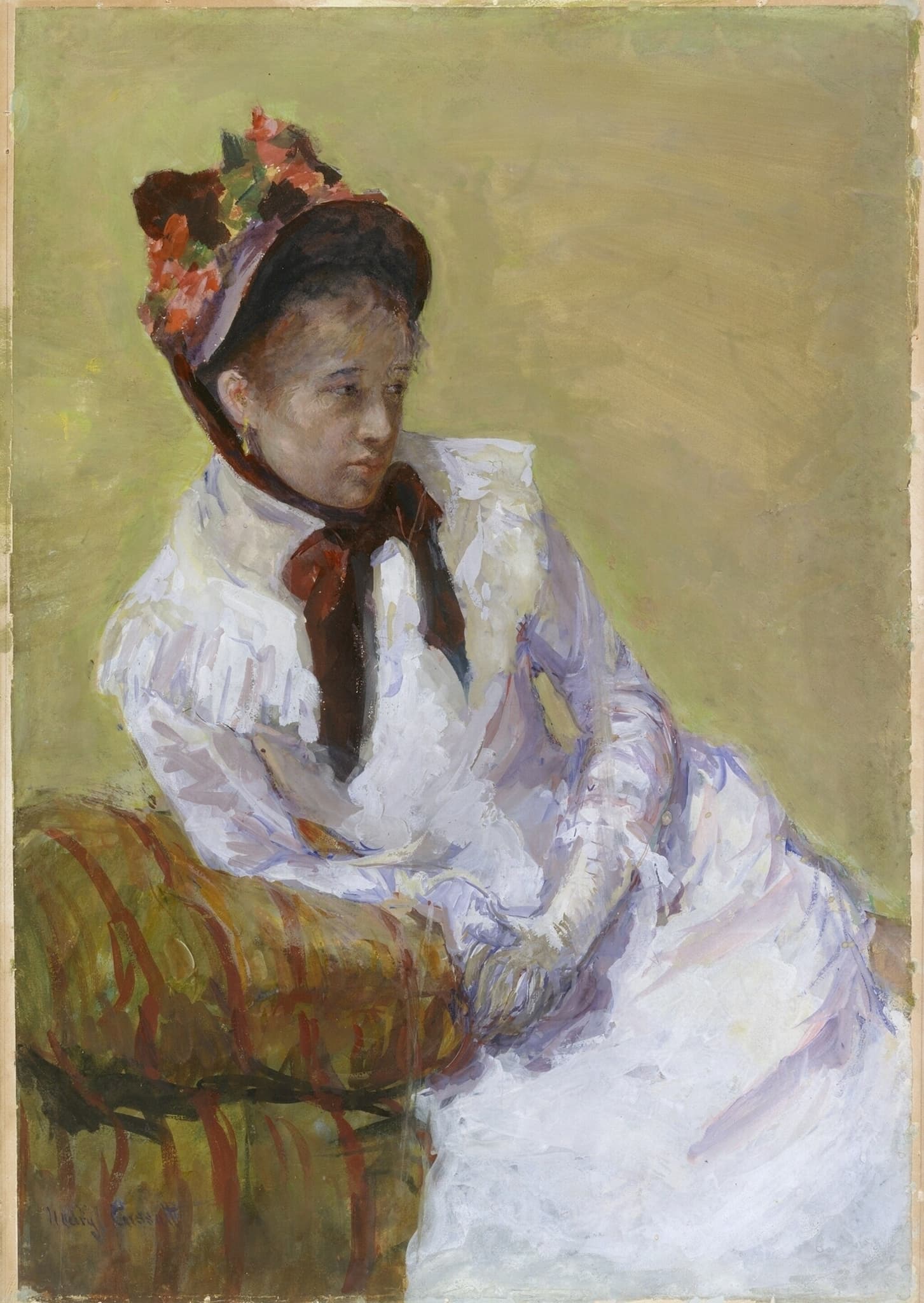
Self-Portrait
Mary Cassatt, 1878 • Watercolor and gouache on wove paper laid down to buff wood-pulp paper
Read full analysis of Self-Portrait →Valuation Analysis
Overview. Mary Cassatt’s Self‑Portrait (1878) at The Metropolitan Museum of Art is a museum‑caliber work from her prime Impressionist years and, crucially, one of only two known self‑portraits by the artist. The Met’s object record confirms the medium (watercolor and gouache on wove paper, laid to wood‑pulp paper), the early date, and a storied provenance reaching back to Louisine Elder (later Havemeyer) by 1879—linking the sheet to one of the most important American collections of Impressionism [1]. This exceptional subject rarity and period specificity elevate the work’s art‑historical weight despite its support on paper.
Market anchors. The closest market benchmark is Christie’s New York (Oct. 20, 2022), where Cassatt’s Young Lady in a Loge, Gazing to Right—another prime‑period, mixed‑media work on paper—realized $7,489,000 and set the standing auction record for the artist [2]. Press and market analyses have emphasized that for Cassatt, top works on paper can equal or outpace many oils when date, subject, and quality align—an unusual dynamic among Impressionists that underscores depth of demand for her best sheets [3].
Adjustments: rarity vs. medium/condition. A self‑portrait by Cassatt is an extreme rarity, conferring a substantial premium over comparably dated works on paper. That premium is balanced by the medium’s inherent sensitivities (light, handling) and this sheet’s mount on wood‑pulp paper—a known conservation concern that can constrain upside if acidity, discoloration, or structural stresses are present [1]. With a strong, recent condition report indicating stability and minimal discoloration, the work could credibly test or surpass the upper‑seven‑figure territory staked out by the 2022 record; material condition reservations would compress the range toward the low end.
Demand tailwinds. Institutional and scholarly focus on Cassatt remains high. The centenary‑year exhibition at the National Gallery of Art in 2026 (Mary Cassatt: An American in Paris) adds timely visibility, while ongoing reassessment of women Impressionists has broadened the collector base and sharpened appetite for signature, biographically resonant subjects [4]. In a market characterized by selectivity and a "flight to quality," canonical names and museum‑grade works have led the rebound in Impressionist & Modern, further supporting pricing for truly exceptional sheets.
Conclusion and range. Balancing these factors, a fair‑market auction estimate of $6–10 million is warranted today. This places the Met Self‑Portrait squarely alongside the artist’s best‑in‑class results for prime‑period works on paper, justified by its singular subject and provenance, while recognizing medium/condition risks. As a non‑substitutable icon, a replacement (insurance) schedule around $10 million is reasonable pending formal conservation review. Additional precision would follow from a current condition report, detailed light‑exposure history, and any newly surfaced hard comps for late‑1870s works of comparable stature [1][2][3].
Key Valuation Factors
Art Historical Significance
High ImpactCreated in 1878, the work sits in Cassatt’s early, formative Impressionist period and is biographically pivotal: it is one of only two known self‑portraits. That rarity, combined with the artist’s stature as a principal American Impressionist embedded in the Paris avant‑garde, imbues the sheet with outsized scholarly and exhibition value. Its early Havemeyer connection and subsequent bequest to The Met tie it to the core narrative of how Impressionism entered U.S. museums, strengthening its cultural capital. In short, this is a signature document of authorship and identity by a blue‑chip artist at a prime moment, enhancing long‑term importance and value resilience [1].
Rarity of Subject
High ImpactAuthentic Cassatt self‑portraits are exceptionally scarce—two are known, both in U.S. museums—creating near‑absolute supply constraint. Self‑portraits by major Impressionists typically command premiums for their autobiographical significance and desirability to institutions and leading private collections. Against this backdrop, the Met sheet’s subject rarefies it beyond even strong mother‑and‑child or theatre subjects. The 2022 record for a prime‑period Cassatt work on paper demonstrates market willingness to pay for iconic themes; a true self‑portrait arguably carries an even stronger identity premium, provided condition supports sustained display and preservation [1][2][3].
Medium and Condition
Medium ImpactExecuted in watercolor and gouache on wove paper and laid to a wood‑pulp support, the work embodies the immediacy prized in Cassatt’s best works on paper but also introduces condition sensitivities. Wood‑pulp mounts can acidify and embrittle, potentially leading to discoloration or planar stress over time if not expertly mitigated. Light sensitivity is intrinsic to the media, affecting display flexibility and long‑term presentation. A current, detailed conservation report is pivotal: excellent, stable condition would justify the upper bound of the valuation; evidence of mounting-induced degradation or notable fading would warrant a discount and a tighter, lower range [1].
Market Benchmarks and Demand
High ImpactCassatt’s standing auction record—$7.489 million for a prime 1878–79 work on paper—confirms deep demand for her best sheets and sets a credible benchmark for the Met self‑portrait’s potential if offered publicly. Recent analyses emphasize that Cassatt’s top works on paper can rival her oils, an atypical pattern that underscores collector focus on subject, date, and quality rather than canvas primacy alone. With the artist’s 2026 centenary exhibition at the National Gallery of Art and sustained institutional attention to women Impressionists, demand tailwinds remain supportive. This context substantiates a $6–10 million fair‑market range today [2][3][4].
Sale History
Self-Portrait has never been sold at public auction.
Mary Cassatt's Market
Mary Cassatt is a blue‑chip Impressionist with sustained global demand across the U.S., U.K., and France. While her most celebrated oils typically achieve mid‑seven figures, the artist’s market is distinctive in that top‑tier works on paper—especially prime‑period pastels and mixed‑media sheets from the late 1870s–1890s—can meet or exceed many oil results. Themes central to her oeuvre (theatre loges; mother and child) and works with strong provenance perform best. Supply at the masterpiece level is thin, and institutions are active competitors. Buyers remain selective on condition and subject, but the best examples retain robust liquidity and price leadership within American and French Impressionism.
Comparable Sales
Young Lady in a Loge, Gazing to Right
Mary Cassatt
Closest-quality anchor: same artist, same prime 1878–79 moment, top-tier mixed media on paper; demonstrates market depth for museum-caliber Cassatt works on paper.
$7.5M
2022, Christie's New York (The Ann & Gordon Getty Collection)
~$8.4M adjusted
The Sun Bath (with Three Figures)
Mary Cassatt
High-water mark for a major Cassatt multi-figure painting; shows upper-tier appetite for masterpiece-level Cassatt, bracketing potential value even though medium differs from the Met self-portrait.
$4.4M
2020, Sotheby's New York
~$5.5M adjusted
Reine Lefebvre with Blond Baby and Sara Holding a Cat
Mary Cassatt
Same artist; work on paper (pastel counterproof) with intimate maternal subject; illustrates current day‑sale liquidity for secondary-tier Cassatt works on paper.
$178K
2026, Christie's New York (Collector/Connoisseur: American Art Day Sale)
~$174K adjusted
Sketch of 'Sara in a Green Bonnet'
Mary Cassatt
Same artist; pastel on support; confirms mid‑six‑figure range for modest, later Cassatt works on paper—useful for market slope but not directly comparable in period or significance.
$152K
2025, Christie's New York
Head of Jules (Buste d’enfant)
Mary Cassatt
Same artist; late‑19th‑century portrait head (oil). Shows pricing for small-scale portraits outside prime 1870s and outside the iconic subjects; context for lower bound.
$165K
2025, Sotheby's New York (Modern Day Auction)
Current Market Trends
Impressionist & Modern markets rebounded after a softer 2024, with a pronounced flight to quality: canonical names and museum‑grade works led performance, often buoyed by single‑owner collections and guarantees. Buyers are more risk‑aware, penalizing condition issues and secondary subjects while paying premiums for prime dates, strong provenance, and compelling narratives. Within this context, Cassatt benefits from institutional programming and reappraisal of women Impressionists, alongside the unusual strength of her top works on paper. Overall, the category shows selective strength: fewer opportunities at the top, but deep competition when masterpieces appear, supporting upper‑seven‑figure outcomes for best‑in‑class sheets.
Study print
Study this painting as a print
Pair the full artwork with a museum-style study sheet focused on one meaningful detail.
Sources
- The Metropolitan Museum of Art: Mary Cassatt, Self‑Portrait (1878) Object Page
- Christie’s: Ann & Gordon Getty Collection — Sale Results and Highlights (Oct 20, 2022)
- Artnet News: Impressionism’s Enduring Market Strength and Cassatt’s Record
- National Gallery of Art: Mary Cassatt — An American in Paris (2026 Exhibition)