How Much Is Lozenge Composition with Two Lines Worth?
Last updated: May 7, 2026
Quick Facts
- Last Sale
- $1.2M (1988, Stedelijk Museum Amsterdam (acquisition from Municipality of Hilversum))
- Methodology
- comparable analysis
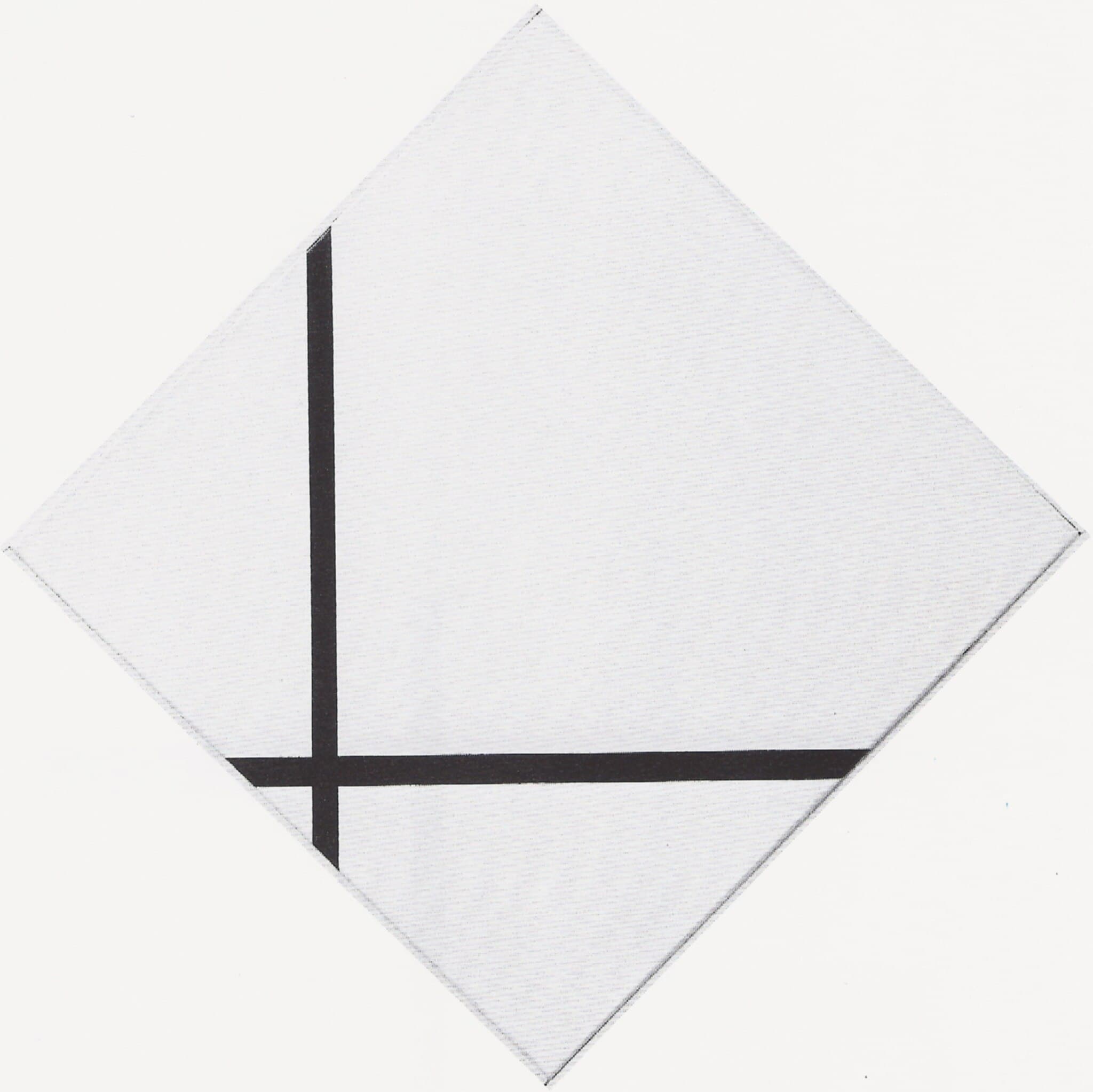
Hypothetical open‑market value for Piet Mondrian’s Lozenge Composition with Two Lines (1931) is $55–85 million. The work is in the Stedelijk Museum Amsterdam and not for sale, but its rarity, canonical status within the lozenge series, and ironclad provenance would command trophy pricing and could challenge the artist’s $51 million auction record.
Valuation Analysis
Conclusion: We value Piet Mondrian’s Lozenge Composition with Two Lines (1931, Stedelijk Museum Amsterdam, acc. 1988.1.0016) at $55–85 million in a hypothetical open‑market sale. The painting is not for sale; this is an informational valuation grounded in recent top auction comparables for prime Mondrian canvases and the exceptional rarity and importance of this specific lozenge type [1].
Market anchors: Mondrian’s current auction record is $51,000,000 for Composition No. II (1930), achieved at Sotheby’s New York on November 14, 2022 [2]. In May 2025, Christie’s sold a major 1922 canvas, Composition with Large Red Plane, Bluish Gray, Yellow, Black and Blue, for $47,560,000 including fees—confirming sustained depth of demand for top‑tier Neoplastic works even in a selective market [3]. These results define the present pricing corridor for prime, museum‑quality Mondrians.
Why the lozenge commands a premium: The late‑1920s to early‑1930s lozenge (diamond) series sits at the core of Mondrian’s Neo‑Plasticism. The pared‑down “two lines” variant is among his most radical and intellectually consequential reductions—extremely rare and disproportionately held by institutions. That combination of art‑historical primacy, scarcity, and institutional desirability supports a premium to rectangular‑grid comparables from adjacent years. Public discourse around another lozenge (Composition with Blue, 1926) has even referenced a value “more than $100 million” in litigation filings, underscoring perceived trophy status for this format (a claim, not a sale) [6].
Provenance and institutional stature: The Stedelijk picture’s history is exemplary: gifted in 1932 to the Municipality of Hilversum, on long‑term loan to the Stedelijk from 1951, then acquired by Amsterdam/Stedelijk in 1987–88 for 2.5 million Dutch guilders with support from Dutch cultural funds [4][5]. Such provenance, combined with extensive exhibition and scholarly presence, typically elevates demand among museums and top private collectors when comparable works appear.
How the range was derived: We anchor the low estimate near the artist’s 2022 record and the 2025 marquee result, then adjust upward to reflect the lozenge series’ rarity and the singularity of the “two lines” composition. The $55–85 million band captures current blue‑chip Modern market dynamics—where guarantees, curated single‑owner contexts, and pristine condition can catalyze record‑level outcomes—while remaining disciplined to recent public sales evidence [2][3]. Methodology: comparable analysis of the closest high‑quality public benchmarks, with a scarcity and significance premium calibrated specifically to the lozenge format. This is not a formal appraisal but reflects present, trophy‑level pricing for Mondrian at the top end of the market [1][2][3].
Key Valuation Factors
Art Historical Significance
High ImpactWithin Mondrian’s oeuvre, the lozenge (diamond) canvases from the late 1920s–early 1930s are a cornerstone of Neo‑Plasticism. The austere “two lines” configuration is among his most radical reductions—a decisive statement about equilibrium, non‑hierarchy, and the elimination of color and incident. Its intellectual clarity and influence on subsequent geometric abstraction make it a canonical image taught in art history and exhibited widely. Works that crystallize an artist’s core theory, with this level of parsimony and resolution, tend to capture outsized institutional and collector demand, supporting values above otherwise comparable period works that are less conceptually definitive.
Rarity and Supply
High ImpactLozenge paintings from ca. 1925–1932 are scarce, and the extreme minimal variants (“two lines” without color planes) are rarer still. Many of the best examples are in long‑term museum holdings, constricting supply on the open market. This chronic scarcity won’t change; the series is finite and institutionally absorbed. When a close peer appears at auction, aggressive third‑party guarantees and global competition are common, leading to strong hammer prices relative to rectangular‑grid works. Rarity is a primary driver of premium pricing here, justifying an uplift from the recent $47–51 million corridor established by top rectangular comparables.
Provenance and Institutional Standing
High ImpactThe specific painting sits in the Stedelijk Museum Amsterdam with clear, public provenance: 1932 civic gift, 1951 loan to the Stedelijk, and a 1987–88 museum acquisition funded by respected cultural bodies. Such a transparent, controversy‑free chain of ownership and extensive institutional exhibition history are precisely what top buyers prize. While this work is not for sale, those attributes would materially support a best‑in‑class valuation if a closely comparable lozenge were offered, as they mitigate risk on authenticity, condition, and restitution exposure—three factors that routinely shape bidding behavior at the very top of the market.
Market Benchmarks and Timing
Medium ImpactMondrian’s market is deep and global, with recent marquee sales at $47.56 million (2025) and the standing $51 million record (2022). The broader Modern segment has been selective but robust for museum‑grade trophies. Against that backdrop, the lozenge series’ scarcity supports a premium to same‑period rectangular works, particularly under strong sale choreography (major New York venue, thoughtful cataloging, appropriate guarantee). Our $55–85 million band balances these supports with 2025–2026 buyer caution, estimating where bidding would realistically clear under competitive conditions without overreliance on exceptional, one‑off scenarios.
Sale History
Stedelijk Museum Amsterdam (acquisition from Municipality of Hilversum)
Private institutional acquisition; price originally 2.5 million NLG; USD shown as an approximate contemporaneous conversion. Not an auction.
Piet Mondrian's Market
Piet Mondrian is a blue‑chip pillar of early 20th‑century abstraction with a compact supply of masterpiece‑level canvases. His record stands at $51,000,000 for Composition No. II (1930) at Sotheby’s New York in 2022, while a top early Neoplastic canvas achieved $47,560,000 at Christie’s in 2025—evidence of sustained, global demand for best‑period works. The collector pool includes major museums and top private buyers, and the market is underpinned by scholarship, iconic status, and cross‑category appeal. Liquidity is strongest for late‑1910s to early‑1930s grids and lozenges, with late transatlantic works and exceptional works on paper providing additional, calibrated entry points.
Comparable Sales
Composition No. II (1930)
Piet Mondrian
Artist and prime De Stijl period; canonical grid painting directly adjacent in date to the 1931 lozenge; market-leading result anchoring top-tier pricing.
$51.0M
2022, Sotheby's New York
~$56.0M adjusted
Composition with Large Red Plane, Bluish Gray, Yellow, Black and Blue (1922)
Piet Mondrian
Artist and early mature Neoplastic period; major rectangular grid canvas with bold planes and primary palette; recent marquee-week benchmark.
$47.6M
2025, Christie's New York
Composition No. III, with Red, Blue, Yellow and Black (1929)
Piet Mondrian
Artist and core late‑1920s De Stijl grid; extremely close in date and art-historical standing to the 1931 lozenge; long-standing top auction reference.
$50.6M
2015, Christie's New York
~$68.8M adjusted
Composition with Red and Blue (1939–41)
Piet Mondrian
Artist and later transatlantic period; strong but less scarce than the radical late‑1920s/early‑1930s works; sets a lower bound for major canvases.
$23.1M
2025, Christie's New York
Current Market Trends
The upper tier of the Modern market remains selective but resilient, with trophy works attracting deep bidding—often supported by irrevocable bids and careful sale curation—while mid‑tier material faces stricter pricing discipline. Within geometric abstraction and De Stijl, Mondrian is the clear price leader. Recent seasons show that canonical, museum‑grade pictures continue to command premium valuations, even as overall auction volumes normalize. Against this backdrop, the scarcity of prime lozenge canvases—especially radical reductions like the 1931 “two lines”—positions them to outperform adjacent categories on a risk‑adjusted basis, provided pristine condition, ironclad provenance, and optimal sale timing.
Sources
- Stedelijk Museum Amsterdam—Collection entry: Piet Mondrian, Lozenge Composition with Two Lines (1931)
- Sotheby’s—Composition No. II (1930), sold for $51,000,000 (Nov 14, 2022)
- Artnet News—Leonard & Louise Riggio: Mondrian at Christie’s sells for $47.56 million (May 12, 2025)
- Vereniging Rembrandt—Ruitvormige compositie met twee lijnen: provenance and acquisition support
- Amsterdam City Archives—Amsterdam koopt (1987–88 Mondrian acquisition; 2.5m NLG)
- Artnet News—Mondrian heirs’ claim over PMA lozenge; valuation cited as more than $100 million