How Much Is Alba Madonna Worth?
Last updated: April 27, 2026
Quick Facts
- Last Sale
- $1.2M (1931, Private purchase (Hermitage sale → Andrew W. Mellon, via dealers))
- Methodology
- extrapolation
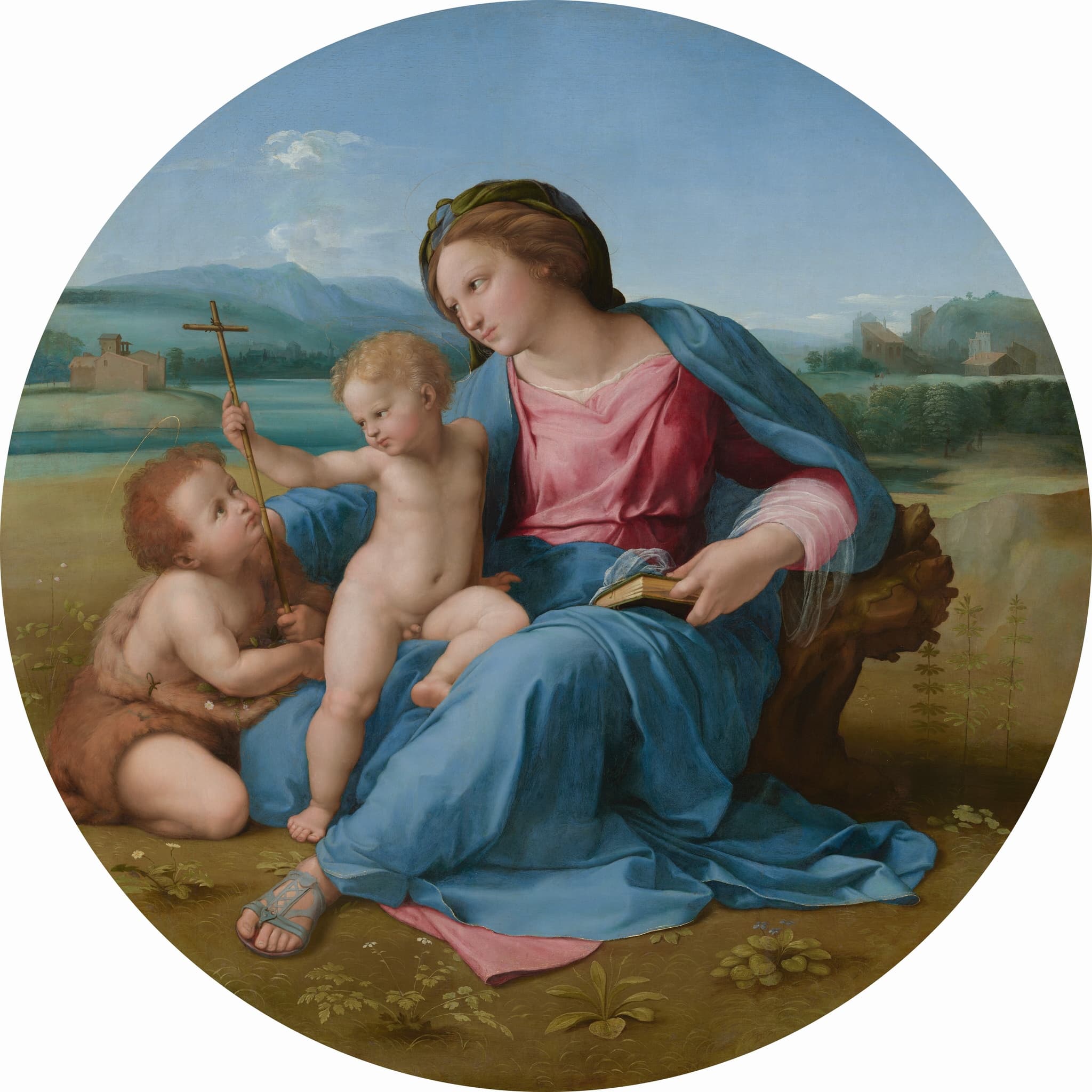
Alba Madonna is a canonical, museum-held Raphael and is effectively off-market. Hypothetically, using extrapolation from top-end Old Master precedents and Raphael market signals, a reasonable preliminary private-market range is approximately $150–400 million, with large uncertainty driven by condition, legal/ownership constraints, and buyer availability.
Valuation Analysis
Estimate: Based on the painting’s canonical status, extreme market scarcity of autograph Raphael paintings, and observed ceilings for exceptional High Renaissance works, I place Alba Madonna in a conditional market range of $150–400 million. This range is speculative and built by extrapolating from limited public comparables, modern museum ownership dynamics, and record High‑Renaissance results rather than a direct recent sale of this object. The National Gallery of Art holds the work and documents a historic panel→canvas transfer and long museum provenance, both of which materially affect marketability and value [1].
Why this range: Raphael autograph paintings of Alba Madonna’s importance virtually never reach the open market; scarcity pushes theoretical value upward while the absence of transparent, recent auction evidence forces a wide range. At the top end the market has demonstrated capacity to pay mid‑hundreds of millions for a contested, canonical High Renaissance work (cf. the Leonardo Salvator Mundi sale that established an extreme market ceiling) [2]. Mid and lower bounds reflect more conservative translations of known Raphael results (drawings and the occasional small panel) into a private‑purchase context and incorporate likely condition and transaction discounts.
Condition and technical risk: The painting’s documented transfer from panel to canvas (historic conservation practice) introduces technical and aesthetic issues that collectors and insurers treat as measurable discounts versus perfectly preserved originals. The NGA notes losses/changes to the right landscape area; a current technical/condition report could move the valuation materially downward if problems are severe, or modestly upward if recent conservation stabilized the work [1].
Ownership and legal constraints: The work is part of the Mellon founding collection of the National Gallery of Art; donor restrictions, deaccession policies and political sensitivities make an actual sale exceptionally unlikely. Any real transaction would be private, protracted, and subject to legal and ethical scrutiny — factors that typically reduce liquidity and can either compress or unpredictably inflate price depending on buyer motivation and public reaction.
Comparables and market mechanics: There are hardly any modern, directly comparable auction sales for a museum‑grade Raphael painting. Raphael drawings and rare small panels have realized tens of millions; a few less‑central Raphael panels sold in the low millions recently. By contrast one outlier High‑Renaissance sale shows that, when provenance/attribution/marketing align, prices can escalate into the mid‑hundreds of millions [2][3][4]. Because Alba Madonna sits at the intersection of exceptional art‑historical importance and constrained marketability, my range intentionally spans conservative to ceiling scenarios.
Conclusion and next steps: This is a high‑uncertainty, conditional valuation. To refine it into a defensible market appraisal you should obtain (1) a current NGA technical/condition report and conservation cost estimate, (2) a legal/title/deaccession review for donor restrictions, and (3) written private‑sale appraisals from Old Master specialists at major houses. Absent those inputs, treat $150–400M as a working hypothetical range reflecting scarcity, significance, condition risk, and demonstrated market ceilings for exceptional High Renaissance works [1][2].
Key Valuation Factors
Art Historical Significance
High ImpactAlba Madonna is a quintessential Raphael tondo from his mature period and is widely regarded as one of his signature Madonna compositions. Its compositional economy, lyricism, and technical mastery place it squarely within the small set of works that define Raphael’s international reputation. That status generates strong intrinsic demand among institutions and the very wealthiest private collectors because the painting is both emblematic of High Renaissance ideals and visually familiar through reproduction and scholarship. In market terms, high art‑historical significance raises theoretical value substantially because few works of comparable pedigree exist in private hands, creating a price multiplier effect for any hypothetical sale.
Rarity / Market Scarcity
High ImpactAutograph Raphael paintings of museum quality are extraordinarily scarce on the open market; most major examples sit in national collections. This acute scarcity means that any available Raphael masterpiece would attract intense bidding from a small, highly liquid buyer pool (major museums, sovereign buyers, ultra‑high‑net‑worth collectors). Scarcity supports very high theoretical valuations but also increases volatility and uncertainty: with only a handful of potential buyers, realized prices depend heavily on whether multiple bidders compete in a single transaction. Scarcity therefore justifies the upper bound of the range but also contributes to the large spread.
Condition / Conservation History
High ImpactDocumented historic treatment — specifically the transfer from panel to canvas — materially affects perceived originality, structural integrity, and aesthetics. Such interventions were common in the 19th/early 20th centuries but are treated prudently by modern buyers and insurers. Condition issues can produce quantifiable discounts or even chilling market interest if significant areas of loss or instability persist. A current technical/condition report from the NGA is essential to narrow valuation: a fully stable, visually intact object would support the higher end of the range, whereas unresolved conservation issues could reduce value materially and push realizations toward the lower bound or below.
Ownership, Legal & Deaccession Constraints
High ImpactThe painting is part of the National Gallery of Art’s founding Mellon collection and is therefore subject to institutional stewardship norms, donor restrictions and public scrutiny. Deaccessioning a core, iconic work involves legal, reputational, and political hurdles that effectively suppress open competition and complicate private sale mechanics. Export controls or donor‑imposed conditions could further limit buyer interest. These constraints reduce practical liquidity and add execution risk, meaning any theoretical valuation must be adjusted for the likelihood that a transparent, arms‑length sale would be improbable.
Comparables & Market Precedent
Medium ImpactThere are few direct comparables: Raphael drawings and rare small paintings have realized tens of millions at auction, while an extreme outlier High‑Renaissance work (Leonardo’s Salvator Mundi) demonstrates market capacity for mid‑hundreds of millions. Because Alba Madonna has no modern auction price, the valuation is an extrapolation from these precedents: translate the highest Raphael drawing/painting realizations upward for the superior historical importance of Alba Madonna, but temper that with conservation and ownership discounts. Comparables therefore guide the ceiling and floor but cannot produce a precise single number.
Sale History
Private / noble collections
Private purchase (via dealers to Andrew W. Mellon)
National Gallery of Art (gift)
Raphael's Market
Raphael sits at the top of the Old Masters hierarchy: artistically canonical, widely studied and collectible, yet commercially thin because most of his major works are museum‑held. Auction market events for Raphael are sporadic; the most valuable sales have been drawings and a handful of smaller panels. Demand is concentrated among institutions and a small group of private buyers able to transact at the highest levels. Attribution certainty, provenance, and technical condition dominate pricing dynamics for Raphael works — more so than trend‑driven collecting cycles.
Comparable Sales
Portrait of Lorenzo de' Medici (attributed to Raphael)
Raphael
One of the few modern auction appearances of a Raphael painting; useful to gauge buyer willingness for autograph Raphael paintings in the public market.
$37.3M
2007, Christie's, London
~$57.0M adjusted
Head of a Muse (drawing)
Raphael
Record auction result for a Raphael drawing; indicates the high end of market demand for autograph Raphael material even though medium differs from a painting.
$47.8M
2009, Christie's, London
~$70.7M adjusted
Saint Mary Magdalene (attributed to Raphael)
Raphael
Recent sale of a small Raphael oil panel (Feb 2025); illustrative of current market realizations for small or less‑canonical Raphael paintings.
$3.1M
2025, Sotheby's, New York
Salvator Mundi
Leonardo da Vinci
Extreme market ceiling for a canonical High Renaissance masterpiece sold at auction; useful only as an upper bound when considering Alba Madonna's theoretical maximum.
$450.3M
2017, Christie's, New York
~$582.3M adjusted
Current Market Trends
The Old Masters market has been selective and relatively muted in recent years; high‑quality, well‑provenanced works still sell strongly but turnover is inconsistent. Demand is driven by connoisseurship and institutional interest; exhibition cycles and scholarly reassessments can temporarily raise visibility. Overall liquidity is limited, so unique works like Alba Madonna face a market where buyer competition (or lack thereof) and legal constraints determine realized price more than headline indices.
Sources
- National Gallery of Art — Collection entry and technical/provenance notes for Alba Madonna (Raphael)
- Christie's — Highlights: Leonardo da Vinci, Salvator Mundi (2017 sale coverage)
- Christie's — Head of a Muse (Raphael drawing) press information, 2009
- Christie's — Portrait of Lorenzo de' Medici (attributed to Raphael), sale entry (2007)
- Artnet News — Coverage of a small Raphael panel offered at Sotheby's New York (Feb 2025)