How Much Is La Belle Jardinière (Madonna and Child with Saint John) Worth?
Last updated: April 27, 2026
Quick Facts
- Methodology
- comparable analysis
This is a theoretical, market‑replacement valuation for Raphael’s La Belle Jardinière of USD 200–400 million. The work is a museum‑held, canonical Raphael in the Louvre and has no modern sale history; the range is anchored to outlier High‑Renaissance trophy sales and adjusted for rarity, provenance/legal restrictions, condition uncertainty, and likely buyer pool dynamics.
Valuation Analysis
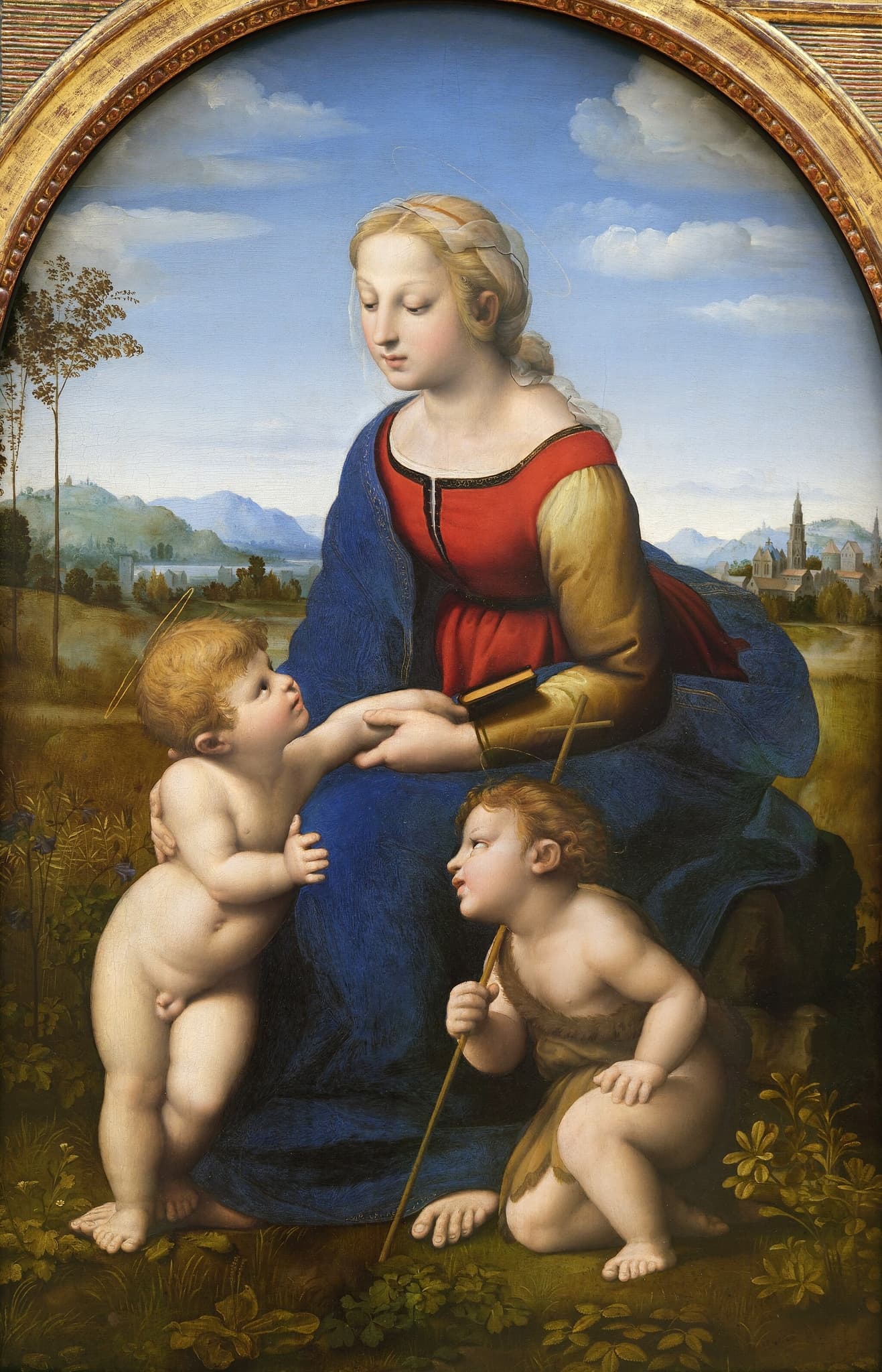
Valuation statement. La Belle Jardinière (Raphael, Madonna and Child with Saint John) is appraised here on a hypothetical open‑market/replacement basis at USD 200–400 million. The painting has never been offered in the modern public market and is part of the Musée du Louvre’s permanent collection, which places practical and legal constraints on true saleability [1].
Why this range. The upper bound of the global market for single High‑Renaissance masterpieces was reset by Leonardo’s Salvator Mundi (Christie’s, 2017), which provides an absolute psychological ceiling for a once‑in‑a‑generation sale [2]. Raphael’s standing as one of the canonical High Renaissance masters implies a substantial scarcity premium: very few autograph Raphaels exist in private hands and the handful that surface (drawings, small panels) have produced headline results in the multi‑tens of millions (drawings) and low millions (small attributed panels). A museum‑caliber, undisputed Raphael Madonna of La Belle Jardinière’s quality would therefore be expected to trade well below the unique Leonardo outlier but well above typical Old‑Master painting results — hence a mid‑hundreds of millions estimate.
Adjustments and assumptions. This valuation assumes: (1) an indisputable Raphael autograph attribution and museum‑grade condition; (2) a fully marketable legal status (i.e., hypothetically transferable despite current French patrimony protections); and (3) an extraordinary auction or private‑treaty sale scenario with multiple eligible trophy buyers/institutions. Material adjustments that would move the estimate materially down include clear conservation issues, significant overpainting or unresolvable condition problems, gaps or risk in provenance, or a confirmed legal impossibility to export/deaccession the work.
Market dynamics. The top‑end Old Masters market is extremely thin and buyer composition matters: state museums, sovereign collections, and ultra‑high‑net‑worth private buyers are the realistic bidders for an object at this scale. Competition among a few bidders can push a final price toward the high end of this range; conversely, legal/export barriers or lack of competitive buyers can prevent realization of this theoretical value. Given the Louvre ownership and French inalienability practices, any real sale is highly improbable and this valuation should be read as a replacement/insurance benchmark rather than a forecast of a likely market transaction [1][2].
Conclusion. USD 200–400 million is a defensible theoretical range for La Belle Jardinière if it were ever legitimately offered under exceptional market conditions and with clean title and condition. The figure is intentionally wide to reflect provenance/legal uncertainty, condition unknowns, and the extreme sensitivity of top‑end Old Masters prices to single‑sale dynamics and buyer identity.
Key Valuation Factors
Art Historical Significance
High ImpactLa Belle Jardinière is a canonical Raphael Madonna from his Florentine period and is widely reproduced and cited in scholarship. As a mature composition by Raphael — high quality of draftsmanship, compositional coherence, and iconographic importance — it ranks among the artist’s museum‑grade Madonnas and commands the highest category of cultural and scholarly value. That status directly translates into a premium in theoretical replacement or trophy‑sale pricing because collectors and institutions prize autograph, academically affirmed works by the artist above workshop or follower pieces.
Rarity & Supply
High ImpactAutograph Raphael paintings are vanishingly scarce in the private market; most of his finest works are held by national museums (e.g., the Vatican, Uffizi, Louvre). This near‑absence of supply creates a large scarcity premium for any canonical Raphael that could conceivably be sold. Market pricing therefore stretches dramatically in the presence of an available masterpiece because buyer competition is concentrated among a very small set of trophy buyers and institutions.
Provenance, Legal & Deaccessionability
High ImpactThe painting’s Louvre ownership places it under French patrimony rules that make deaccession and export highly constrained. National collection status, cultural patrimony protections, and political objections to selling national treasures create a materially lower practical marketability and, in most realistic scenarios, render a bona fide sale impossible. Even as a theoretical valuation, the legal and provenance context is the single largest practical limiter on transaction probability and therefore is a decisive negative on liquidity.
Condition & Conservation
Medium ImpactCondition—panel stability, paint loss, restorations, and overpaint—has substantial impact on value. While the Louvre performs high‑level conservation and the work has been the subject of study, any serious structural or aesthetic issues discovered in a full technical dossier would reduce market value materially. Conversely, evidence of original surface, underdrawing, and minimal intrusive restoration would support the high end of the valuation range.
Market Comparables & Buyer Base
High ImpactComparable evidence is thin but instructive: top Raphael drawings have sold in the high‑tens of millions, small attributed panels in the low‑millions, while Leonardo’s Salvator Mundi (2017) establishes an outlier ceiling (~USD 450M). These comparables imply that a museum‑grade Raphael Madonna would likely trade in the mid‑hundreds of millions under extraordinary sale conditions because it competes for the same narrow trophy‑buyer cohort and institutional purchasers.
Sale History
La Belle Jardinière (Madonna and Child with Saint John) has never been sold at public auction.
Raphael's Market
Raphael occupies one of the most esteemed positions in the Old Masters market: academically canonical, globally famous, and with very limited supply in private hands. Market evidence is dominated by a handful of high‑value drawing sales (multi‑tens of millions) and occasional small panel results; full‑scale museum Madonnas virtually never appear. Because of this, attribution certainty and condition drive pricing decisively: confirmed autograph works can command large premiums, while ambiguous attributions or workshop designations dramatically reduce buyer competition and price.
Comparable Sales
Salvator Mundi
Leonardo da Vinci
Extraordinary High‑Renaissance trophy sale that establishes the psychological/top ceiling for a unique Renaissance masterwork; useful as an upper‑bound benchmark versus a museum‑grade Raphael Madonna.
$450.3M
2017, Christie's New York
~$531.4M adjusted
Head of a Young Apostle (black chalk drawing)
Raphael
Record auction result for a Raphael drawing; demonstrates the market's willingness to pay multi‑tens of millions for top autograph Raphael works on paper — a relevant scarcity premium indicator.
$47.8M
2012, Sotheby's London
~$61.2M adjusted
Head of a Muse (drawing)
Raphael
Historic high‑end Raphael drawing sale that, together with other drawings, sets the high‑water mark for Raphael on the market and indicates the scarcity/value of autograph material.
$47.9M
2009, Christie's London
~$68.1M adjusted
Portrait of Lorenzo de' Medici
Raphael
One of the relatively few Raphael paintings to appear at auction in the modern era; shows that paintings (when not museum‑canonical Madonnas) have historically sold in the tens of millions rather than hundreds of millions.
$37.3M
2007, Christie's London
~$54.1M adjusted
Saint Mary Magdalene (attributed to Raphael)
Attributed to Raphael
Recent sale of a small Raphael panel (attributed) illustrating current market realised prices for small devotional panels and how attribution/condition materially reduce value compared with museum masterpieces.
$3.1M
2025, Sotheby's New York
Current Market Trends
The current Old Masters market is ‘two‑speed’: trophy, museum‑quality works and exceptional drawings still command strong demand, while mid‑tier material sees more cautious bidding. Blockbuster exhibitions and fresh technical scholarship (which the market has seen recently) tend to increase appetite for connected works in the short term. Macro volatility and legal/export constraints remain major practical moderators of realized prices.