How Much Is Parnassus Worth?
Last updated: April 27, 2026
Quick Facts
- Methodology
- extrapolation
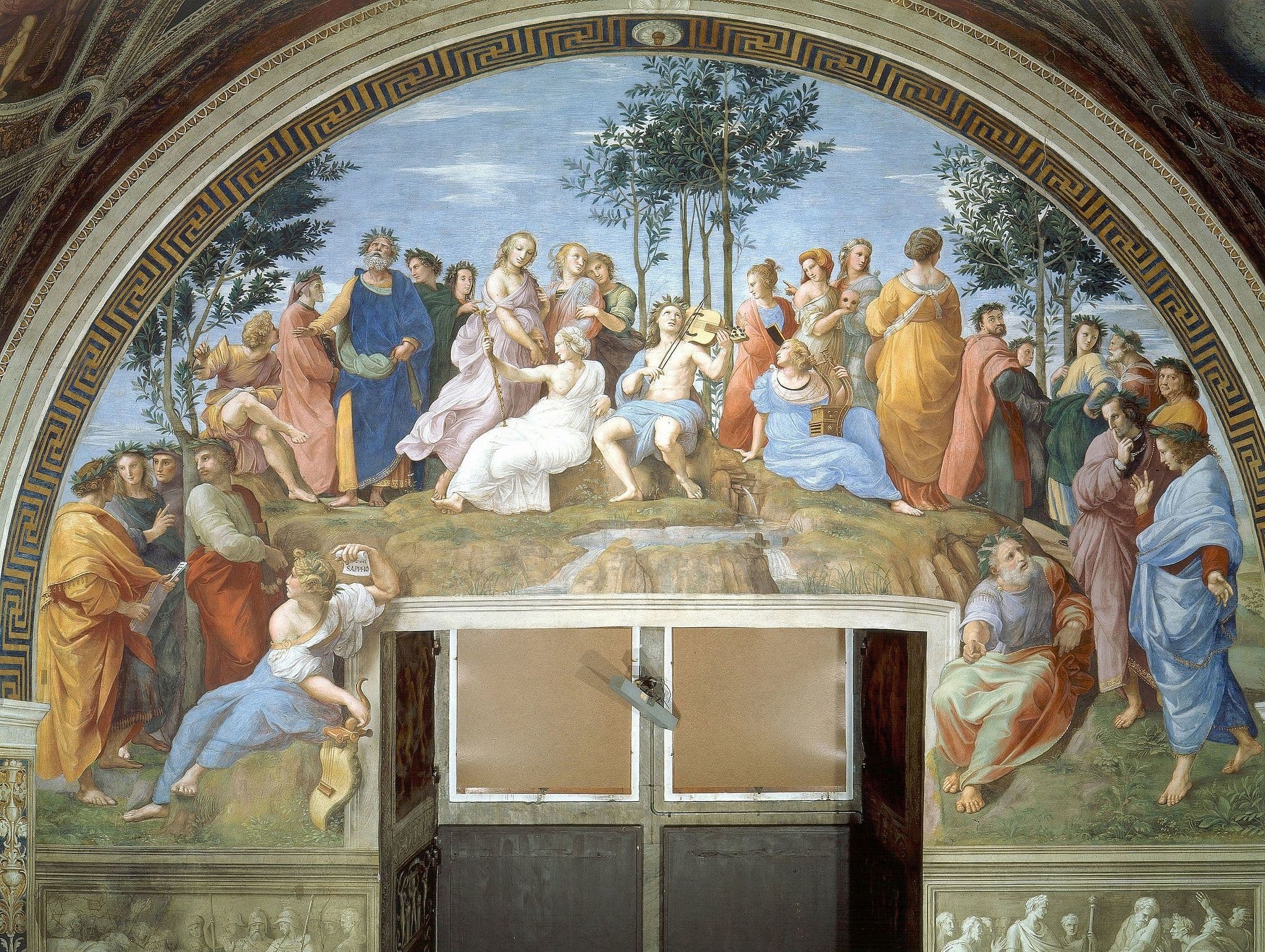
Parnassus (Raphael, c.1511) is an immovable, in‑situ Vatican fresco and therefore legally and practically unsellable—its commercial market value is effectively priceless. Under a strictly counterfactual assumption of full transferability, I estimate a headline private/auction range of approximately $200–$500 million USD, based on extrapolation from Raphael autograph sales, institutional acquisition behavior, and trophy‑work precedents.
Valuation Analysis
This figure is explicitly hypothetical. The Parnassus mural is part of Raphael’s Stanza della Segnatura in the Apostolic Palace and remains in situ under Vatican custodianship and cultural‑heritage protections, so it has no sale history and is not a transferable commercial asset [1]. Any dollar estimate is therefore a counterfactual exercise intended to express relative market magnitude rather than a realizable offer or insured value.
The methodology used here is an extrapolation from the best available market signals: high‑end autograph Raphael drawings and small paintings that have sold or been acquired (Sotheby’s/Christie’s drawing records, and institutional purchases), the behavior of museums toward trophy Renaissance works, and outlier private/auction results that demonstrate ceilings for unique Renaissance icons (notably the Salvator Mundi sale) [2][3][4][5]. Because large, autograph Raphaels are almost never offered, the interpolation uses (a) autograph drawing sale peaks (~USD 45–50M realized historically), (b) institutional purchase precedents for small paintings (tens of millions), and (c) the market’s demonstrated willingness to pay several hundred million under exceptional, portable circumstances. Taken together, these datapoints support a conservative-to-aspirational counterfactual range of USD 200M–500M.
Key value drivers in that extrapolation are extreme scarcity of supply (most major Raphaels are museum‑held), global institutional demand for canonical High Renaissance masterpieces, and the cultural/trophy status of works integral to Raphael’s signature cycles. Offsetting those drivers in any practical scenario are legally enforceable inalienability, removal/transport impossibility, and ethical/provenance constraints that would likely preclude any legitimate commercial transfer [1]. A hypothetical sale would therefore require exceptional legal and technical assumptions (e.g., a removable, high-quality panel version or an alternate, transferable autograph work of equivalent art‑historical weight).
Uncertainty is large: attribution debates, condition or conservation findings, buyer concentration, macroeconomic liquidity and political/legal obstacles would each materially shift realizations. The chosen USD 200–500M range is intentionally broad to reflect those contingencies: the low end approximates aggressive institutional willingness informed by comparables; the high end recognizes the Salvator Mundi precedent as a potential ceiling for an uncontested, portable Renaissance masterpiece [5].
In short: for practical, legal and ethical reasons the fresco is priceless and not marketable. If asked to price a transferable Raphael masterpiece of equivalent cultural weight in today’s market, a defensible headline estimate is USD 200–500 million, with final realization dependent on provenance clarity, portability, and exceptional buyer competition.
Key Valuation Factors
Art Historical Significance
High ImpactParnassus is part of the Stanza della Segnatura, one of Raphael’s defining commissions and a cornerstone of High Renaissance art. Its subject (Apollo and the Muses), placement within the Vatican’s programmatic scheme and direct association with Raphael’s workshop give the fresco exceptional scholarly, pedagogical and cultural weight. That significance elevates its theoretical market value far above ordinary Old Master works: institutions treat such works as irreplaceable cultural capital and are the primary competitive bidders when comparable masterpieces do appear. In short, its canonical status is the primary upward driver in any counterfactual price estimate.
Provenance & Legal Inalienability
High ImpactOwnership by the Vatican and the fresco’s in‑situ status create near‑absolute legal and administrative barriers to sale or export. Italian and Vatican cultural patrimony regimes, UNESCO norms and institutional practice treat the Raphael Rooms as inalienable public heritage. Those legal and ethical constraints effectively remove the work from the tradable market—this factor removes practical marketability and thus renders any dollar figure purely hypothetical. Were transfer possible, provenance clarity and a legal pathway would remain indispensable prerequisites for credible high‑end offers.
Comparative Market Scarcity
High ImpactGenuinely autograph Raphael paintings and large compositional works rarely, if ever, reach the market; most are held by major museums. Scarcity concentrates buyer competition to a tiny pool of institutions and ultra‑high‑net‑worth collectors, which drives potential headline prices higher when truly exceptional, transferable works appear. The scarcity effect amplifies perceived value beyond technical metrics (size, medium) to reflect trophy status and institutional urgency—key reasons a transferable Raphael comparable could command a several‑hundred‑million-dollar price tag.
Comparable Sales & Trophy Benchmarking
High ImpactPublic benchmarks are limited but informative: autograph Raphael drawings have realized in the high tens of millions (Sotheby’s/Christie’s results), small Raphael paintings have attracted institutional purchases in the tens of millions, and the Leonardo Salvator Mundi sale demonstrates an extreme ceiling for a portable Renaissance icon. These datapoints provide the quantitative scaffolding for extrapolation: multiply drawing/painting auction precedents by scarcity/trophy multipliers and compare to outlier trophy sales to establish a plausible headline range. This comparative logic underpins the $200–$500M band.
Condition, Conservation & In‑situ Value
Medium ImpactAs a fresco, Parnassus’s material condition and the history of restorations matter more for scholarly value and display than for tradable liquidity, because removal would be destructive. Conservation history and ongoing maintenance by the Vatican preserve its scholarly and visitor value but do not create a transferable commodity. In a counterfactual sale scenario condition would be a risk factor: restoration evidence, later interventions, or fragility would reduce bidder confidence and thus lower realizations versus an idealized, portable masterpiece in superb condition.
Sale History
Parnassus has never been sold at public auction.
Raphael's Market
Raphael occupies the highest tier of the Old Master market: canonical, historically pivotal, and overwhelmingly museum‑held. Genuine autograph works rarely come to market, so public price discovery is constrained to drawings and a handful of small paintings that periodically appear. When Raphael material does surface it commands intense institutional interest and premium prices relative to most Old Masters. The paucity of supply, combined with high scholarly and institutional demand, makes Raphael a trophy‑market artist whose hypothetical transferable works would trade at the very top of the pre‑modern art market.
Comparable Sales
Head of a Young Apostle
Raphael
Autograph Raphael drawing; one of the highest public‑market Raphael results (rare autograph work on paper) and a direct benchmark for market demand for Raphael autograph material.
$47.8M
2012, Sotheby's London (Old Master Drawings sale)
~$66.4M adjusted
Head of a Muse (study for the Parnassus)
Raphael
Autograph Raphael drawing and a study specifically tied to Parnassus (same subject/compositional family) — therefore the closest direct market comparable for works related to the Parnassus composition.
$47.9M
2009, Christie's London (Old Master Drawings sale)
~$71.3M adjusted
Madonna of the Pinks
Raphael
Small, autograph Raphael painting bought by a major museum — useful institutional‑acquisition benchmark for how much museums will pay to secure an autograph Raphael painting.
$39.6M
2004, National Gallery (London) – institutional acquisition (private treaty)
~$66.9M adjusted
Salvator Mundi
Leonardo da Vinci
Outlier upper‑bound for a single Renaissance masterpiece sold on the open market; although different artist and unusual market circumstances, it demonstrates the potential ceiling for universally accepted Renaissance trophies.
$450.3M
2017, Christie's New York (Evening Sale)
~$586.1M adjusted
Canaletto (Venice view) — Old Masters Evening record
Canaletto
2025 museum‑quality Old Master auction record showing continued appetite for rare, fresh‑to‑market masterpieces at the high end of the Old Masters market — useful for contemporary market context.
$43.9M
2025, Christie's London (Old Masters Evening Sale)
Current Market Trends
The Old Masters segment is supply‑driven and volatile: 2024 saw a dip in aggregate value, while isolated 2025 offerings produced headline results for museum‑quality works. Institutional demand remains the stabilizing force; when museum‑grade, fresh‑to‑market masterpieces appear they can still achieve very high prices. Macro liquidity, attribution outcomes and legal/cultural constraints are primary near‑term determinants of realizations.
Sources
- Vatican Museums — Raphael Rooms / Stanza della Segnatura (Parnassus)
- Sotheby's — Head of a Young Apostle (Raphael), Old Master Drawings sale (2012)
- Christie's — Head of a Muse (study for the Parnassus) and related Raphael drawing sales (2009)
- National Gallery (London) — Raphael, Madonna of the Pinks (institutional acquisition, 2004)
- Christie's — Leonardo da Vinci, Salvator Mundi (2017) — market benchmark for a portable Renaissance trophy