How Much Is Portrait of Baldassare Castiglione Worth?
Last updated: April 27, 2026
Quick Facts
- Methodology
- comparable analysis
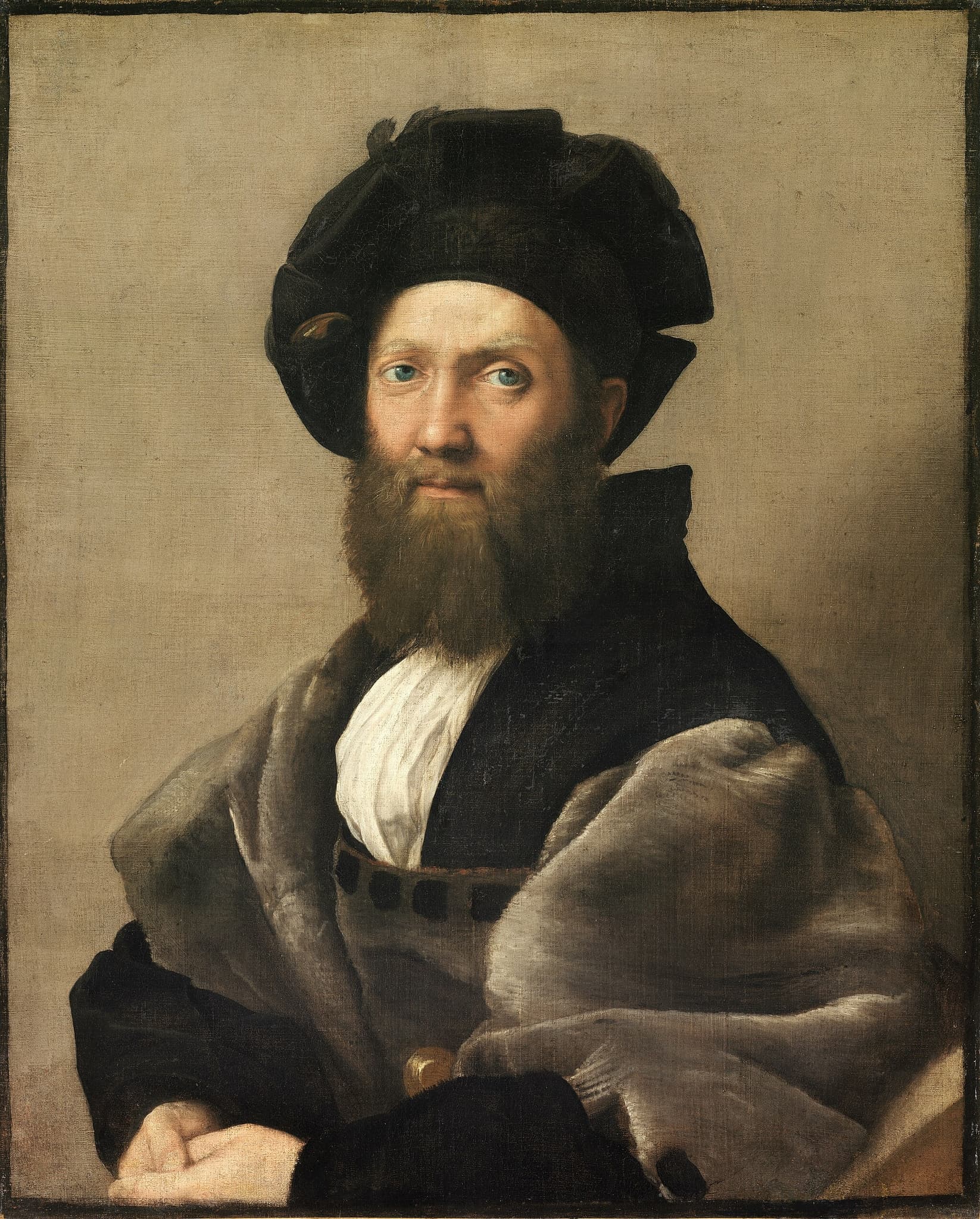
If this is the canonical, securely attributed autograph Portrait of Baldassare Castiglione by Raphael, a hypothetical open‑market valuation today lies in the range of approximately $100–300 million, reflecting the extreme rarity and institutional demand for autograph Raphaels. If attribution is downgraded to workshop or later copy, values fall sharply into mid‑tens of millions or below depending on quality and provenance.
Valuation Analysis
Valuation conclusion: On the assumption that the picture is accepted by leading scholarship as an autograph Raphael (the canonical Castiglione portrait), I place a reasonable open‑market range at $100–300 million. That range synthesizes the few available painting comparables for Raphael, high public willingness to pay for one‑off Renaissance masterpieces, and structural ceilings demonstrated by extraordinary sales in the category [1][2].
Comparables and ceiling: Direct public comparables for autograph Raphael paintings are scarce. The best painting benchmark available in the public record is Christie's 2007 sale of a Raphael portrait (Lorenzo de’ Medici), which, while lower in scale than the Castiglione in institutional stature, illustrates how rare Raphael paintings can still command multi‑ten‑million prices when they appear at auction [2]. For structural market ceilings, the Leonardo Salvator Mundi sale shows what a uniquely rare, heavily contested Renaissance single‑owner picture can achieve in an aggressive global market; Salvator Mundi therefore defines the very top bound of what collectors and institutions will pay for a unique Renaissance masterpiece [3].
Why the wide but high range: The range ($100–300M) reflects (a) the painting’s cultural importance and canonical status in Raphael’s portraiture, (b) the near absence of competing autograph Raphaels on the open market, and (c) market mechanics (museum / institutional buyer interest, guarantees, and competitive private collectors or sovereign buyers) that substantially lift pricing for trophy works. Practical sale outcomes would turn on auction vs private treaty, the presence of third‑party guarantees, and whether major institutions actively compete.
Key risks and downward drivers: Attribution uncertainty, compromised condition, incomplete provenance, or export/patrimony restrictions materially reduce value. A well‑documented studio/attributed work (good quality) might trade in the $25M–100M band; high‑quality period copies or followers typically sit much lower. The canonical Louvre Castiglione is not on the market (museum ownership since the 17th century) so this valuation is hypothetical and contingent on an accepted autograph status and sale circumstances [1].
Recommended next steps to firm the figure: secure written opinions from two leading Raphael specialists, commission a full technical dossier (IRR, X‑ray, pigment analysis, panel/ground study), and compile exhaustive provenance and exhibition history. If the work is intended for sale, coordinate an auction strategy that engages the world’s top institutions and uses guarantees/irrevocables to capture competitive bids.
Key Valuation Factors
Art Historical Significance
High ImpactThe Portrait of Baldassare Castiglione occupies a prominent place in Raphael’s oeuvre and in High Renaissance portraiture generally. It is repeatedly cited in scholarship for its psychological subtlety, elegant pose and refined handling of paint—qualities that make it culturally iconic and highly desirable to major museums and private collectors. The painting’s canonical status amplifies demand because institutions view it as a missing anchor for canonical displays of Raphael’s portraiture; collectors who can access such rare icons often pay a premium well above ordinary Old Master levels. In short, the work’s intrinsic art‑historical importance is a primary driver of top‑tier market value.
Attribution Certainty
High ImpactAuthorship is the single most determinative valuation factor. A firmly established autograph Raphael attribution—supported by catalogue‑raisonné inclusion, convergent expert opinions, and consistent technical markers—places the work in a trophy category with extraordinary buyer interest. Conversely, any downgrade to workshop, follower, or later copy causes a large step‑down in market value because the artist premium disappears. Rigorous technical study (infrared reflectography, X‑radiography, pigment analysis, and stylistic cross‑checks) and contemporary scholarly endorsements are essential to defend the high estimate; without them the painting will attract only specialist collectors and dealers at a much lower price point.
Provenance & Ownership History
High ImpactLong, well‑documented provenance materially increases marketability and value by reducing acquisition risk. The canonical Castiglione has an elite provenance (Castiglione family / royal collections / Louvre) that largely eliminates title concerns and reassures institutional bidders. By contrast, an object lacking continuous documentation or showing gaps, suspicious transfers, or wartime displacement will face buyer hesitancy and possibly legal complications that depress price or remove major bidders. Provenance also affects exportability and insurance; clear royal/museum lineage is therefore a premium factor for achieving the high end of the valuation range.
Condition & Technical State
High ImpactPhysical condition and conservation history are crucial. Original, structurally sound paint and an undisturbed ground significantly strengthen attribution arguments and buyer confidence; substantial overpainting, unstable supports, or questionable restorations can materially reduce value. Technical reports that demonstrate original brushwork, underdrawing consistent with Raphael’s practice, and period pigments will support an autograph attribution and preserve market value. Conversely, expensive conservation requirements or extensive nineteenth/ twentieth‑century repaint will be negative value drivers and will be reflected in a lower sale price.
Market Rarity & Demand
High ImpactAutograph Raphael paintings are vanishingly rare in the open market; that scarcity concentrates demand among a small global set of museums, high‑net‑worth collectors and sovereign buyers prepared to compete at scale. When such works reach auction, they typically attract guarantees, third‑party underwriting and intense press attention—conditions that push final prices well above passive market expectation. The concentrated bidder pool can generate rapid price escalation in favorable sale circumstances, but the same rarity also means the work could underperform if contention over attribution or exportability deters institutional bidders.
Sale History
Portrait of Baldassare Castiglione has never been sold at public auction.
Raphael's Market
Raphael is a blue‑chip Renaissance master whose securely attributed autograph paintings rarely appear on the market; when they do, demand is intense from museums and top collectors. Historically, Raphael drawings have produced the strongest public auction numbers, while paintings—especially those with long institutional histories—are normally retained in major collections. Market pricing is therefore driven less by frequent sale comparables and more by scarcity, scholarly consensus and institutional appetite; this makes valuation highly sensitive to attribution and provenance documentation.
Comparable Sales
Portrait of Lorenzo de' Medici, Duke of Urbino
Raphael
Autograph Raphael portrait and one of the few Raphael paintings to appear at major auction — a direct painting-to-painting benchmark for high‑quality Raphael portraits.
$37.3M
2007, Christie's London
~$57.9M adjusted
Head of a Muse (study for Parnassus)
Raphael
Secure autograph Raphael (drawing) that set the auction record for Raphael works on paper — shows collector willingness to pay a premium for undisputed Raphael autograph works, though medium differs from an oil portrait.
$47.9M
2009, Christie's London
~$72.0M adjusted
Salvator Mundi
Leonardo da Vinci
Not Raphael, but the structural ceiling for the market for uniquely rare Renaissance masterpieces — useful for defining the absolute upper bound of what the market can pay for a one‑off blue‑chip Renaissance picture.
$450.3M
2017, Christie's New York
~$591.6M adjusted
Saint Mary Magdalene (panel, attributed to Raphael)
Raphael (attributed)
Recent small Raphael panel (attributed) sold at auction — indicates market outcomes for small devotional Raphael panels versus major autograph portraits.
$3.1M
2025, Sotheby's New York
Le Melon Entamé
Jean‑Siméon Chardin
High‑end Old Masters sale (different artist/period) that demonstrates institutional/collector appetite for museum‑quality works in the $20M–$40M band — useful as market‑context for top Old Masters demand.
$28.9M
2024, Christie's Paris
~$29.3M adjusted
Current Market Trends
The Old Masters market has been cyclical: a soft patch in 2024 shifted to a selective rebound in 2025, where museum‑grade works and well‑provenanced trophies outperformed. Guarantees and private‑treaty museum acquisitions have become common tools to manage risk and create headline results. For a Raphael of Castiglione’s stature, institutional competition and careful sale packaging are likely to be decisive in realizing the high end of the estimate.