How Much Is The Transfiguration Worth?
Last updated: April 27, 2026
Quick Facts
- Methodology
- comparable analysis
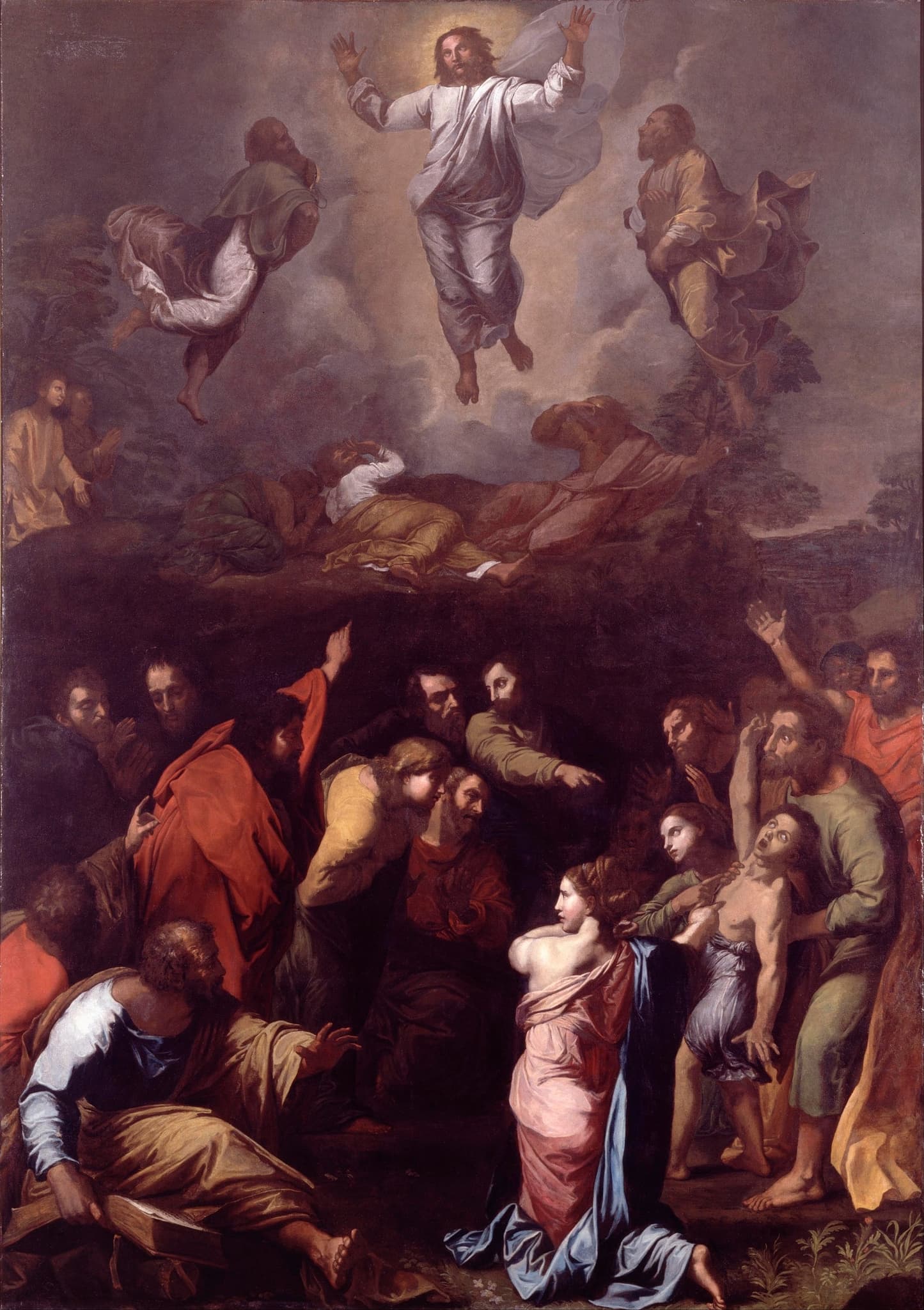
Assuming an unrestricted, fully exportable sale, Raphael’s The Transfiguration would command approximately $600 million to $1.0 billion. This range is anchored above Leonardo’s Salvator Mundi benchmark and reflects the painting’s status as Raphael’s culminating masterpiece, its scale, rarity, and global renown.
Valuation Analysis
Conclusion: In a hypothetical, unrestricted sale scenario, Raphael’s The Transfiguration warrants a valuation of $600 million to $1.0 billion. It is generally regarded as the artist’s final and greatest painting and among the defining images of the High Renaissance. Today the panel resides in the Pinacoteca Vaticana, where it is treated as a sovereign treasure; no public sale history exists, and any real-world transfer would be extraordinary [1].
Benchmarks and anchors: The principal public reference for a single, canonical High Renaissance painting is Leonardo da Vinci’s Salvator Mundi, sold for $450.3 million (premium-inclusive) at Christie’s New York in 2017, establishing the modern price ceiling at auction for Old Masters [2]. On art-historical stature and iconicity, The Transfiguration is at least the equal of that benchmark for Raphael’s oeuvre, with broader consensus around authorship and an unassailable place in the canon [1]. Accordingly, the low end of the range is set above the Leonardo datapoint.
Artist-market calibration: Raphael’s market is defined by extreme scarcity. His top auction price is for a drawing, Head of a Young Apostle (a study for The Transfiguration), which realized roughly $47.8 million at Sotheby’s London in 2012—an emphatic signal of demand at the very top even for works on paper [3]. The highest publicly sold Raphael painting achieved $37.3 million in 2007, a figure best understood as a function of vanishing supply rather than a cap on demand for a masterpiece-level oil [4]. These datapoints underscore that a magnum-opus panel occupies a different, trophy-only tier.
Peer signals for nine-figure capacity: Private treaty evidence—most notably the joint acquisition of Rembrandt’s pendant portraits by the Rijksmuseum and the Louvre at €160 million—demonstrates the ability of sovereign and institutional buyers to transact aggressively for canonical Old Masters [5]. While not directly comparable in subject or epochal weight, such deals validate a deep, competitive buyer pool when once-in-a-generation opportunities emerge. The Transfiguration, with its large scale, complex narrative, and pristine place within scholarship, would trigger maximum institutional and UHNW attention.
Positioning of the range: The $600 million floor recognizes the Leonardo precedent and the superior unanimity around this painting’s art-historical primacy within Raphael’s output. The $1.0 billion ceiling allows for concentrated bidding by a handful of sovereign, museum, and UHNW players for an absolutely singular object, tempered by the practical reality that the pool at this altitude is necessarily thin. The estimate assumes lawful transferability, robust insurability, and stable condition consistent with continuous museum display; any material condition or legal encumbrance would be value-sensitive. Under these explicit assumptions, the indicated range reflects a fair, defensible synthesis of art-historical stature, market scarcity, and proven trophy pricing power [1][2][3][4][5].
Key Valuation Factors
Art Historical Significance
High ImpactThe Transfiguration is broadly regarded as Raphael’s culminating masterpiece, worked on until his death in 1520. It synthesizes his mature style—harmonic composition, sculptural figure modeling, and complex multi-register narrative—into an image that has shaped the visual identity of the High Renaissance. Few works so perfectly encapsulate an artist’s apex and an era’s ideals. Its canonical status is deeply embedded in museum displays, scholarship, and teaching worldwide, placing it on a short list of paintings—across all periods—capable of commanding true trophy premiums. That stature supports a price above standard Old Master benchmarks and justifies anchoring the estimate above the Leonardo Salvator Mundi auction record.
Rarity and Supply Scarcity
High ImpactGenuine opportunities to acquire a prime Raphael painting are effectively non-existent. The auction market offers only sporadic Raphaels, typically drawings or studio works; museum-quality panels almost never surface. This structural scarcity inflates willingness to pay when a pinnacle work is hypothetically available. The fact that a single Raphael drawing—albeit a study for The Transfiguration—brought nearly $48 million underscores latent demand at the very top for even secondary media. In a competitive sale, scarcity would serve as a decisive multiplier, compressing due diligence timelines and pushing bids to rarity premiums atypical of more liquid categories.
Provenance and Institutional Prestige
High ImpactA continuous, illustrious provenance—from Medici commission to centuries of veneration in Rome, Napoleonic-era display in Paris, and present stewardship by the Vatican Museums—confers exceptional cultural capital. Such institutional pedigree amplifies global recognition and reduces attributional or provenance risk that can suppress Old Master prices. While the Vatican’s ownership makes a real sale implausible, the provenance would be a positive value driver in any lawful transfer scenario, enhancing confidence among sovereign, museum, and UHNW buyers. The estimate explicitly assumes clean title, exportability, and insurability, at which point the institutional aura becomes a pricing catalyst rather than an impediment.
Demand Ceiling and Buyer Pool
High ImpactPublic and private transactions demonstrate robust nine-figure capacity for pre-1600 masterpieces when bidding includes states, museums, and select UHNW collectors. Leonardo’s Salvator Mundi at $450.3 million proves auction liquidity at this altitude, while sovereign-backed purchases like the €160 million Rembrandt pair show coordinated institutional buying power. The Transfiguration’s fame and image legibility would attract the same audience, with additional religious and cultural resonance for multiple regions. Although the buyer pool is necessarily small, it is deep enough to clear a $600 million floor and, in a competitive environment, to test the $1 billion mark for a truly once-in-history opportunity.
Sale History
The Transfiguration has never been sold at public auction.
Raphael's Market
Raphael sits at the apex of the Old Masters category, but his market is defined by extreme scarcity. The top auction results are for drawings, led by Head of a Young Apostle (2012) around $47.8 million, and Head of a Muse (2009) at a similar level, signaling intense demand for authenticated works even on paper. Public sales of autograph paintings are rare; the highest publicly sold Raphael painting achieved ~$37 million in 2007, a figure constrained by supply rather than collector appetite. Museum acquisitions, like the National Gallery’s Madonna of the Pinks (2004, private treaty), underscore institutional competition. In short, when blue-chip Raphaels surface, demand is immediate, global, and price-insensitive at the top.
Comparable Sales
Salvator Mundi
Leonardo da Vinci
Iconic High Renaissance religious painting; apex-level trophy that set the public auction ceiling for Old Masters; similar buyer pool and scarcity dynamics.
$450.3M
2017, Christie's New York
~$597.2M adjusted
Portraits of Maerten Soolmans and Oopjen Coppit (pair)
Rembrandt van Rijn
Nine-figure private treaty for canonical Old Master paintings acquired by top museums (Rijksmuseum/Louvre); evidences sovereign/museum demand at this level.
$180.0M
2016, Christie's Private Sales
~$243.7M adjusted
Head of a Young Apostle (study for The Transfiguration)
Raphael
Same artist; direct preparatory drawing for The Transfiguration; Raphael’s top auction result, showing willingness to pay near $50m for related works on paper.
$47.8M
2012, Sotheby's London
~$67.7M adjusted
Portrait of Lorenzo de’ Medici, Duke of Urbino
Raphael
Same artist; highest publicly sold Raphael painting; anchors the public market for Raphael oils despite not being a masterpiece-altarpiece.
$37.3M
2007, Christie's London
~$58.5M adjusted
Portrait of a Young Man Holding a Roundel
Sandro Botticelli
Record-setting Renaissance painting in recent years; demonstrates deep cross-category trophy demand for prime pre-1600 masters.
$92.2M
2021, Sotheby's New York
~$110.6M adjusted
Rest on the Flight into Egypt
Titian
Religious subject by a core High Renaissance master; fresh market record for Titian, evidencing current appetite for prime Renaissance works.
$22.1M
2024, Christie's London
~$22.8M adjusted
Current Market Trends
The Old Masters market remains polarized: mid-tier material is selective, while best-in-class works continue to command aggressive bidding and guarantees. Recent years reaffirmed strong trophy appetite—exemplified by record-setting Renaissance results and high-profile private treaties—despite broader market volatility. Supply is the primary brake on annual totals; when top lots appear, sell-through and pricing strengthen markedly. Sovereign and museum buyers remain active, often partnering on once-in-a-generation opportunities, while UHNW private collectors compete for brand-defining works. Against this backdrop, a singular, canon-defining Raphael would be positioned to surpass prior Old Master auction ceilings, provided clear title, exportability, and insurability are assured.
Sources
- Vatican Museums – Raphael, Transfiguration
- The Art Newspaper – Leonardo’s Salvator Mundi sells for $450m at Christie’s New York
- Sotheby’s – Raphael, Head of a Young Apostle (2012 sale result)
- Christie’s – Raphael, Portrait of Lorenzo de’ Medici (2007 press release)
- The Art Newspaper – France and Netherlands finalise €160m Rembrandt treaty