Two programs for seeing modernity
Both artists turned modern sites into optical laboratories. Stations, boulevards, bridges, and water gardens became instruments for testing how light, weather, and engineered space organize vision. Here their shared project meets the fork that defines them: Caillebotte stabilizes space; Monet performs perception.
Comparison frame: How do Caillebotte’s measured city and Monet’s dissolving atmospheres show two ways modern painting teaches us to see?
Quick Comparison
| Topic | Claude Monet | Gustave Caillebotte |
|---|---|---|
| What painting is asked to do | Stabilize and measure modern vision | Perform perception as a timed event |
| Core instrument | Measured perspective; camera-like cropping; deep focus | Serial observation; atmosphere; reflections as second architecture |
| Edges and surfaces | Crisp contours even under rain, fog, or snow | Dissolving silhouettes; vibrating touches; color-mixed darks |
| Typical sites | Haussmann boulevards, iron bridges, rationalized interiors | Train sheds, rivers, London fog, gardens built to be painted |
| Time strategy | Single, constructed moment from a fixed, plotted vantage | Iterated canvases across hours and weather; comparison builds meaning |
| Infrastructure’s role | Architecture grids vision (lampposts, façades, parquet) | Architecture anchors vision but yields to atmosphere |
| Palette/finish | Cool, controlled finish; clarity tempered by design | Chromatic, lively surfaces; no dead black; optical shimmer |
| Social optics | Urban spacing reads etiquette and distance | Figures become rhythm within a field of light and steam |
Shared Ground
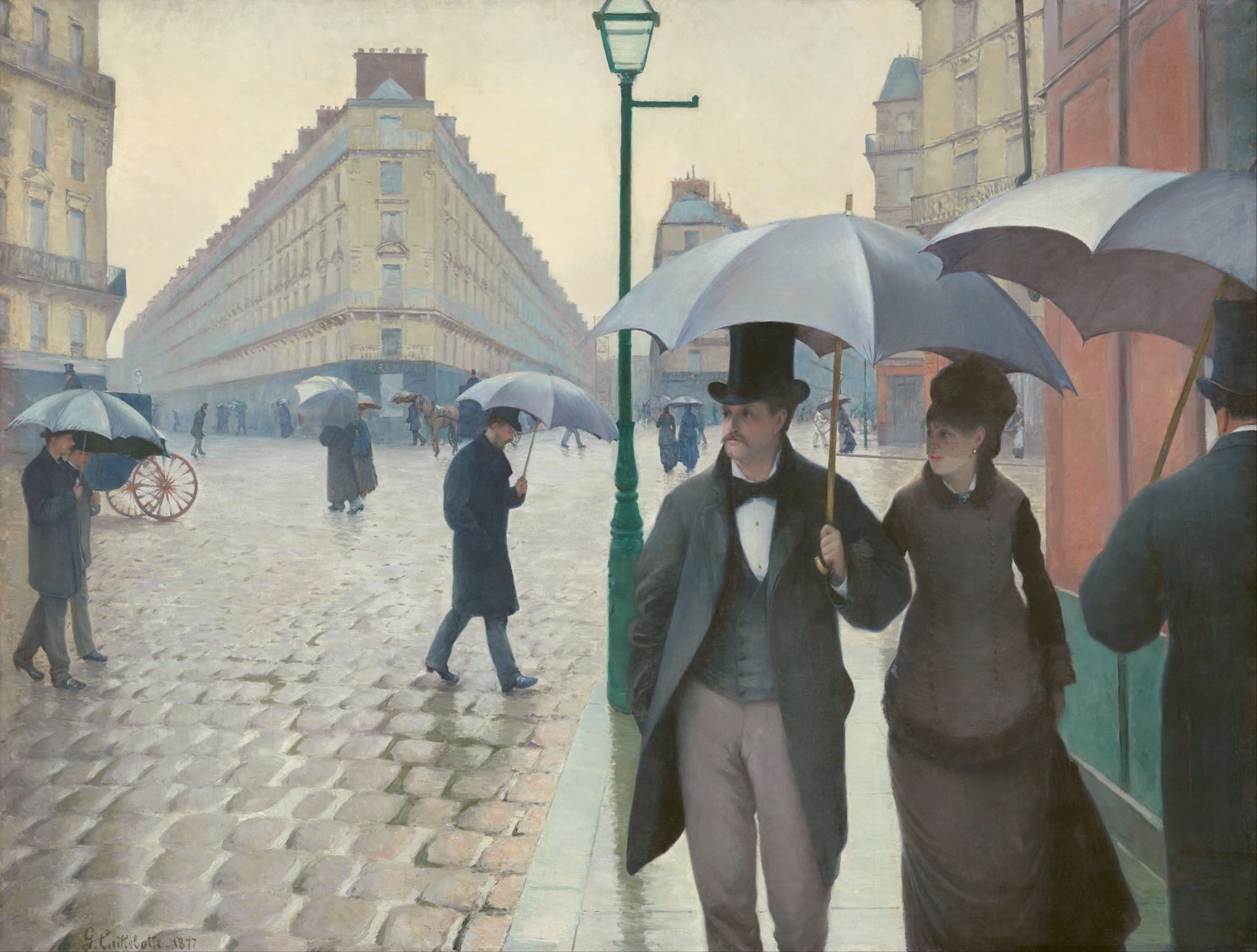
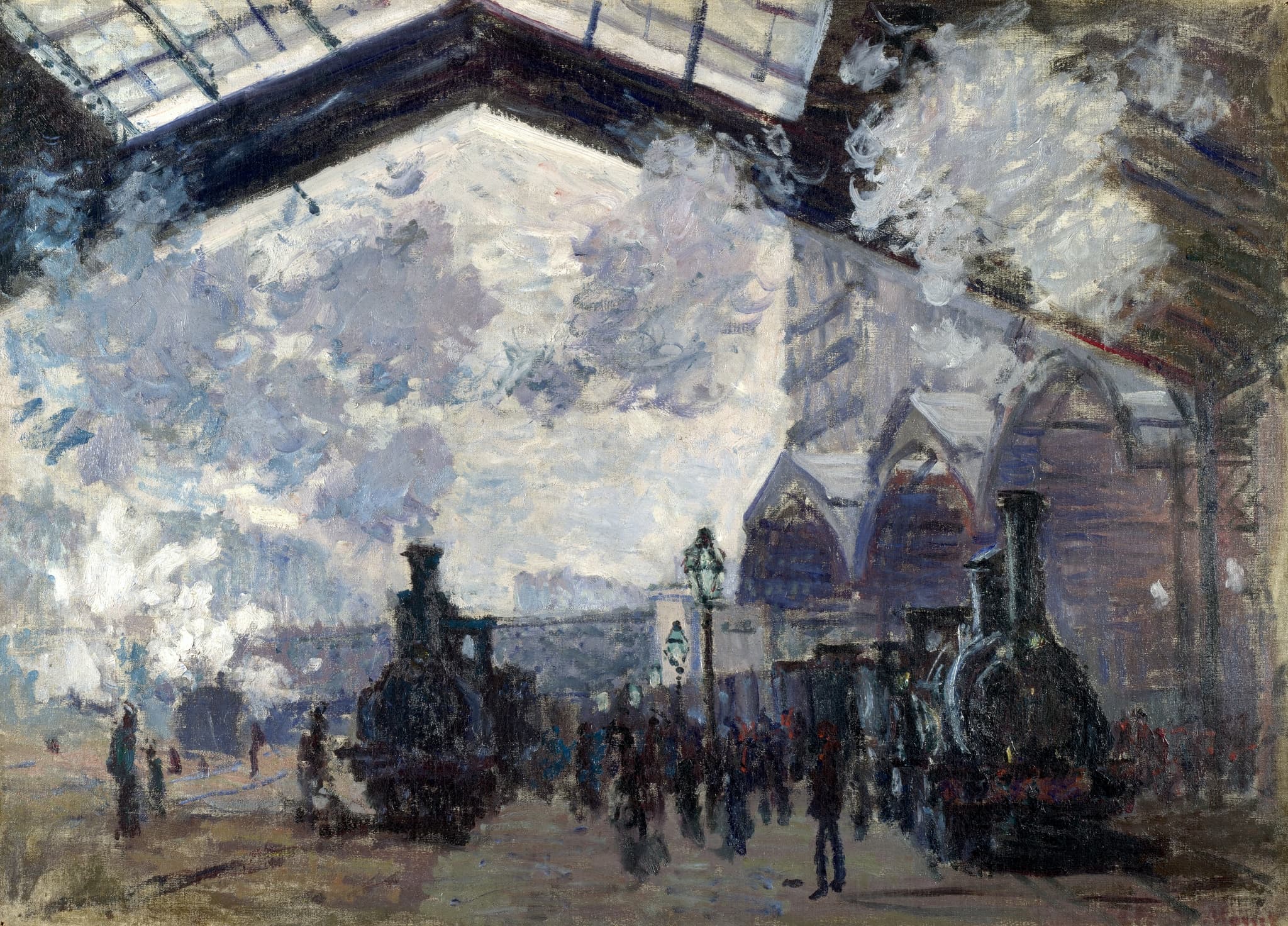
Monet and Caillebotte share a modern brief: use painting to register how the nineteenth century reorganizes seeing. Each treats the city and its technologies as optical devices. In 1877 Paris, Caillebotte’s Paris Street; Rainy Day maps a Haussmann intersection with lamppost axis, measured façades, and camera-like cropping; in the same year Monet’s Gare Saint-Lazare turns steam under iron-and-glass into an interior sky. Rail stations, boulevards, fog, snow, and reflective streets are not just subjects but testbeds where perception becomes visible.
Both artists lean on built structure to anchor contingency. Monet later constructs a subject to observe—the water garden and bridge at Giverny—so reflections can bind sky and object into a single field. Caillebotte selects the new urban order itself—standardized blocks, rationalized apartments, iron bridges—as a grid for light and weather to play against. Wet cobbles, glass roofs, and water surfaces act like second architectures: they mirror, flatten, and time-stamp what the eye encounters.
Their attention is empirical as well as poetic. Caillebotte’s streets explicitly register Haussmann’s redesign, while studies have correlated Monet’s London haze with documented coal-smog optics. In both, infrastructure and environment author vision. What differs is what painting is made to do with those conditions: hold them still so modern distance can be read, or let them unfold so modern flux can be felt.
Decisive Difference
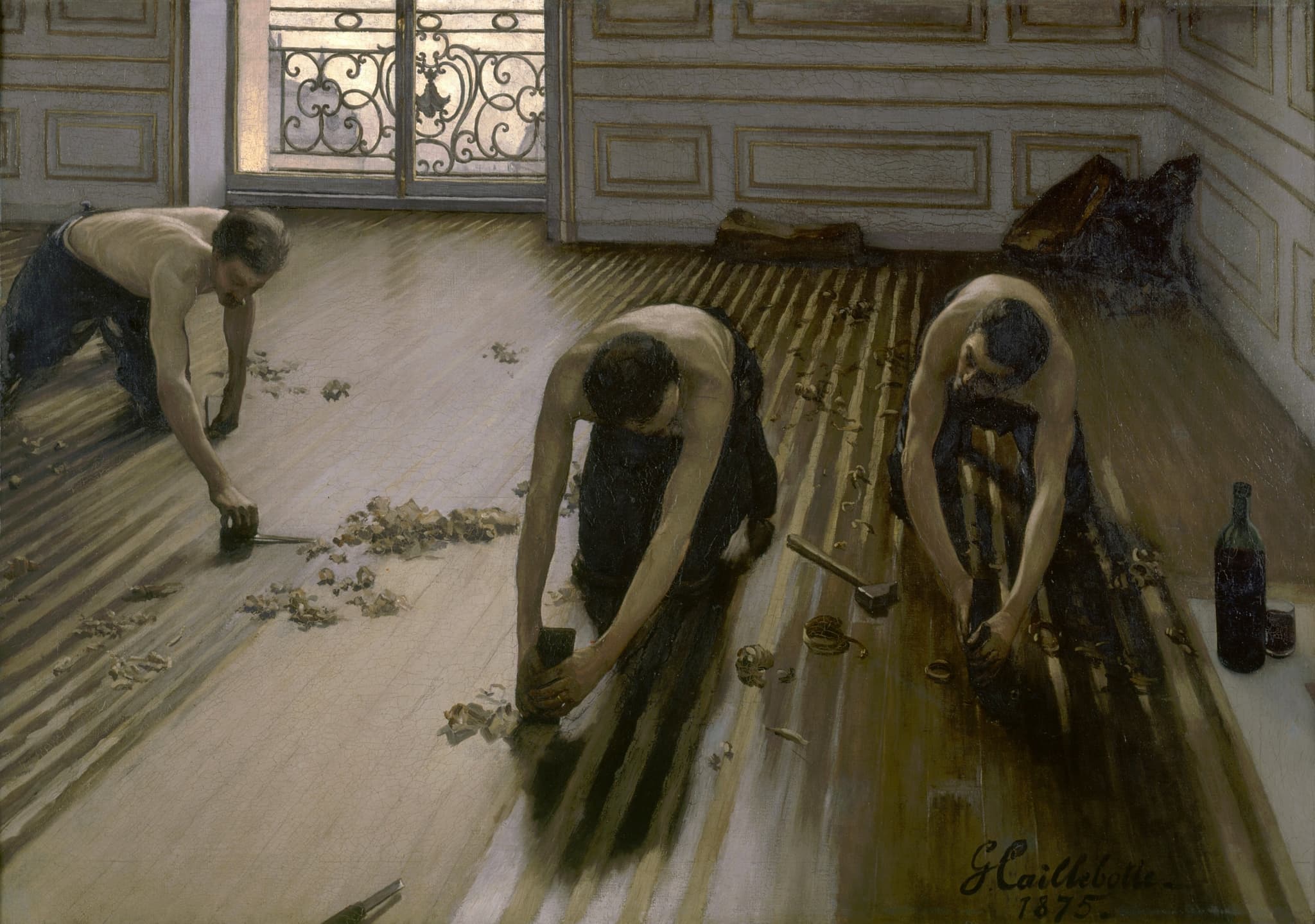
The decisive split lies in the task each assigns to painting. For Caillebotte, painting is a stabilizing instrument: a way to plot modern space with engineered clarity. Paris Street; Rainy Day is built from surveyed orthogonals and a lamppost spine that divides the picture into legible zones; its deep focus and severe edge-cropping echo the camera while keeping contour intact. In The Floor Scrapers, raking light, parquet geometry, and tool specifics turn labor into a measured procedure. Even when snow or drizzle veils the scene, Caillebotte preserves outline so distance and social spacing read cleanly.
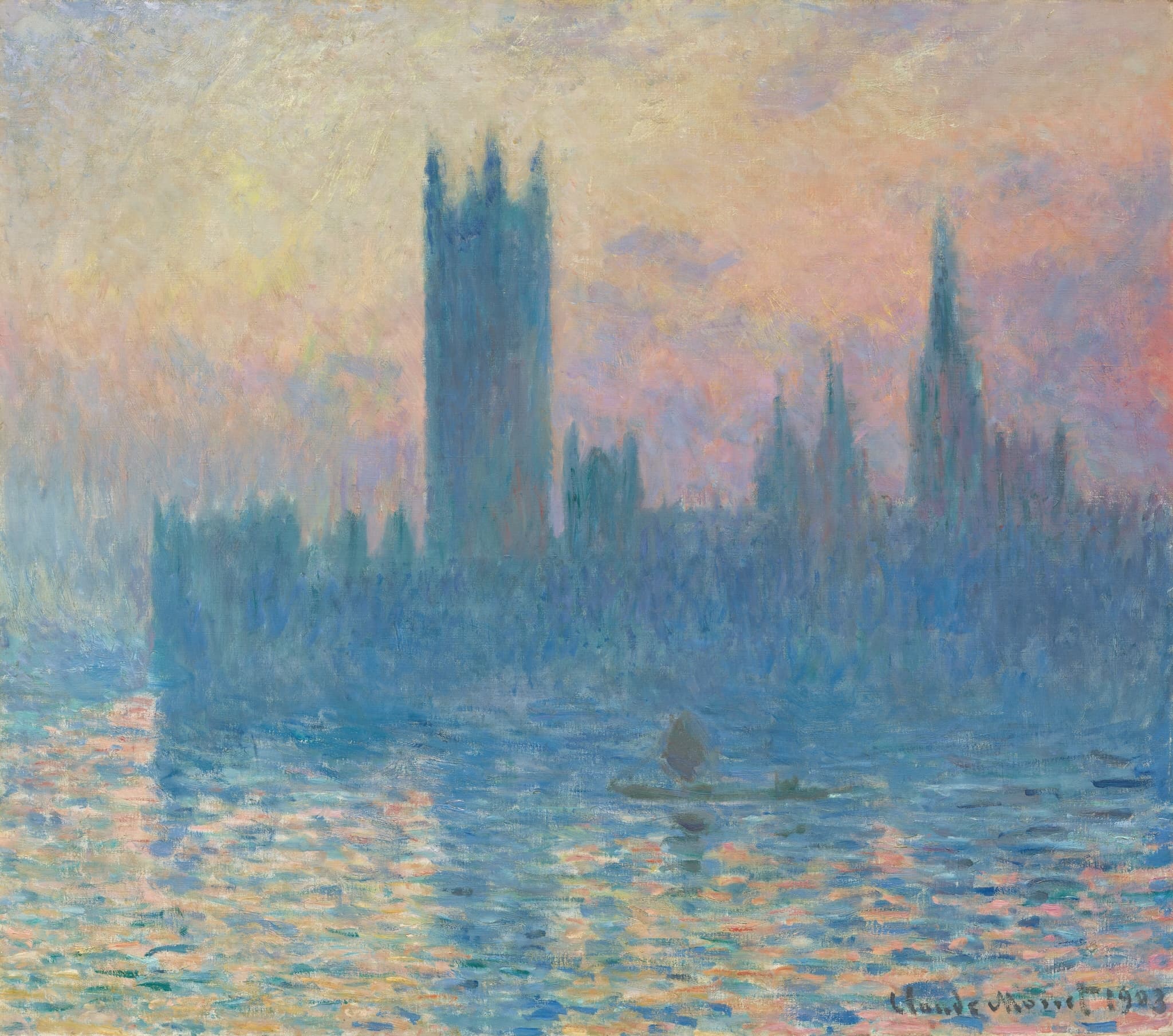
For Monet, painting performs perception in time. Gare Saint-Lazare lets steam rewrite space inside a station—architecture becomes scaffolding for an atmospheric event, with chromatic darks keeping the surface optically alive. In Houses of Parliament, Westminster is reduced to a vibrating silhouette whose meaning is carried by haze and sunset, an effect he pursued serially to make comparison itself the content. At Giverny, the bridge and pond are built to test reflection: sky, foliage, and lily pads share one field where edges dissolve and time is legible as flicker.
In short: Caillebotte engineers clarity to reveal modern distance; Monet accepts dissolution to reveal modern flux. One maps the city’s optics; the other lets optics make the image.
Paired Works
Paris 1877: mapped distance vs. interior sky
Focus question: What happens when Haussmann’s order and rail steam set the terms of vision?
Paris Street; Rainy Day vs Gare Saint-Lazare
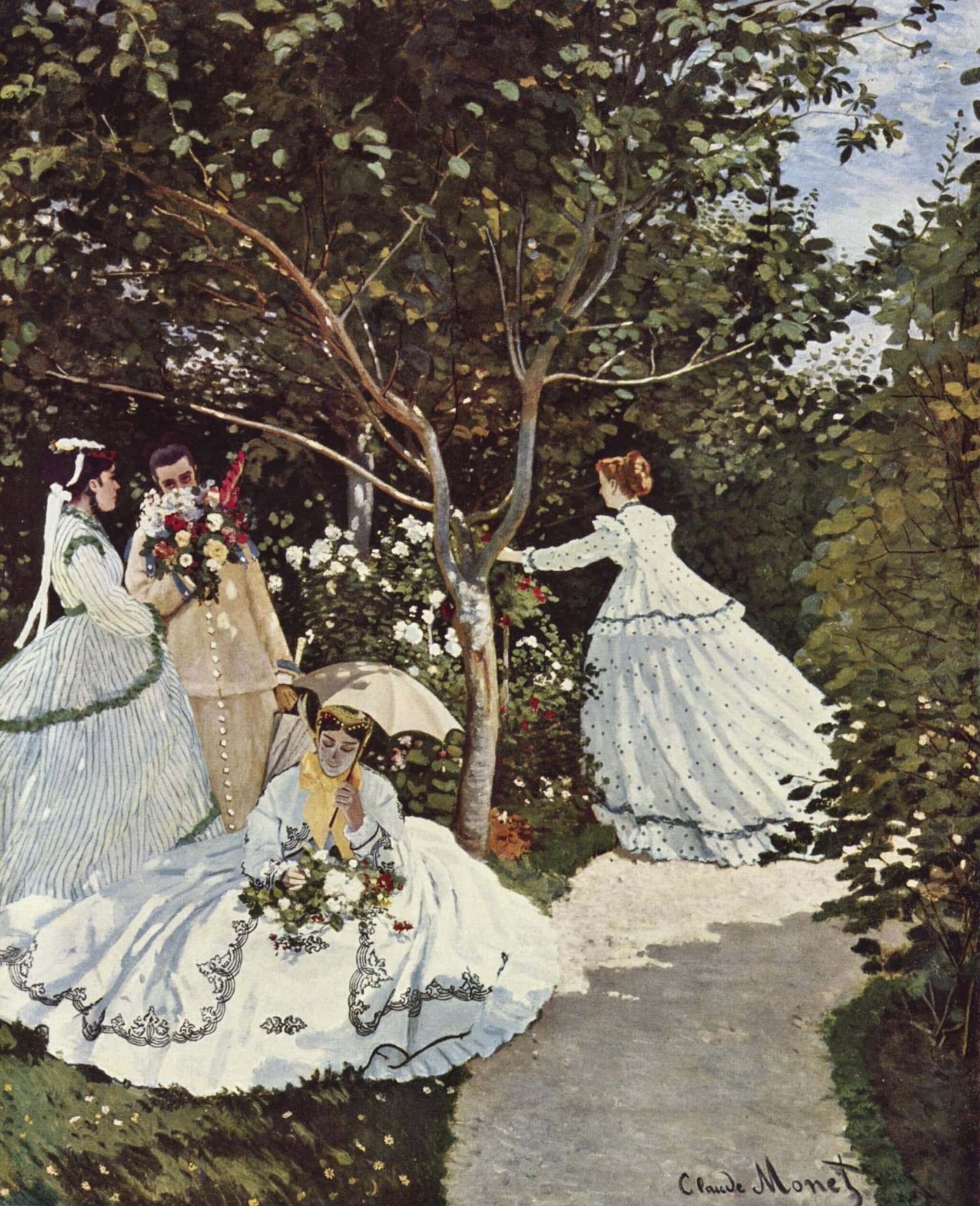
Procedure vs. sensation
Focus question: How do labor and leisure become optical programs?
The Floor Scrapers vs Women in the Garden
Structure first, or atmosphere first?
Focus question: When architecture meets air, which one leads?
Le Pont de l’Europe vs Houses of Parliament
Fixed motif, shifting envelope
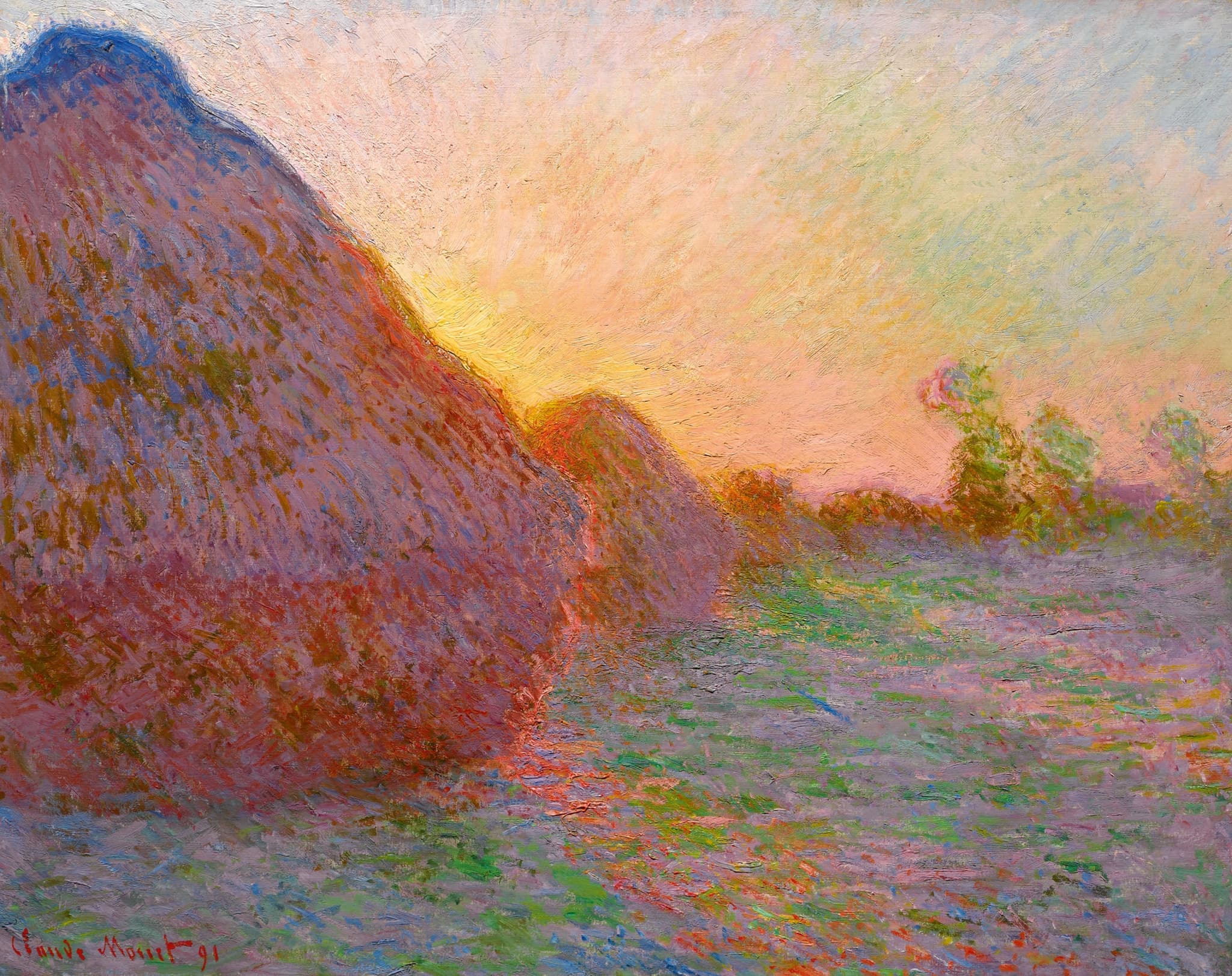
Focus question: What changes when form is constant and weather moves?
Rooftops (Effect of Snow) vs Haystacks Series by Claude Monet | Light, Time & Atmosphere
Why This Comparison Matters
Setting Caillebotte beside Monet clarifies what was truly at stake in Impressionism. The movement was not a style so much as a question: how should painting respond to modern conditions—engineered cities, synchronized time, industrial atmosphere? Caillebotte’s answer is to stabilize them into legible space, using perspective and camera-like framing to reveal distance, etiquette, and infrastructural order. Monet’s answer is to let them unfold, using iteration and atmosphere to show that perception itself is historical and time-bound.
Seen together, they model two enduring options for modern art. One makes clarity out of contingency; the other makes contingency the content. Understanding this fork helps a viewer read far more than Paris in the 1870s or London in the 1900s. It explains why bridges, stations, and water continue to be painted: they are devices for thinking about how we see. Choose either path and the result is modernity made visible—mapped or breathed.
Related Links
Sources
- Art Institute of Chicago – Paris Street; Rainy Day (object page)
- AIC Digital Publication – Caillebotte: Paris Street; Rainy Day (vantage, perspective, photography)
- Musée d’Orsay – The Floor Scrapers (object record)
- National Gallery, London – The Gare St-Lazare (collection entry)
- National Gallery, London – The Water-Lily Pond (collection entry)
- PNAS (2023) – Atmospheric pollution and the optics of Impressionist skies
- National Gallery of Art, Washington – The Houses of Parliament, Sunset
- Kimbell Art Museum – Gustave Caillebotte (exhibition material; Le Pont de l’Europe context)
- Musée d’Orsay – Rooftops (Effect of Snow) (object record)
- The Art Bulletin (2020) – Impressionism and the Standardization of Time (Gare Saint-Lazare)