From Fog to the Void
Monet and Malevich both relocate meaning from depicted things to the conditions of vision. Monet binds motif and air into time-stamped atmospheres; Malevich strips motif away to reveal relations as pure feeling on a white, non-objective field. The comparison clarifies how modern painting can be empirical or absolute—and why that difference matters to how we look.
Comparison frame: What changes when painting treats seeing as contingent weather (Monet) versus absolute relation (Malevich)?
Quick Comparison
| Topic | Claude Monet | Kazimir Malevich |
|---|---|---|
| What painting is for | A laboratory for seeing as it changes in time (the enveloppe) | A field for absolute, non-objective relations (“zero of form”) |
| Primary variable | Hour, season, weather—empirical duration | Weight, axis, interval—axiomatic balance |
| Space model | Compressed, reflective surfaces; depth turns into skin (Water Lilies) | White infinite field; forms float without illusionistic depth |
| How difference is organized | Serial comparison of one motif across changing effects (Haystacks, Rouen) | Systemic grammar of squares/crosses read across a wall (0,10) |
| Installation strategy | Orangerie panoramas that immerse and slow looking | Icon-corner placement that sacralizes non-objectivity |
| Touch and material | Broken, chromatic strokes; contour softened by light | Hand-painted geometry; slight irregularities and craquelure |
| Where truth resides | In contingent, ecological conditions of light and air | In supra-referential form-as-feeling, independent of objects |
| Temporality | Duration enacted on the surface | Aimed at atemporality; material aging registers time against the claim |
Shared Ground
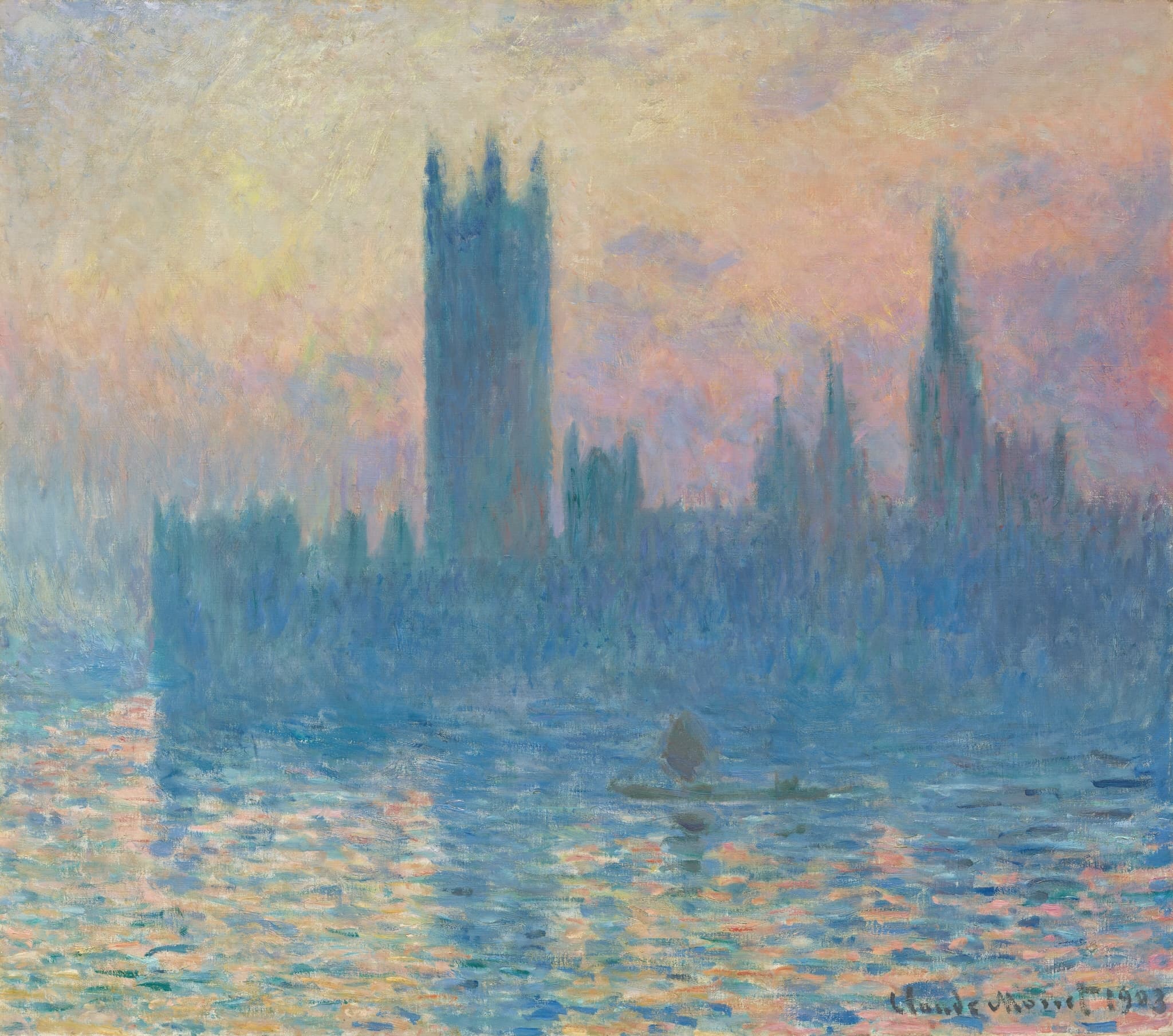
Monet and Malevich both redefine painting as a test of perception rather than a vehicle for narrative. Monet’s project fuses motif and atmosphere into an enveloppe—a chromatic field that makes architecture or landscape legible as colored air. Malevich relocates meaning to non-objective relations, asserting that a square or cross on white can embody feeling itself. In each case, the subject is not a pictured thing but how vision is structured.
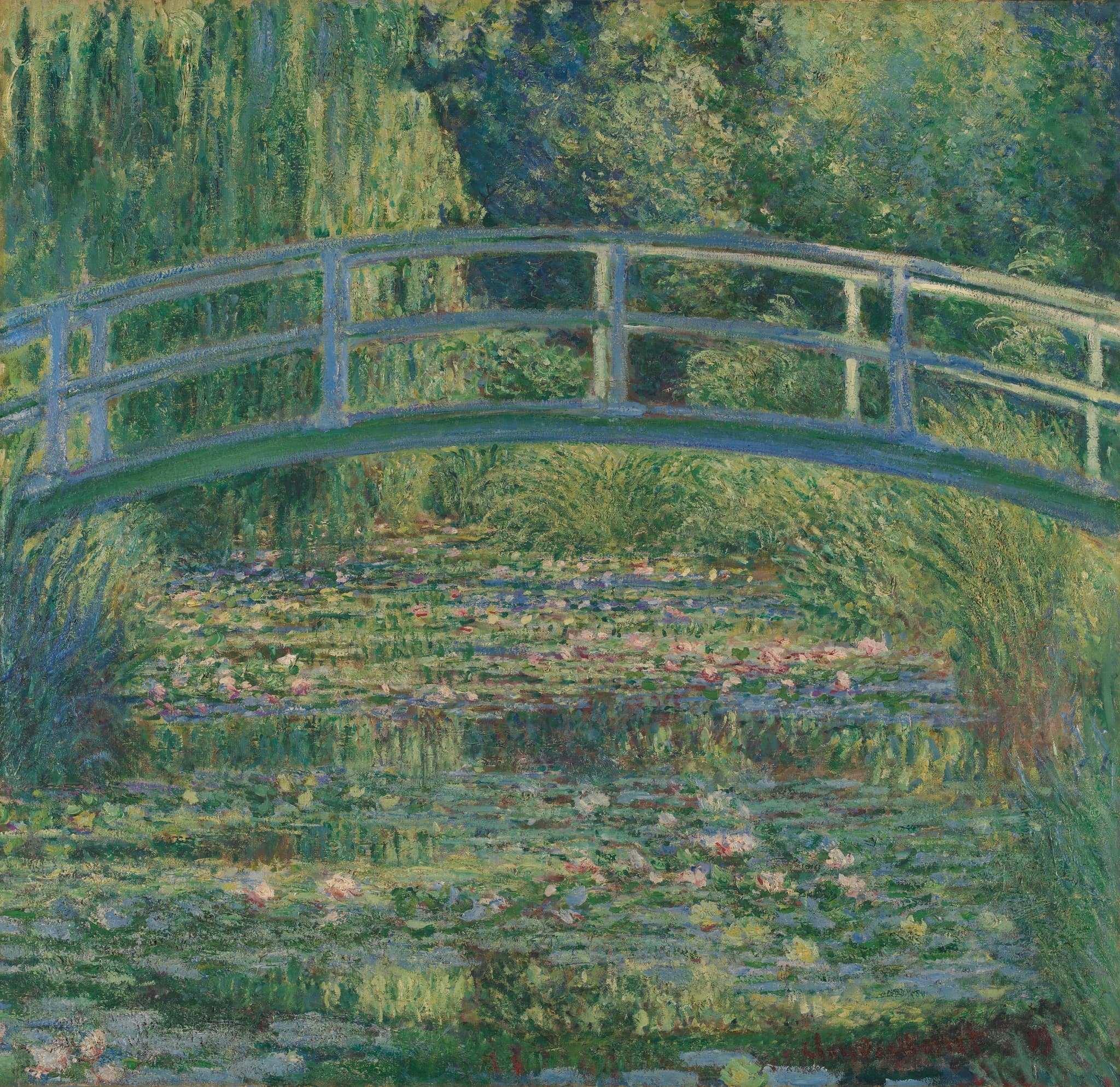
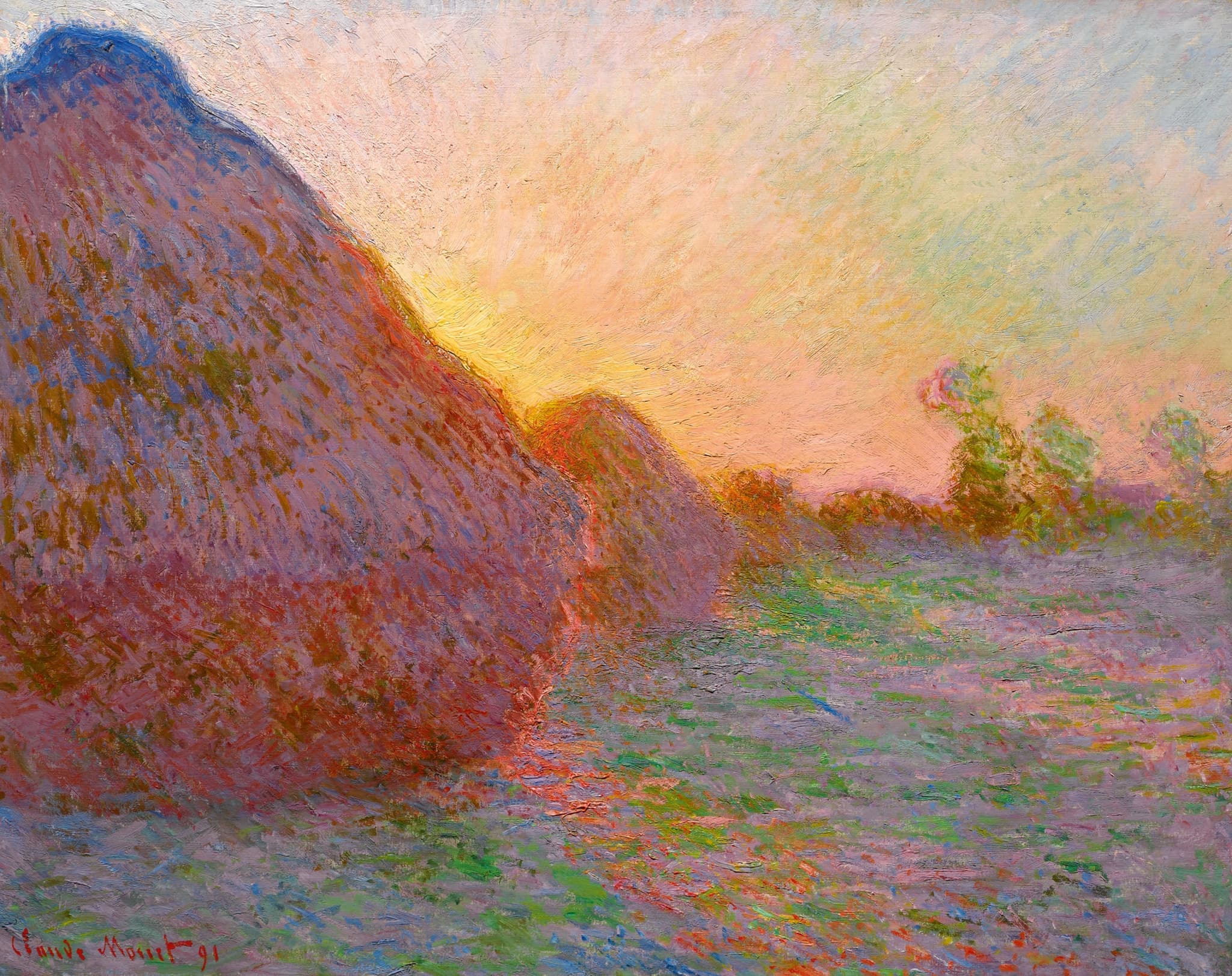
They also change how we are meant to look. Monet’s Haystacks were first exhibited as a deliberate series in 1891, inviting viewers to scan across nearly identical motifs to perceive time as difference. Malevich’s 0,10 display (1915–16) organized Suprematist canvases as a wall-grammar anchored by Black Square in the room’s icon corner, turning attention to intervals, axes, and the relations among canvases. Both flatten and de-center conventional space to make perception legible: Monet’s Water-Lily pictures compress depth into reflective surface, while Malevich’s floating geometries propose an infinite, non-illusionistic arena. Finally, both artists think beyond a single canvas. Monet designed the Orangerie’s oval rooms so the Water Lilies surround vision and slow it; Malevich’s icon-corner placement reframed the act of looking as a modern, secular devotion. Across fog and white ground alike, these painters convert painting into a system for training attention.
Decisive Difference
The decisive difference is their truth-claim about seeing. For Monet, vision is historically and ecologically specific. He fixes a motif and varies hour, season, and weather so that each canvas becomes a time-stamped optical record. The London Parliament pictures can be correlated with the sun’s positions and characteristic smog optics; the Water-Lilies translate reflection into a structure for registering duration. In Monet, the world appears as colored air changing in time. Facture—short, granular strokes—keeps edges permeable so that light makes and unmakes form. Serial hanging turns comparison itself into content: truth emerges through repetition-with-difference.
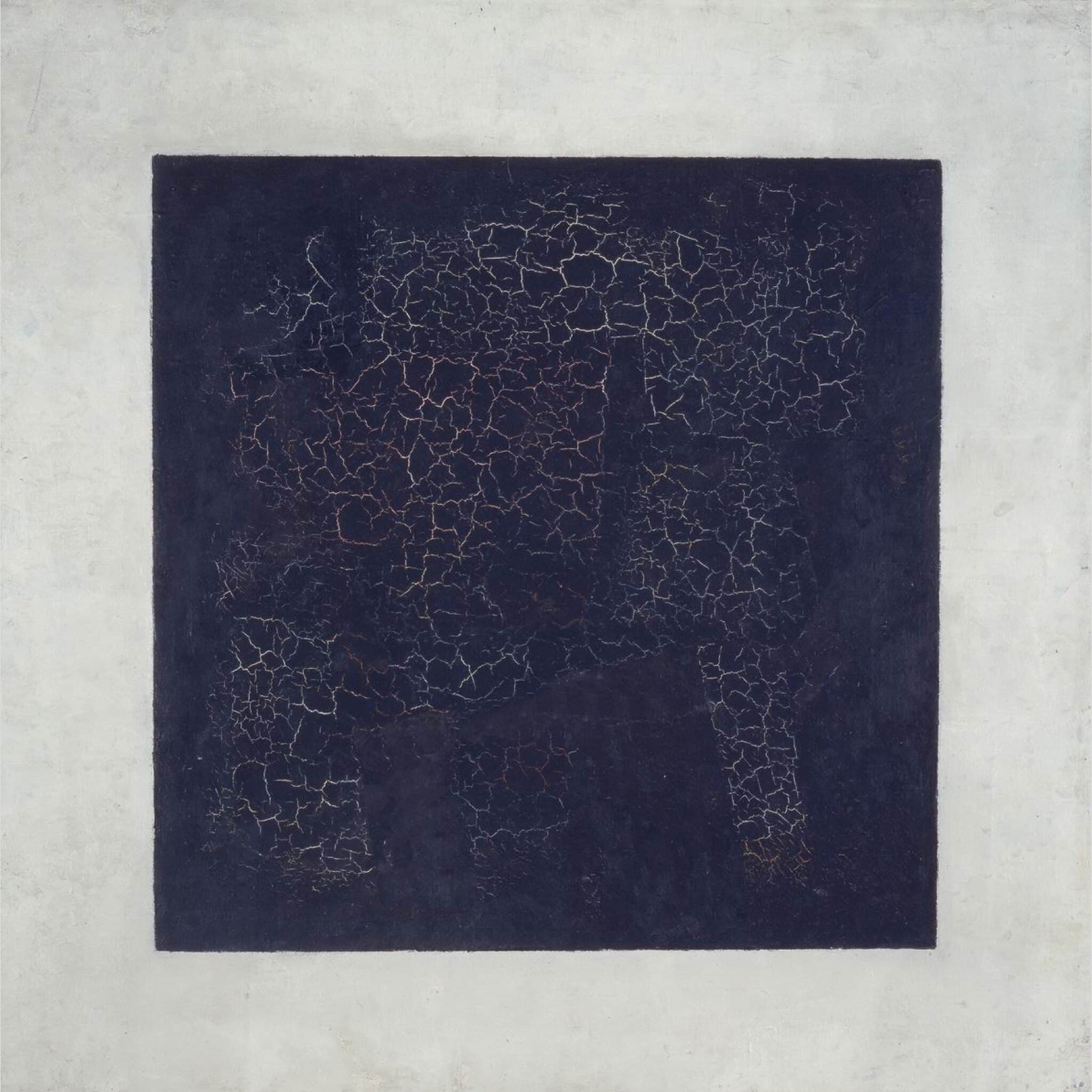
For Malevich, seeing is absolute and non-objective. Black Square declares a “zero of form,” rejecting depiction to reveal form-as-feeling on a white, infinite field; White on White tilts a pale square in a limitless arena to propose motion and stillness without referents. Installation does doctrinal work: the icon-corner placement proclaims a new kind of modern icon. Even the hand-made irregularities and craquelure in Black Square read against this aim, reminding us that a utopian claim is carried by mortal materials. Monet’s temporality is empirical duration; Malevich’s is a bid for atemporality. One treats painting as weather you can compare canvas to canvas; the other treats painting as a ground-zero condition from which relations—and a new way of seeing—begin.
Paired Works
Monument into Atmosphere vs Zero of Form
Focus question: What happens when a monument is dematerialized into light (Monet) versus abolished altogether (Malevich)?
Houses of Parliament vs Black Square
Reflection and Threshold vs Pure Field
Focus question: What kind of space results when surface and depth trade places (Monet) versus when reference drops out (Malevich)?
The Water Lily Pond vs Suprematist Composition: White on White
Serial Weather vs Systemic Relations
Focus question: What does difference mean in a Monet series versus a Malevich system?
Haystacks Series by Claude Monet | Light, Time & Atmosphere vs Suprematist Composition: Airplane Flying
Industrial Time vs Non-Objective Stillness
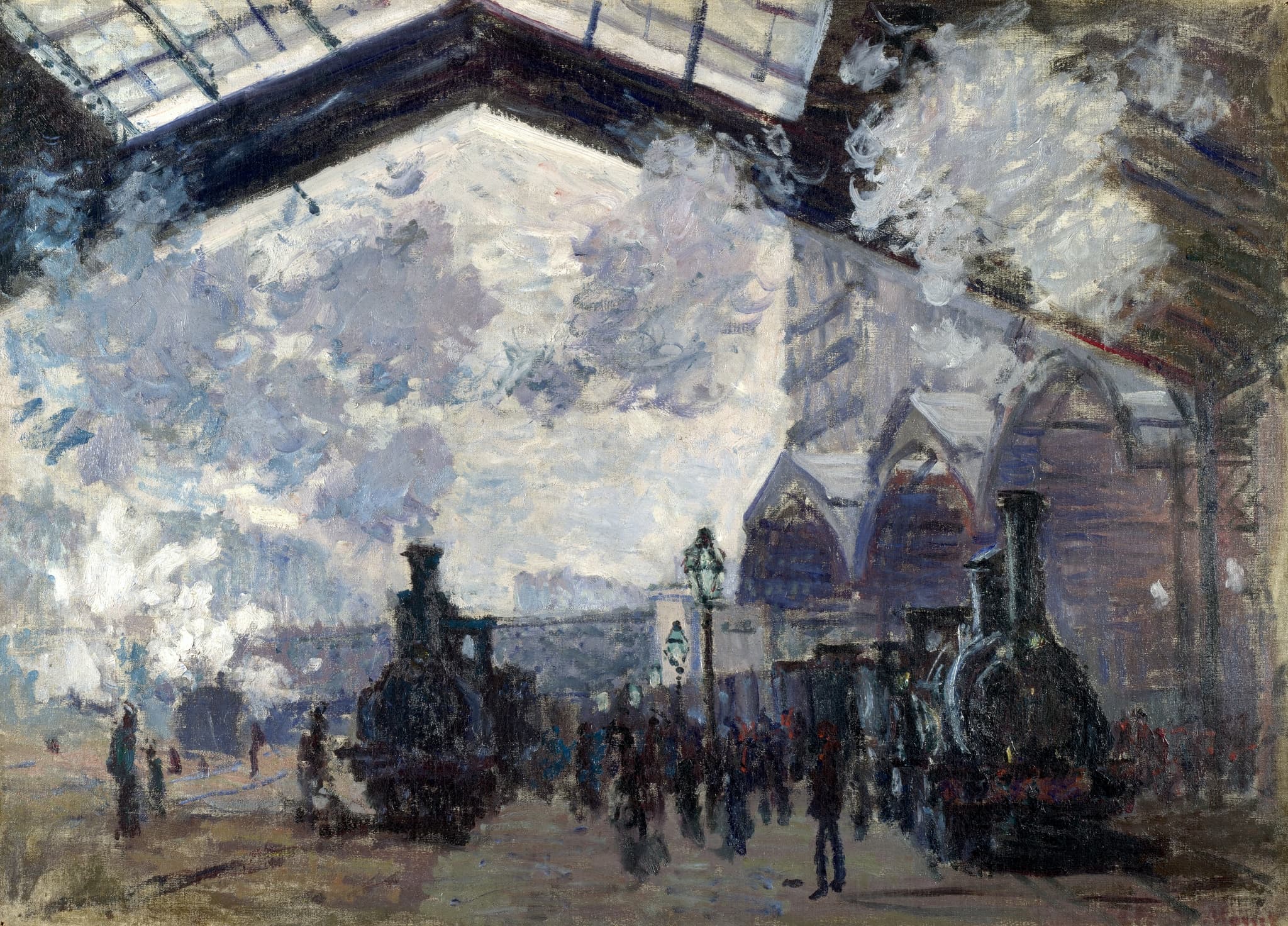
Focus question: How do a station’s steam and a cross’s planar force model time differently?
Gare Saint-Lazare vs Black Cross
Why This Comparison Matters
This comparison sharpens two modern habits of looking. Monet teaches attentiveness to conditions—how air, light, and even pollution author what we see. His serial method and immersive installations model a way of reading the world as changing data: a useful ethic in an age of environmental awareness and real-time imaging. Malevich teaches attentiveness to relations—how weight, axis, and interval can carry feeling without reference. His icon-corner gesture and non-objective field give a clear language for abstraction that still underwrites design, interface, and minimal art.
Understanding their split helps decode museums and images today. Are we being asked to register contingent effects across a set, or to grasp a rule-set that claims universality? Monet’s answer roots vision in weather and history; Malevich’s posits a ground-zero condition from which new forms of thought proceed. Both expand what painting can be, but in opposite directions—one toward the empirical world, one toward the absolute.
Related Links
Sources
- National Gallery (UK): Monet, Water-Lilies overview
- The Met: Monet’s Haystacks and the 1891 series display
- Musée de l’Orangerie: The Water Lilies installation
- University of Birmingham (Baker & Thornes, 2006): Solar position in Monet’s Parliament series
- PNAS (2023): Atmospheric pollution and Impressionist skies
- Smarthistory: Malevich and the 0,10 exhibition (icon corner)
- Malevich, The Non-Objective World / Suprematism (1927)
- MoMA: Suprematist Composition: White on White
- National Gallery of Art (Washington): Monet, The Houses of Parliament, Sunset
- Factum Foundation/Tretyakov: Material studies of Black Square (craquelure, underlayers)
- National Gallery (UK): Monet, The Gare St-Lazare