Engineered depth vs edited surface
Both painters turn modern Paris into a lab for vision. Caillebotte builds calibrated spaces that place you in a fixed, legible viewpoint. Manet edits the scene on the picture plane—flattening, cropping, and staging—to make the image’s construction and stakes explicit. Together they show two decisive ways painting made modernity visible.
Comparison frame: How do Caillebotte’s engineered depth and Manet’s edited surface each teach us to see modern life?
Quick Comparison
| Topic | Édouard Manet | Gustave Caillebotte |
|---|---|---|
| Core aim | Make modern Paris optically legible as inhabited space | Make the modern picture an edited surface with meaning |
| How vision is built | Engineered depth: horizons, orthogonals, axial dividers | Edited surface: flattening, severe croppings, planar fields |
| Signature setting | Mapped boulevards and measured interiors (Place de Dublin; apartments) | Studio-built “snapshots” of cafés, readers, and events |
| Use of photography | Camera-like framing plus rigorous perspective to situate the viewer | Photographic cuts and selectivity to withhold context and focus meaning |
| Dialogues with the past | Academic draftsmanship redeployed for modern subjects | Velázquez/Goya models refit for flat, edited modern images |
| Crowds and attention | Stabilizes flows within Haussmann clarity | Disperses attention; no privileged center |
| Ethical effect | Confidence of a placed observer in a lucid city | Viewer implicated in how images shape truth |
Shared Ground
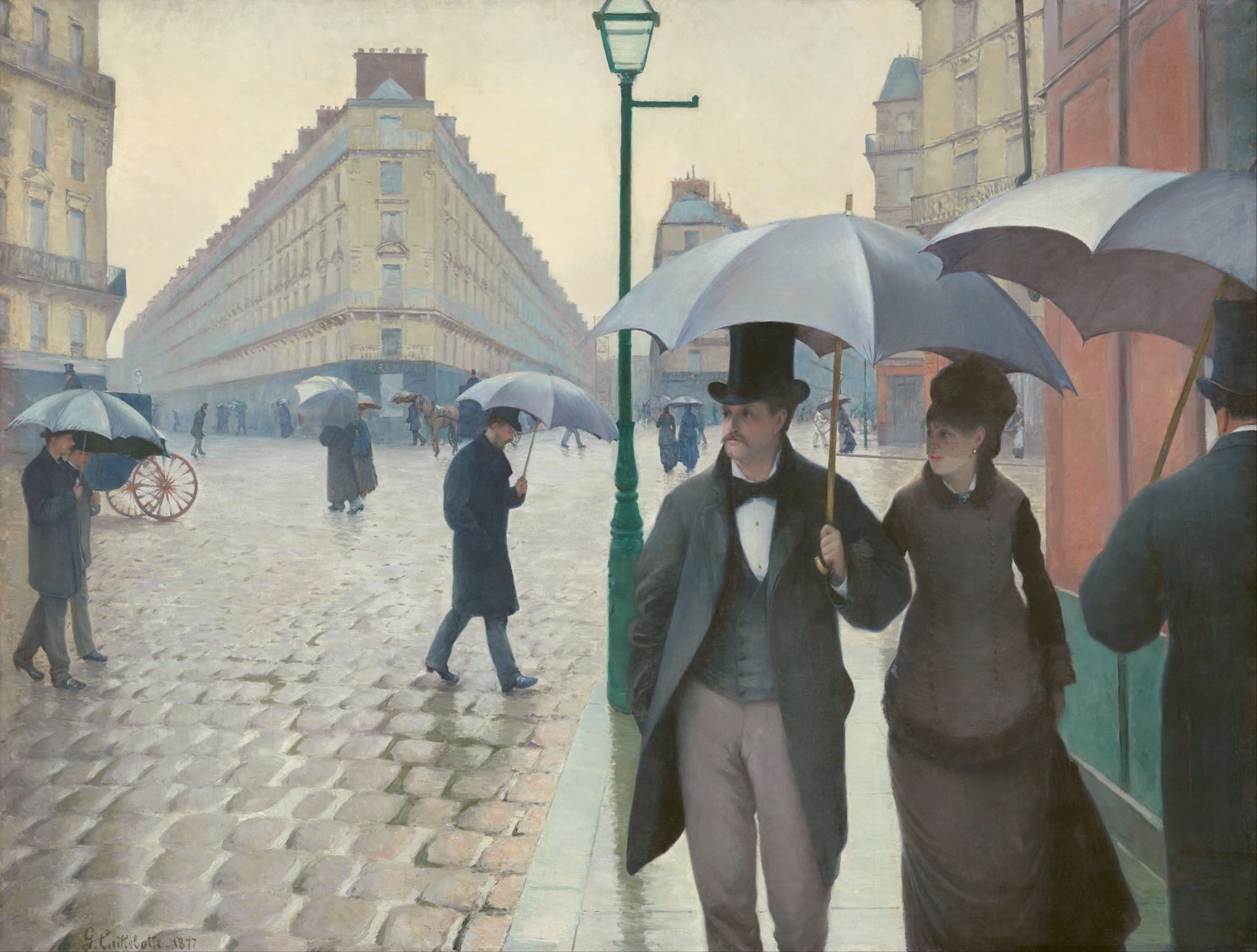
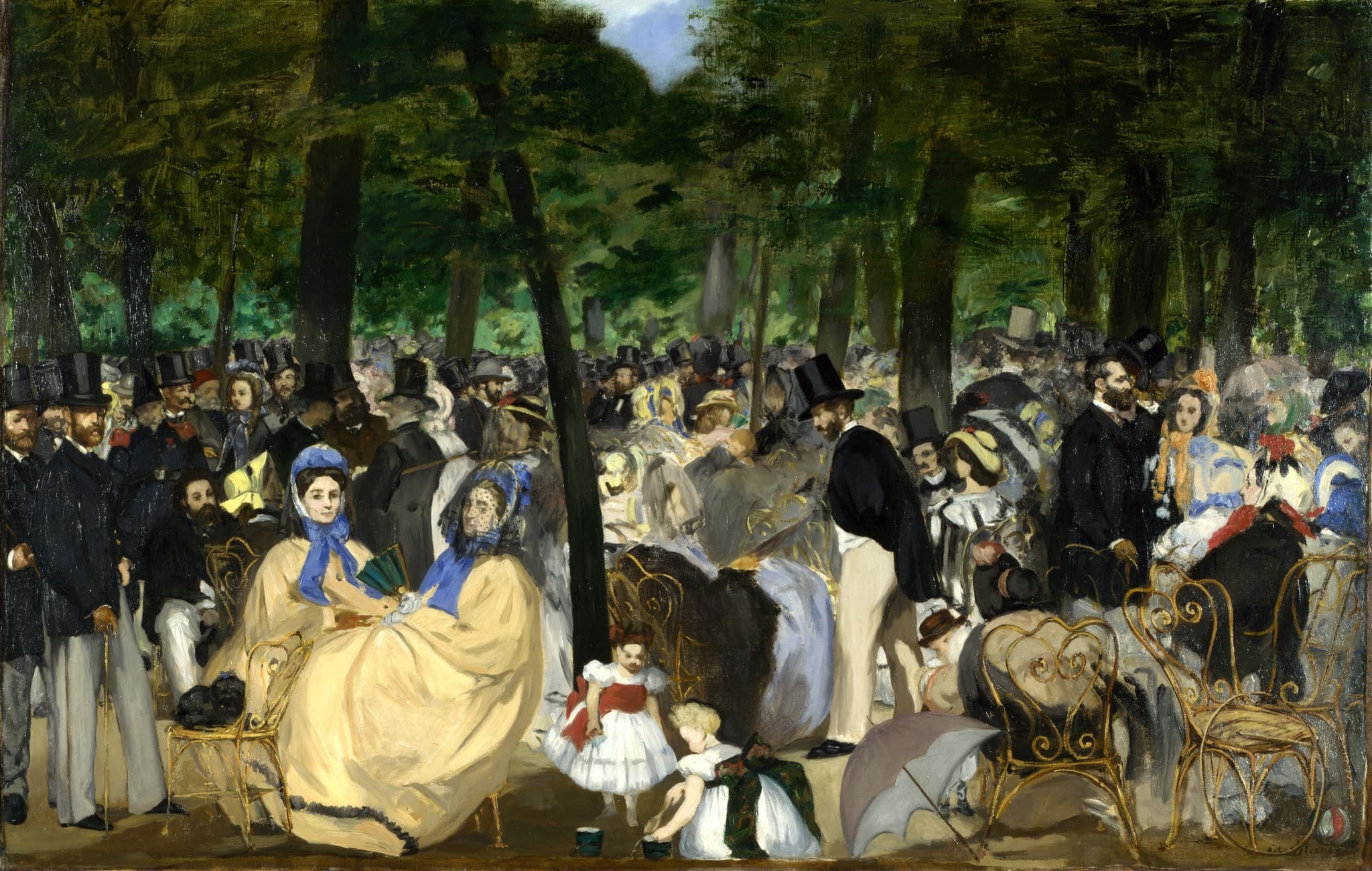
Manet and Caillebotte make modern Paris their testing ground. Each abandons academic hierarchies to ask how a painting can register ordinary life—crowds, cafés, work, leisure—without anecdotal plot. Manet’s Music in the Tuileries (1862) disperses attention across a milling frieze and even withholds the band, turning the very act of looking in public into the subject. Caillebotte’s Paris Street; Rainy Day (1877) answers with engineered clarity: Place de Dublin is organized by a lamppost axis, calibrated façades, and wet cobbles that unify the scene into a readable system of depth.
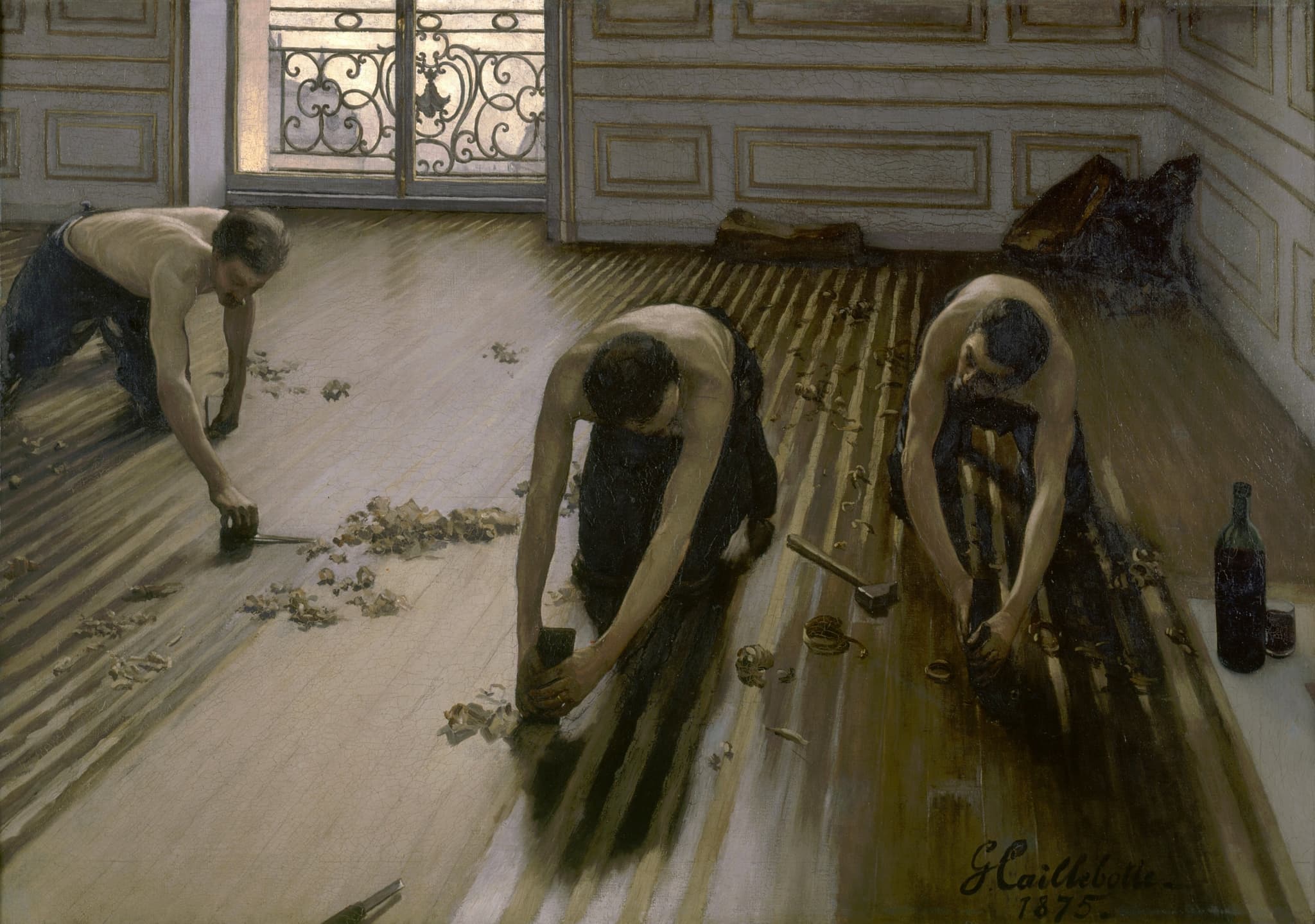
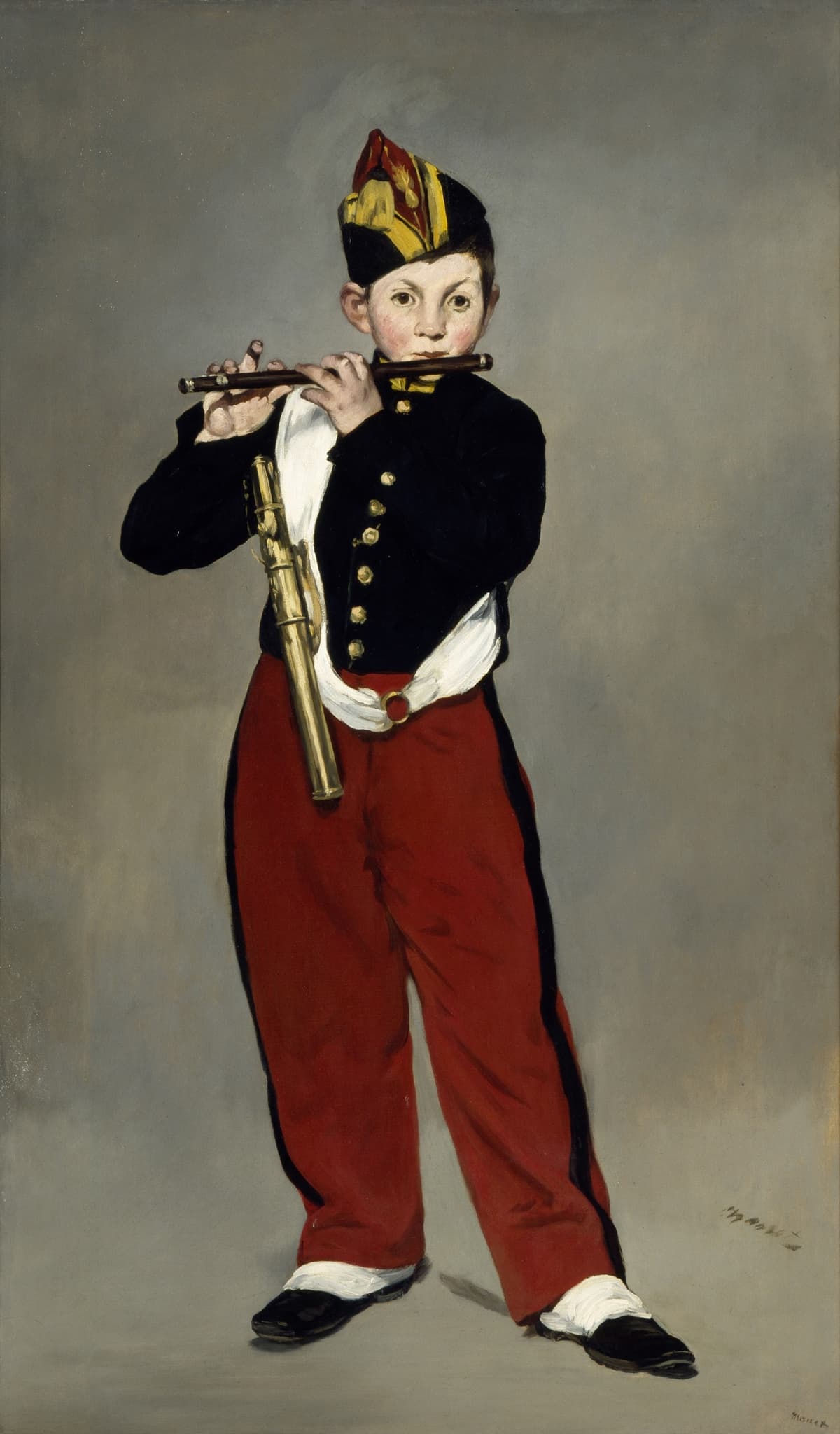
Both retool the past to modern ends. Manet translates Spanish formulas (Velázquez, Goya) into radically flattened, edited images—the single figure “in air” of The Fifer (1866), the pared staging of The Execution of Emperor Maximilian (1867–68). Caillebotte fuses academic drawing and measured perspective with Impressionist interest in weather and the instant—the perspectival chamber of The Floor Scrapers (1875) and the rain-sheened order of his boulevards. Each absorbs photography’s challenge, not by copying photos but by rethinking framing and focus: Caillebotte’s abrupt croppings and life-size proximities feel camera-aware while locking us to a stable vantage; Manet’s cuts and planar fields register as editorial decisions that shift painting from description to construction. In both, modern life is seen not as story but as a new kind of pictorial problem.
Decisive Difference
Caillebotte engineers vision in depth. He treats the rebuilt city as an optical instrument—stable horizons, orthogonals, and axial dividers that make space legible and inhabitable. In Paris Street; Rainy Day a green lamppost functions like a spine; façades and sidewalks recede with surveyor’s accuracy; wet cobbles knit the parts into one atmosphere. The Floor Scrapers turns labor into a measured interior: parquet strips, light rakes, and tools articulate procedure and time. Even outdoors, in works like Le Pont de l’Europe, iron trusses and radiating streets scaffold how we look. The viewer’s position is clarified and secured; the painting’s argument is that modern life can be known by calibrating where we stand.
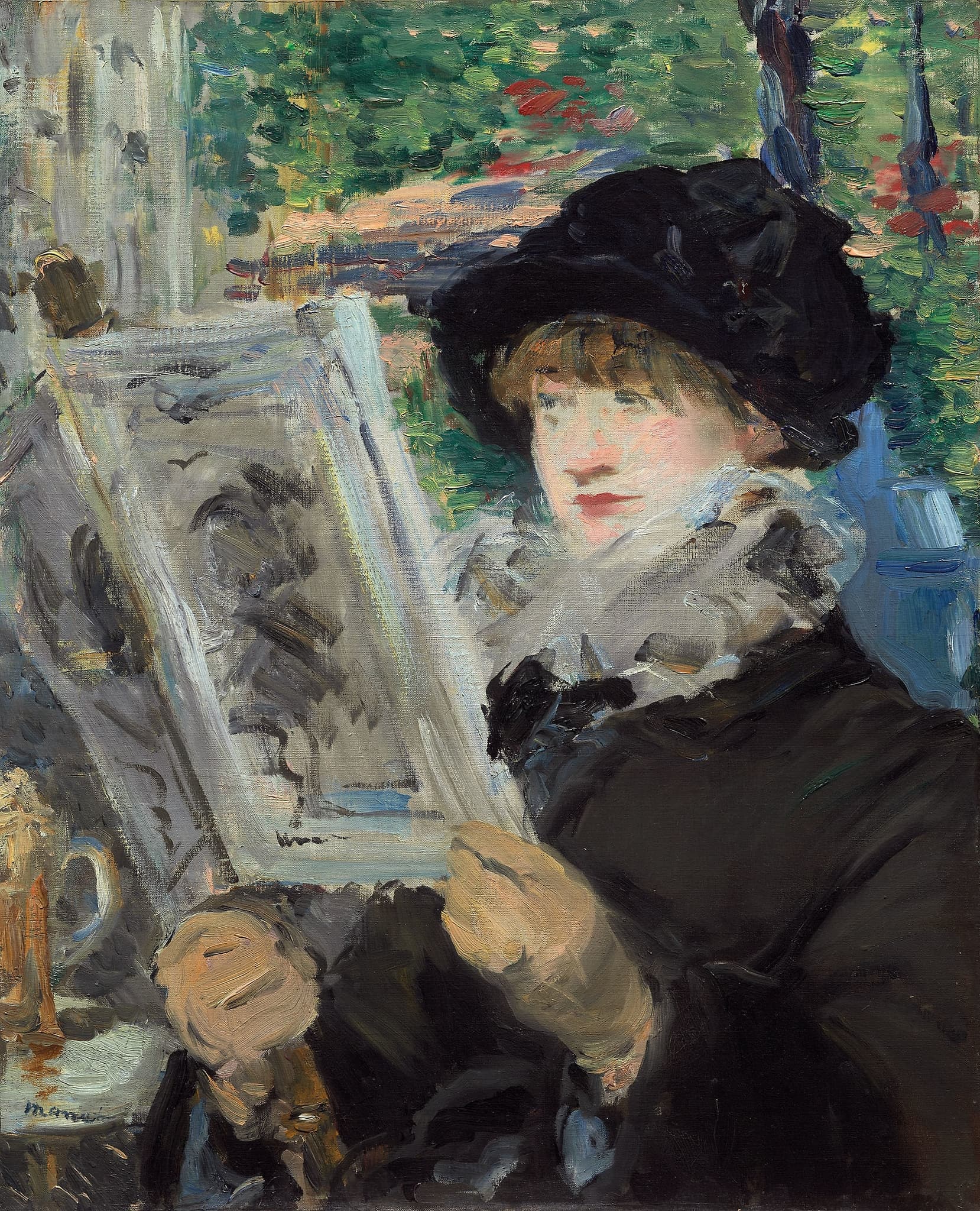
Manet edits vision on the surface. He strips settings, flattens grounds, and stages scenes so that the picture reads as an authored cut. The Fifer isolates a child against a nearly void plane—presence built from a few decisive fields of red, black, and white. In The Execution of Emperor Maximilian, rifles align with the horizon and the condemned are displaced to the edge; cool light and planar grouping turn killing into impersonal machinery. Late works like Woman Reading are studio-constructed “snapshots”—café props, a painted backdrop, cropped beer glass—where immediacy and artifice coexist. For Manet, painting changes how we see by insisting on the edited image and its ethical charge. Where Caillebotte stabilizes the world for a placed observer, Manet stabilizes the picture to expose how meaning is made.
Paired Works
Crowd, focus, and the modern city
Focus question: When you picture a crowd, do you stabilize space or let attention wander?
Paris Street; Rainy Day vs Music in the Tuileries
Dignity without myth
Focus question: How does each artist make an ordinary figure monumental?
The Floor Scrapers vs The Fifer
Making attention
Focus question: Is modern attention scaffolded by infrastructure or by studio edits?
Le Pont de l’Europe vs Woman Reading
Why This Comparison Matters
This pairing clarifies two durable models for modern seeing. Caillebotte’s paintings teach that perception can be stabilized by the city’s new optics—straight streets, fixed horizons, engineered nodes—so a viewer occupies a lucid, accountable position. Manet shows that modern truth often arrives as an edited surface—flattened, cropped, staged—where meaning depends on what is cut and what is shown. Those approaches don’t cancel each other; they map complementary logics of modernity: infrastructure that orders experience and images that construct it.
Understanding the split helps decode later culture. Photography, cinema, and graphic design inherit Manet’s ethics of the cut; urban planning, architecture, and documentary photography extend Caillebotte’s calibrated vantage. When you look at a city scene—or a news photo—ask Caillebotte’s question: Where am I placed? And Manet’s: How has this image been edited? The answers describe not only two painters but the visual habits we still live by.
Related Links
Sources
- Art Institute of Chicago, Caillebotte: Paris Street; Rainy Day (digital scholarly catalogue)
- AIC Publications, Caillebotte and photography (framing, optics, camera influence)
- Musée d’Orsay, Manet: The Fifer
- National Gallery, London, Manet: Music in the Tuileries Gardens
- National Gallery, London, Manet: The Execution of Emperor Maximilian
- Art Institute of Chicago, Manet: Woman Reading (AIC digital catalogue)
- Musée d’Orsay/Metropolitan resources on Manet and Velázquez
- NGA, Washington, Manet: Plum Brandy