Painting Meanings Essay
Not a Bride: The Misreading That Made Whistler Famous
Picture the stakes: a young American in Europe betting his career on a canvas the juries didn’t want. First the Royal Academy in London said no.
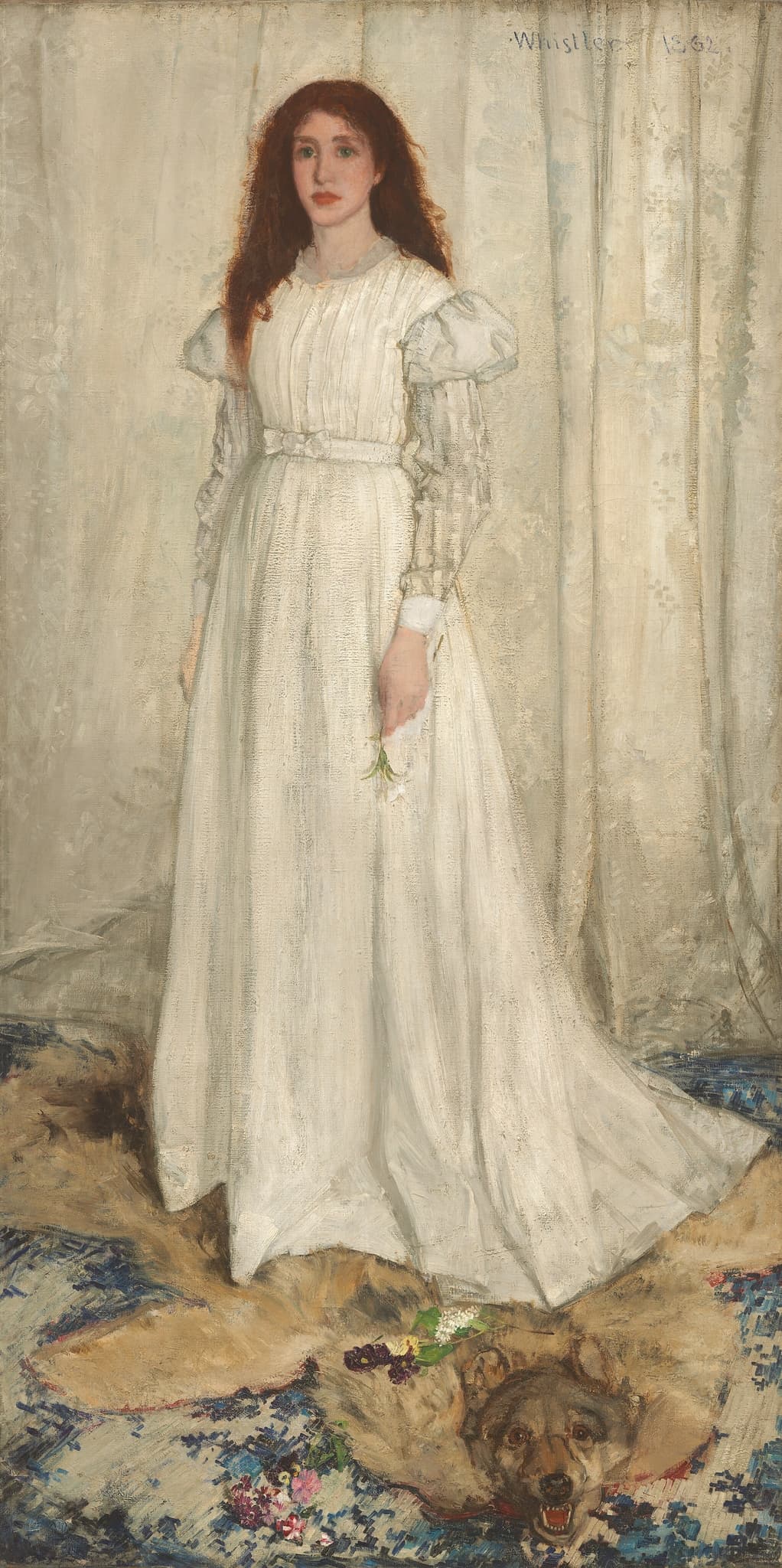
Picture the stakes: a young American in Europe betting his career on a canvas the juries didn’t want. First the Royal Academy in London said no. Then Paris said no. Whistler shipped The White Girl anyway, and when the Salon slammed the door, it slid into the breakaway show that made modern art modern—the 1863 Salon des Refusés, a sideshow that drew a mob hungry for trouble. There was money, reputation, and a love affair on the line; the woman in the dress was Joanna Hiffernan, Whistler’s partner and collaborator.
Crowds pressed in close. They read the white dress as purity, the spilled bouquet as aftershock, the animal pelt as danger. Critics argued whether she was a bride or a fallen woman, and they argued loudly. The refusal had turned the canvas into bait. Whistler’s name rode the same wave of controversy that lifted Manet that year; the Refusés framed them both as rebels the establishment couldn’t stomach 12.
Here’s the tension: the public demanded a plot; Whistler refused to supply one. He kept telling anyone who would listen that this wasn’t a story at all. He would even retitle it—Symphony in White, No. 1—to push viewers away from gossip and toward sensation. The title was a shield. The more people speculated about Joanna’s virtue, the more he doubled down on tone, mood, arrangement.
He had a credo for that defiance.
"Art should be independent of all clap-trap—should stand alone... and appeal to the artistic sense of eye or ear." 3
This wasn’t a coy dodge. It was an attack on a whole Victorian habit of extracting morals from pictures like headlines from police reports.
But the personal risk was real. Joanna Hiffernan wasn’t a symbol; she was a person facing daily judgment while her image toured as a Rorschach test. Rejection meant lost sales and studio rent on edge. Misreading meant her reputation in strangers’ mouths. Whistler had painted her with white-on-white restraint, avoiding the melodrama Victorian audiences expected. That reserve—her steady gaze, the pallor-on-pallor backdrop, the quiet fist of white flowers—let spectators project anything. And they did.
Then came the reversal. The scandal made him visible. When the crowd insisted on scandal, he reframed the entire conversation with language borrowed from music: symphony, harmony, nocturne. Color and composition first; narrative last, if at all. The White Girl was the first major test of that strategy, a manifesto smuggled into a portrait-shaped package. Museums now underline Joanna’s authorship in this shift: she wasn’t a passive muse but a "model, partner, and collaborator" who helped Whistler forge this new aesthetic 2.
And the shock? The painting that sparked all those moral readings is, in fact, the least illustrative thing about its own legend. Once you learn the backstory, the wolf-pelt snarl at her feet reads less like a moral and more like a chord—one low growl against a field of whites. The canvas became famous not because it told the right story but because it refused to, loudly. That refusal was marketable; controversy turned a rejection slip into a headline and a headline into a career. Our eyes chase plot; Whistler trained us to hear arrangement.
Look at how this flips the usual power dynamic. The establishment tried to gatekeep taste; the audience tried to gatekeep meaning; Whistler gatekept neither—he moved the fight to a different arena. If painting could be a symphony, then the only scandal left was our insistence on guessing the lyrics. That’s the knife twist in The White Girl: the more we try to name her—bride, temptress, martyr—the more the picture wins by holding still.
"Not a subject-picture at all," Whistler effectively argued—just a white-on-white dare that made narrative blink first 24.
This is why the work still hums online, why it feels contemporary in a feed full of hot takes. It proves you can hack attention without handing over your meaning. Whistler turned a double rejection into a rebrand for painting. Joanna turned being looked at into leverage. The scandal wasn’t sex or sainthood. The scandal was ambiguity—and it sold.
Sources:
1 Britannica on the 1863 Salon des Refusés: https://www.britannica.com/event/Salon-des-Refuses
2 National Gallery of Art exhibition, “The Woman in White: Joanna Hiffernan and James McNeill Whistler”: https://www.nga.gov/exhibitions/2022/woman-in-white-joanna-hiffernan-james-mcneill-whistler.html
3 Tate glossary, “Art for art’s sake” (quoting Whistler’s Ten O’Clock): https://www.tate.org.uk/art/art-terms/a/art-for-arts-sake
4 Painting Meanings artwork page: https://paintingmeanings.com/artworks/james-abbott-mcneill-whistler/symphony-in-white-no-1-the-white-girl