Diego Velazquez Paintings in London — Where to See Them
London matters because it brings together approximately 11 Velázquez paintings on permanent display across three institutions — the National Gallery (nine) and the Wallace Collection (two) — making it one of the most concentrated places outside Spain to see his work in a single visit. What makes the city's holdings distinctive is that the National Gallery offers a near–comprehensive, single-site survey of his court portraits and mature canvases while the Wallace Collection provides intimate, domestically scaled examples of his technique; the Royal Collection at Hampton Court Palace currently has no Velázquez on display.
At a Glance
- Museums
- The National Gallery, The Wallace Collection, Royal Collection (Hampton Court Palace)
- Highlight
- See Velázquez masterpieces at The National Gallery
- Best For
- Art lovers and history enthusiasts
The National Gallery
The National Gallery’s group of nine Velázquez paintings makes it arguably the most important place outside Spain to see a concentrated cross-section of his work — from intimate court portraits to later, looser brushwork that influenced 19th-century realists and impressionists. Because those works are displayed together, you can directly trace shifts in his palette, handling of light, and psychological subtlety, which is hard to do when his canvases are scattered among many collections.
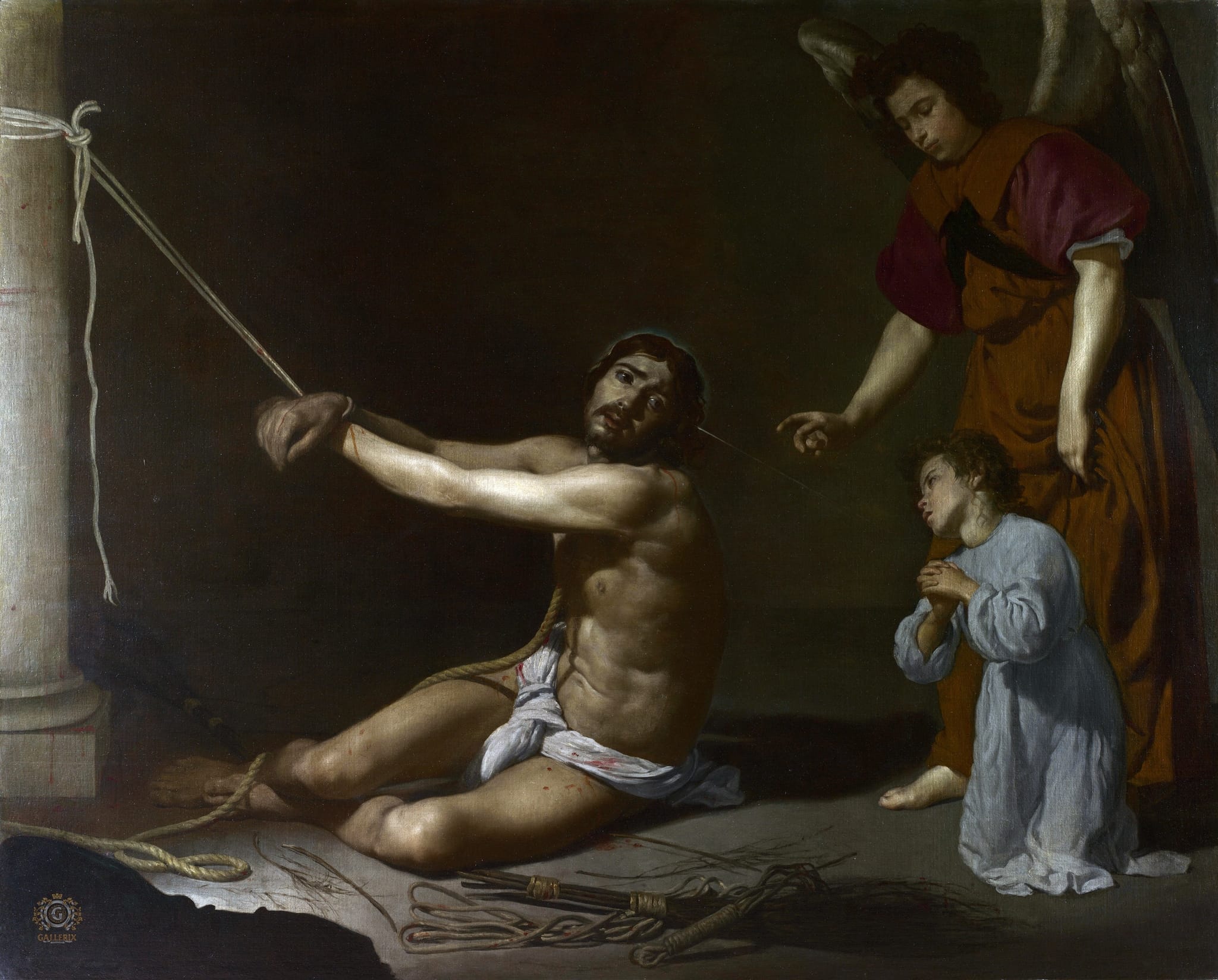
Christ after the Flagellation contemplated by the Christian Soul
1628
Velázquez shows the beaten, bloodied Christ alone against a dark background, emphasizing the physical aftermath of the flagellation and the inward, spiritual response suggested by the figure of the Christian Soul. This early masterpiece is significant for its stark realism and psychological intimacy, which mark a move away from decorative religious iconography toward more humanized sacred subjects. Look for the restrained palette, the careful modelling of flesh and wounds, and the way light isolates Christ to invite contemplative empathy.
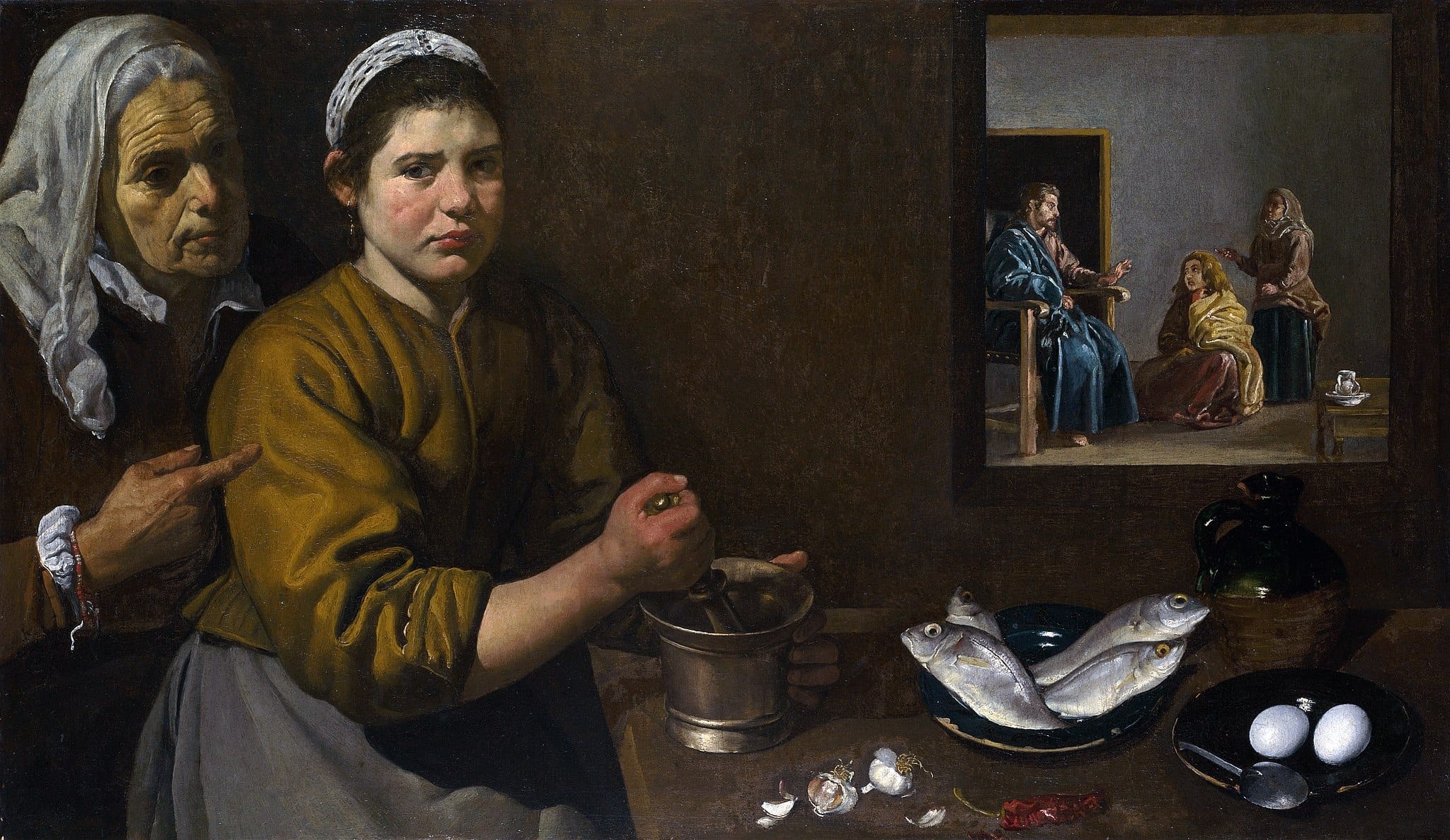
Kitchen Scene with Christ in the House of Martha and Mary
1618
This painting juxtaposes a humble kitchen foreground of cooks, food and domestic detail with a small, distant Biblical scene of Christ and the two sisters in the background, merging genre and religious painting. It is important as an example of Velázquez’s Seville period experiments with everyday realism and layered narrative—sacred and profane coexist on the same plane. Notice the trompe-l’œil detail of the food and utensils, the subtle theatrical depth between foreground and background, and how the tiny Biblical tableau reframes the whole composition.
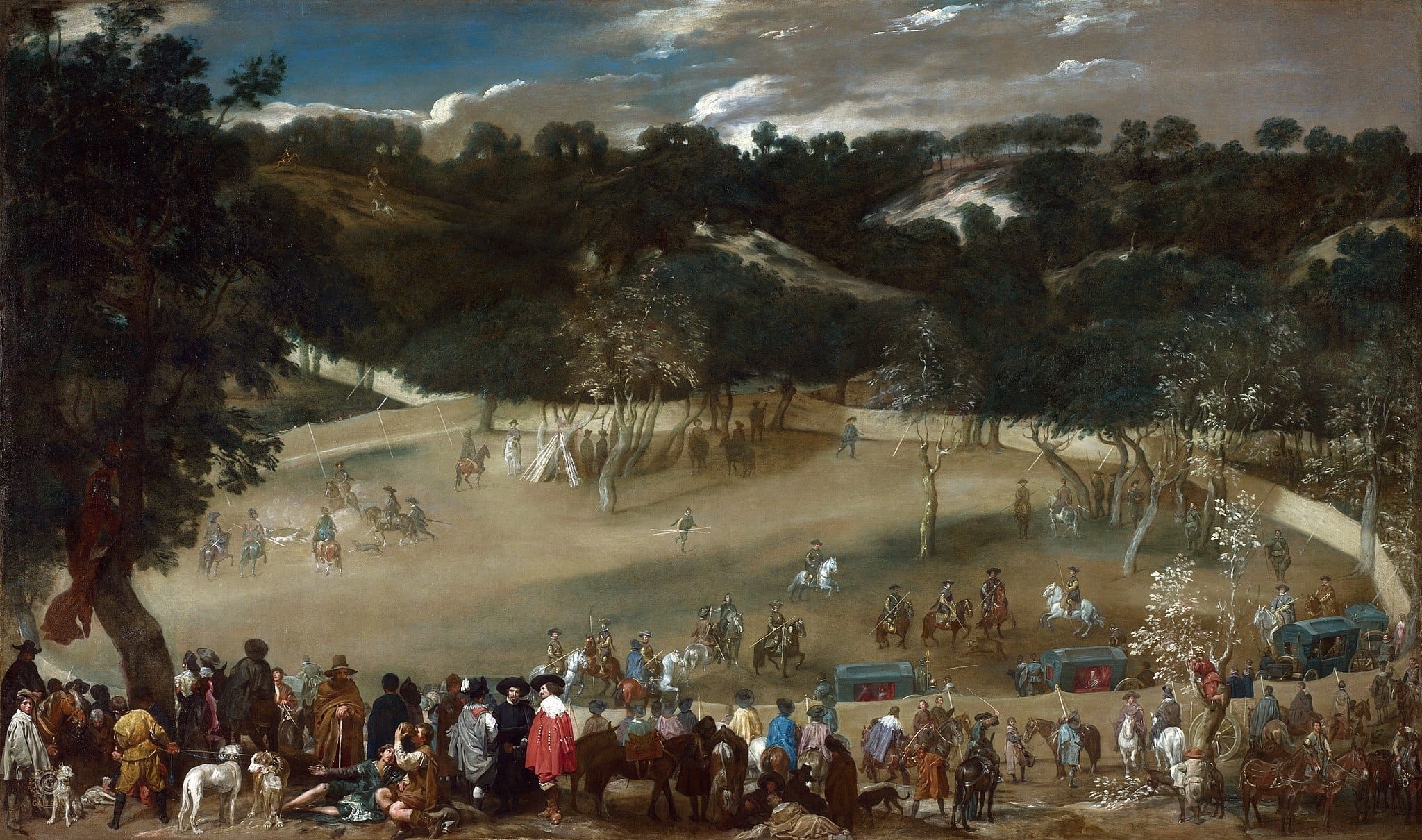
Philip IV hunting Wild Boar (La Tela Real)
1630
Velázquez depicts Philip IV in the moment of a staged royal boar hunt within a fenced enclosure, surrounded by attendants and hounds, presenting the king as active and vigorous. The work is significant for its large scale, dynamic composition and for blending portraiture, court propaganda and outdoor spectacle to project royal authority. Watch for the sweeping diagonals, the contrast between rider and animals, and Velázquez’s economical brushwork that suggests detail without overworking it.
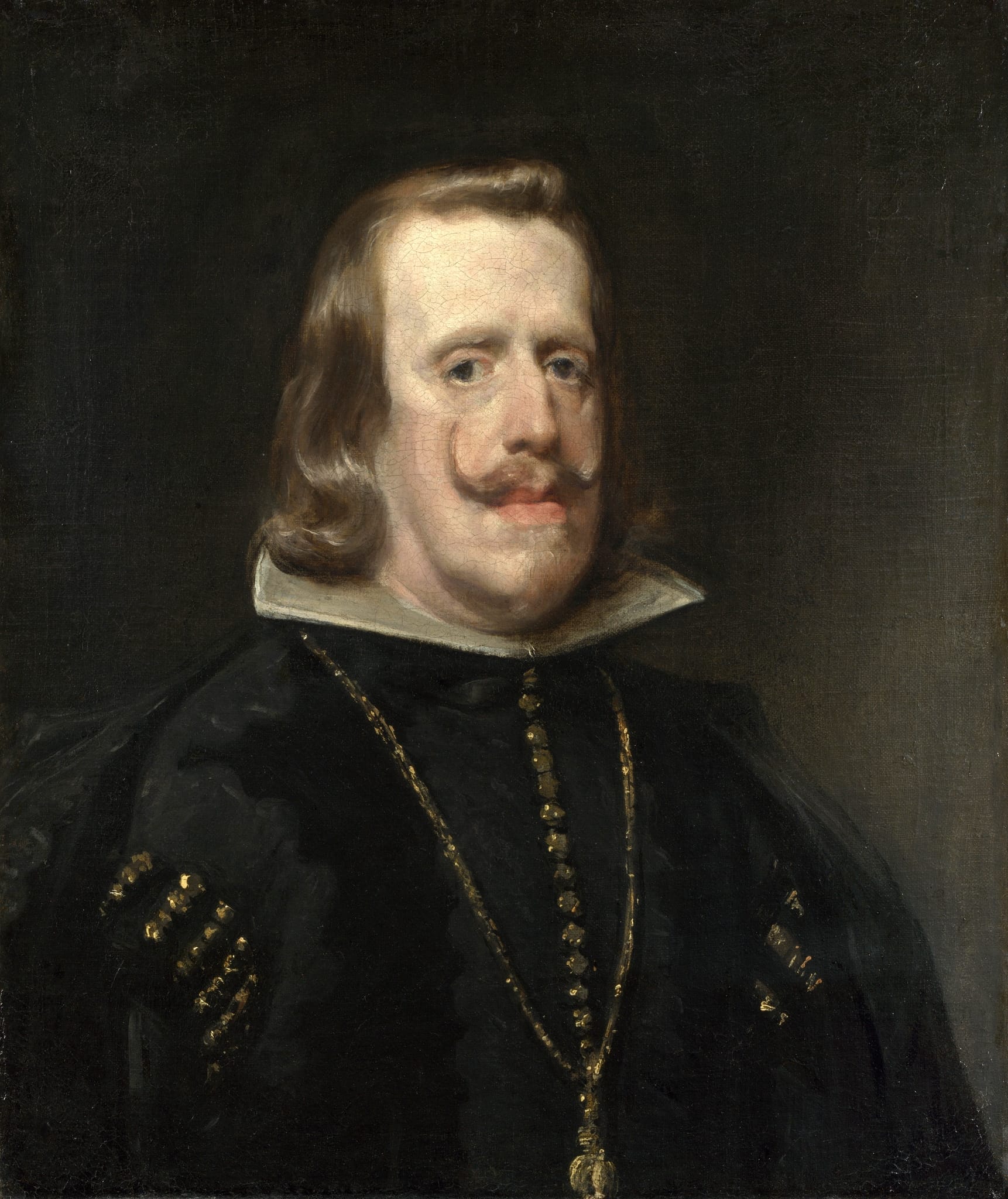
Philip IV of Spain
1656
In this mature portrait Velázquez presents Philip IV with quiet dignity — an older, authoritative monarch rendered with a spare palette and effortless handling. The significance lies in Velázquez’s mastery of psychological portraiture at court, capturing status through posture and subtle expression rather than ornate costume alone. Look for the controlled brushwork, the attention to the sitter’s hands and face, and how light sculpts presence from a limited tonal range.
Must-see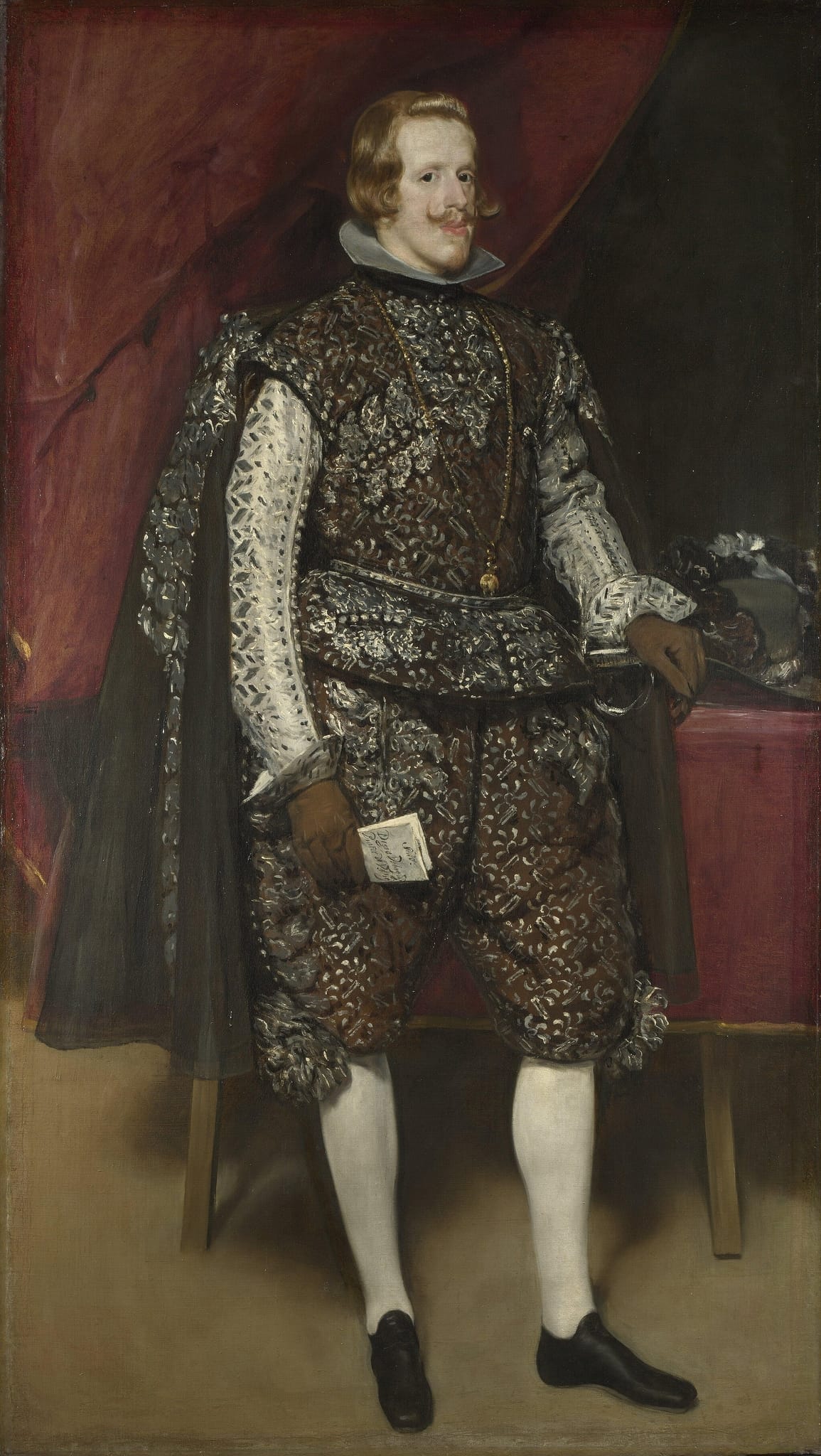
Philip IV of Spain in Brown and Silver
1631
This earlier court portrait shows Philip IV in an elegant brown costume trimmed with silver, combining regal costume with a natural, unostentatious bearing that became characteristic of Velázquez’s royal images. It marks an evolution after Velázquez’s first Italian trip toward a softer palette and a more painterly approach to texture and fabric. Observe the tonal harmony between figure and background, the delicate rendering of textiles, and the subtle psychological reserve in the king’s expression.
Must-see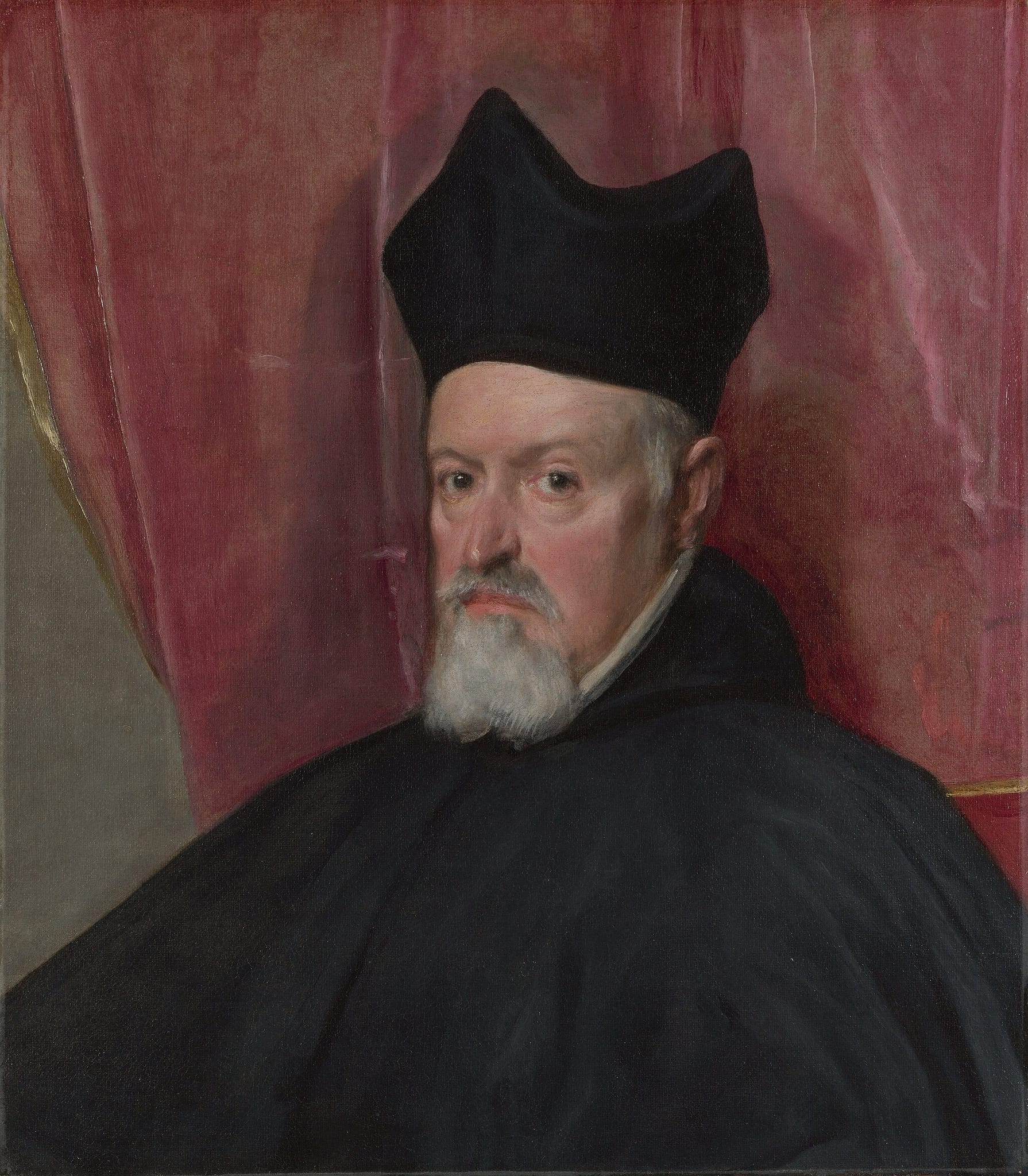
Portrait of Archbishop Fernando de Valdés
1640
Velázquez portrays Archbishop Fernando de Valdés with solemn dignity, concentrating on the face and hands to convey ecclesiastical gravitas rather than ornamental display. The painting is significant as an example of Velázquez’s capacity to combine clerical authority with human presence, using economical composition to emphasize character. Look for the sober color scheme, the textured handling of flesh against simple vestments, and the penetrating but restrained gaze.
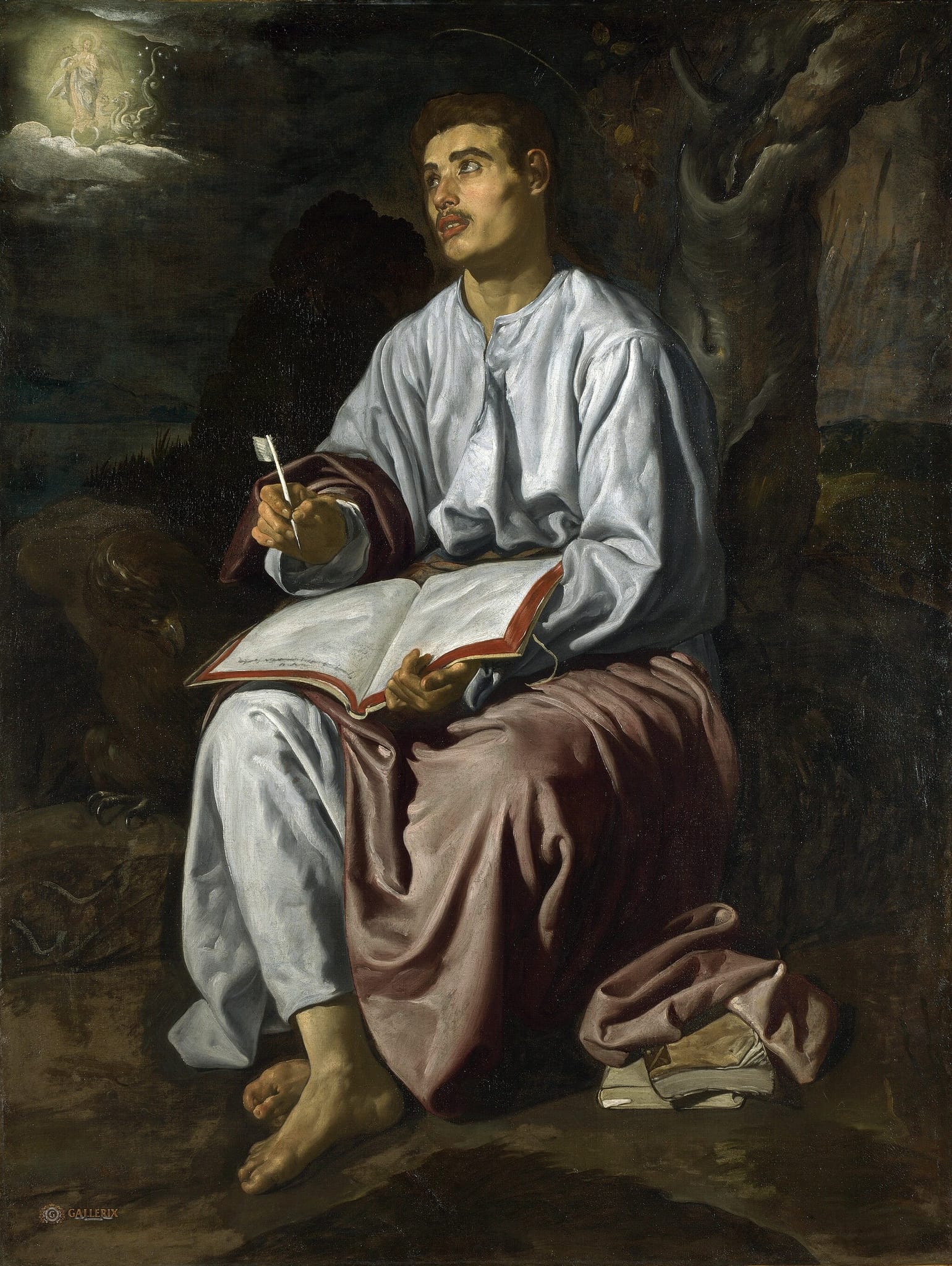
Saint John the Evangelist on the Island of Patmos
1618
Velázquez depicts the young Saint John in contemplative solitude on Patmos, engaged in the act of writing or receiving the vision that will become Revelation, set within a modest, natural setting. This early work is important for showing Velázquez’s interest in narrative clarity and emotional restraint in religious subjects during his Seville years. Pay attention to the directness of the pose, the clarity of the drawing, and how light defines the saint against his surroundings.
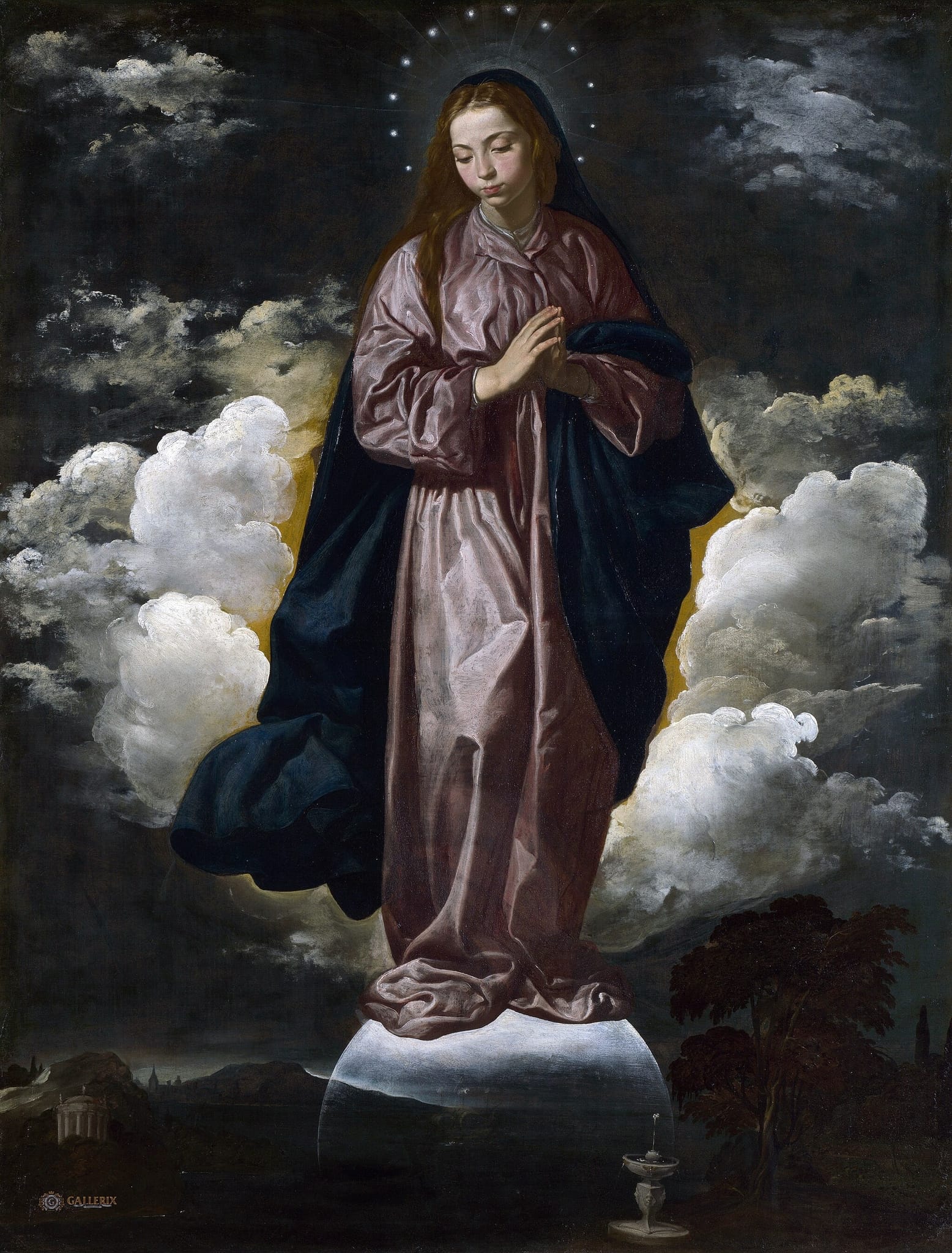
The Immaculate Conception
1618
Velázquez represents the Virgin Mary as the Immaculate Conception, often shown standing on a crescent moon and clothed in luminous whites and blues, embodying purity and divine grace. The painting is significant for combining Counter-Reformation iconography with the artist’s fledgling skill at rendering delicate light and devotional feeling. Look for the serene, otherworldly expression, the soft modelling of drapery, and symbolic details (such as the moon and stars) that underline Marian doctrine.
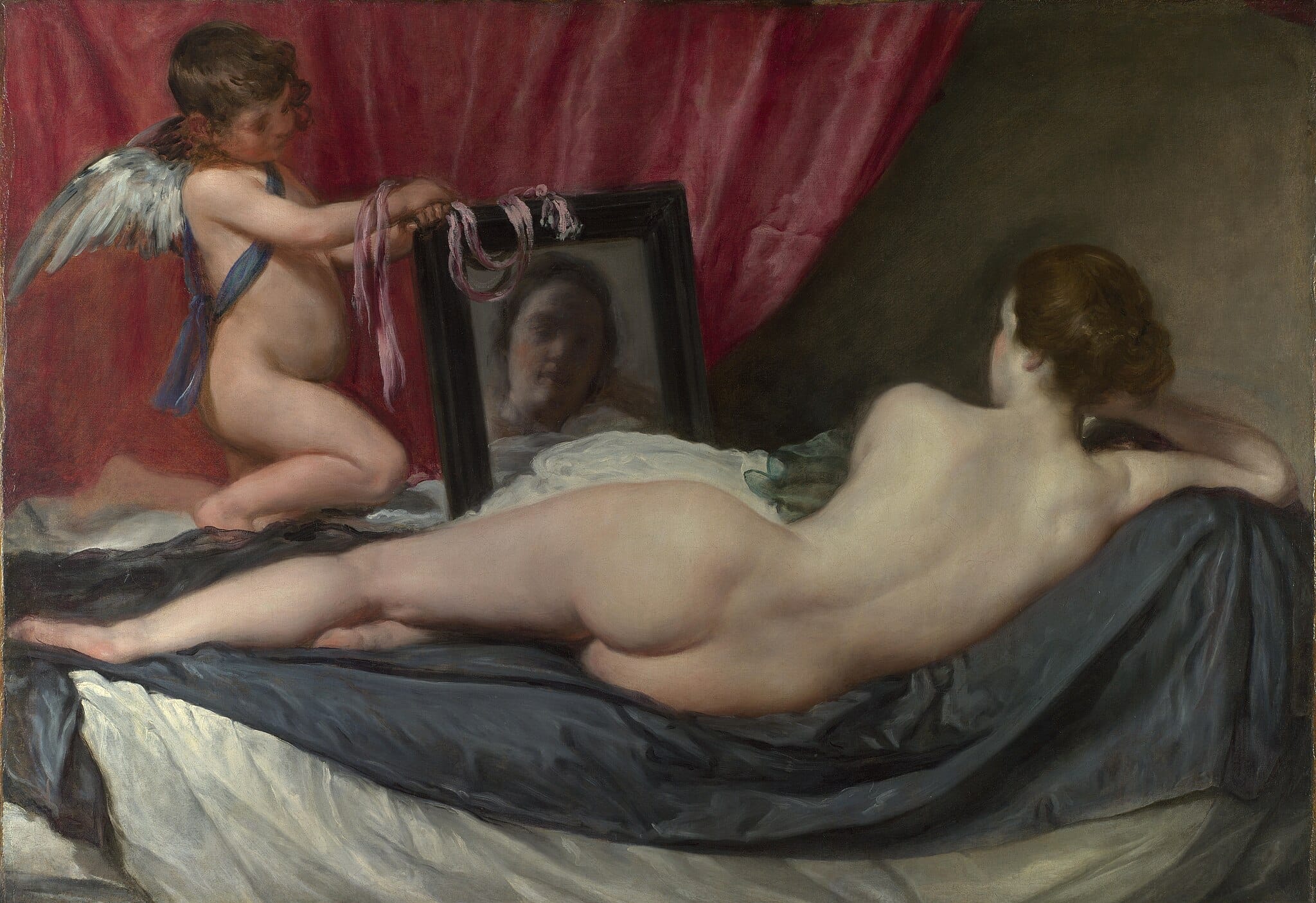
The Toilet of Venus ('The Rokeby Venus')
1647
Known as the Rokeby Venus, this famous painting shows Venus reclined on a bed with her back to the viewer, gazing into a mirror held by Cupid—an intimate, sensuous exploration of beauty and reflection. Its significance stems from Velázquez’s rare full-length female nude and his sophisticated interplay of surface, mirror-image and soft, velvety paint handling that influenced later artists. Notice the subtle modelling of the back, the cool, silvery reflection in the mirror, and the painting’s delicate balance between eroticism and classical restraint.
Must-seeThe Wallace Collection
The Wallace Collection’s two Velázquez paintings are important because they survive within an 18th–19th-century aristocratic interior very similar to the private contexts in which many Spanish court paintings were once displayed. Seeing Velázquez there offers a feel for how his work functioned as part of private taste and collecting — the small scale and conversational placement highlights the intimacy and courtly nuance of his portraits and genre scenes.
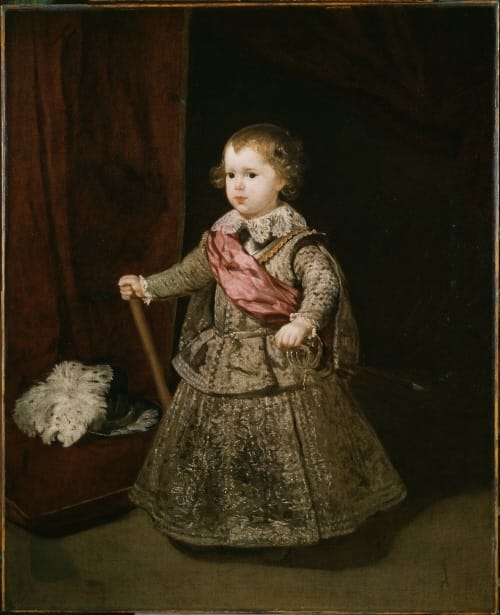
Prince Baltasar Carlos in Silver
1633
A formal portrait of the young Prince Balthasar Carlos, shown full-length wearing a gleaming silver costume and standing beside a richly caparisoned horse; Velázquez captures both the child’s princely bearing and the shine of metallic textiles with economical, confident brushstrokes. This work is significant as an early mature portrait by Velázquez of the heir to the Spanish throne, combining courtly ceremony with the artist’s growing interest in painterly handling and realism. Viewers should look for the contrast between the smooth modelling of the prince’s face and the lively, almost sketch-like handling of the silver costume and horse trappings, which reveal Velázquez’s subtle virtuosity. ([wallacelive.wallacecollection.org](https://wallacelive.wallacecollection.org/eMP/eMuseumPlus?module=collection&objectId=64902&service=ExternalInterface&viewType=detailView&utm_source=openai))
Must-see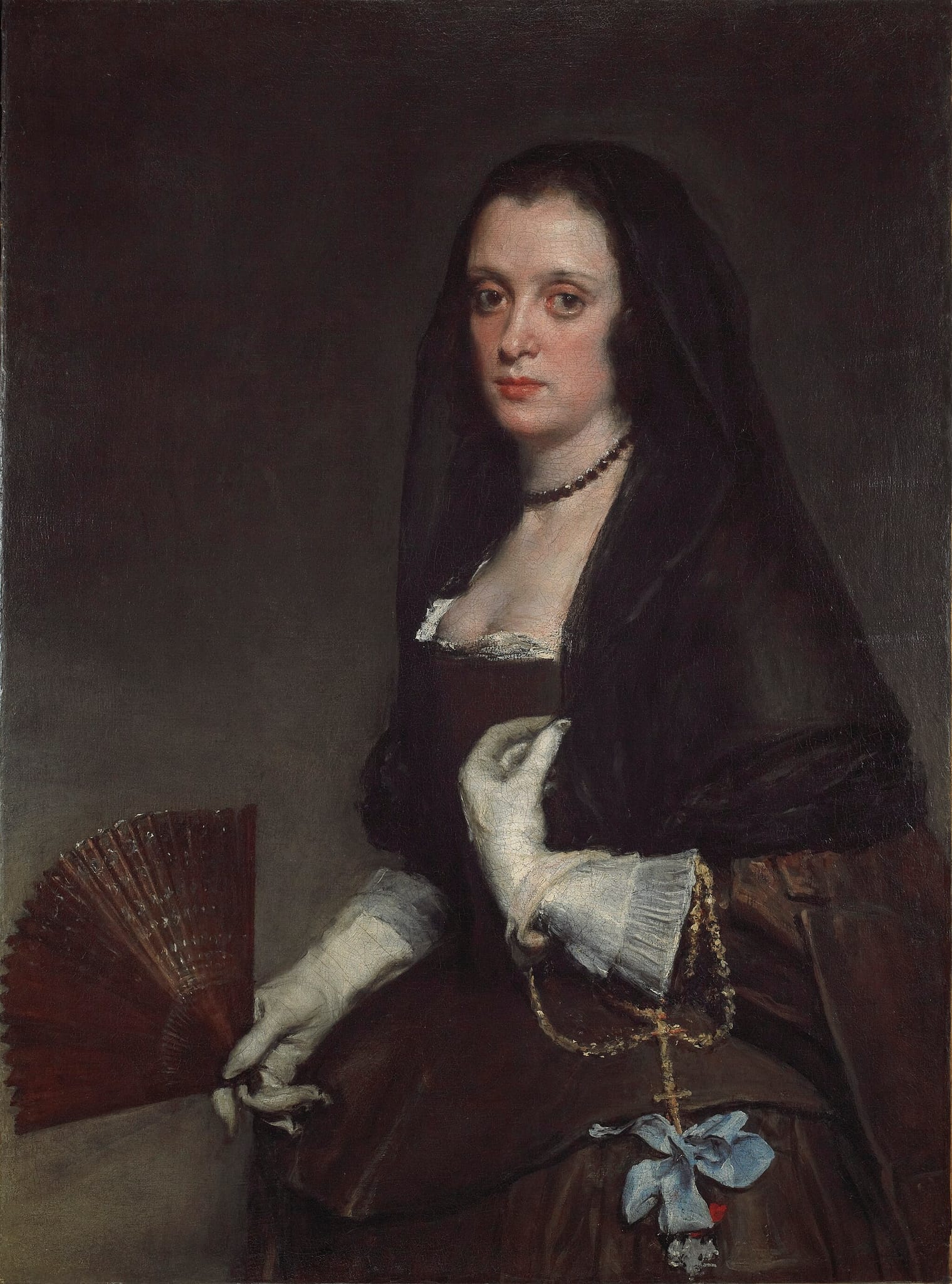
The Lady with a Fan
1640
A striking, intimate bust portrait of a fashionable woman holding a fan, rendered with spare, luminous brushwork that leaves parts of the costume and background suggested rather than fully detailed. The painting is important as one of Velázquez’s most enigmatic secular portraits outside the Spanish court—celebrated for its psychological presence and the looseness of technique that anticipates his later style. When looking, attend to the subtle modelling of the face and the quick, economical strokes of the fan and dress: the contrast between the detailed face and abbreviated costume is central to the picture’s sense of immediacy. ([wallacelive.wallacecollection.org](https://wallacelive.wallacecollection.org/eMP/eMuseumPlus?module=collection&objectId=64963&service=ExternalInterface&utm_source=openai))
Must-seeRoyal Collection (Hampton Court Palace)
Although Hampton Court Palace does not hold paintings by Velázquez (as noted), it matters for understanding Velázquez because the palace and the Royal Collection illustrate the courtly world that produced and commissioned his art — the ceremonial rooms, royal portrait traditions, and inventories reflect the display practices and patronage structures of European courts that shaped his career. Visiting Hampton Court helps place Velázquez’s role as a Spanish court painter into a broader, comparative royal-collection context: you can see how monarchs curated image, power, and diplomatic exchange even when the master himself isn’t represented there.