Edvard Munch Paintings in Berlin — Where to See Them
Berlin matters for experiencing Edvard Munch because the city preserves approximately one painting on permanent display across one museum — the Stiftung Stadtmuseum Berlin (Sammlung Stadtmuseum / Märkisches Museum). Seeing Munch there is distinctive: his work is presented within a civic-historical museum context that situates his psychological modernism alongside Berlin’s urban and cultural history, exposing the connections between his themes and the city’s own turn-of-the-century transformations.
At a Glance
- Museums
- Stiftung Stadtmuseum Berlin (Märkisches Museum)
- Highlight
- See Munch’s painting in the intimate, historic Märkisches Museum setting.
- Best For
- Visitors who enjoy intimate, historically focused art experiences
Stiftung Stadtmuseum Berlin (Sammlung Stadtmuseum / Märkisches Museum)
Although the Märkisches Museum holds only one painting by Edvard Munch, that single work is important because it places Munch directly into the civic and urban history context of Berlin—showing how his psychological, modernist language was read and collected by a major German city. The museum’s civic-collection setting lets visitors see Munch not only as a Scandinavian outsider but as an artist whose themes (urban alienation, modern life) intersected with Berlin’s own cultural debates and the development of German Expressionism.
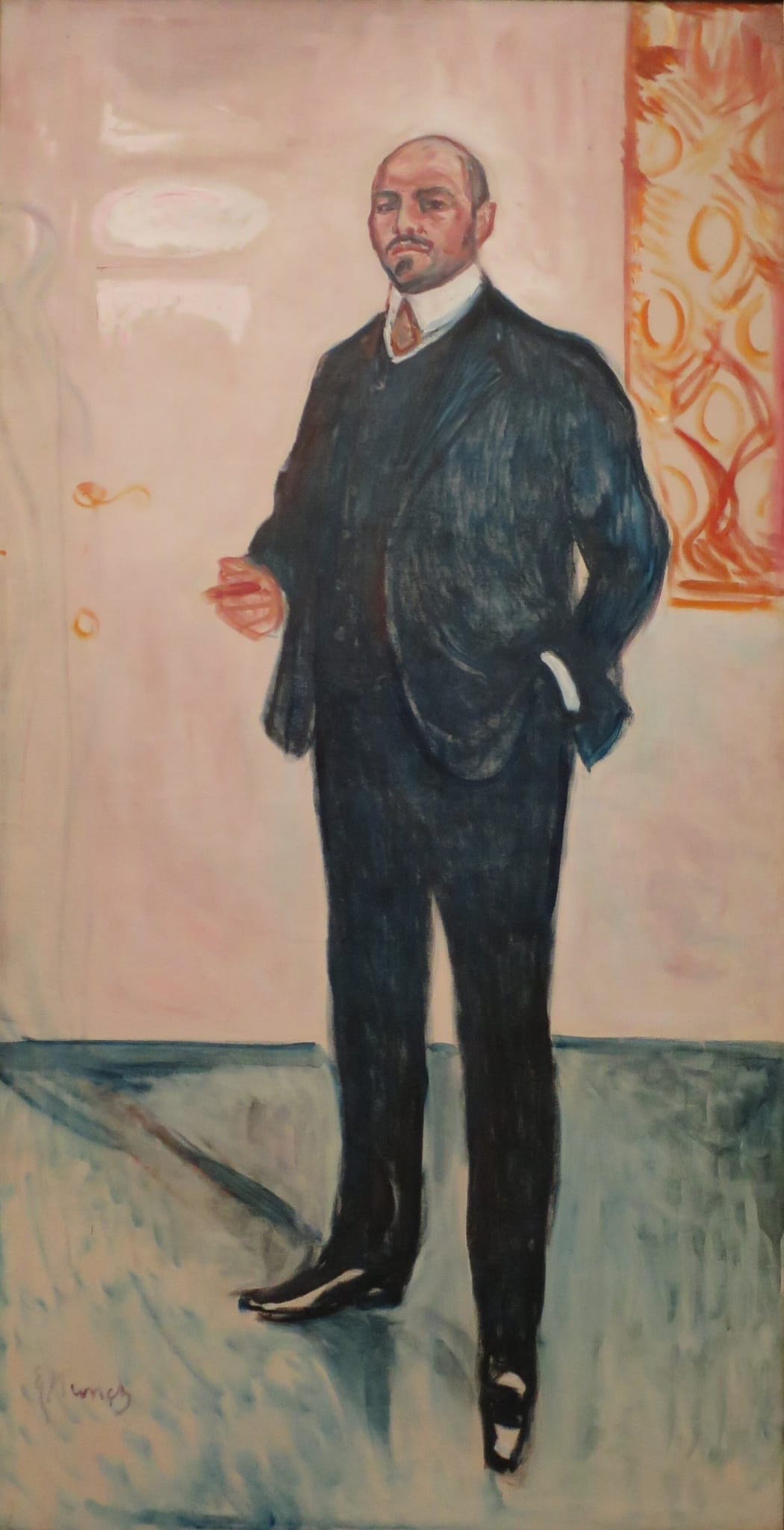
Portrait of Walther Rathenau
1907
Munch’s 1907 portrait shows the Berlin industrialist, art collector and later statesman Walther Rathenau in a frontal, almost monumental pose that emphasizes his presence more than photographic likeness; note the spare background and Munch’s expressive handling of paint that isolates Rathenau’s face and hands. The work is significant both as a testament to Rathenau’s role as an early supporter and collector of Munch in Berlin and as a highlight of the Stadtmuseum Berlin’s modern collection—viewers should look for the tension between psychological intensity and restrained form, especially in the eyes and the modulated brushwork around the mouth and hands. ([stadtmuseum.de](https://www.stadtmuseum.de/en/exhibition/embracing-modernism?utm_source=openai))
Must-see