Edvard Munch Paintings in Oslo — Where to See Them
Oslo matters for experiencing Edvard Munch because the city preserves approximately 11 paintings on permanent display across one venue: the University of Oslo’s Aula (Domus Media), where his works are installed within the grand ceremonial hall. Visiting the Aula lets you see his large-scale, site-specific compositions in their intended civic and architectural context, making it easy to plan a focused stop to view these important, publicly accessible works.
At a Glance
- Museums
- University of Oslo — Universitetets aula (Aula / Domus Media)
- Highlight
- See Munch’s monumental Aula frieze in its original setting.
- Best For
- Art history and Munch enthusiasts seeking immersive historical context.
University of Oslo — Universitetets aula (Aula / Domus Media)
The Aula is one of the few places where Munch worked at monumental scale for a public commission, producing a coherent ensemble of large paintings meant to integrate with the hall’s architecture and programme. Seeing these works in situ reveals how Munch adapted his palette, composition and symbolism for a civic setting — the theatrical scale, placement and relationship to light make different aspects of his expressionism visible compared with small canvases in gallery rooms.
The Sun
1911
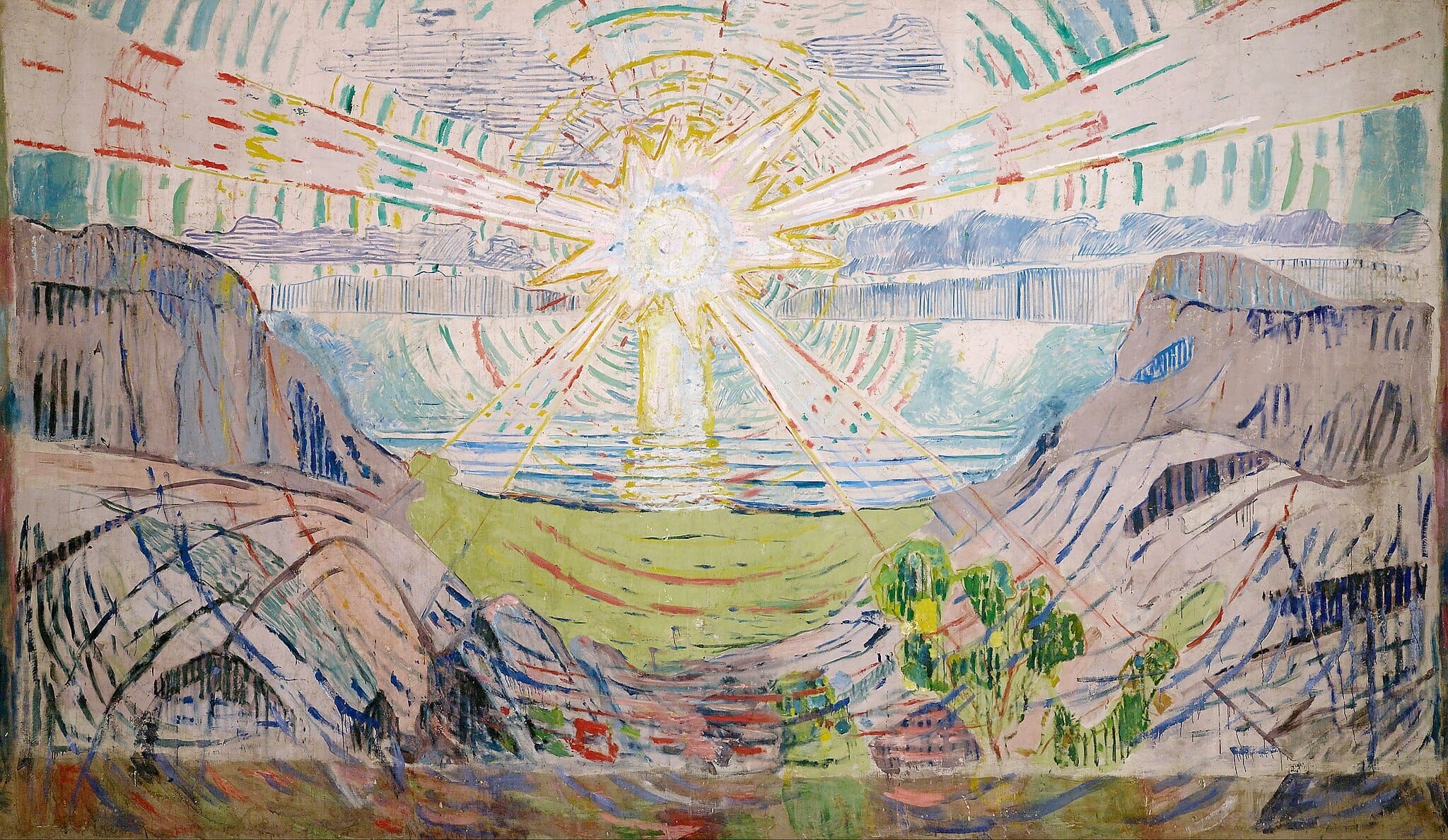
A monumental, radiant composition in which the sun dominates the sky and floods the scene with an almost blinding yellow light, bathing human figures and landscape in intense color. It is significant as the culminating, unifying image of Munch’s Aula cycle — a symbolic celebration of life, light and creative energy — and viewers should notice the layered planes of color, the way light abstracts forms into near-silhouettes, and the painting’s oscillation between naturalism and pure, symbolic color.
Must-see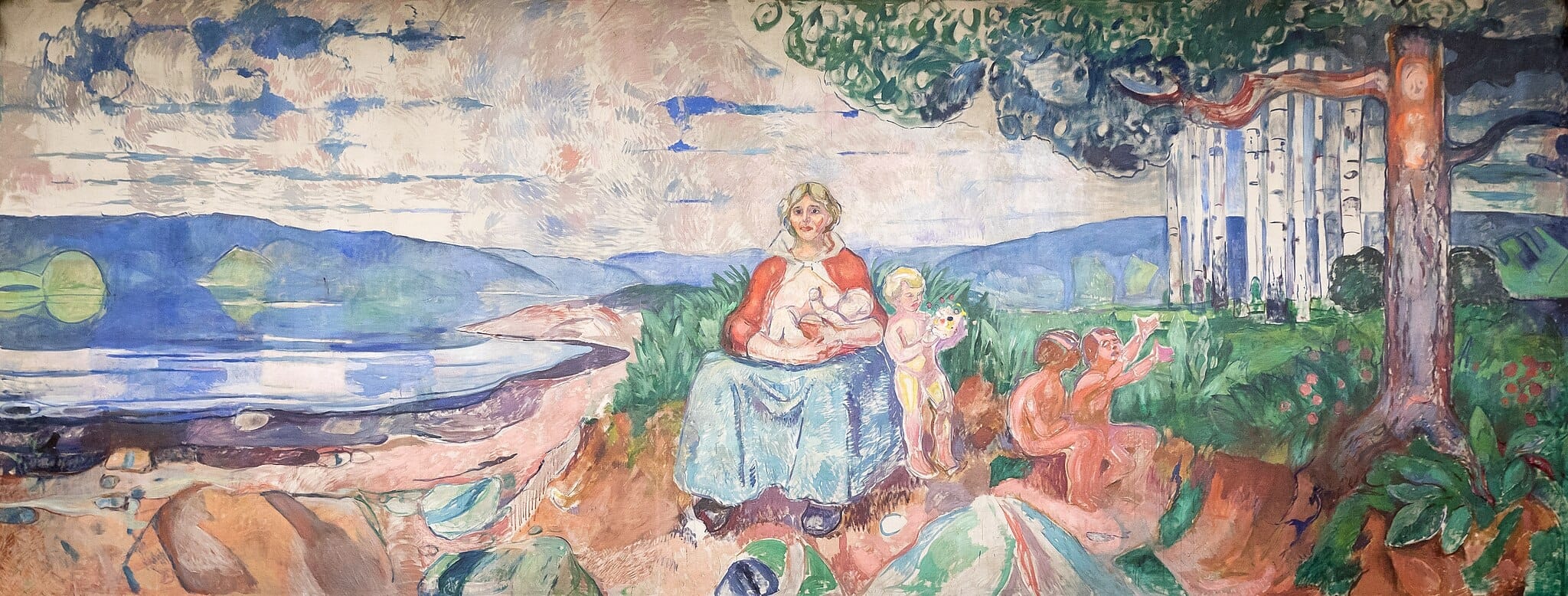
Alma Mater
An allegorical depiction of the university as a nurturing, classical figure presiding over learning, often shown surrounded by students or symbolic motifs of knowledge. Important for its role as the Aula’s educational centerpiece, the work blends academic iconography with Munch’s expressive palette; look for the figure’s posture and facial expression, the use of stylized drapery, and any book- or torch-like attributes that identify her as the university’s guiding spirit.
Must-see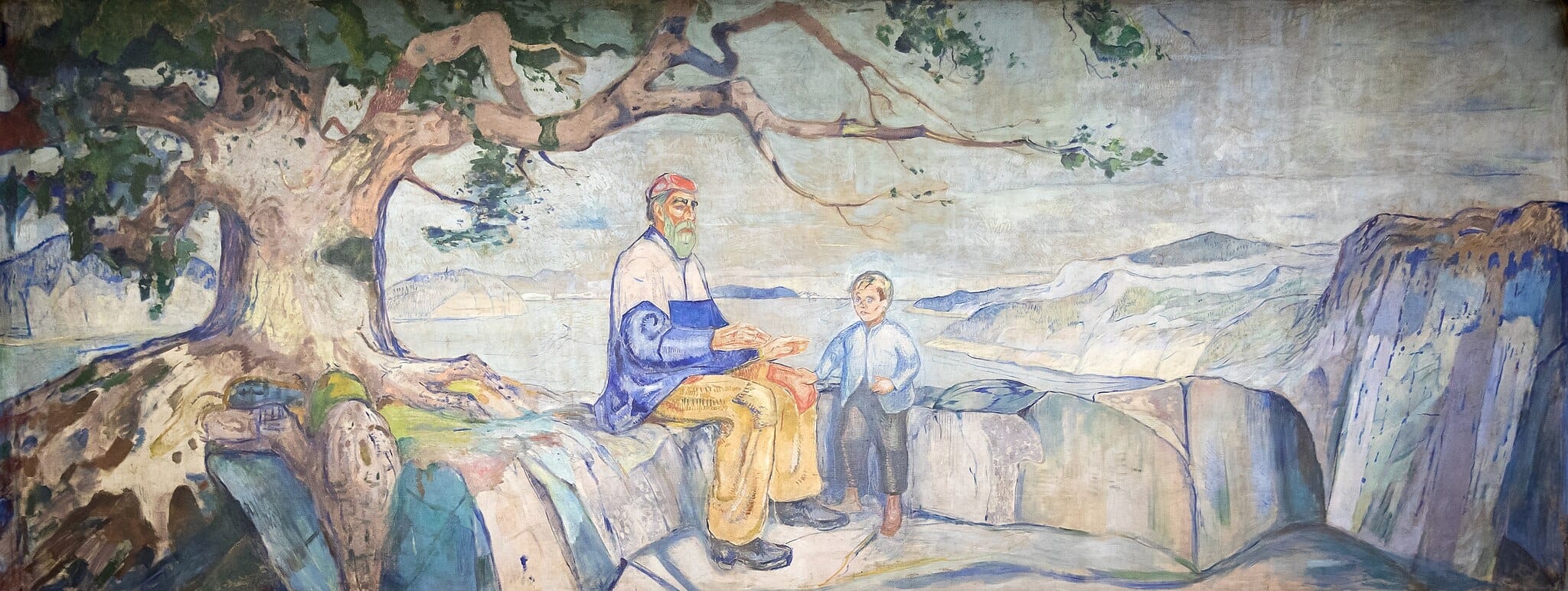
History
A meditative scene that evokes the continuity and weight of the past, typically populated by figures and book-like forms suggesting memory and narrative. Its significance lies in Munch’s attempt to give pictorial form to collective memory for a public institution; viewers should attend to the layering of figures, the cadence of gestures that imply storytelling, and any symbolic objects (scrolls, ledgers, older figures) that anchor the theme.
Must-see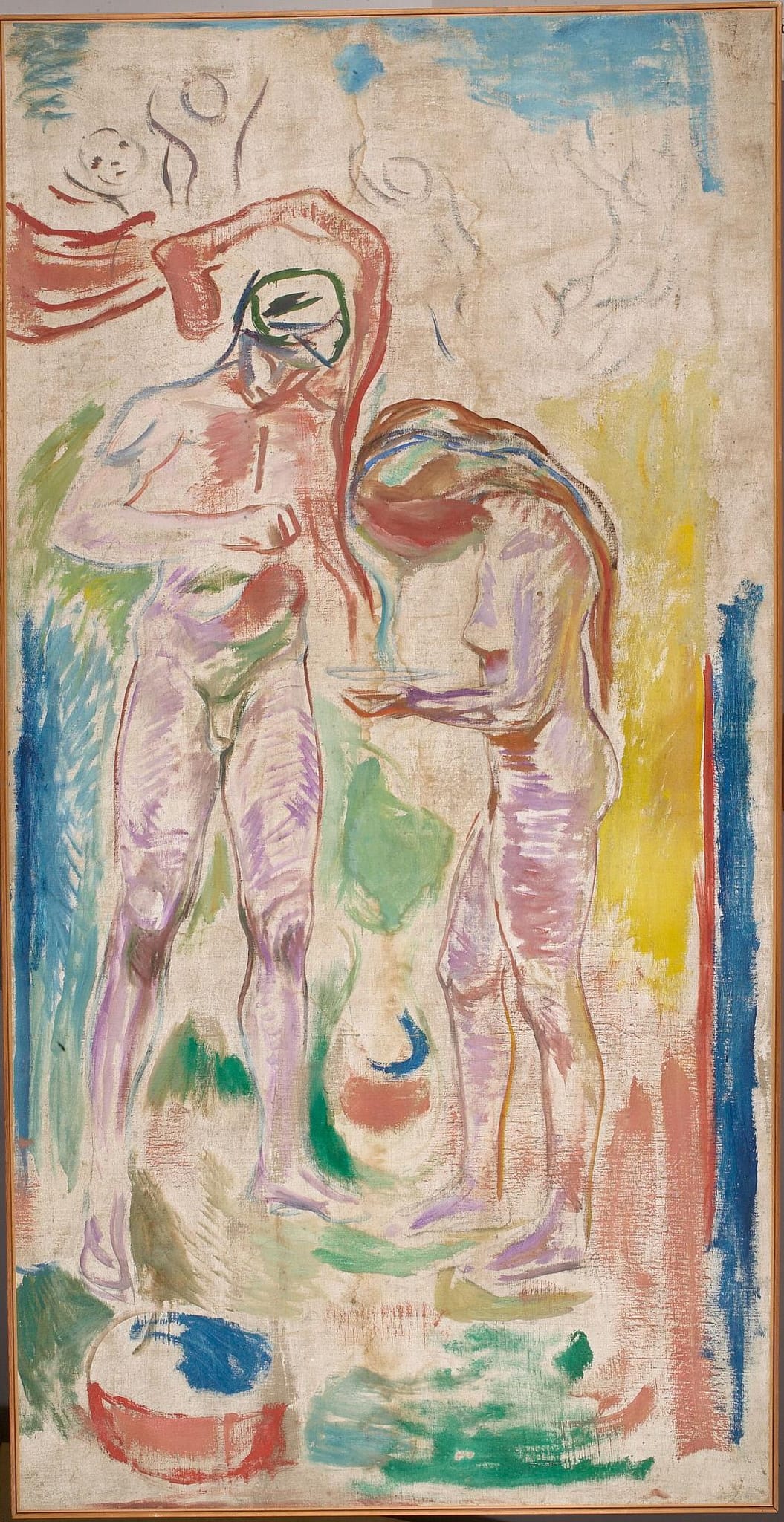
Chemistry
An emblematic composition linking scientific inquiry to human endeavor, in which figures and symbolic laboratory implements are integrated into Munch’s luminous color-field style. The painting matters as part of the Aula’s program honoring the sciences, and observers should look for arrangements that suggest experimentation (vessels, beakers, focused faces), the contrast between rational motifs and expressive color, and how light is used to confer importance on certain gestures or tools.
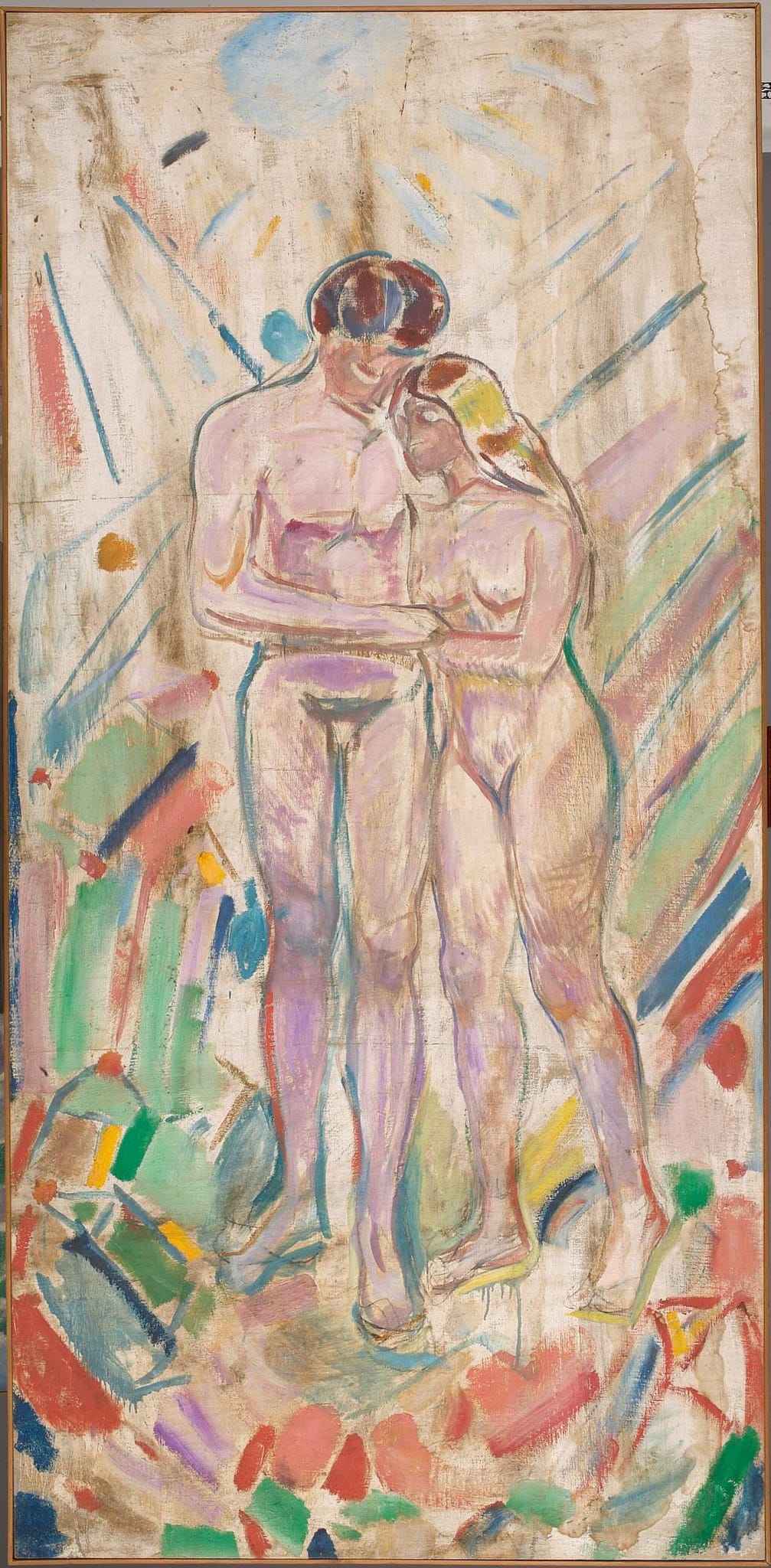
New Rays
A dynamic study of light as a creative, almost spiritual force: beams or shafts of color cut across the composition and transform figures and landscape. It is significant for expressing Munch’s interest in renewal and modern vitality, and viewers should notice the directional sweep of the rays, the way they fragment color and space, and how figures respond to or are illuminated by these new energies.
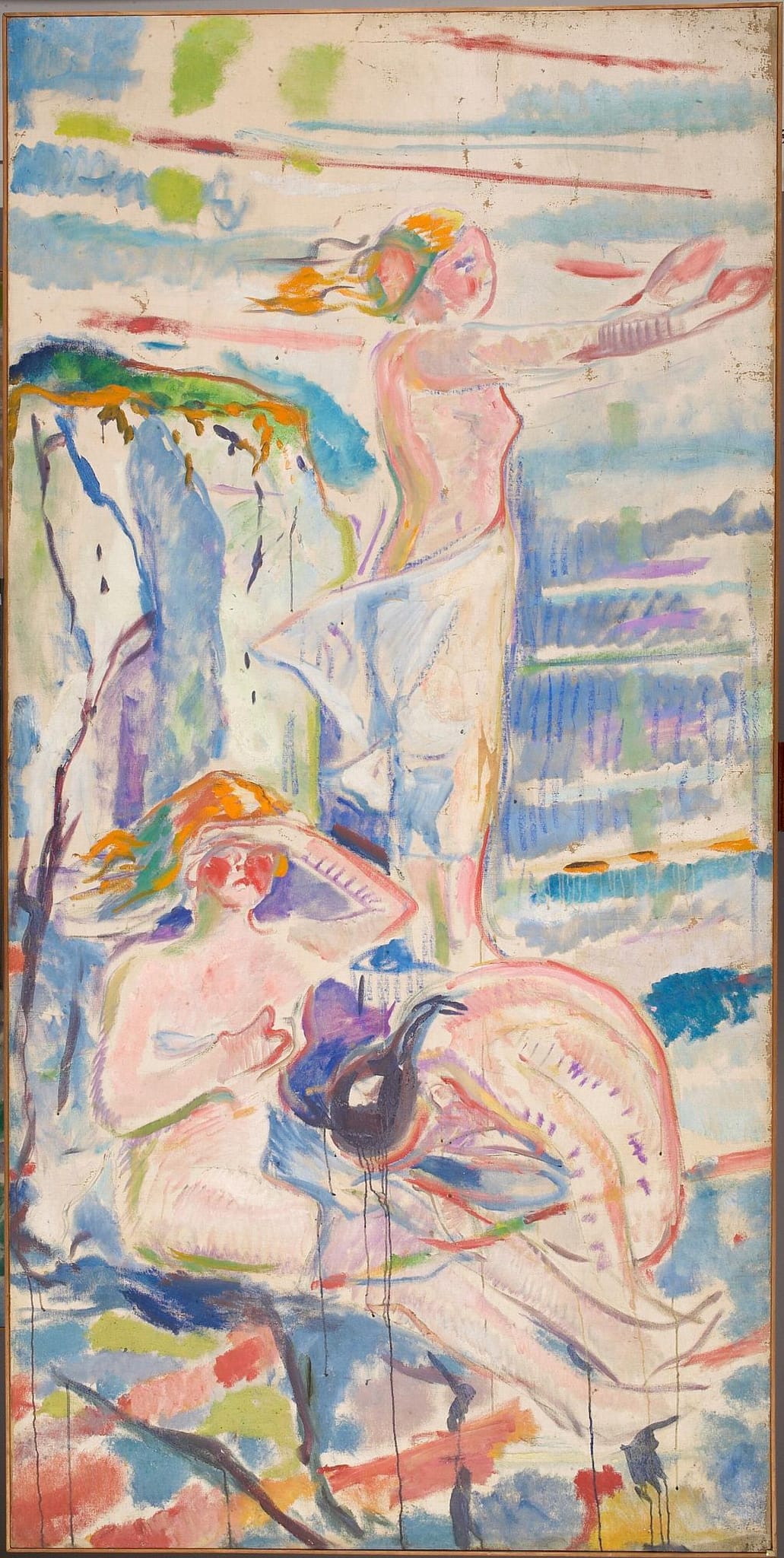
Women Facing the Sun
A group composition showing women turned toward the sun, absorbing its warmth and light in a moment of collective receptivity and renewal. This painting is important for its exploration of femininity, communal ritual, and the healing power of light; look for subtle variations in posture and expression, the interplay of silhouette and glow, and the rhythmic repetition of the figures as a unifying device.
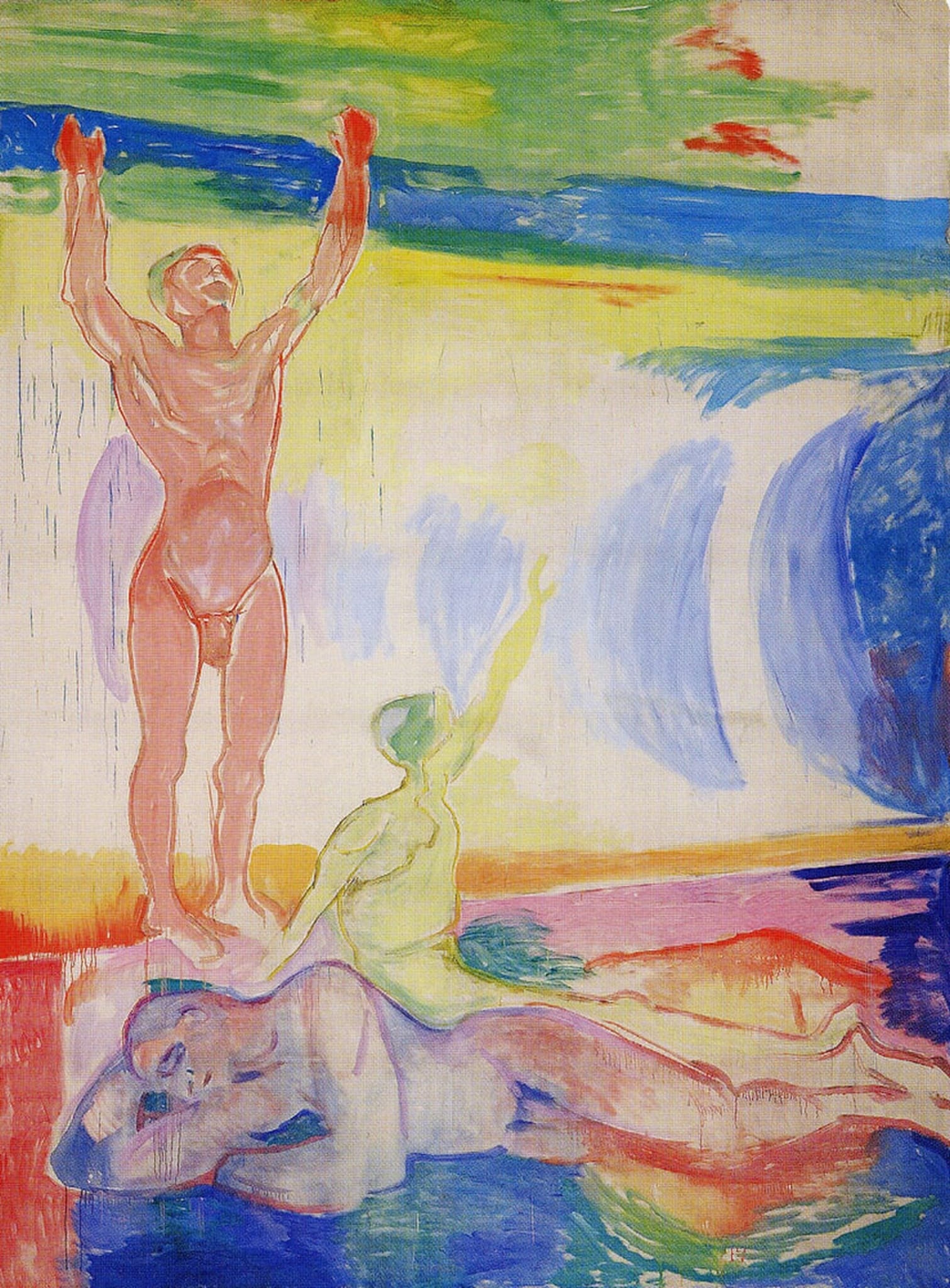
Awakening Men in the Flood of Light
Depicts men emerging or awakening within an overwhelming wash of sunlight, suggesting intellectual or spiritual rebirth. Significant within the Aula cycle as a counterpart to the female figures and as an image of masculine renewal, the work invites viewers to observe the gestures of rising or opening eyes, the movement from darkness into light, and the painterly treatment of luminosity that nearly dissolves form at the edges.
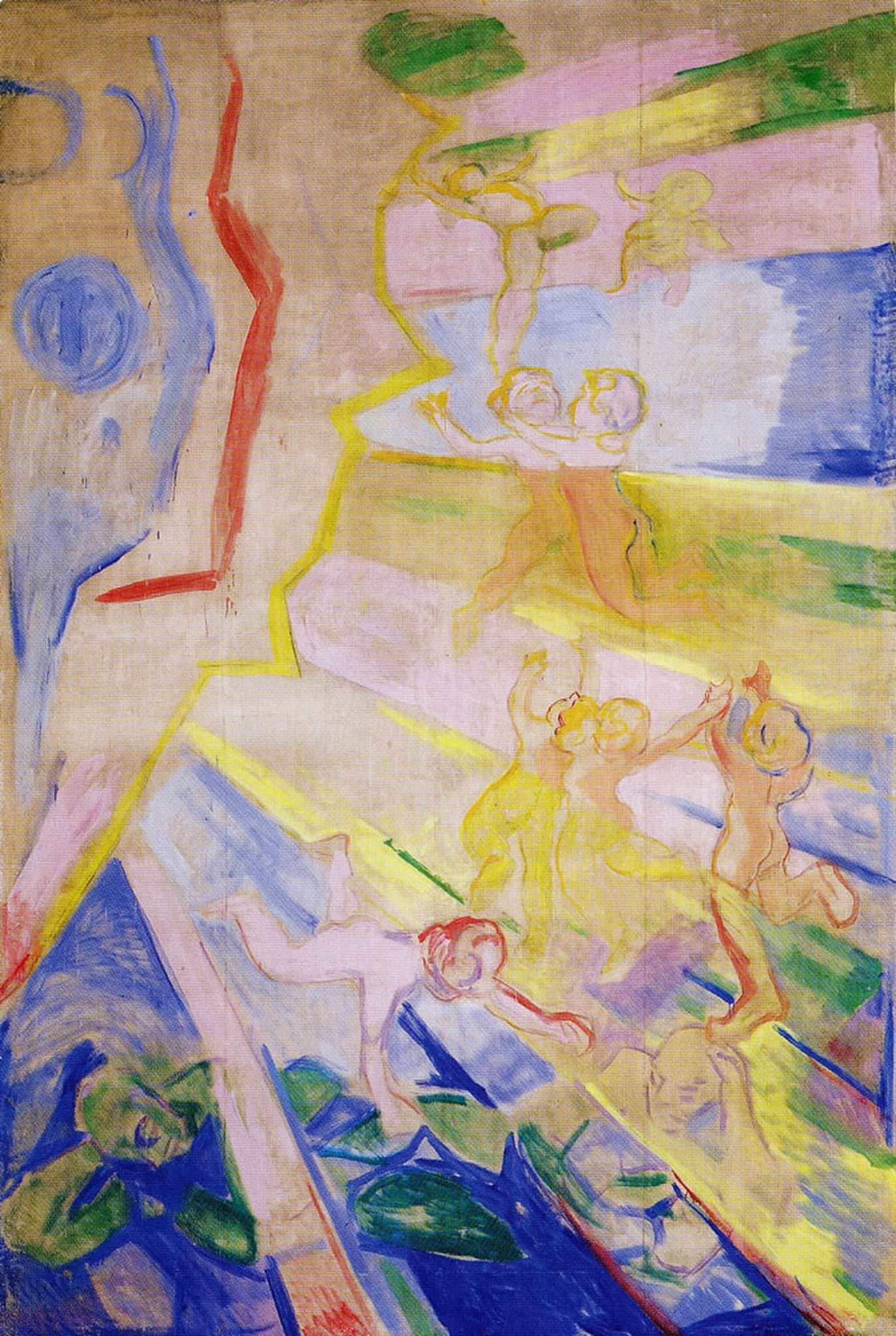
Geniuses in the Flood of Light
A visionary tableau in which creative minds are bathed in a pervasive, clarifying light that seems to inspire or reveal genius. Its importance stems from Munch’s attempt to visualize artistic and intellectual inspiration as a physical phenomenon; viewers should seek the individual expressions and postures that suggest concentration or revelation, and the way light both isolates and connects the figures.
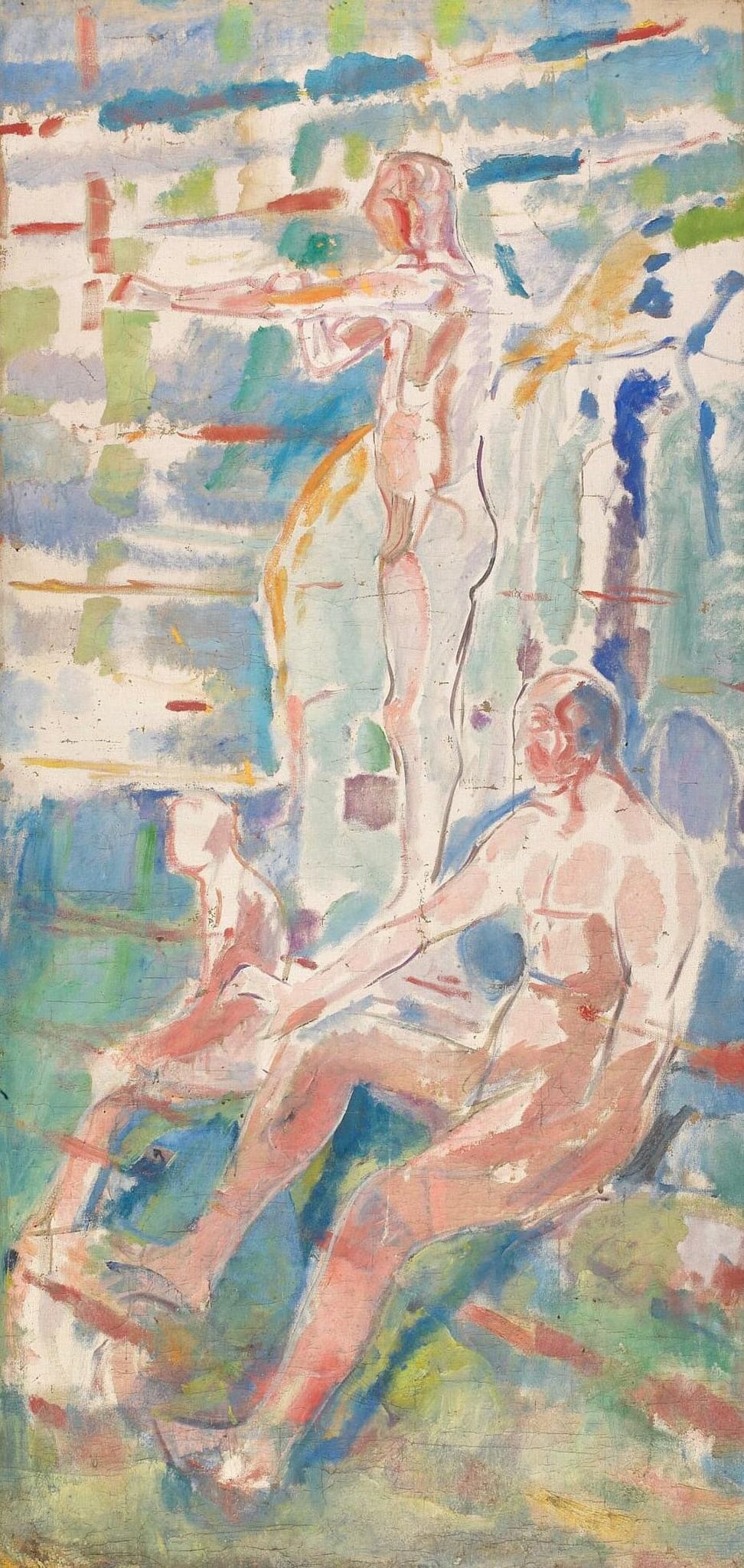
Men Facing the Sun
A counterpart to the female group, this work shows men turned toward sunlight in a composed, ceremonial manner, emphasizing solidarity and openness to illumination. The painting is significant for balancing the Aula’s gendered motifs of exposure to truth and knowledge; notice the formal arrangement of the figures, their silhouettes against the sun, and subtle differences in stance that convey character or role.
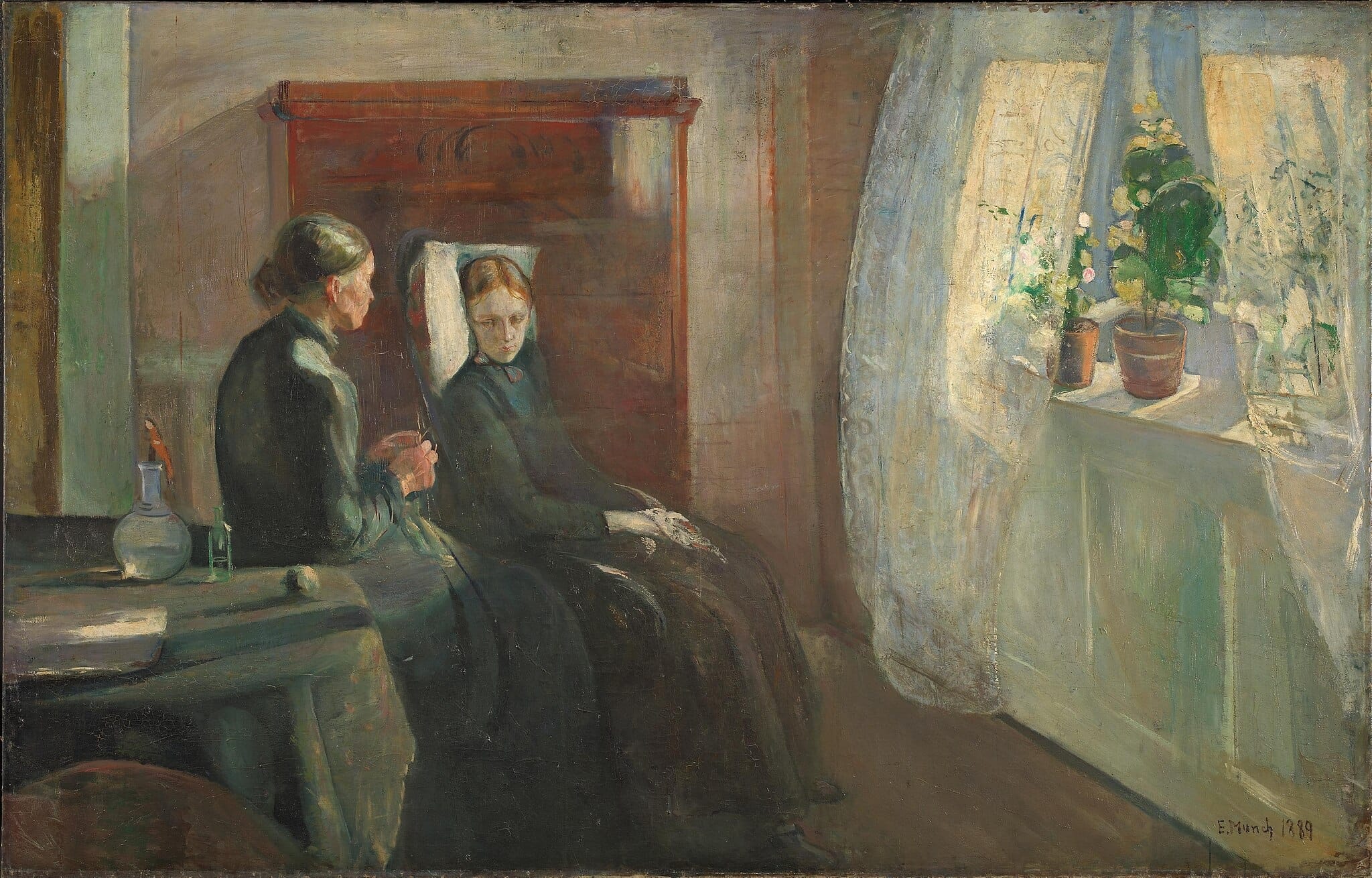
The Spring
An image of seasonal renewal where nature and human presence together signal awakening and new beginnings, often through fresh greens, blossoms, and figures in repose or motion. Important as a closing or restorative motif in the cycle, the work rewards attention to natural motifs (buds, water, young foliage), the lightness of palette compared with darker panels, and the sense of hopeful forward momentum conveyed by compositional direction and color.