Edvard Munch
Biography
Themes in Their Work
Where to See Edvard Munch's Paintings
Explore Edvard Munch's works on display in museums around the world.
Compare Edvard Munch
Most Expensive Edvard Munch Paintings
Explore ranked valuations of Edvard Munch's most valuable works →
Featured Artworks
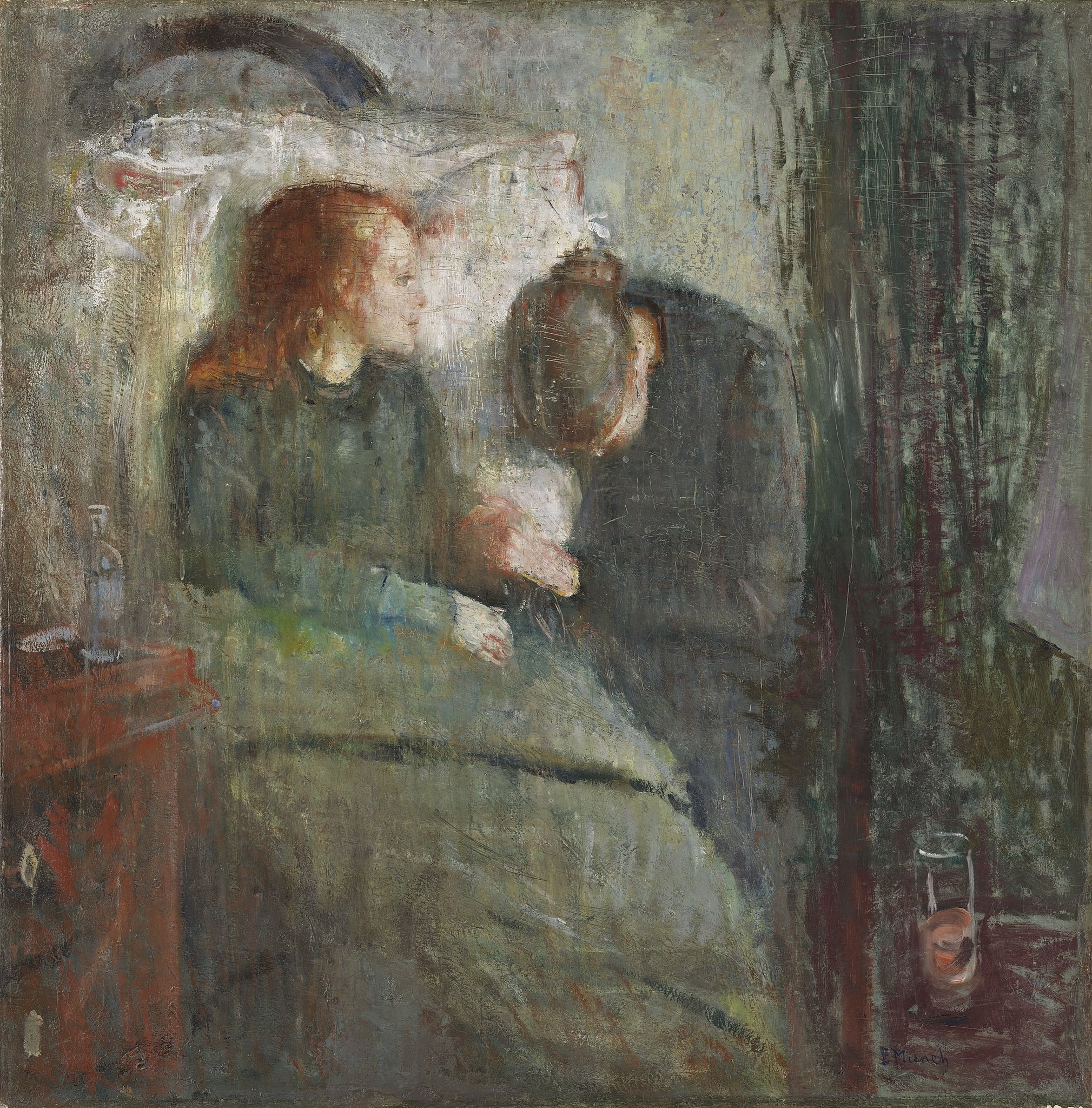
The Sick Child
Edvard Munch (1885–86)
The Sick Child condenses a bedside vigil into a stark drama of <strong>love and helplessness</strong>. A pale, copper-haired girl glows against a chalky pillow while a bowed caregiver clasps her hand; the scraped, striated paint makes grief feel <strong>present and eroding</strong> at once <sup>[1]</sup><sup>[2]</sup>. Sparse props—a bottle, a glass, a thin red line—stand as mute emblems of medicine’s limits.
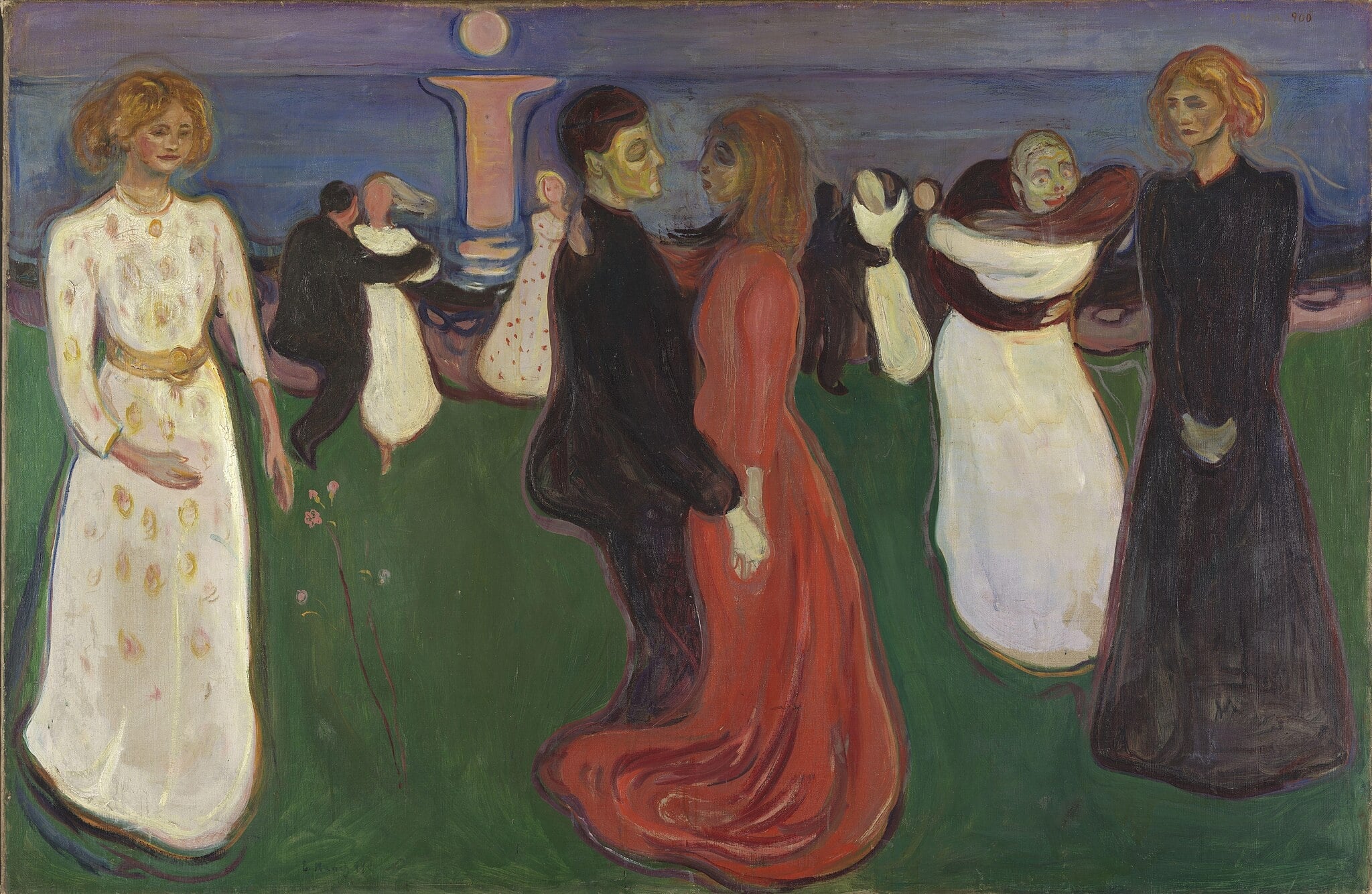
The Dance of Life
Edvard Munch (1899–1900)
The Dance of Life compresses <strong>youth, passion, and renunciation</strong> into a single moonlit scene on the Åsgårdstrand shore. A pale girl in white, a red‑clad woman entwined with a dark-suited man, and a withdrawn figure in black form a symbolic arc that binds love to <strong>time and mortality</strong> <sup>[1]</sup><sup>[2]</sup>.
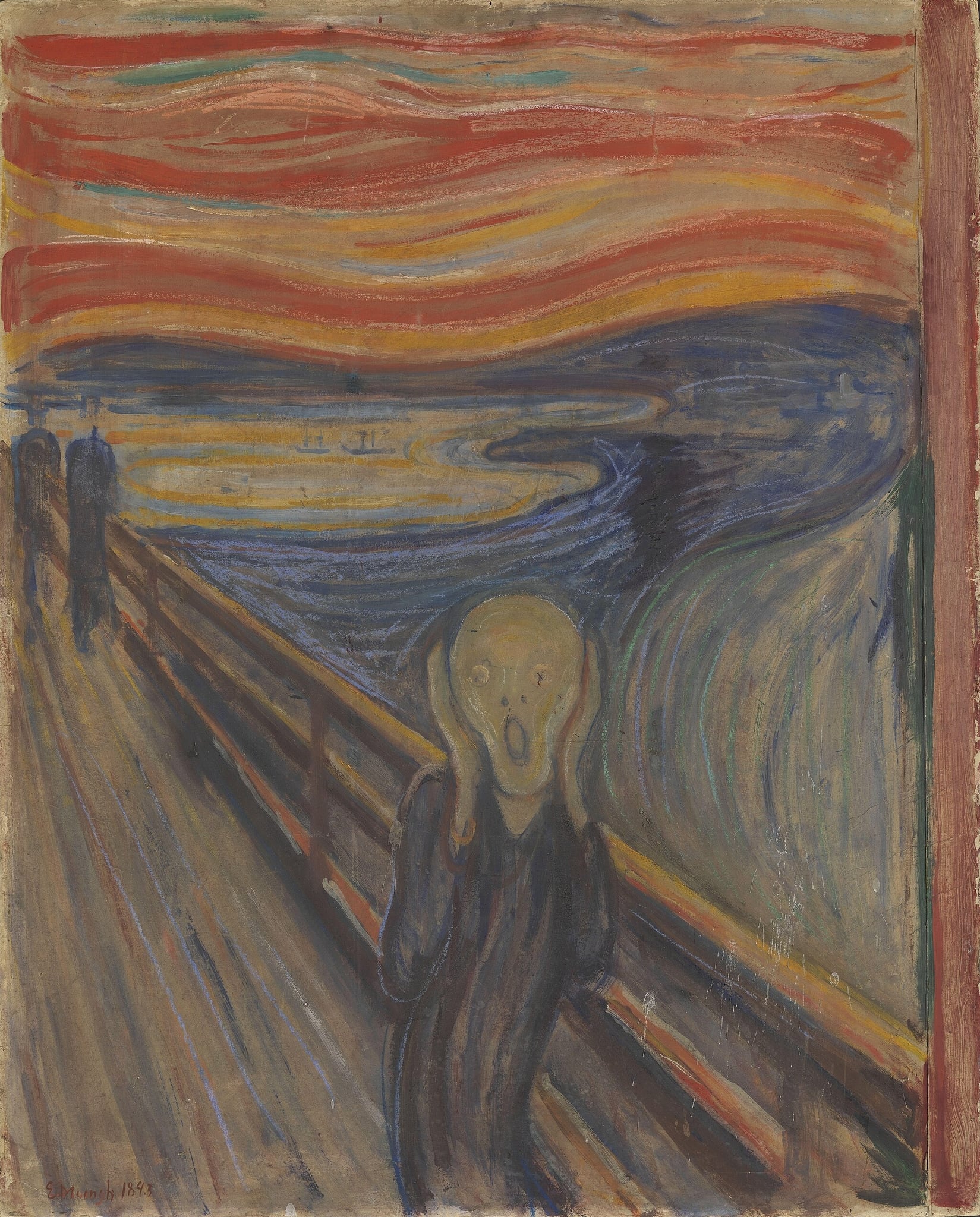
The Scream
Edvard Munch (1893)
Edvard Munch’s The Scream condenses modern dread into an image where the self and the world collapse: an androgynous, skull-like figure grips its head as a <strong>blood-red sky</strong> and <strong>vibrating shoreline</strong> pulse around it. The rigid, receding bridge rails counter the turbulence, staging a clash between <strong>inner panic</strong> and <strong>outer reality</strong> <sup>[1]</sup><sup>[2]</sup>.
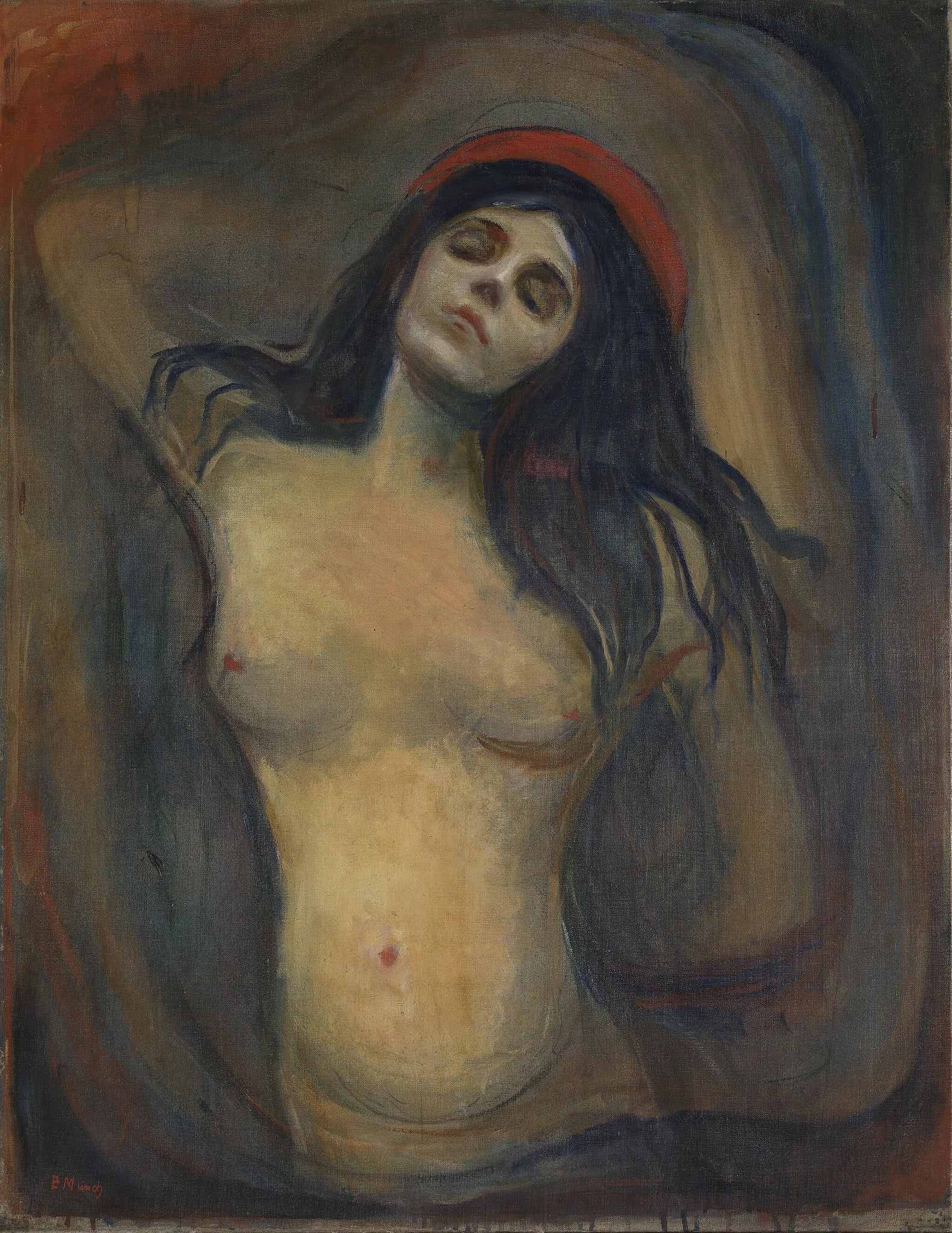
Madonna
Edvard Munch (1894)
Munch’s Madonna stages a collision of <strong>sanctity and sensuality</strong>: a half-length nude, eyes closed, tilts into a crimson nimbus while a dark, tidal field seems to carry her body. With smeared contours and a sparse palette, the figure hovers between emergence and dissolution, turning the Virgin’s icon into a modern emblem of <strong>eros, creation, and death</strong> <sup>[1]</sup><sup>[2]</sup><sup>[3]</sup>.
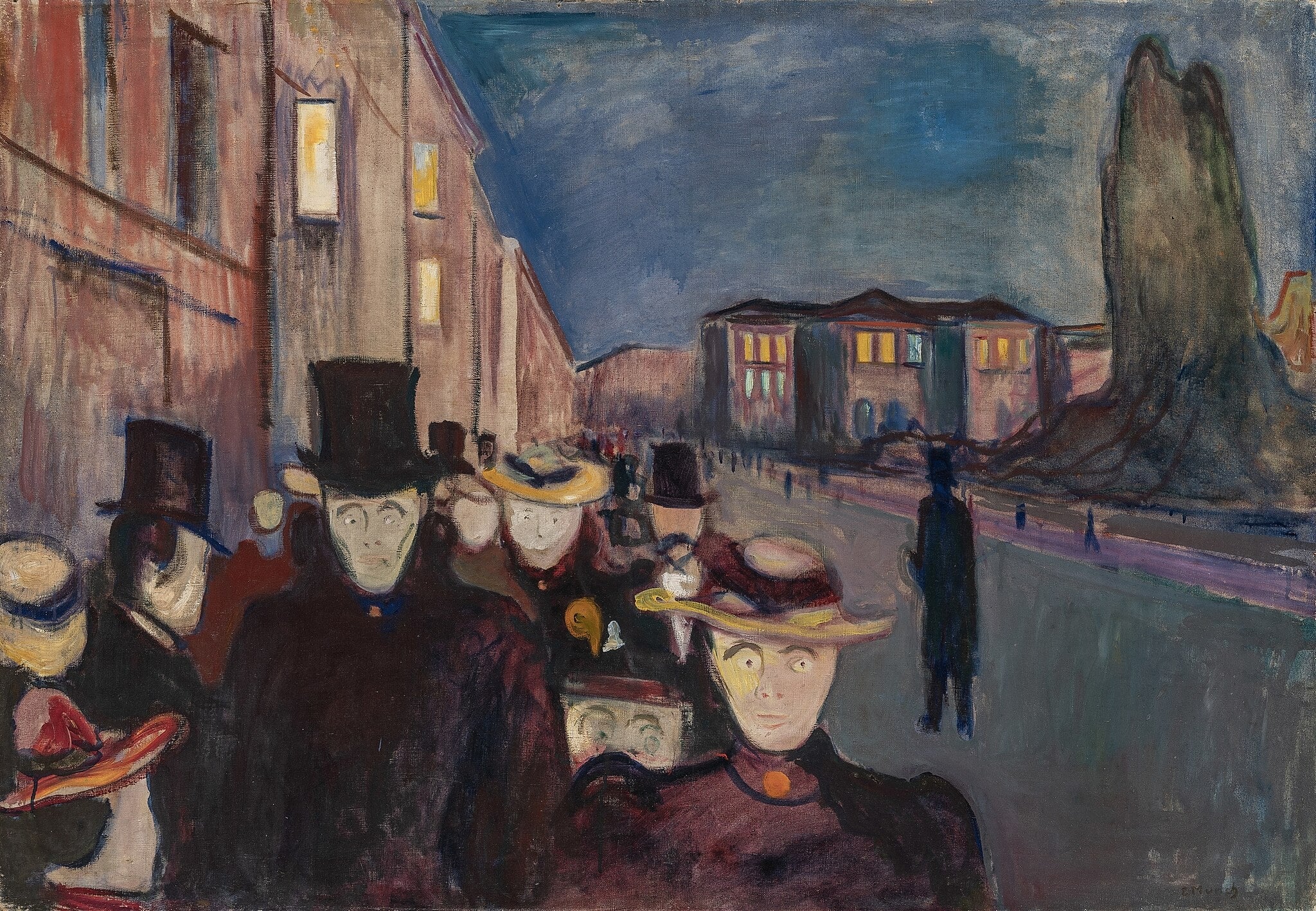
Evening on Karl Johan
Edvard Munch (1892)
Evening on Karl Johan by Edvard Munch stages a fashionable Oslo boulevard as a scene of <strong>urban dread</strong>. A mask-faced crowd in top hats surges forward while an <strong>isolated silhouette</strong> recedes at right, and tilted buildings glow with jaundiced windows under a cold blue sky. Munch converts a social promenade into a <strong>symbol of alienation</strong> through compressed space, skewed color, and nervous brushwork <sup>[1]</sup><sup>[2]</sup><sup>[3]</sup><sup>[4]</sup>.