Creation myths & origin stories
Featured Artworks
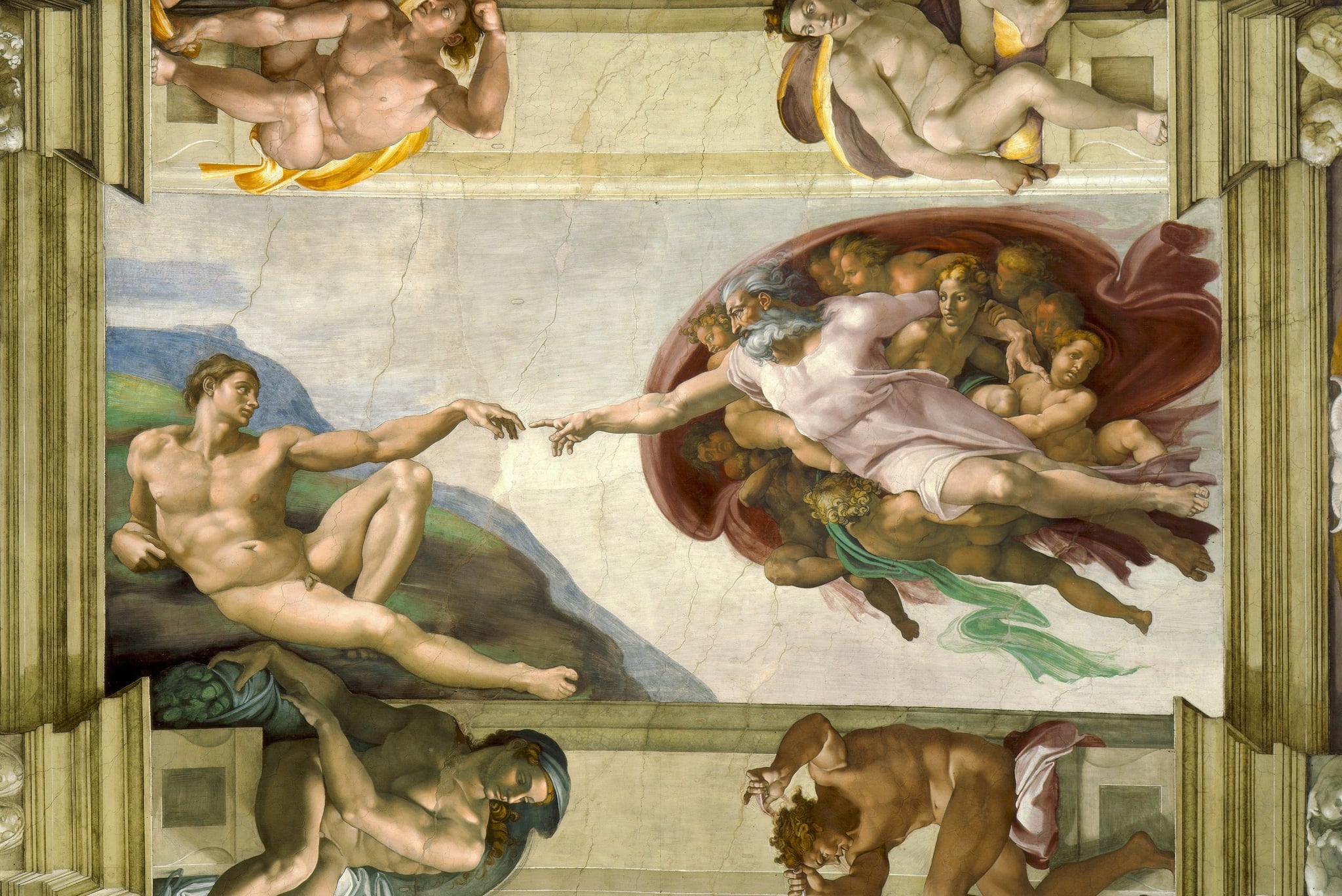
The Creation of Adam
Michelangelo (c.1511–1512)
Michelangelo’s The Creation of Adam crystallizes the instant before life is conferred, staging a charged interval between two nearly touching hands. The fresco turns Genesis into a study of <strong>imago Dei</strong>, bodily perfection, and the threshold between inert earth and <strong>active spirit</strong> <sup>[1]</sup><sup>[2]</sup>.
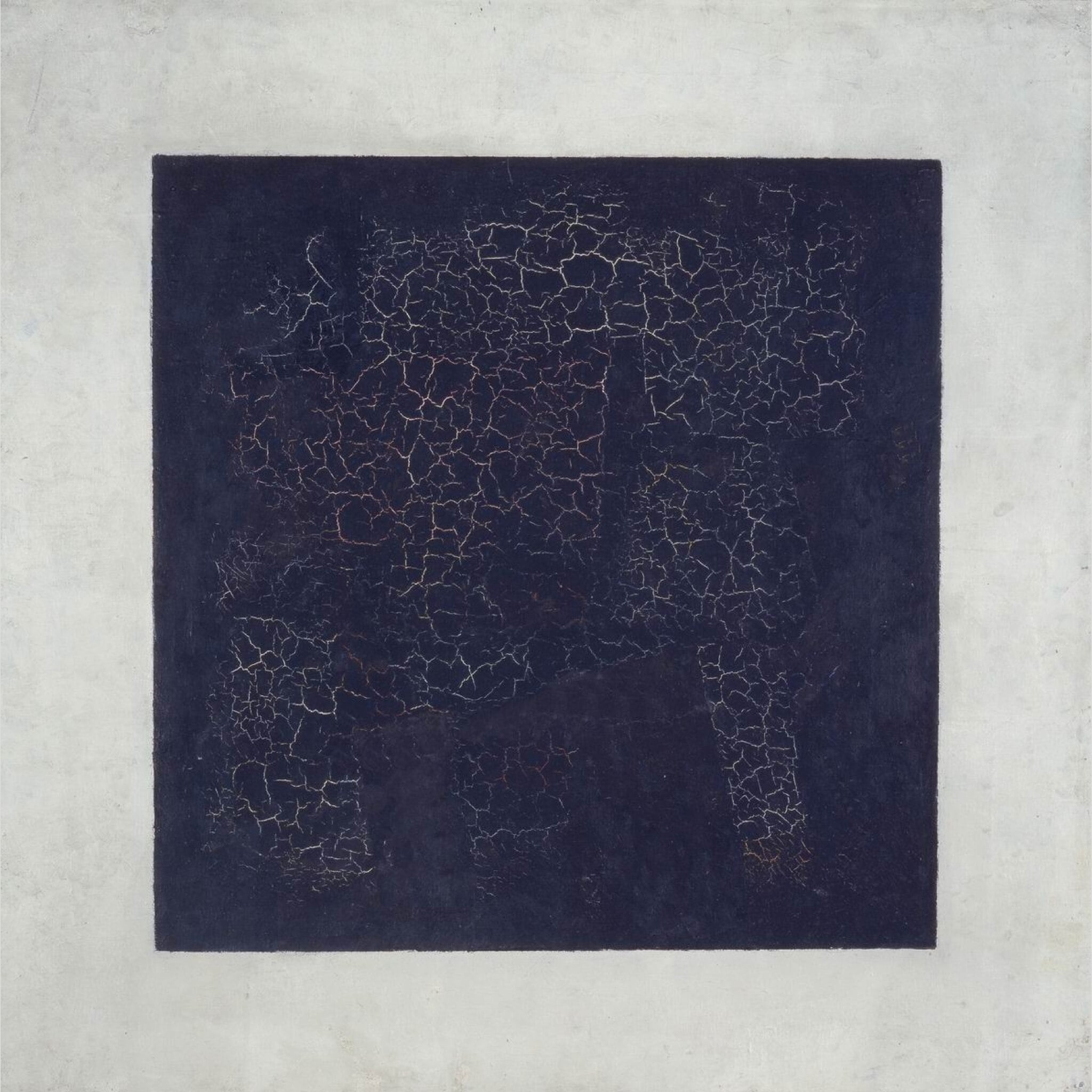
Black Square
Kazimir Malevich (1915)
Kazimir Malevich’s Black Square declares a radical reset: a hand-painted, slightly irregular black form set on a chalky white field, presented as an artistic <strong>zero</strong> and a new spiritual-conceptual space. The hairline craquelure that webs across the dark surface counters any idea of a perfect void, binding utopian claim to material time.
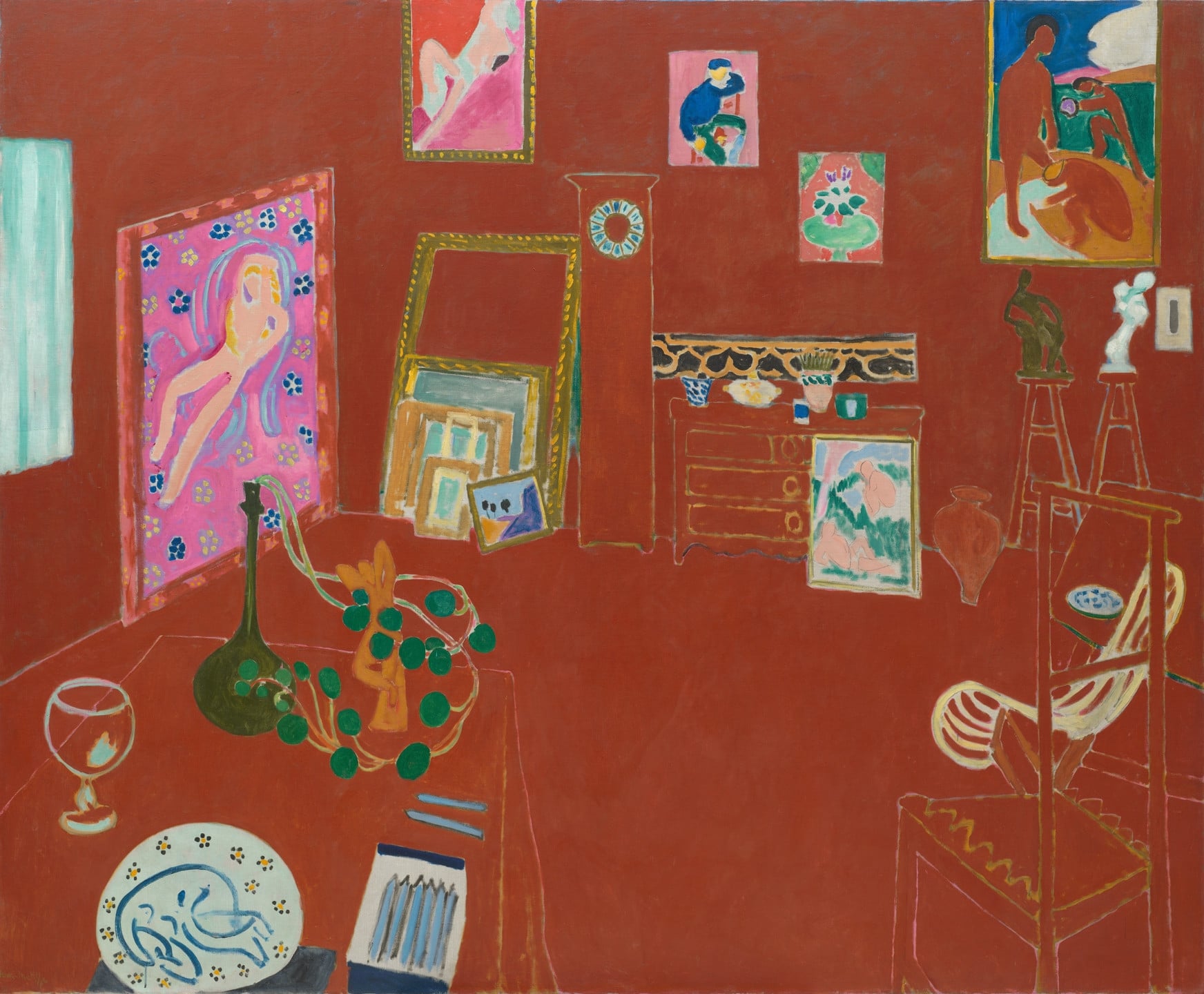
The Red Studio
Henri Matisse (1911)
Henri Matisse’s The Red Studio (1911) saturates the artist’s workspace in a continuous field of <strong>Venetian red</strong>, collapsing walls, floor, and furniture into a single chromatic plane. Objects and architecture appear as <strong>mustard-yellow reserve lines</strong> that read like drawing, while Matisse’s own paintings and sculptures retain full color, asserting art’s primacy within the room <sup>[1]</sup><sup>[2]</sup><sup>[3]</sup>. The result is a studio that feels like a <strong>mental map</strong> rather than a literal interior.
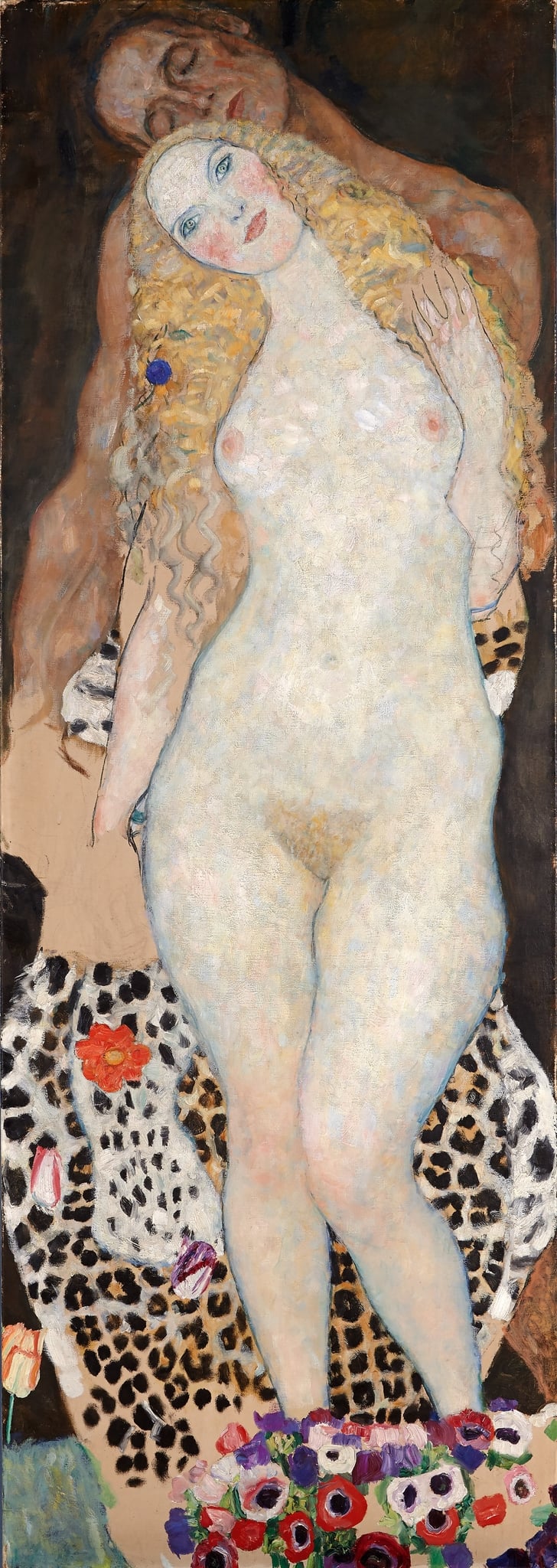
Adam and Eve
Gustav Klimt (1916–1918 (unfinished))
Gustav Klimt’s Adam and Eve recasts the biblical pair as a <strong>sensual, timeless allegory</strong> rather than a didactic tale. Eve’s <strong>luminous, opalescent body</strong> and direct gaze dominate, while Adam recedes in shadow, enfolding her amid a <strong>leopard pelt</strong> and a <strong>carpet of anemones</strong> that signal erotic vitality and fertility <sup>[2]</sup><sup>[3]</sup>.
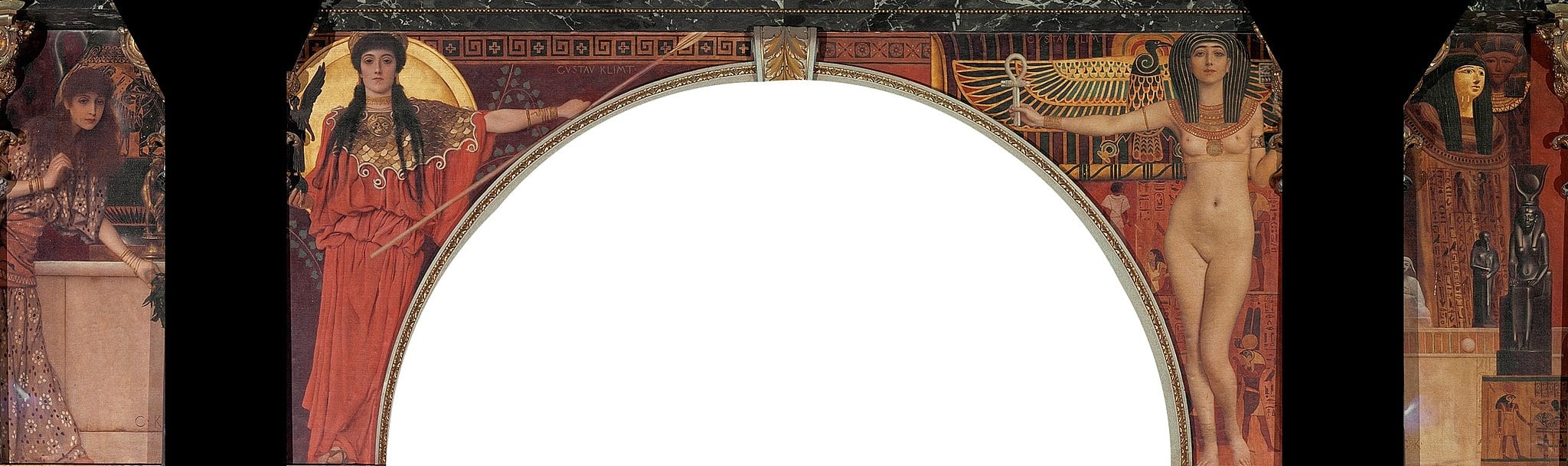
Ancient Greece and Egypt
Gustav Klimt (1891)
Gustav Klimt’s staircase pair Ancient Greece and Egypt stages two <strong>female allegories</strong> flanking an empty arch: a robed, animated <strong>Athena</strong> to the left and a frontal, nude Egyptian goddess aligned with <strong>Nekhbet’s vulture</strong> to the right. Klimt fuses collection-based citations with <strong>ornamental gold, red, and black</strong> to declare a canon in which Western art passes through Greece’s humanist clarity and Egypt’s sacral permanence <sup>[1]</sup><sup>[2]</sup><sup>[3]</sup>.
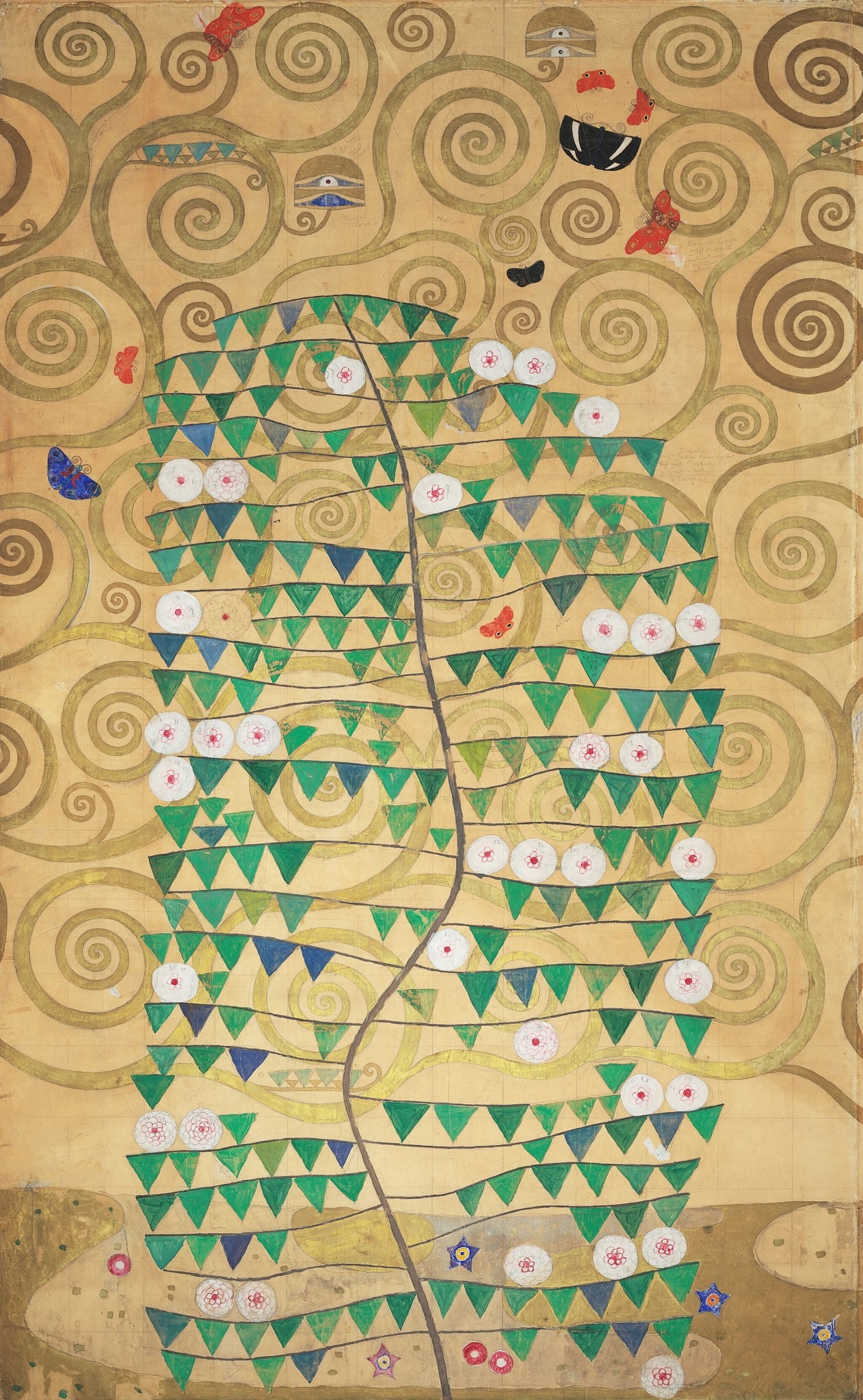
Rosebush (Part 6)
Gustav Klimt (1910/11)
In Rosebush (Part 6), a single, wavering stem climbs through a field of gold spirals while regimented green-and-blue triangular leaves and pale, jewel-like blossoms punctuate its path. Around it, vivid butterflies and star-flowers animate the surface. Klimt fuses nature and ornament into a <strong>precious</strong>, <strong>cyclical</strong> emblem of growth, metamorphosis, and renewal.
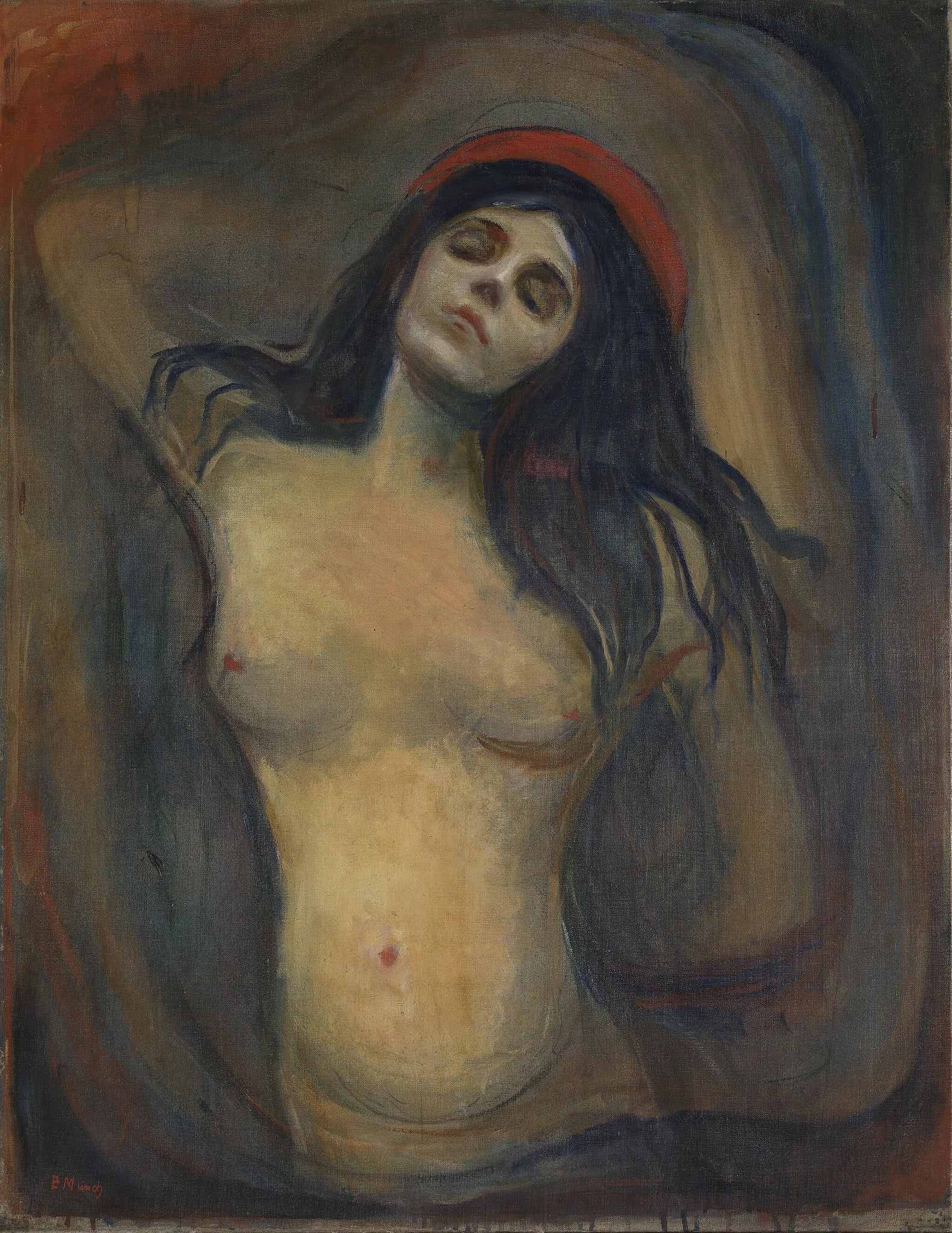
Madonna
Edvard Munch (1894)
Munch’s Madonna stages a collision of <strong>sanctity and sensuality</strong>: a half-length nude, eyes closed, tilts into a crimson nimbus while a dark, tidal field seems to carry her body. With smeared contours and a sparse palette, the figure hovers between emergence and dissolution, turning the Virgin’s icon into a modern emblem of <strong>eros, creation, and death</strong> <sup>[1]</sup><sup>[2]</sup><sup>[3]</sup>.
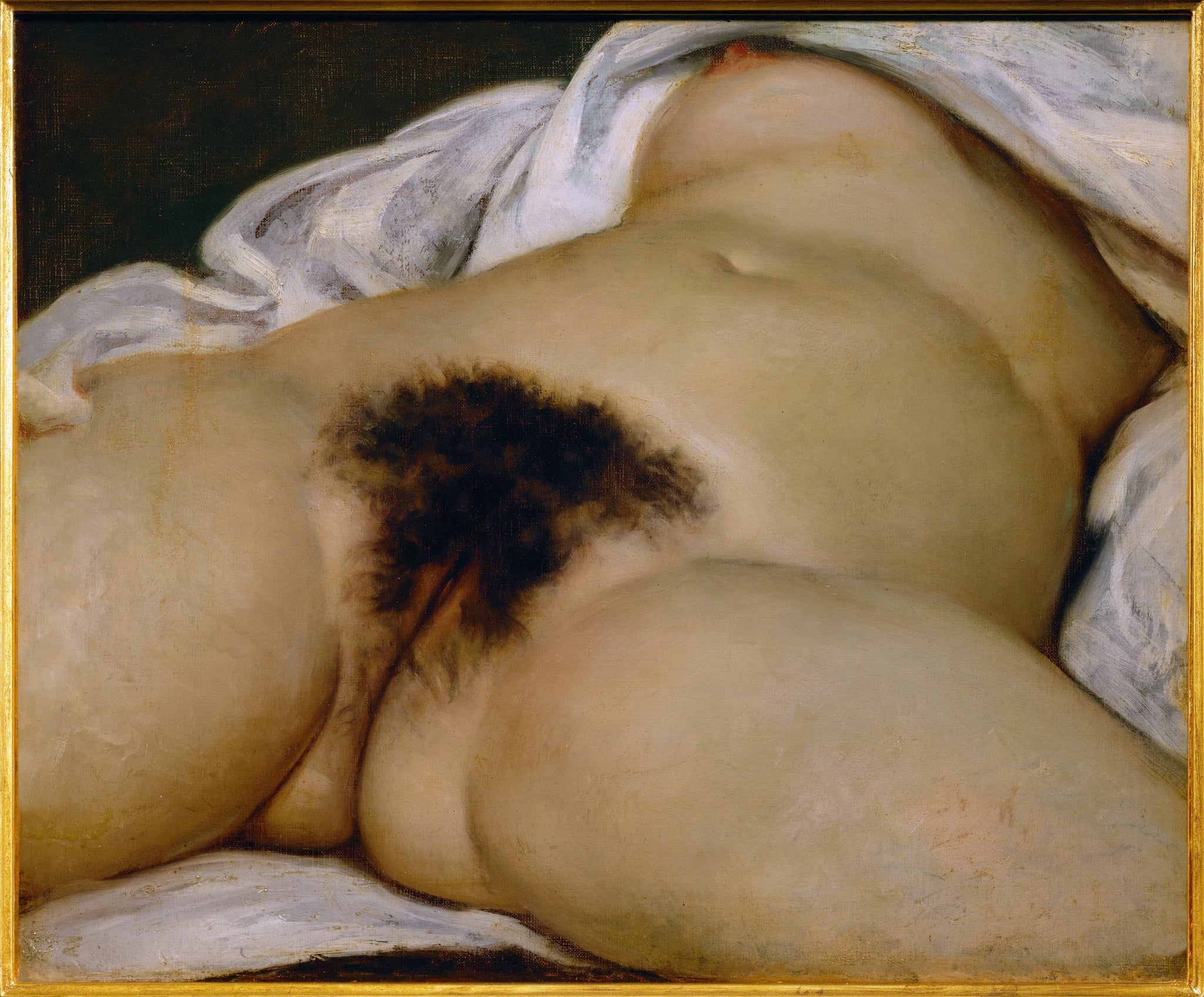
The Origin of the World
Gustave Courbet (1866)
The Origin of the World presents an uncompromising, tightly cropped view of a reclining female torso, setting warm flesh against cool, rumpled linen. With <strong>radical framing</strong> and <strong>unidealized realism</strong>, Gustave Courbet redirects the nude from myth to matter, making the central pubic triangle a compositional and conceptual anchor. The painting asserts a material, bodily <strong>origin</strong> in place of allegory, collapsing eroticism into a claim about life’s beginnings <sup>[1]</sup><sup>[3]</sup>.