Grief & mourning
Featured Artworks
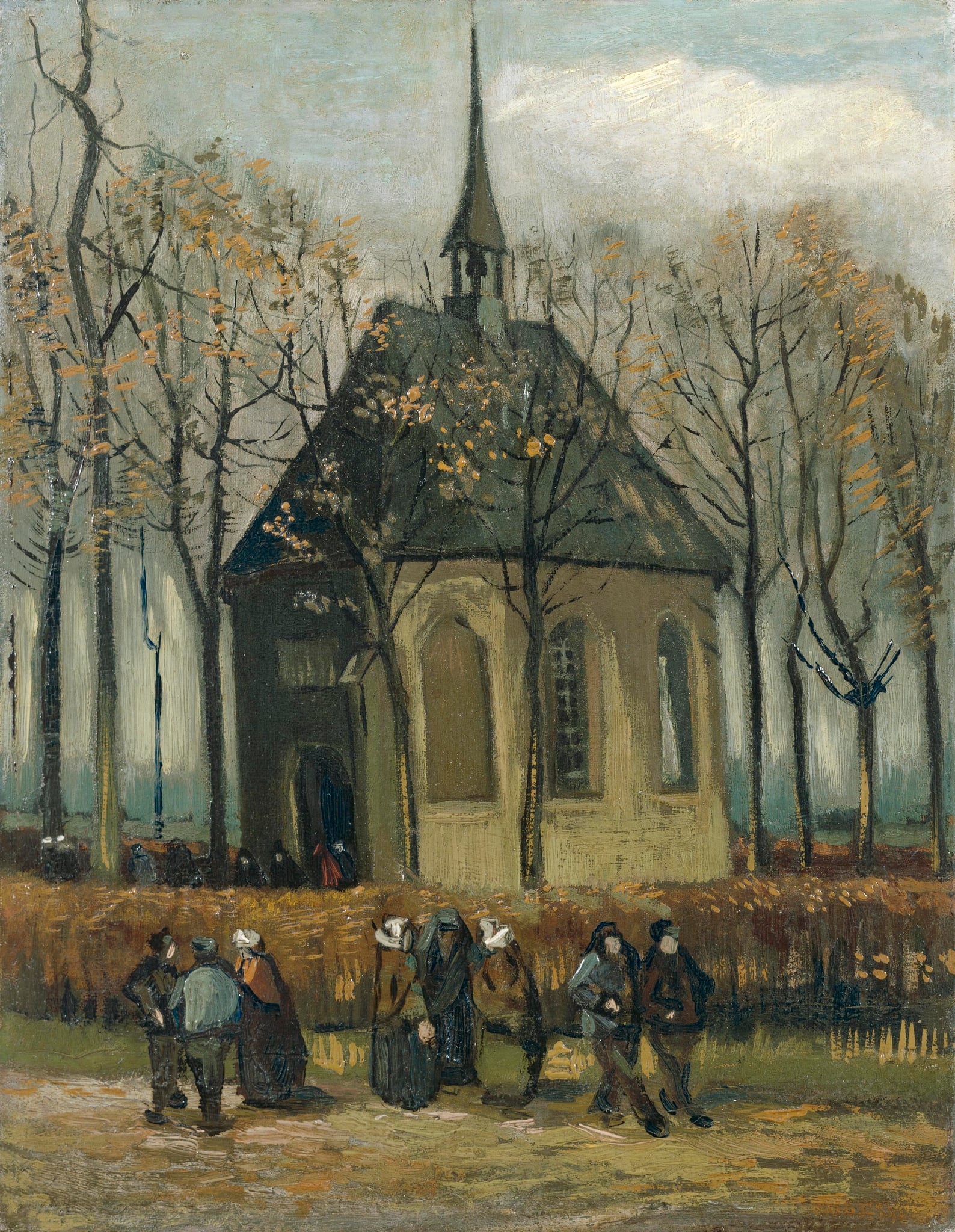
Congregation Leaving the Reformed Church in Nuenen
Vincent van Gogh (1884; reworked 1885)
Vincent van Gogh’s Congregation Leaving the Reformed Church in Nuenen turns a modest village service into a meditation on <strong>mourning</strong>, <strong>community</strong>, and <strong>thresholds</strong>. The low steeple, clipped hedge, and bundled figures in black shawls and white caps file past autumn-tinted, near-bare trees, shifting the scene from ordinary Sunday ritual to public grief. Painted in 1884 and <strong>reworked in 1885</strong> with the congregation and ocher leaves, the canvas folds private loss into rural Protestant life <sup>[1]</sup><sup>[2]</sup><sup>[3]</sup>.
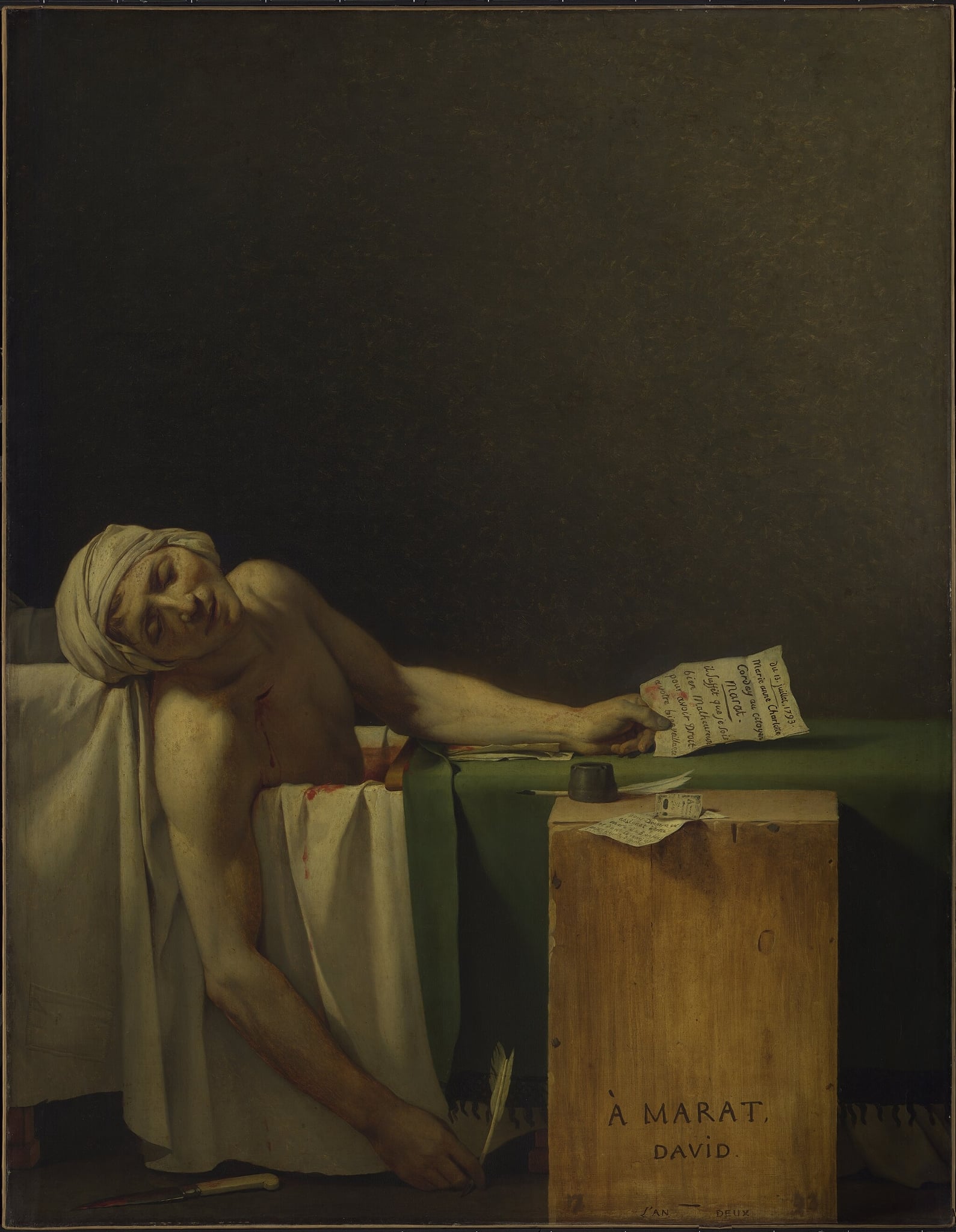
The Death of Marat
Jacques-Louis David (1793)
<strong>The Death of Marat</strong> turns a private murder into a <strong>secular martyrdom</strong>: Marat’s idealized body slumps in a bath, a pleading letter in his hand, a quill slipping from the other beside a bloodied knife and inkwell. Against a vast dark void, David’s calm light and austere geometry elevate humble objects—the green baize plank and the crate inscribed “À MARAT, DAVID, L’AN DEUX”—into civic emblems <sup>[1]</sup><sup>[2]</sup><sup>[3]</sup>.
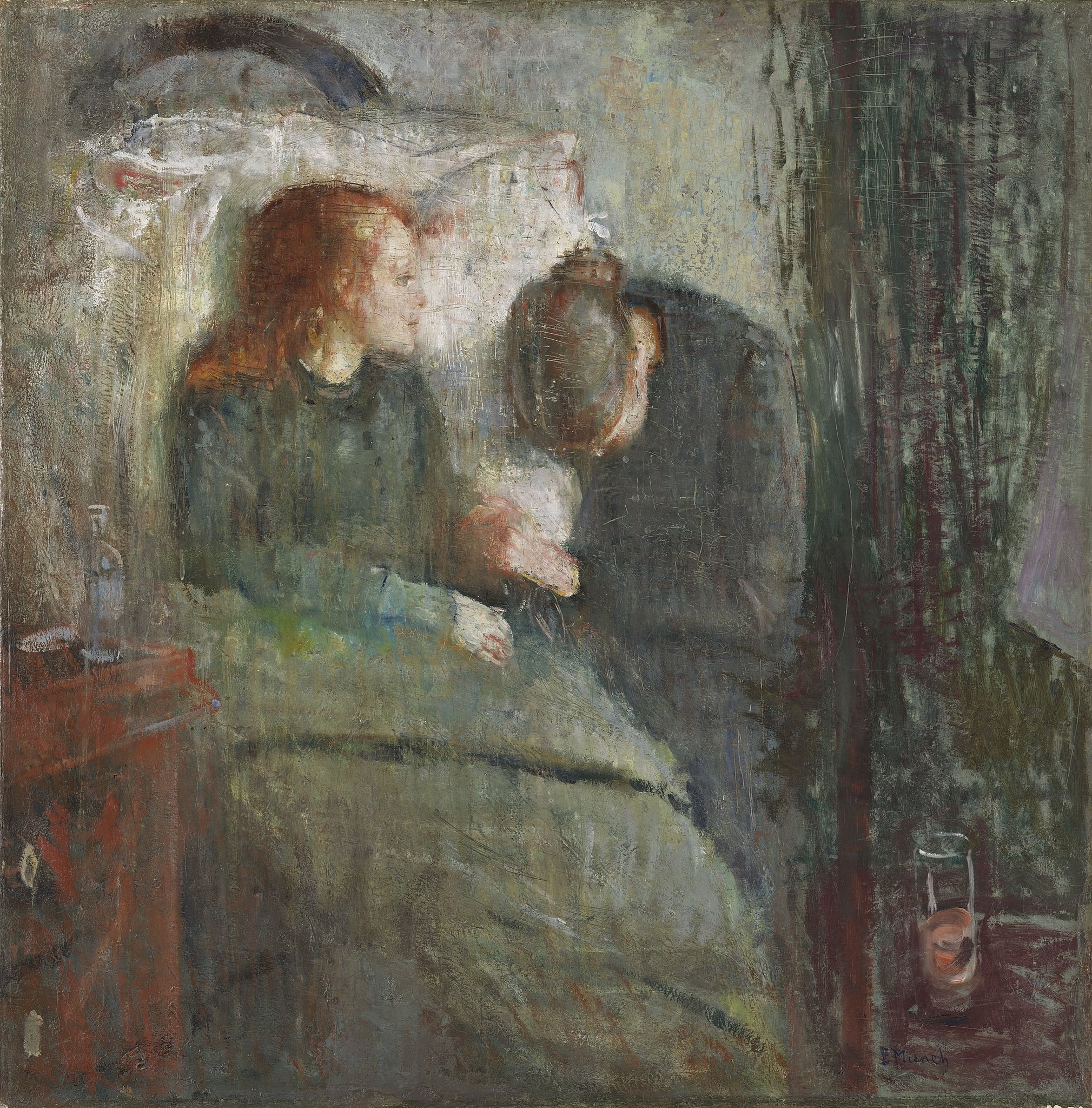
The Sick Child
Edvard Munch (1885–86)
The Sick Child condenses a bedside vigil into a stark drama of <strong>love and helplessness</strong>. A pale, copper-haired girl glows against a chalky pillow while a bowed caregiver clasps her hand; the scraped, striated paint makes grief feel <strong>present and eroding</strong> at once <sup>[1]</sup><sup>[2]</sup>. Sparse props—a bottle, a glass, a thin red line—stand as mute emblems of medicine’s limits.
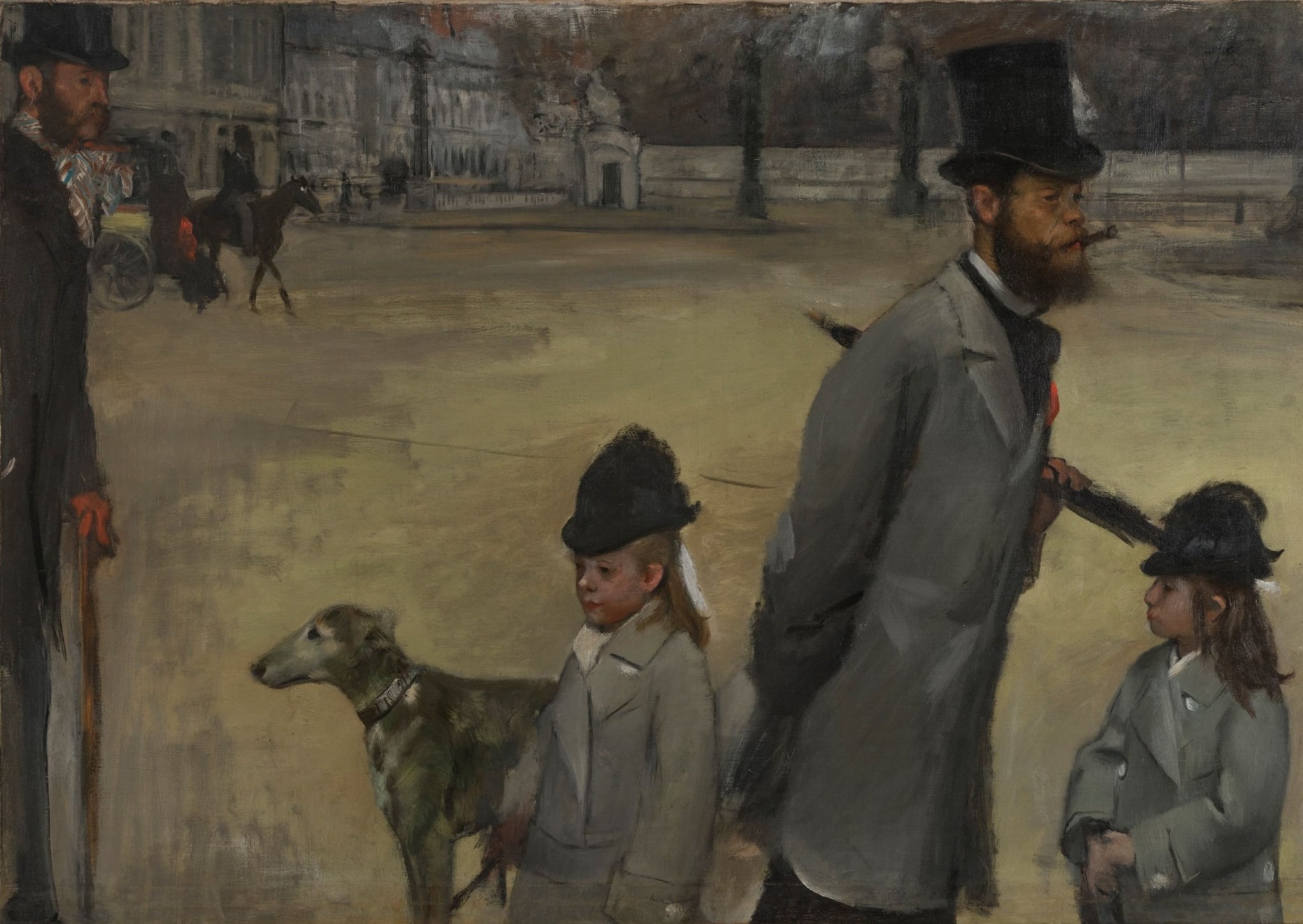
Place de la Concorde
Edgar Degas (1875)
Degas’s Place de la Concorde turns a famous Paris square into a study of <strong>modern isolation</strong> and <strong>instantaneous vision</strong>. Figures stride past one another without contact, their bodies abruptly <strong>cropped</strong> and adrift in a wide, airless plaza—an urban stage where elegance masks estrangement <sup>[1]</sup><sup>[2]</sup>.
The Raft of the Medusa
Theodore Gericault (1818–1819)
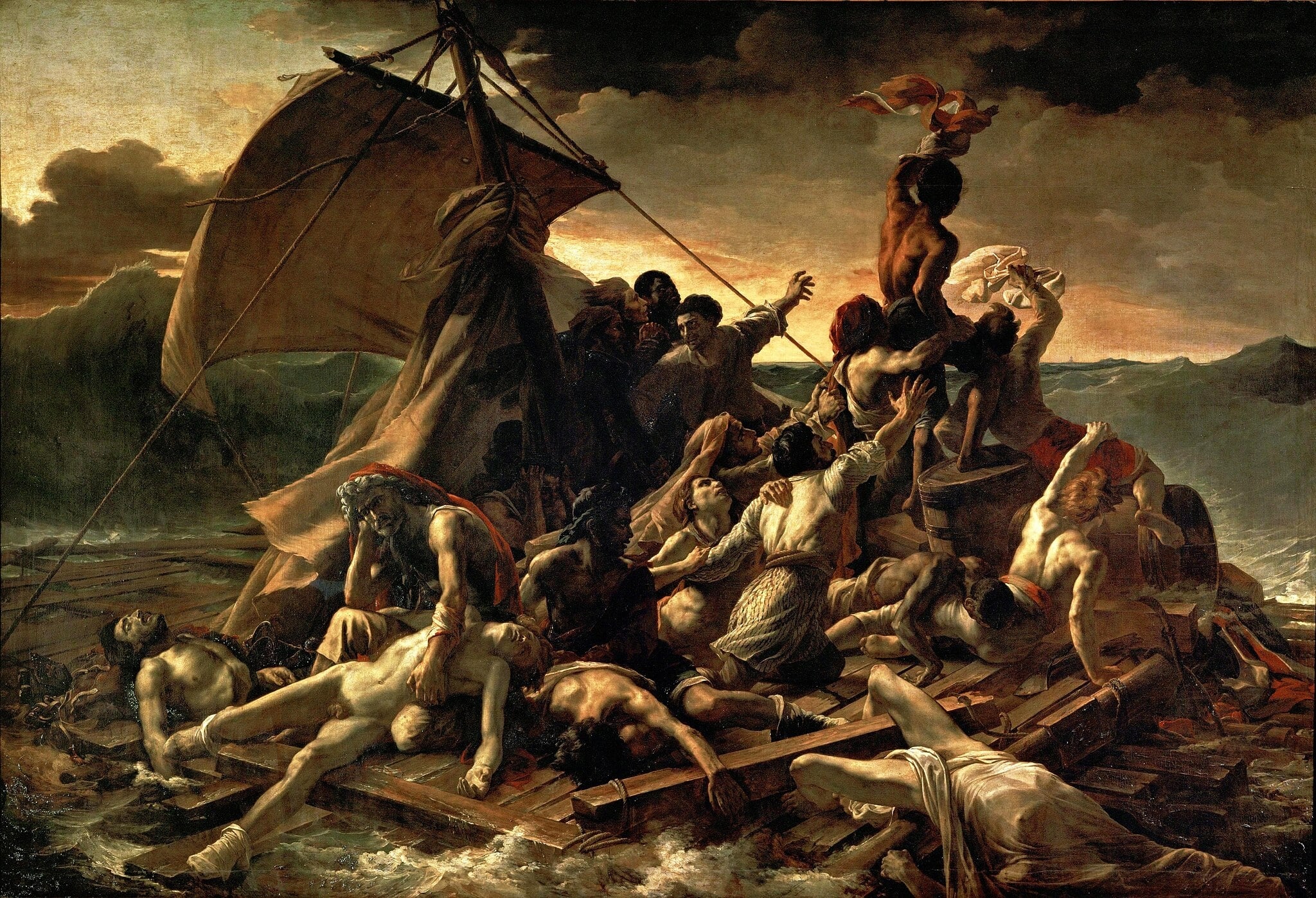
The Raft of the Medusa stages a modern catastrophe as epic tragedy, pivoting from corpses to a surge of <strong>collective hope</strong>. The diagonal mast, torn sail, and a Black figure waving a cloth toward a tiny ship compress the moment when despair turns to <strong>precarious rescue</strong> <sup>[1]</sup><sup>[2]</sup>.
The Weeping Woman
Pablo Picasso (1937)
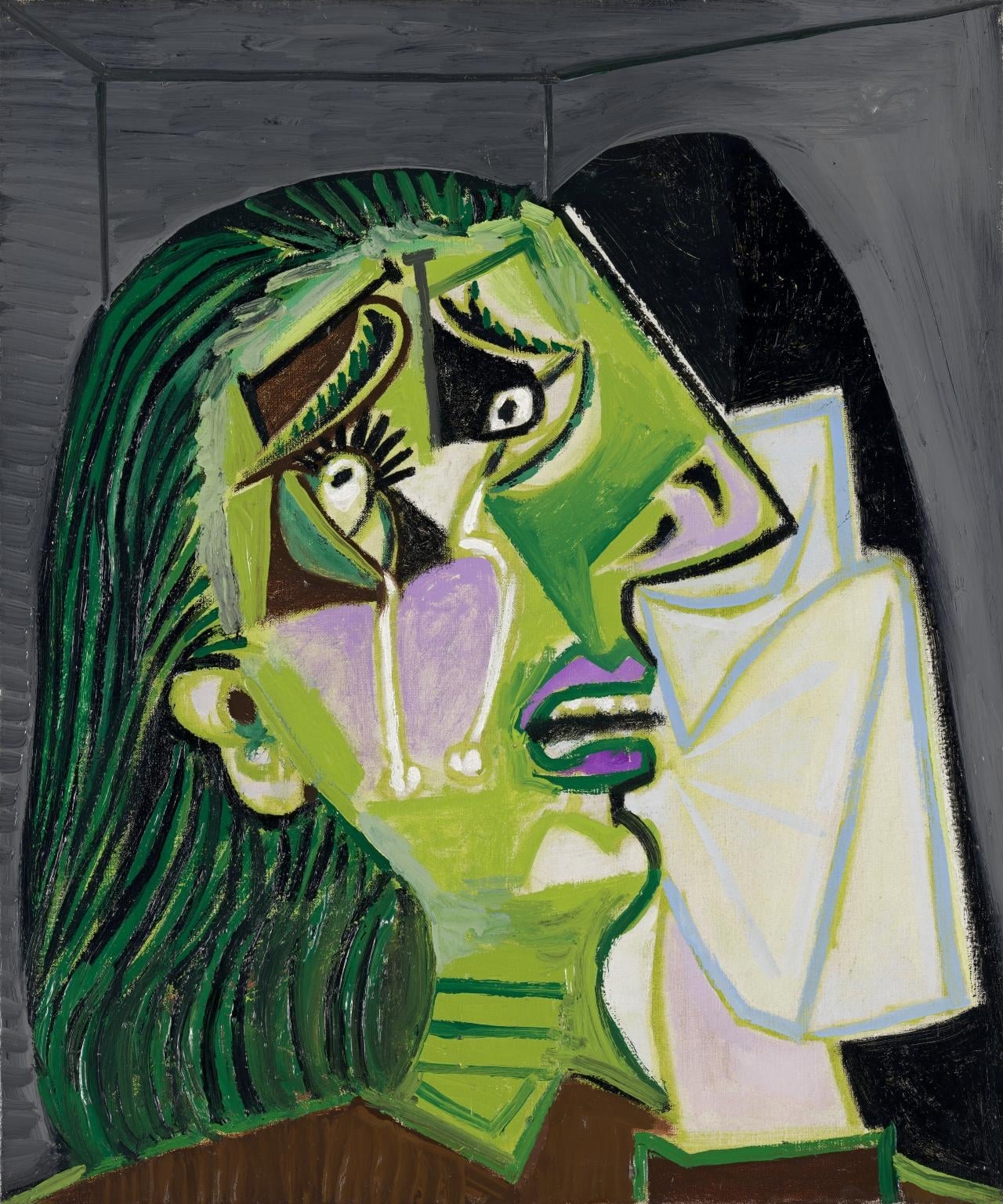
Picasso’s The Weeping Woman turns private mourning into a public, <strong>iconic emblem of civilian grief</strong>. Shattered planes, <strong>acidic greens and purples</strong>, and jewel-like tears force the viewer to feel the fracture of perception that follows trauma <sup>[1]</sup><sup>[2]</sup>.
Camille Monet on a Garden Bench
Claude Monet (1873)
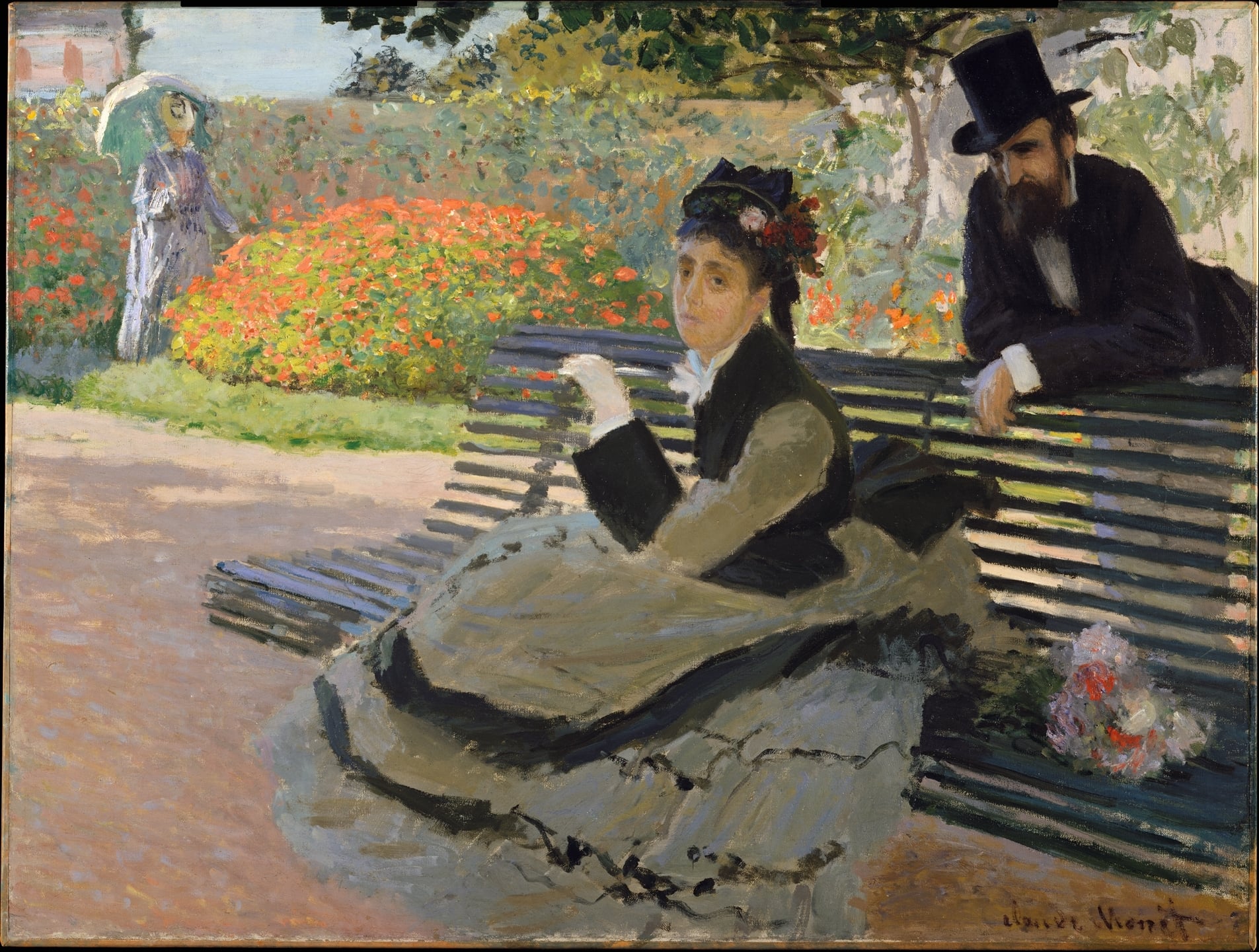
Claude Monet’s Camille Monet on a Garden Bench (1873) stages an intimate pause where <strong>light, grief, and modern leisure</strong> intersect. Camille, shaded and withdrawn, holds a letter while a <strong>top‑hatted neighbor</strong> hovers; a bright bank of <strong>red geraniums</strong> and a strolling woman with a parasol ignite the distance <sup>[1]</sup>. Monet converts a domestic garden into a scene about <strong>psychological distance</strong> amid fleeting sunlight.
Agapanthus
Claude Monet (c. 1915–1926)
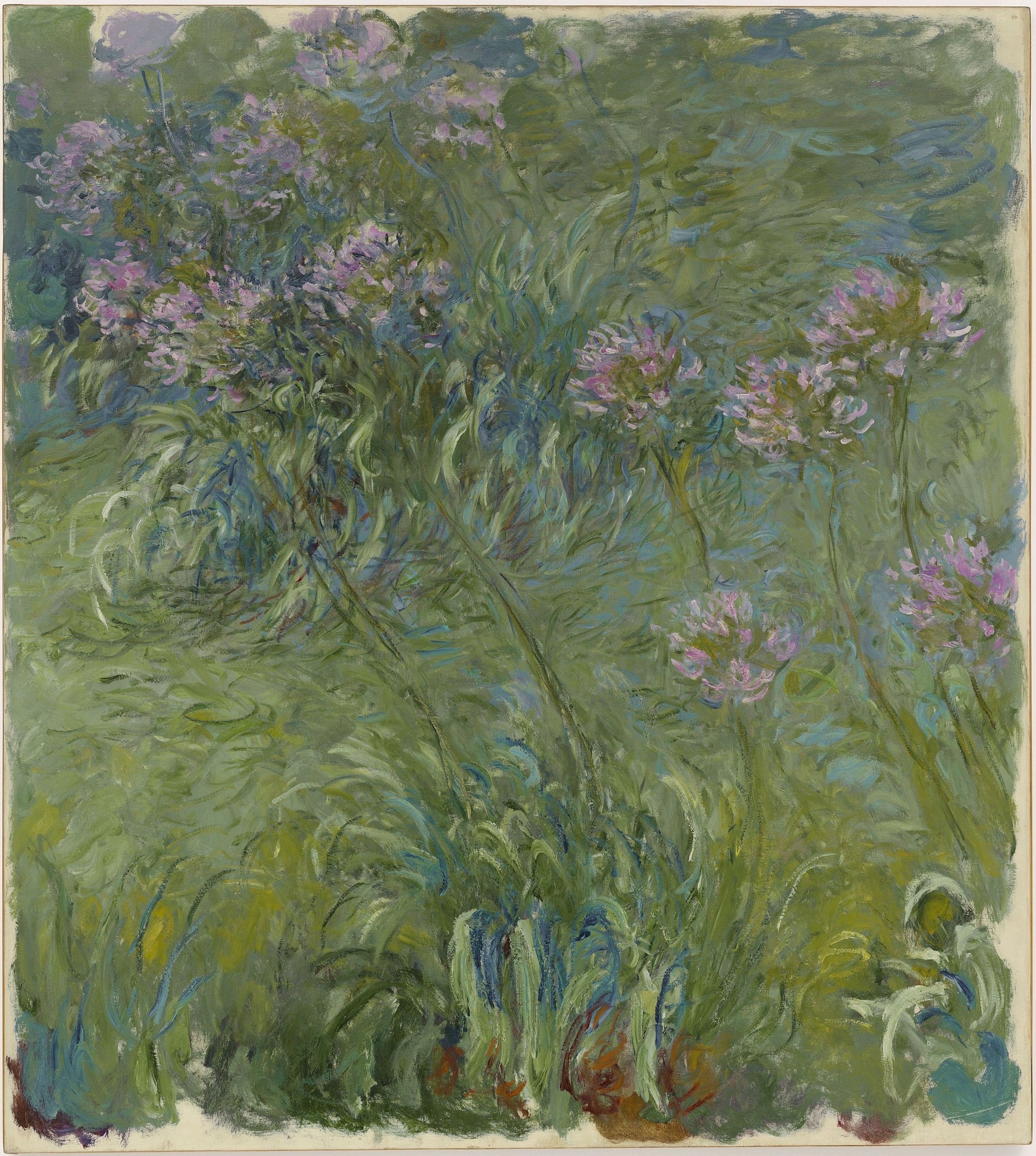
In Agapanthus, Claude Monet turns a close-cropped bed of lilies into a field of <strong>pure movement and light</strong>. Lilac blooms flicker against layered greens, their long, arcing stems written in <strong>calligraphic strokes</strong> that dissolve the line between plant and air.
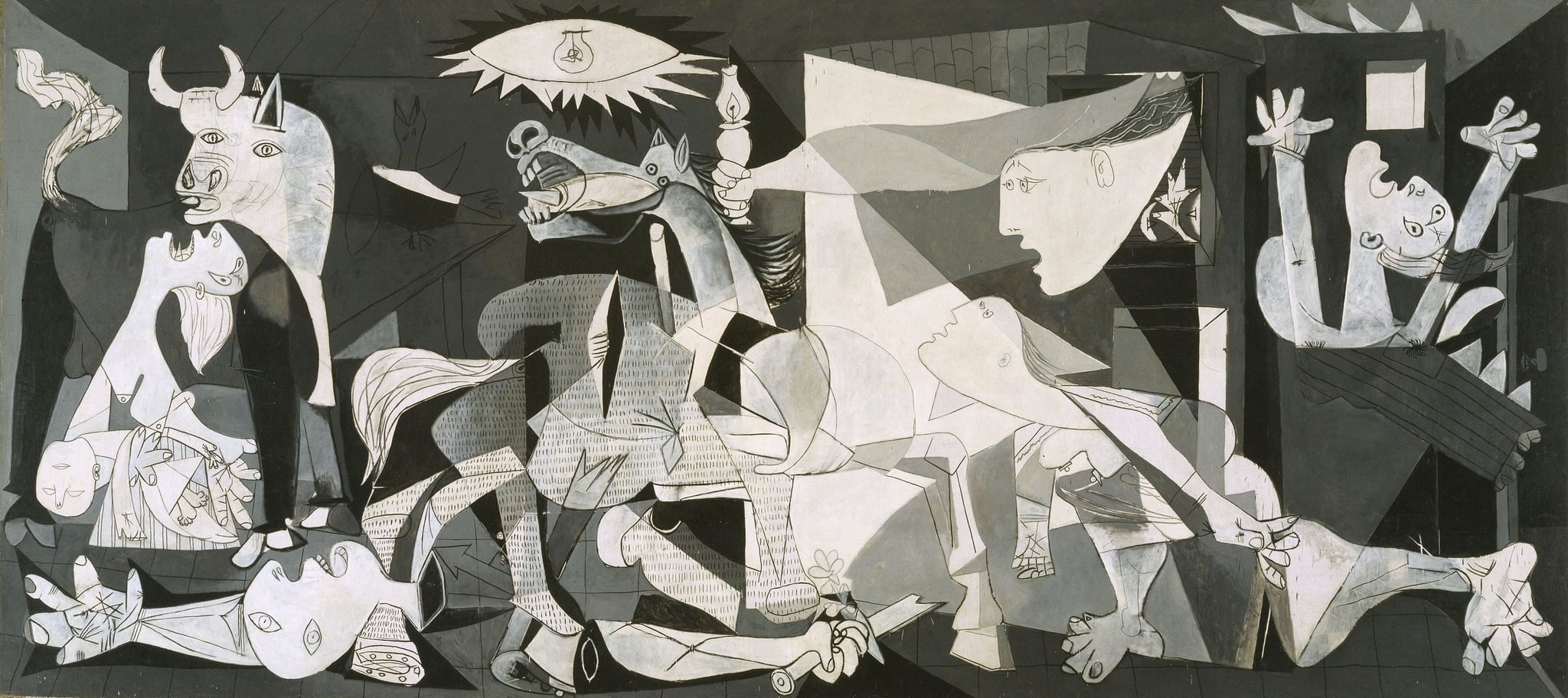
Guernica
Pablo Picasso (1937)
Guernica is a monumental, monochrome indictment of modern war, compressing a town’s annihilation into a frantic tangle of bodies, beasts, and light. Across the canvas, a <strong>shrieking horse</strong>, a <strong>stoic bull</strong>, a <strong>weeping mother with her dead child</strong>, and a <strong>fallen soldier</strong> stage a civic tragedy rather than a heroic battle. The harsh <strong>electric bulb</strong> clashes with a fragile <strong>oil lamp</strong>, turning the scene into a stark drama of terror and witness.
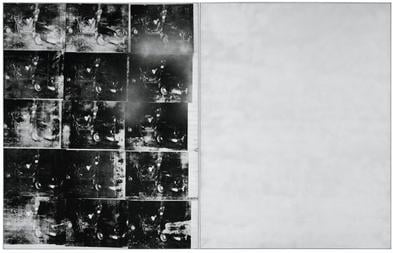
Silver Car Crash (Double Disaster)
Andy Warhol (1963)
Silver Car Crash (Double Disaster) pairs a grid of uneven, black‑and‑white silkscreened crash images with a vast, nearly blank field of metallic silver, staging a battle between <strong>relentless spectacle</strong> and <strong>mute void</strong>. Warhol’s industrial repetition converts tragedy into a consumable pattern while the reflective panel withholds detail, forcing viewers to face the limits of representation and the cold afterglow of modern media <sup>[1]</sup><sup>[2]</sup>.
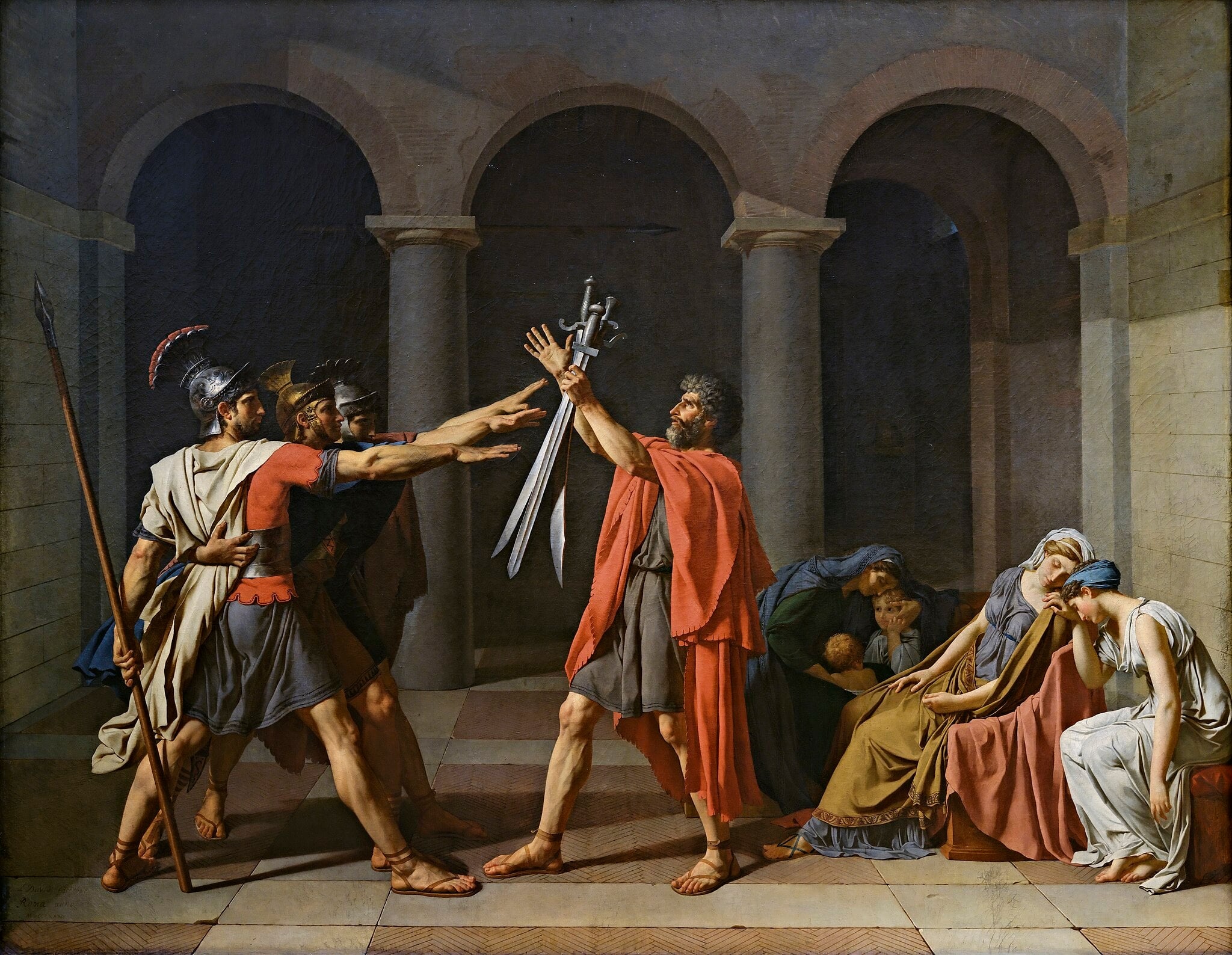
The Oath of the Horatii
Jacques-Louis David (1784 (exhibited 1785))
In The Oath of the Horatii, Jacques-Louis David crystallizes <strong>civic duty over private feeling</strong>: three Roman brothers extend their arms to swear allegiance as their father raises <strong>three swords</strong> at the perspectival center. The painting’s severe geometry, austere architecture, and polarized groups of <strong>rectilinear men</strong> and <strong>curving mourners</strong> stage a manifesto of <strong>Neoclassical virtue</strong> and republican resolve <sup>[1]</sup><sup>[2]</sup><sup>[3]</sup>.
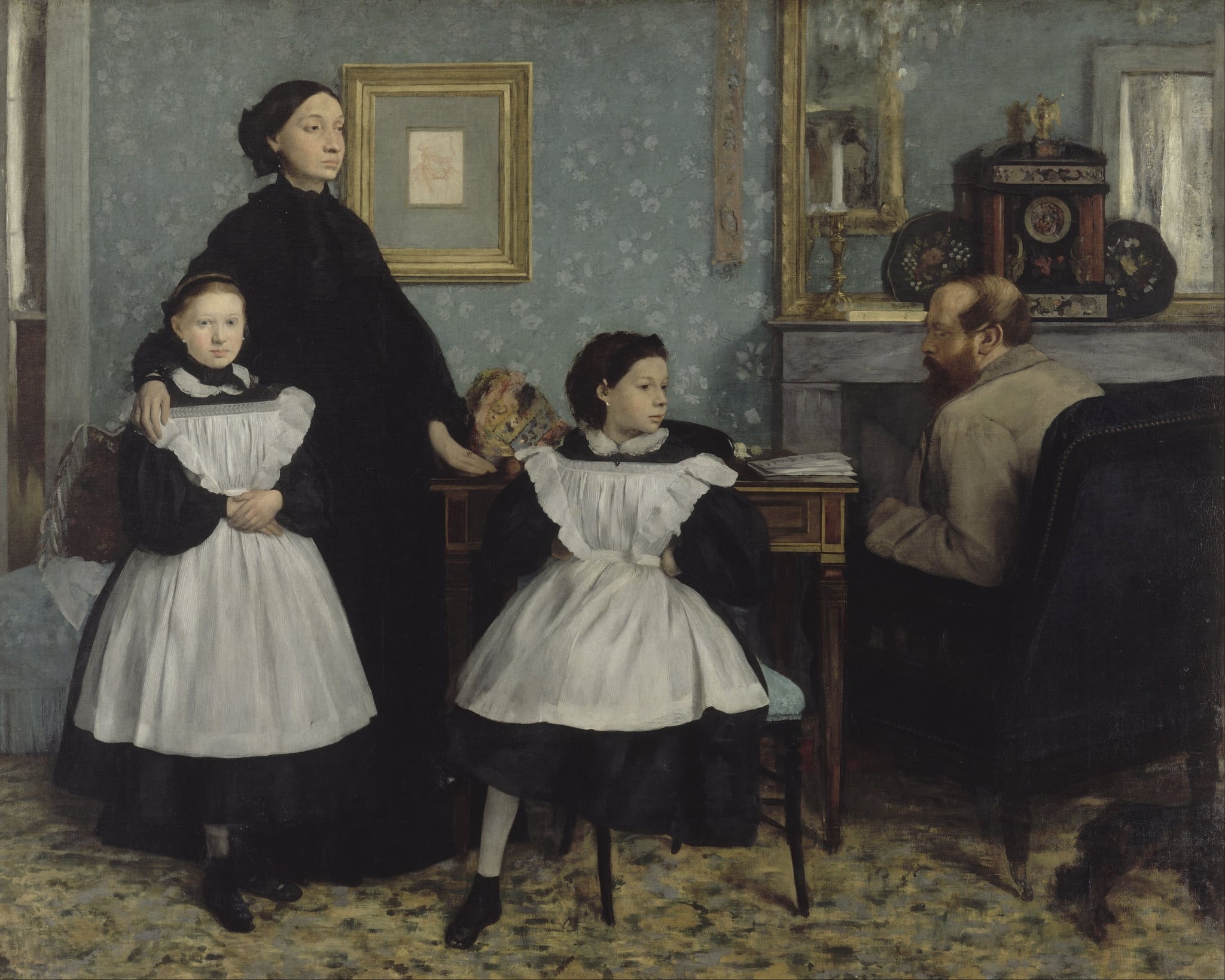
The Bellelli Family
Edgar Degas (1858–1869)
In The Bellelli Family, Edgar Degas orchestrates a poised domestic standoff, using the mother’s column of <strong>mourning black</strong>, the daughters’ <strong>mediating whiteness</strong>, and the father’s turned-away profile to script roles and distance. Rigid furniture lines, a gilt <strong>clock</strong>, and the ancestor’s red-chalk portrait create a stage where time, duty, and inheritance press on a family held in uneasy equilibrium.
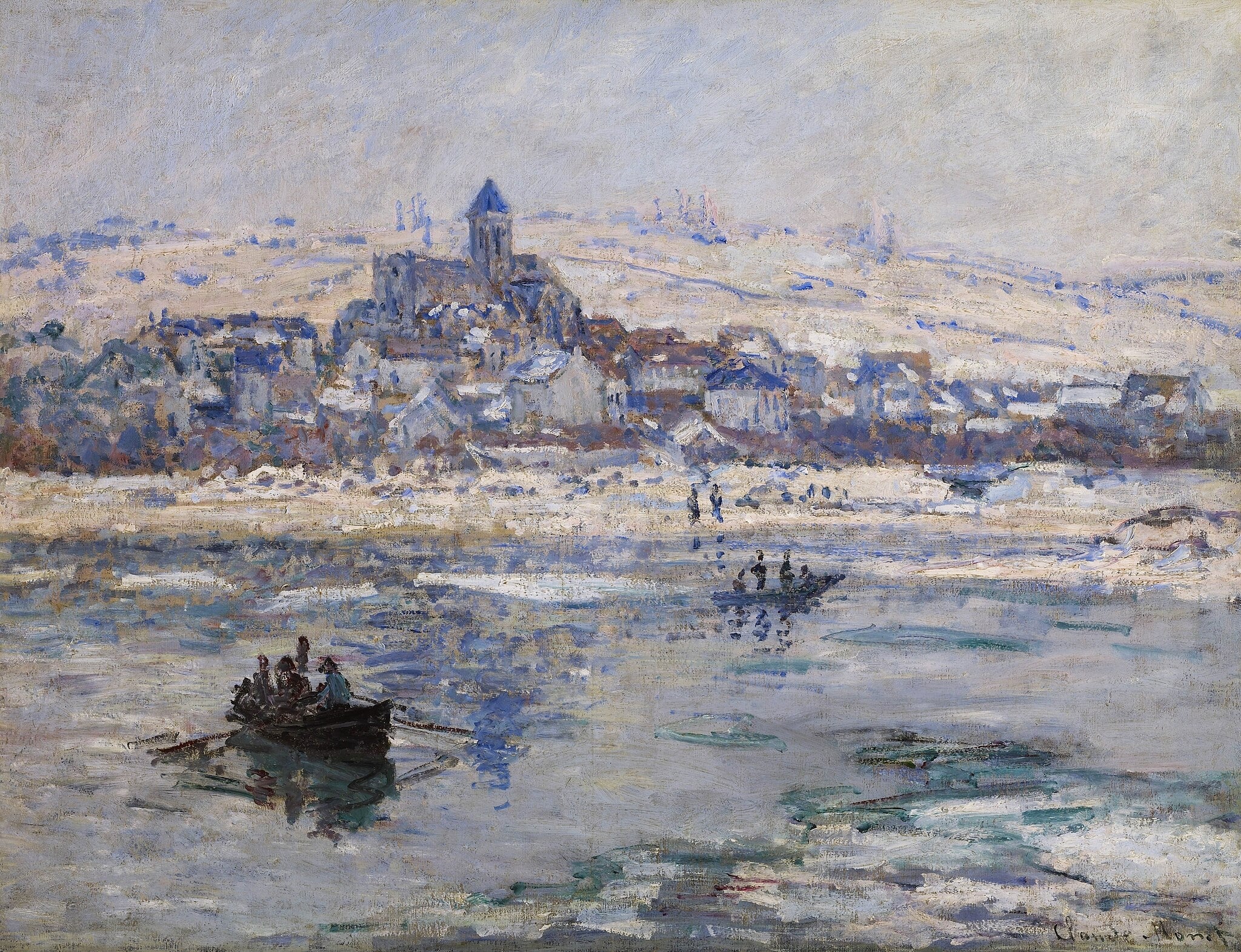
Vétheuil in Winter
Claude Monet (1878–79)
Claude Monet’s Vétheuil in Winter renders a riverside village in a <strong>silvery, frost-laden light</strong>, where the Seine carries <strong>broken ice</strong> past clustered houses and the tall church tower. The scene’s <strong>granular blue-green palette</strong> and softened edges make the town appear to crystallize out of air and water, while small boats and figures signal quiet persistence.
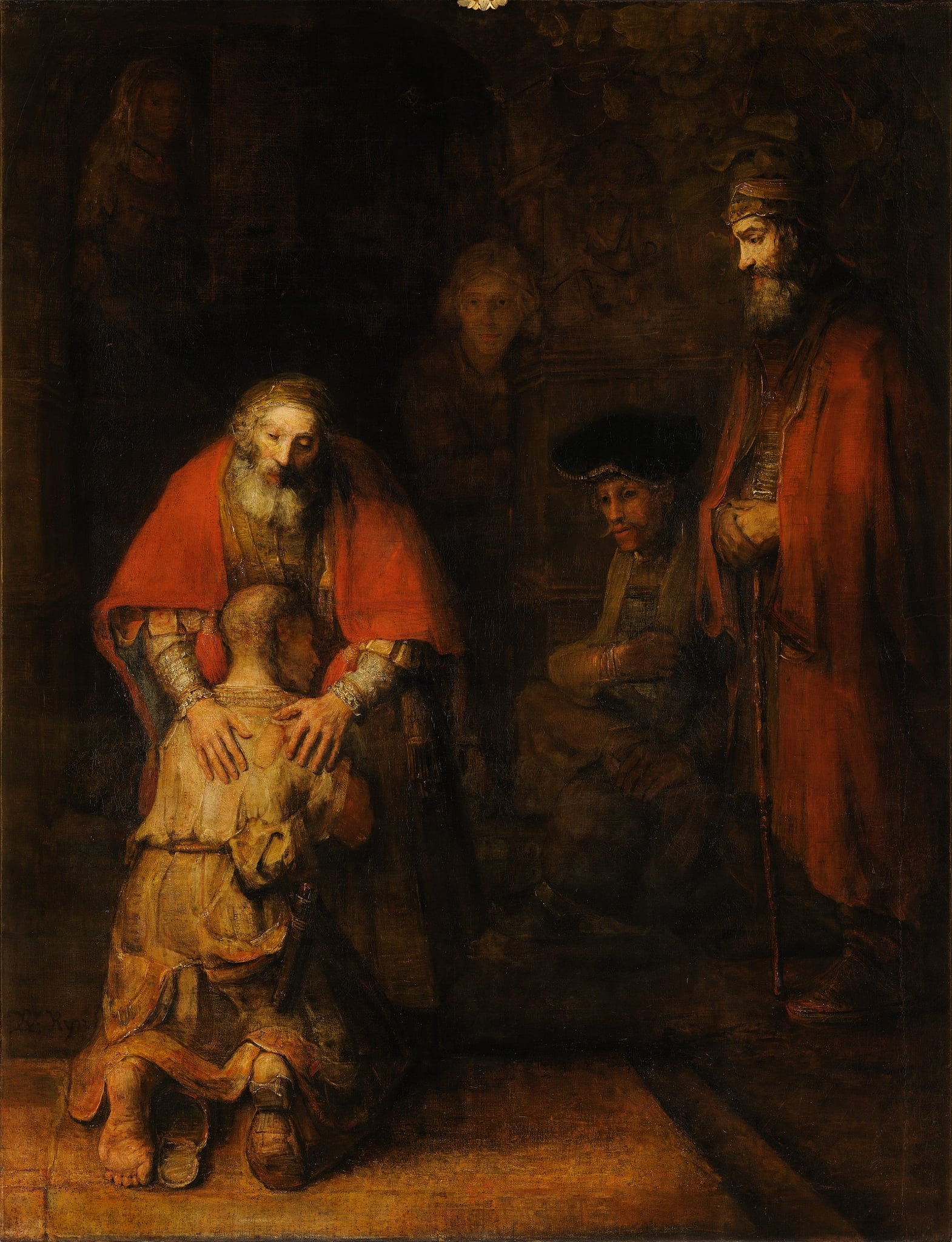
The Return of the Prodigal Son
Rembrandt van Rijn (c. 1661–1669 (probably completed by 1669))
Rembrandt van Rijn’s The Return of the Prodigal Son is a late-life meditation on <strong>mercy</strong>, <strong>homecoming</strong>, and <strong>restored dignity</strong>. In a hush of dusk-like light, a ragged son kneels into his father’s <strong>embrace</strong>, while an upright elder brother holds back in shadow. The image concentrates meaning in illuminated <strong>faces, hands, and feet</strong>, turning a parable into a timeless human reckoning. <sup>[1]</sup><sup>[2]</sup>
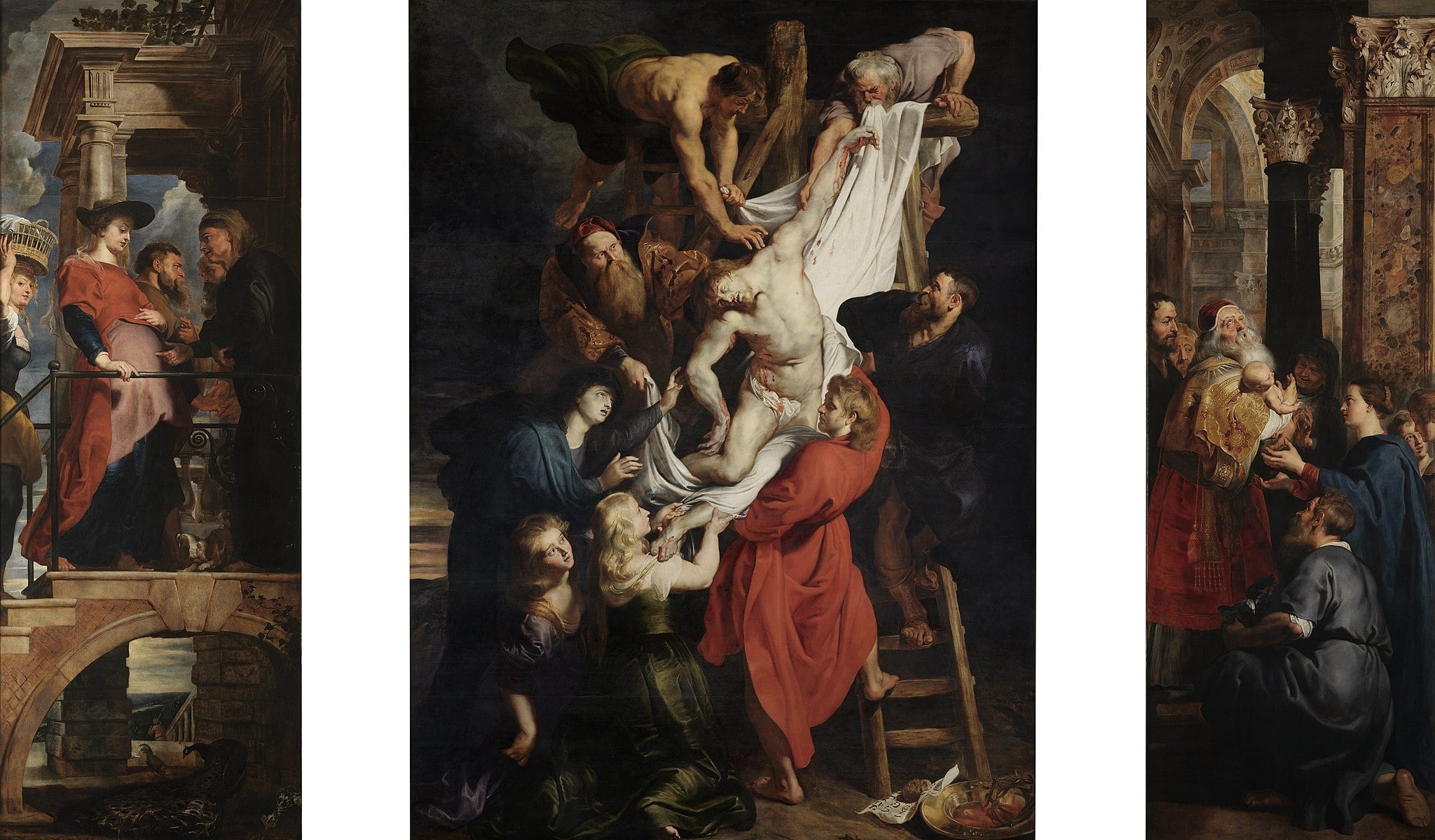
The Descent from the Cross
Peter Paul Rubens (1611–1614)
At night beneath a black sky, The Descent from the Cross stages a solemn transfer of Christ’s body along a luminous <strong>white shroud</strong> that cuts diagonally across the scene. The flanking wings—<strong>The Visitation</strong> and <strong>The Presentation in the Temple</strong>—frame the central tragedy with beginnings and revelation, turning the triptych into a single arc from Incarnation to Redemption. Rubens fuses <strong>Baroque chiaroscuro</strong> with tender, communal gestures to make grief a shared act of devotion.
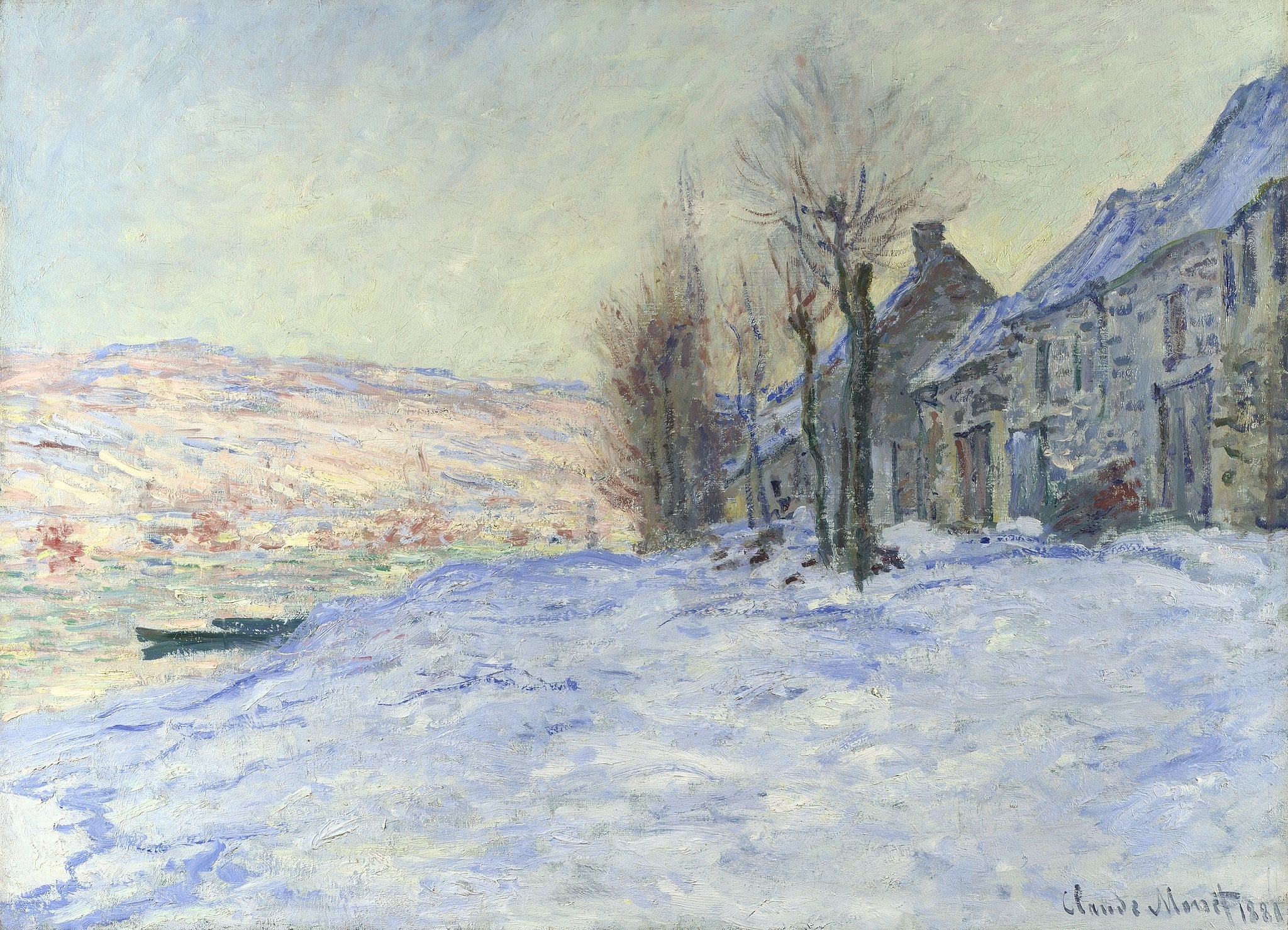
Lavacourt under Snow
Claude Monet (about 1878–81 (probably winter 1879–80; signed 1881))
Claude Monet’s Lavacourt under Snow distills a frozen morning on the Seine into a field of <strong>lilac‑blue shadows</strong> and a counterglow of <strong>rose light</strong> across the far bank. A diagonal of cottages and <strong>leafless trees</strong> holds the right margin while a <strong>moored dark boat</strong> punctuates the left, turning transience into structure <sup>[1]</sup>.
Still Life with Bible
Vincent van Gogh (1885)
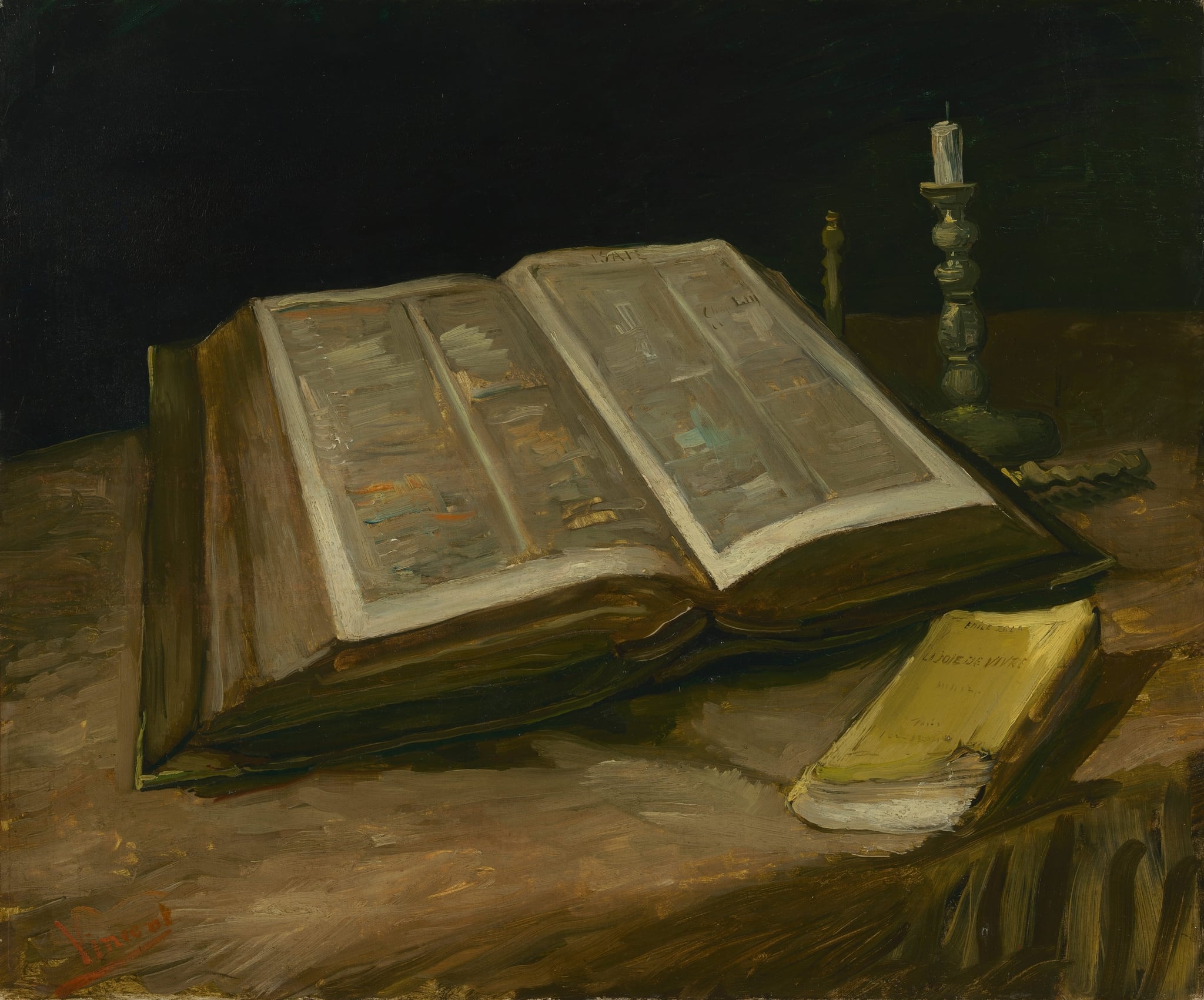
Vincent van Gogh’s Still Life with Bible (1885) stages a stark encounter between a monumental family <strong>Bible</strong>, a snuffed <strong>candle</strong>, and Zola’s yellow‑covered <strong>La joie de vivre</strong>. The painting’s heavy, earthen brushwork and diagonal sweep forge a tense dialogue between <strong>inherited faith</strong> and <strong>modern experience</strong> <sup>[1]</sup><sup>[2]</sup>.
Old Man on His Deathbed
Gustav Klimt (1900 (cataloged; c. 1899–1900, inscription likely by another hand))
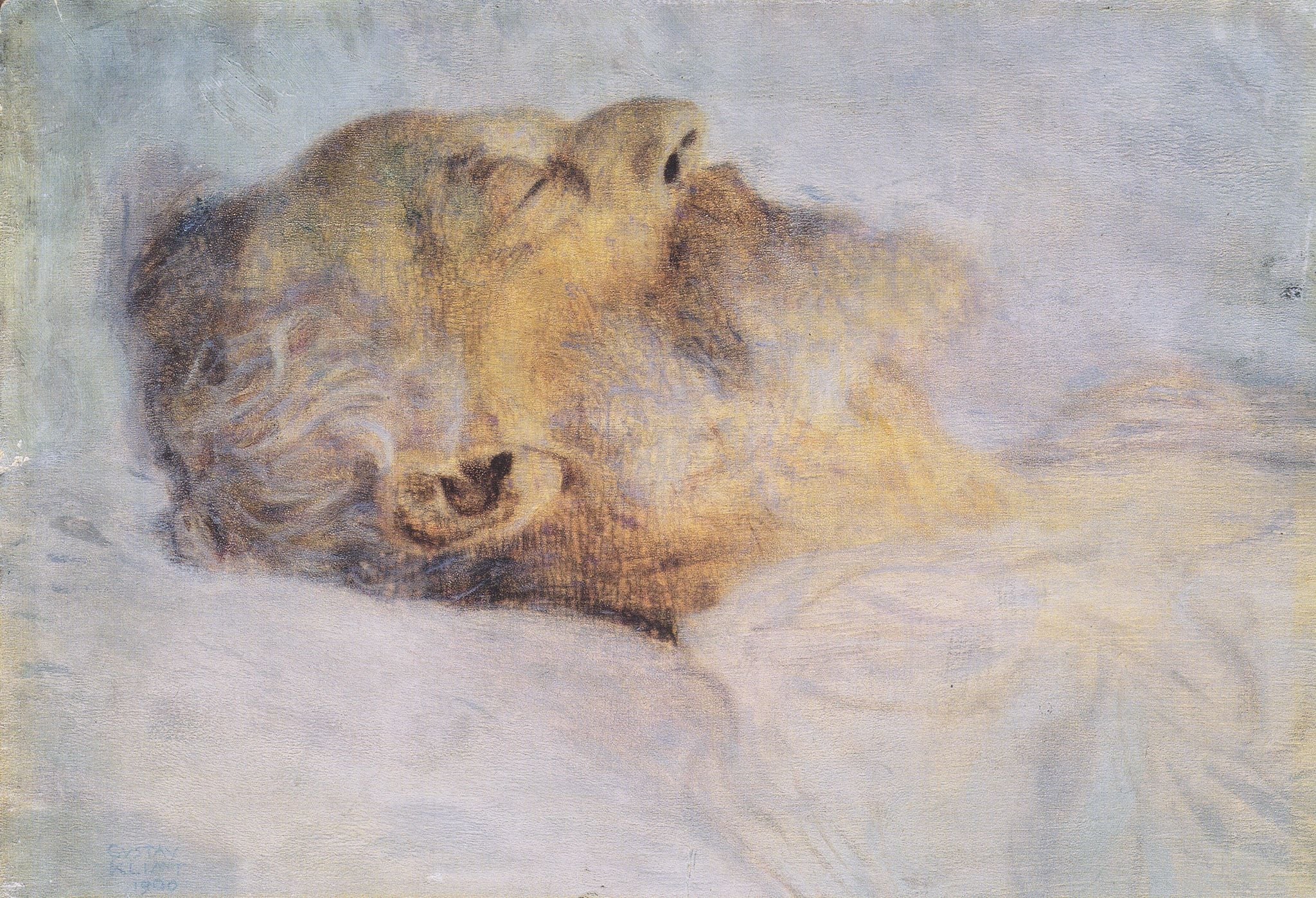
Gustav Klimt’s Old Man on His Deathbed is a concentrated vigil at life’s threshold, rendered in <strong>vaporous blues and ochers</strong> that let head, pillow, and air bleed into one another. The profile turned toward light, with <strong>closed eyes and a slightly parted mouth</strong>, transforms observation into a modern <strong>memento mori</strong> <sup>[1]</sup><sup>[2]</sup>.
The Dance of Life
Edvard Munch (1899–1900)
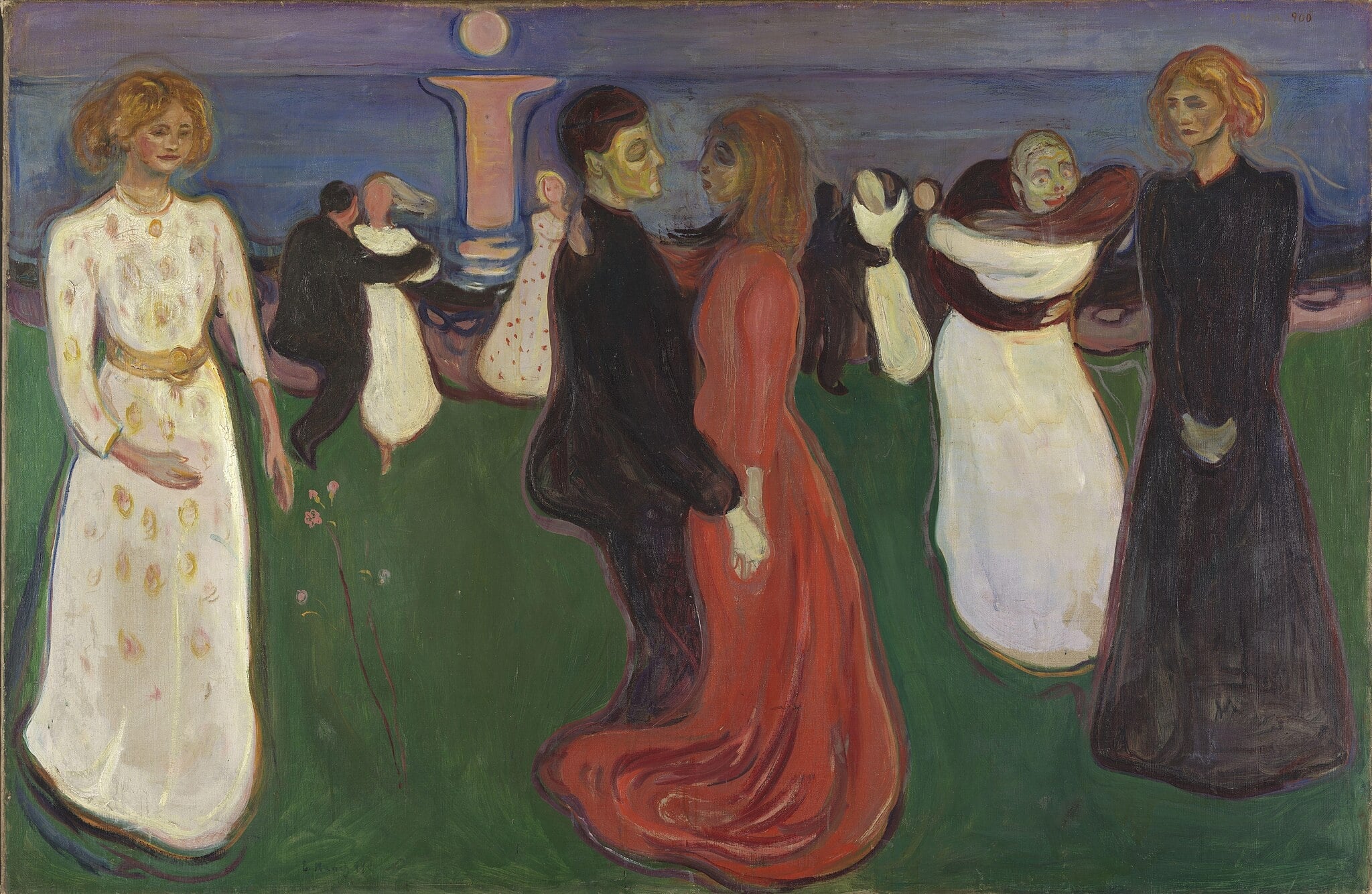
The Dance of Life compresses <strong>youth, passion, and renunciation</strong> into a single moonlit scene on the Åsgårdstrand shore. A pale girl in white, a red‑clad woman entwined with a dark-suited man, and a withdrawn figure in black form a symbolic arc that binds love to <strong>time and mortality</strong> <sup>[1]</sup><sup>[2]</sup>.
A Burial at Ornans
Gustave Courbet (1849–1850)
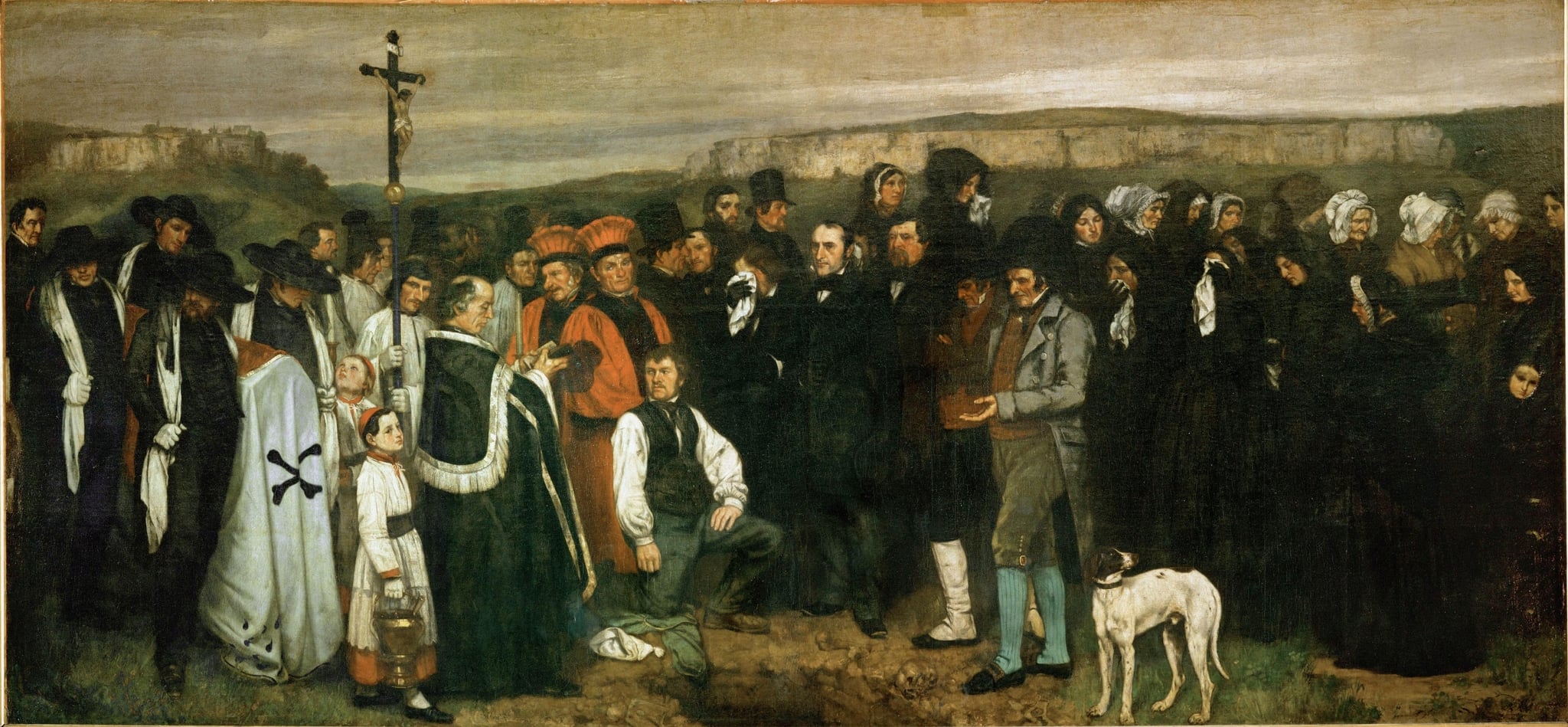
A Burial at Ornans turns a provincial funeral into a life‑size, horizontal <strong>frieze</strong> where clergy, officials, peasants, and mourners stand shoulder to shoulder before an <strong>open grave</strong> and skull. Courbet’s refusal of climax—despite the tall <strong>processional crucifix</strong>—and details like the <strong>kneeling gravedigger</strong> and indifferent <strong>dog</strong> make mortality the great equalizer, not piety or heroism. The limestone <strong>cliffs of Ornans</strong> close the horizon, sealing the scene’s weight and finality.
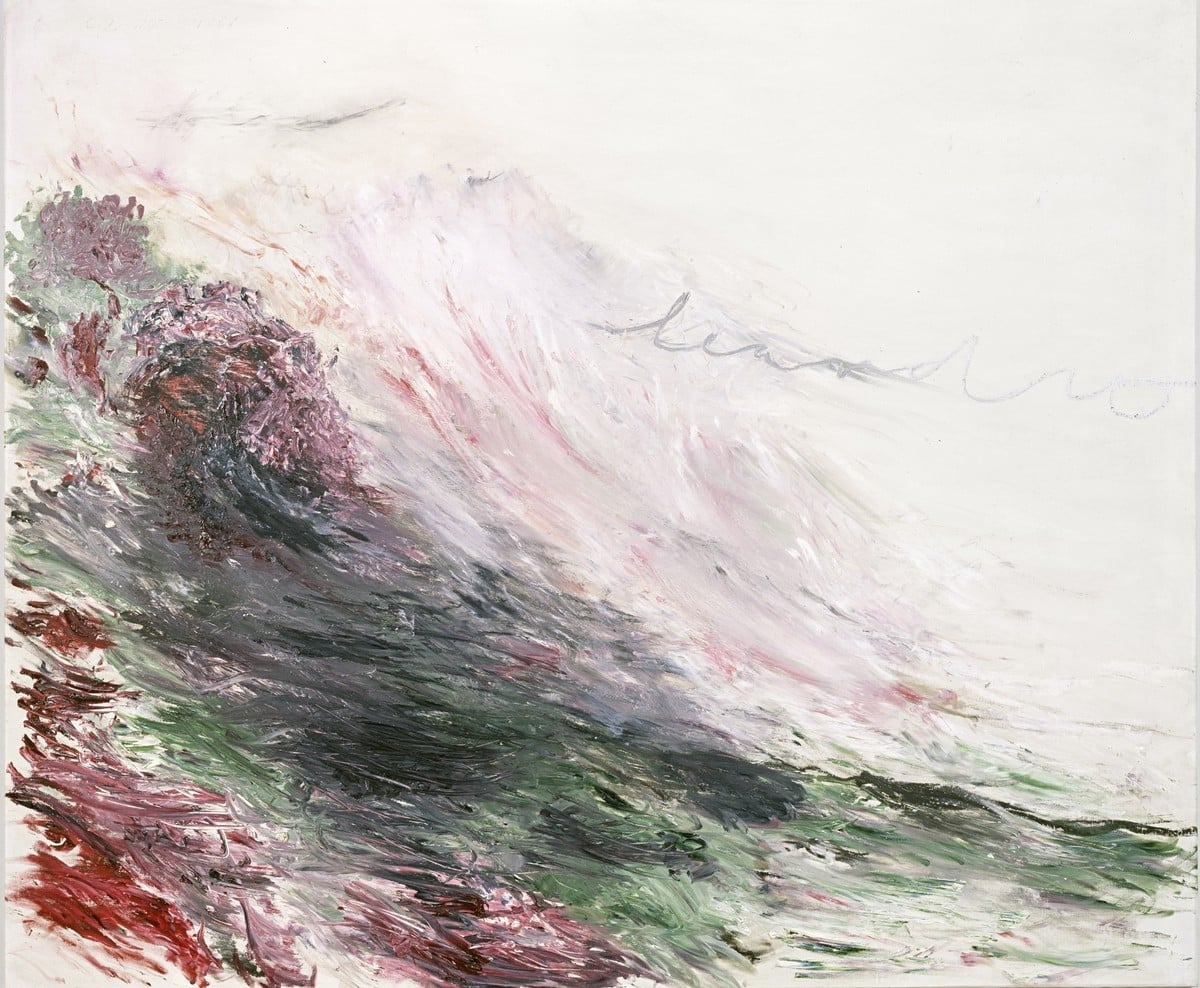
Hero and Leandro
Cy Twombly (1985)
<strong>Hero and Leandro</strong> compresses myth into a single, diagonal surge of paint that fuses sea, storm, and desire. The impasto wave drives from lower left to upper right, while the faint graphite name “leandro” thins into the white ground, turning language into a last breath. Twombly converts Marlowe’s poem and the Greek legend into a <strong>painterly elegy</strong> where gesture stands in for fate <sup>[1]</sup><sup>[2]</sup><sup>[3]</sup>.
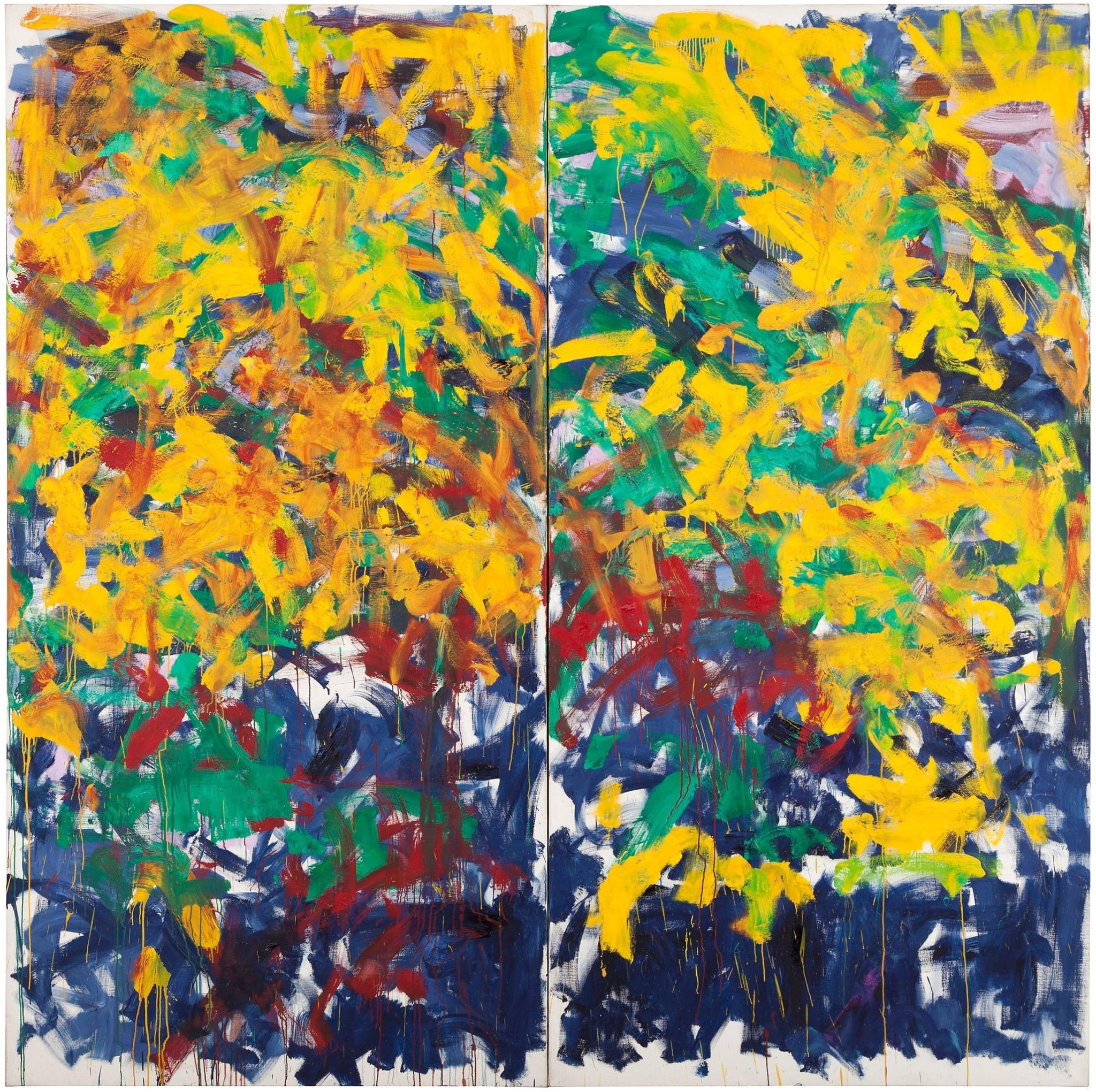
La Grande Vallée VII
Joan Mitchell (1983)
La Grande Vallée VII is a monumental <strong>diptych</strong> in which Joan Mitchell converts a remembered landscape into a charged field of color and motion. Cascades of <strong>blazing yellow</strong>, <strong>leafy green</strong>, and <strong>inky blue</strong> collide across the seam, where drips and slashing strokes keep the surface alive—an arena where <strong>exuberance and elegy</strong> co-exist <sup>[1]</sup><sup>[2]</sup>.
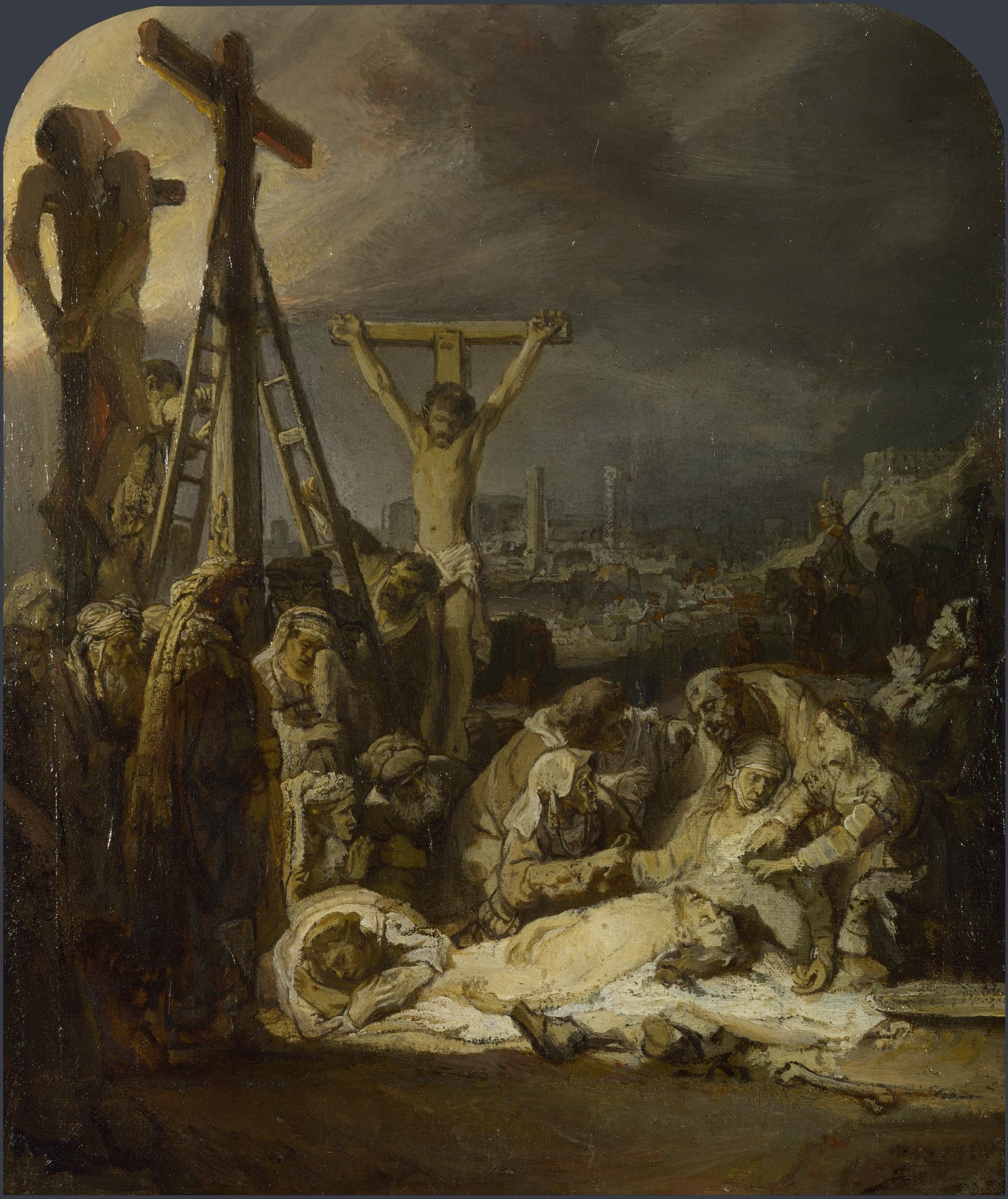
The Lamentation over the Dead Christ
Rembrandt van Rijn (about 1635)
In The Lamentation over the Dead Christ, Rembrandt van Rijn gathers grief and hope into a single <strong>grisaille</strong> blaze of light. Christ’s diagonal, pallid body on a white shroud draws mourners into a tight arc, while ladders, crosses, and the silhouetted thieves still crown the hill under a storming sky <sup>[1]</sup>.
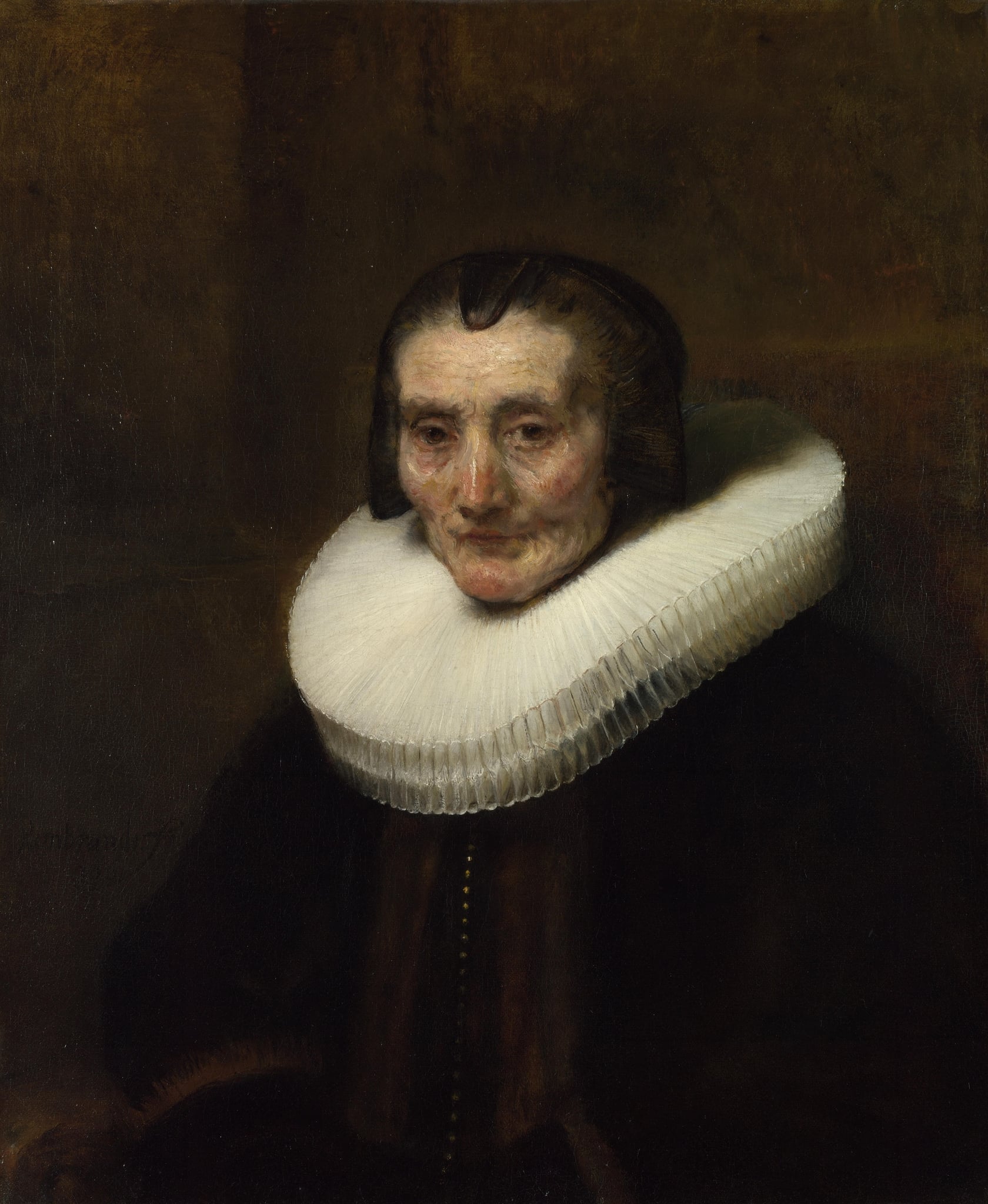
Portrait of Margaretha de Geer, Wife of Jacob Trip
Rembrandt van Rijn (about 1661)
Rembrandt van Rijn’s Portrait of Margaretha de Geer, Wife of Jacob Trip crystallizes late‑style <strong>chiaroscuro</strong> and a fearless study of <strong>age and dignity</strong>. The incandescent <strong>millstone ruff</strong> gathers and emits light against a brown void, while the dark gown and measured posture project wealth disciplined by piety <sup>[1]</sup>.