Gustav Klimt Paintings in New York — Where to See Them
New York matters for experiencing Gustav Klimt because you can see approximately four of his paintings on permanent display across two world-class institutions, letting you compare how his work is presented in different curatorial contexts. The Museum of Modern Art houses two Klimt paintings that emphasize his place in modernist painting, while the Metropolitan Museum of Art’s two works highlight his ties to European decorative arts and historical portraiture—making the city an efficient, revealing stop for understanding Klimt’s range.
At a Glance
- Museums
- The Museum of Modern Art (MoMA), The Metropolitan Museum of Art (The Met)
- Highlight
- See Klimt's intimate portraits at MoMA and grand works at The Met.
- Best For
- Art lovers seeking world-class collections and varied museum experiences.
The Museum of Modern Art (MoMA)
MoMA matters for experiencing Klimt because it places his work within the international modernist narrative — seeing Klimt in conversation with artists from Paris, Vienna and beyond highlights how his decorative surfaces and bold use of gold and pattern anticipate and influence 20th‑century modernism. The museum’s installations often emphasize formal links (composition, flattened space, ornament) between Klimt and movements like Symbolism and early abstraction, so visitors get a sense of his role as a bridge from fin‑de‑siècle Vienna to global modern art.
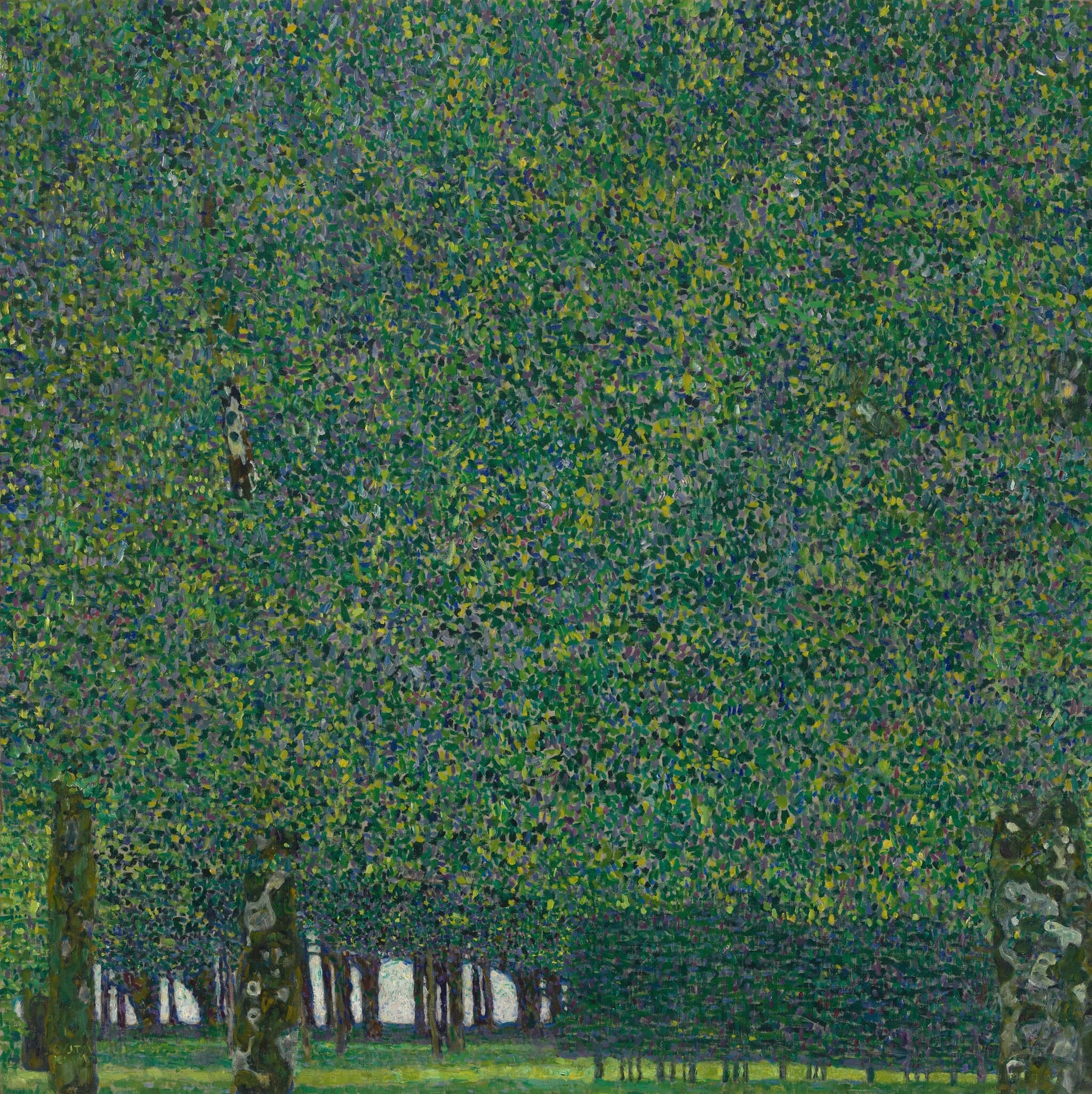
The Park
1910
A near-square, densely patterned landscape in which a shimmering canopy of leaves fills almost the entire surface, with only a few tree trunks at the bottom to anchor the scene; Klimt reduces natural forms to decorative, mosaic-like marks that make the picture read as a field of color and texture. The painting is significant as an example of Klimt’s late decorative landscapes where he abandons literal naturalism for surface rhythm and color, influencing Viennese Expressionists who admired his new visual vocabulary. Viewers should look for the flattened picture plane, the repetitive leaf motifs that dissolve into abstraction, and the subtle shifts of light and color that create a sense of depth despite the overall decorative treatment. ([moma.org](https://www.moma.org/collection/works/78411?utm_source=openai))
Must-see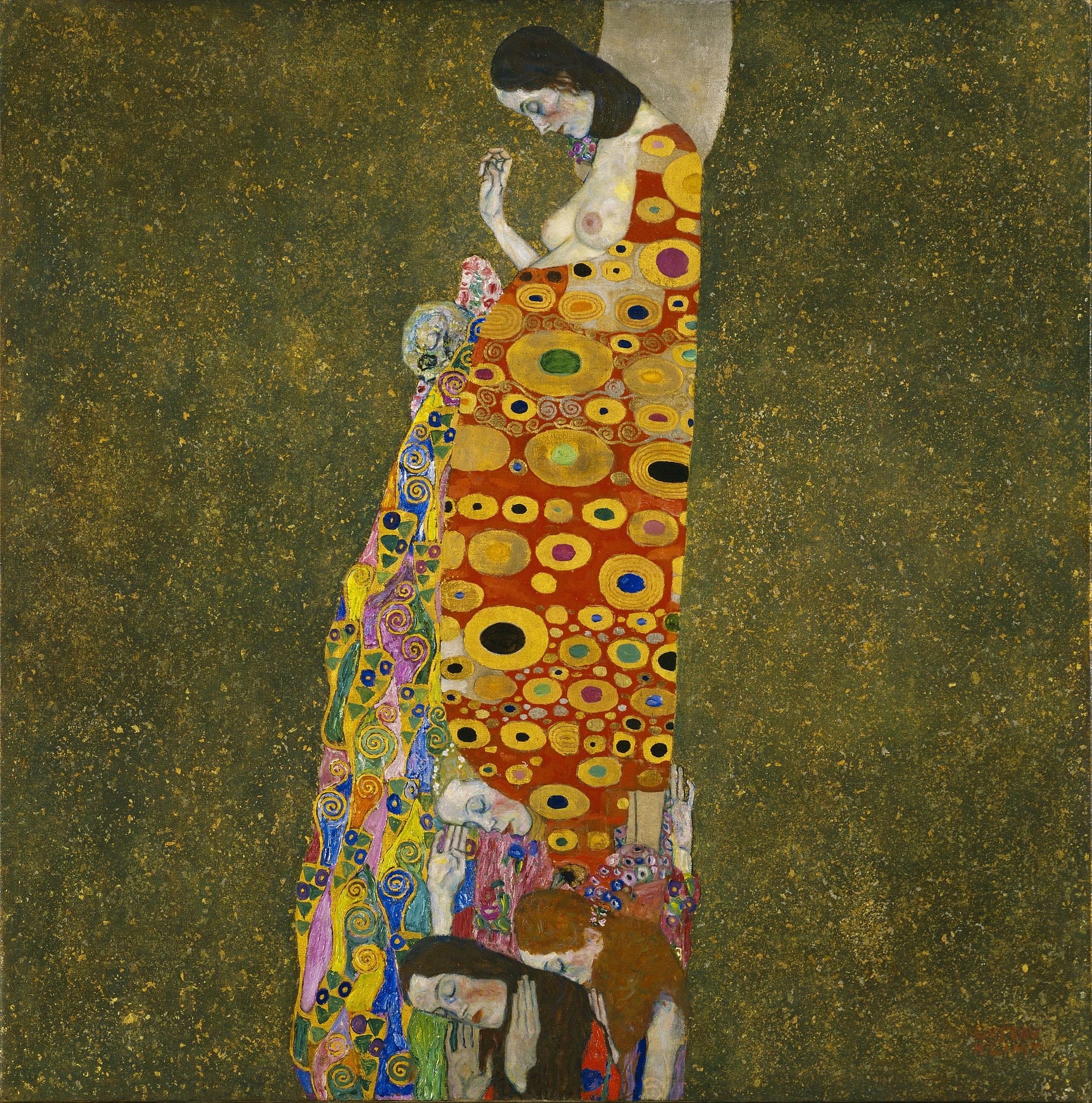
Hope, II
1908
An allegorical, vertical composition centered on a pregnant woman whose elongated form is surrounded by shimmering ornament, ghostly skulls, and a densely patterned background merging symbolist content with Klimt’s ‘golden’ decorative manner. The work is important for its unsettling blend of life and death—Klimt contrasts the theme of pregnancy and hope with faintly sinister motifs—marking a mature moment in his symbolic, Art Nouveau–inflected practice. When you look closely, pay attention to the layering of ornamental pattern and figuration, the use of metallic tones and flattened space, and the small symbolic details (skulls, mourning figures) that complicate the painting’s surface and meaning. ([moma.org](https://www.moma.org/collection/works/79792?utm_source=openai))
Must-seeThe Metropolitan Museum of Art
The Met matters for Klimt because it frames his paintings within a broader historical and decorative arts context, letting you compare his portraits and allegorical pieces directly with 19th‑century European painting and applied arts that influenced him. The museum’s curatorial notes and comparative displays often draw attention to Klimt’s techniques, patterning and use of ornament — revealing how his painterly surface relates to textiles, metalwork and portrait conventions in collections the Met preserves.
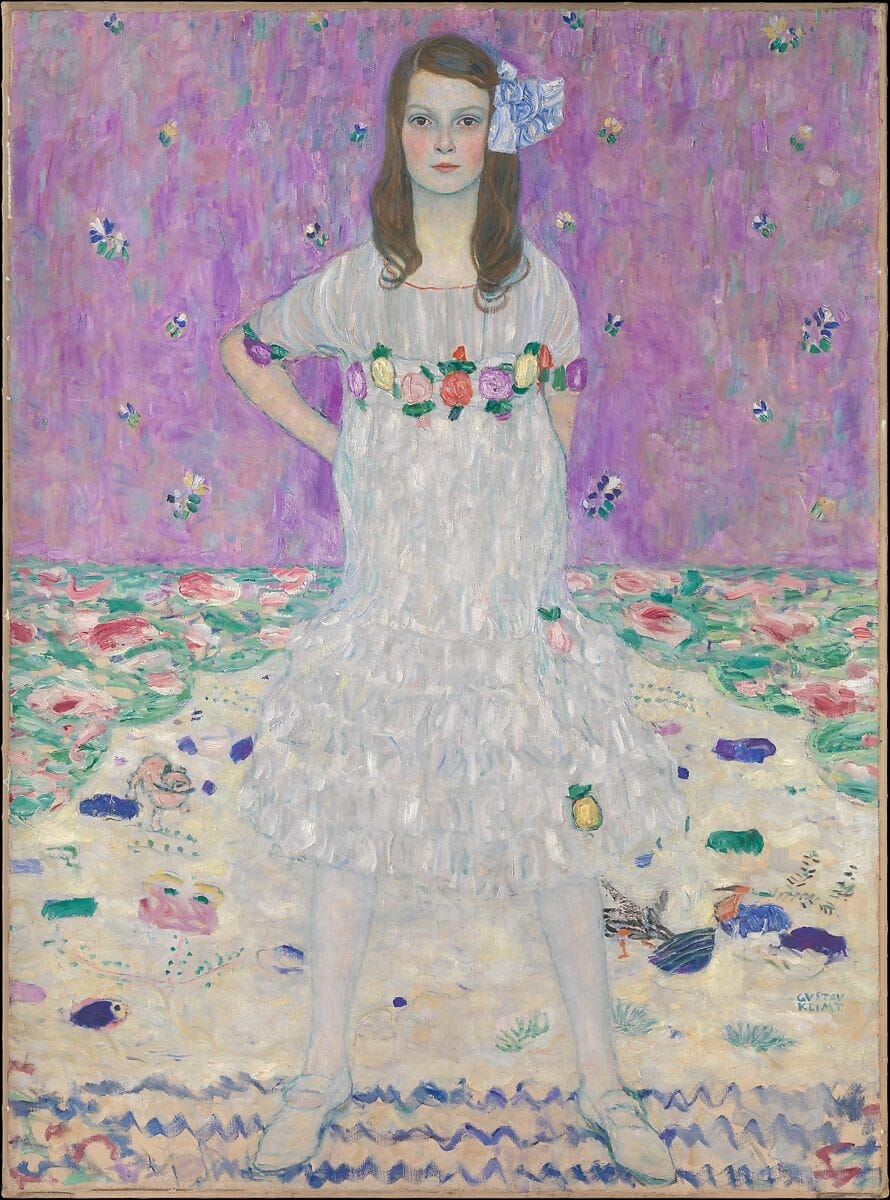
Mäda Primavesi
1912–13
A tender, intimate portrait of nine-year-old Mäda Primavesi seated against a patterned background, showing Klimt’s late-career shift toward more expressive color and painterly surfaces. It’s significant as one of Klimt’s rare child portraits that balances psychological presence with decorative richness; look for the lively brushwork in the face and hands contrasted with the flattened, ornamented treatment of the dress and background which creates a subtle tension between realism and pattern. ([metmuseum.org](https://www.metmuseum.org/toah/works-of-art/64.148?utm_source=openai))
Must-see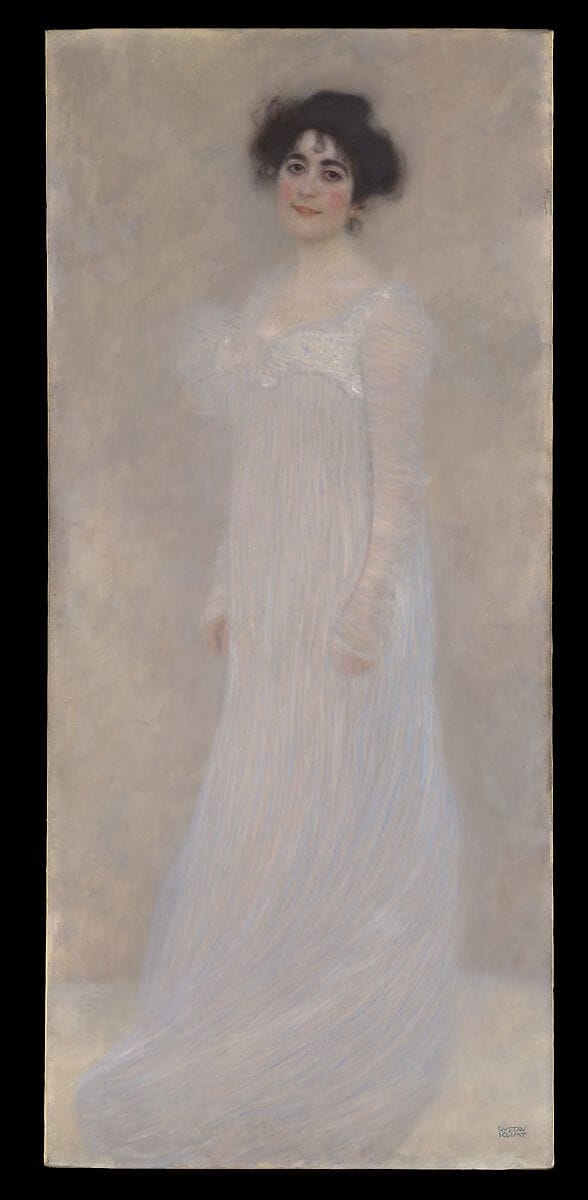
Serena Pulitzer Lederer
1899
This elegant portrait depicts Serena Lederer in three-quarter view, emphasizing her poise and refined social standing while demonstrating Klimt’s early Secessionist style. Important for its role in Klimt’s portrait oeuvre and his close association with the Lederer family (major patrons and collectors), the painting rewards close looking at the delicate modeling of her face and hands and the decorative, textile-like patterns that frame and characterize her clothing. ([metmuseum.org](https://www.metmuseum.org/art/collection/search/436820?utm_source=openai))
Must-see