Most Expensive John William Waterhouse Paintings
John William Waterhouse occupies a singular niche in the market: a late-Victorian painter whose Pre-Raphaelite sensibility and cinematic compositions have migrated from critical reappraisal into serious collector demand, where masterpieces can command extraordinary sums. At the apex are renditions of Tennyson’s doomed heroine — listed here as both "The Lady of Shallot" and "The Lady of Shalott" — each valued in the tens of millions ($30–60 million and $30–50 million respectively), signaling how literary romance and virtuoso technique translate into blue-chip pricing. Works such as "St Cecilia" ($12–22 million) further demonstrate the market’s willingness to reward large, museum-quality canvases, while mythic scenes like "Hylas and the Nymphs" ($3,000,000–$10,000,000) and "The Siren" ($3.5–6.5 million) show strong mid-market appetite. Smaller but still significant pictures — "The Soul of the Rose" ($3,000,000–$6,000,000), "The Magic Circle" ($1,000,000–$5,000,000), "Fair Rosamund" ($1,000,000–$2,500,000), and "Miranda – The Tempest" ($500,000–$1.5 million) — round out a market profile in which narrative richness, technical finesse, and provenance make Waterhouse’s paintings distinctly collectible.
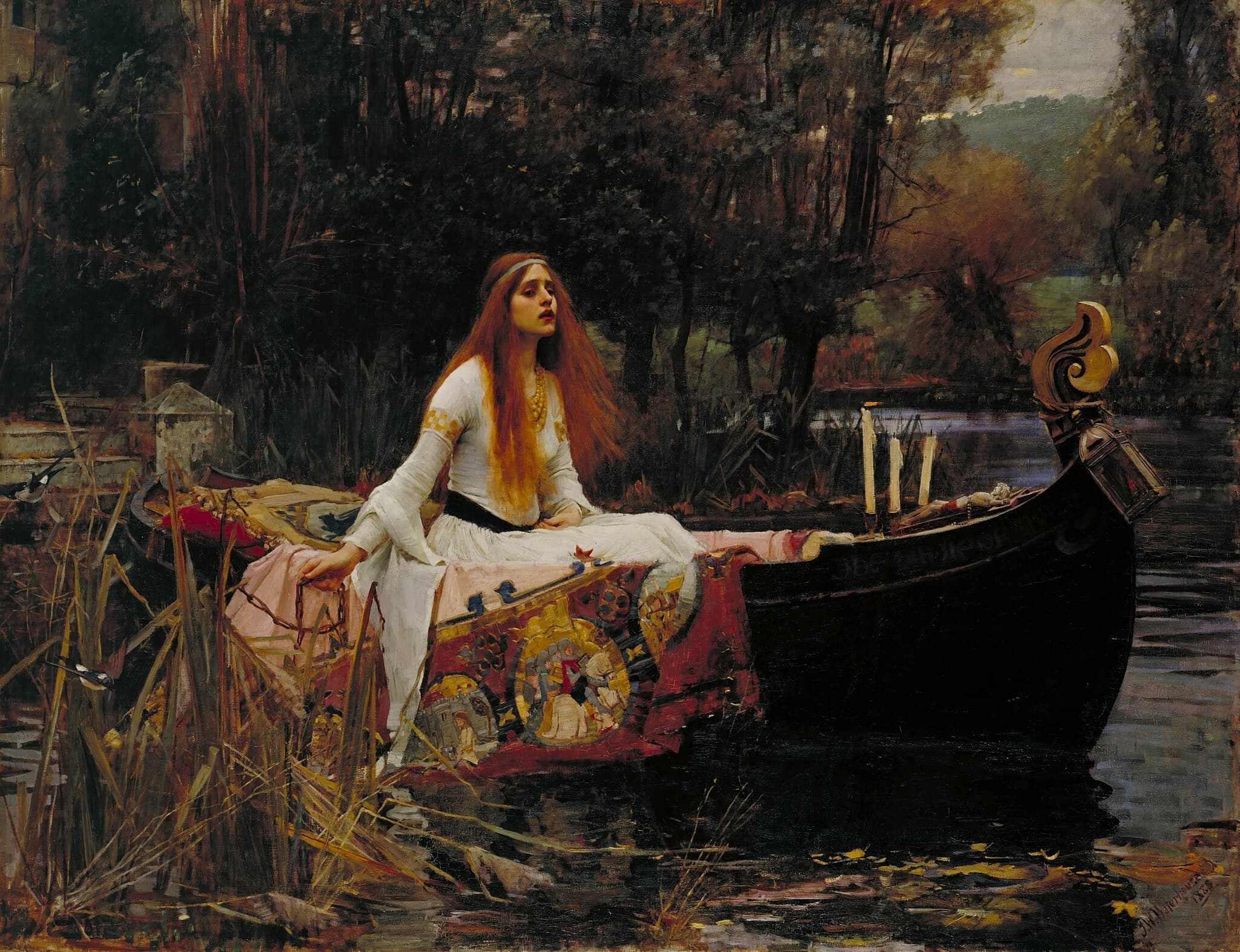
$30-60 million
Range extrapolates decisively above Waterhouse’s auction benchmarks, reflecting The Lady of Shalott’s signature‑masterpiece status and the extreme scarcity of museum‑caliber comparables.
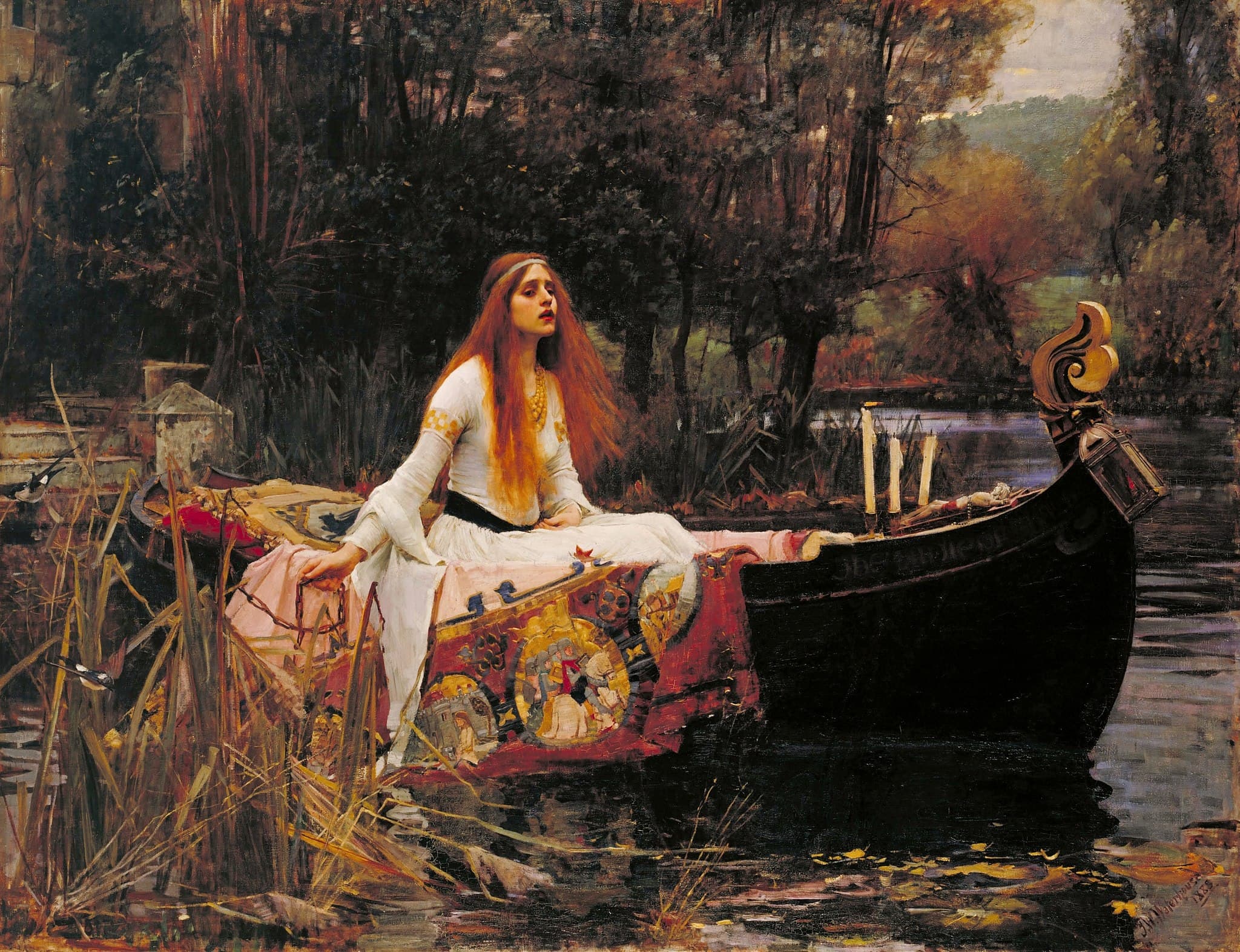
$30-50 million
Range sits above all recorded Waterhouse results and challenges the category ceiling, reflecting this definitive image’s singular cultural status and a significant masterpiece premium.
$12-22 million
Estimate is anchored to Christie's 14 June 2000 sale and adjusted for inflation and subsequent high‑end Waterhouse comparables to arrive at USD $12–22M.
$3,000,000 - $10,000,000
As a Manchester Art Gallery–held icon never offered on the modern market, the defensible working range projects a most‑likely realized sale around USD $4–7M.
$3.5-6.5 million
Anchored to Sotheby’s London 12 July 2018 sale (£3,835,800 incl. premium; ≈USD 5.08M), the USD $3.5–6.5M guidance adjusts for channel, condition, provenance and promotion.
$3,000,000–$6,000,000
Range is anchored to Christie’s New York 28 Oct 2019 realization of USD $4,695,000 for the authenticated 1908 original of The Soul of the Rose.
$1,000,000–$5,000,000
Not for sale in Tate Britain, the hypothetical USD $1–5M range is derived from a Christie’s 2009 preparatory‑study sale and the artist’s historical auction ceiling.
$1,000,000 - $2,500,000
Anchored to its May 2014 Sotheby’s sale (realized ≈USD $1.505M), the USD $1.0–2.5M range assumes accepted autograph status and intact Royal Academy/Lever provenance.
$500k–$1.5M
Defensible auction range USD $500k–1.5M is grounded in Sotheby’s New York 24 Apr 2009 sale of Miranda — The Tempest for USD $746,500 and recent comparables.
What Drives Value in John William Waterhouse's Work
Iconicity & Reproducibility
The strongest Waterhouse‑specific price driver is iconic imagery that defines the artist’s public brand. Canvases such as The Lady of Shalott, Hylas and the Nymphs, The Magic Circle and Circe anchor Waterhouse’s recognition in scholarship and popular culture, creating cross‑category demand. Market notes treat these works as trophies — the Lady of Shalott’s institutional fame alone is cited as justifying a hypothetical $30–60m band well above routine Waterhouse comparables.
Institutional Provenance & Effective Inaccessibility
Long museum custody materially alters value for Waterhouse. Major institutional holdings (Tate Britain’s Lady of Shalott since 1894, the Magic Circle via the Chantrey Bequest, Manchester’s Hylas) both validate attribution and remove supply, producing scarcity premiums when comparable works appear. That same custodianship complicates marketability — deaccession rules, export licensing and public scrutiny shape whether a canonical canvas can ever be monetized and therefore influence achievable top prices.
Scale, Pictorial Ambition & Subject Type
Waterhouse’s market shows a clear premium for large, exhibition‑scale narrative canvases and particular subject types: full‑figure Shakespearean or mythic female scenes (Lady of Shalott ~153×200cm, Miranda, St Cecilia) attract museums and trophy buyers. Smaller studies, workshop variants or less theatrical late works (many late minor pieces) consistently sell for materially less. Institutional display needs and compositional completeness thus drive artist‑specific valuation gaps.
Condition, Conservation & Technical Authentication
Because Waterhouse’s value depends on subtle surface handling, condition and technical proof heavily sway price. Positive technical profiles — e.g., The Siren noted as unlined on its original stretcher and clean conservation records, or St Cecilia’s documented provenance at sale — preserve top‑end bids. Major relining, heavy inpainting, unclear signatures, or lack of catalogue‑raisonné/technical corroboration (a risk for some late works) prompt steep, Waterhouse‑specific discounts.
Market Context
John William Waterhouse’s auction market is specialist, quality‑sensitive and resilient: his 1895 St Cecilia (Christie’s London, 2000) remains the record benchmark at roughly £6.6m (≈$9.9m), while recent blue‑chip offerings such as The Siren and The Soul of the Rose have realized circa $4–5m, confirming persistent demand for large, mythological and literary canvases. Supply of museum‑grade works is extremely thin and institutional holdings and exhibitions underpin collector interest; when canonical, well‑provenanced, exhibition‑backed canvases appear they attract competitive, cross‑category trophy buyers and can reset ceilings. The market has seen more private‑treaty activity and guarantees at the ultra‑high end, while studies and smaller oils trade steadily in the mid‑/high‑six figures. Overall demand is selective but enduring.