Leonardo da Vinci Paintings in Florence — Where to See Them
Florence is essential for seeing Leonardo because the Gallerie degli Uffizi houses approximately three of his paintings on permanent display, concentrated in a single museum where you can study his Florentine period up close. That focused presentation lets you compare his early experiments in composition and technique within the same historical and cultural setting where he trained and worked.
At a Glance
- Museums
- Gallerie degli Uffizi
- Highlight
- See Leonardo's three works at the Uffizi, including his exquisite studies and paintings
- Best For
- Renaissance art lovers and history enthusiasts seeking masterworks in an intimate setting
Gallerie degli Uffizi
The Uffizi is where you can see Leonardo’s early Florentine work up close: his Annunciation and the large, unfinished Adoration of the Magi—both key for understanding his formative experiments with composition, landscape and sfumato—and the Baptism of Christ in the Verrocchio workshop, which preserves what Leonardo contributed as an apprentice (notably the kneeling angel and parts of the landscape). Visiting the Uffizi lets you compare Leonardo’s emerging hand with his teacher’s and contemporaries in the same rooms, so you can trace how his technical innovations and radical compositional choices developed in a Florentine context. ([lovefromtuscany.com](https://lovefromtuscany.com/art/leonardo-da-vinci-paintings-uffizi/?utm_source=openai))
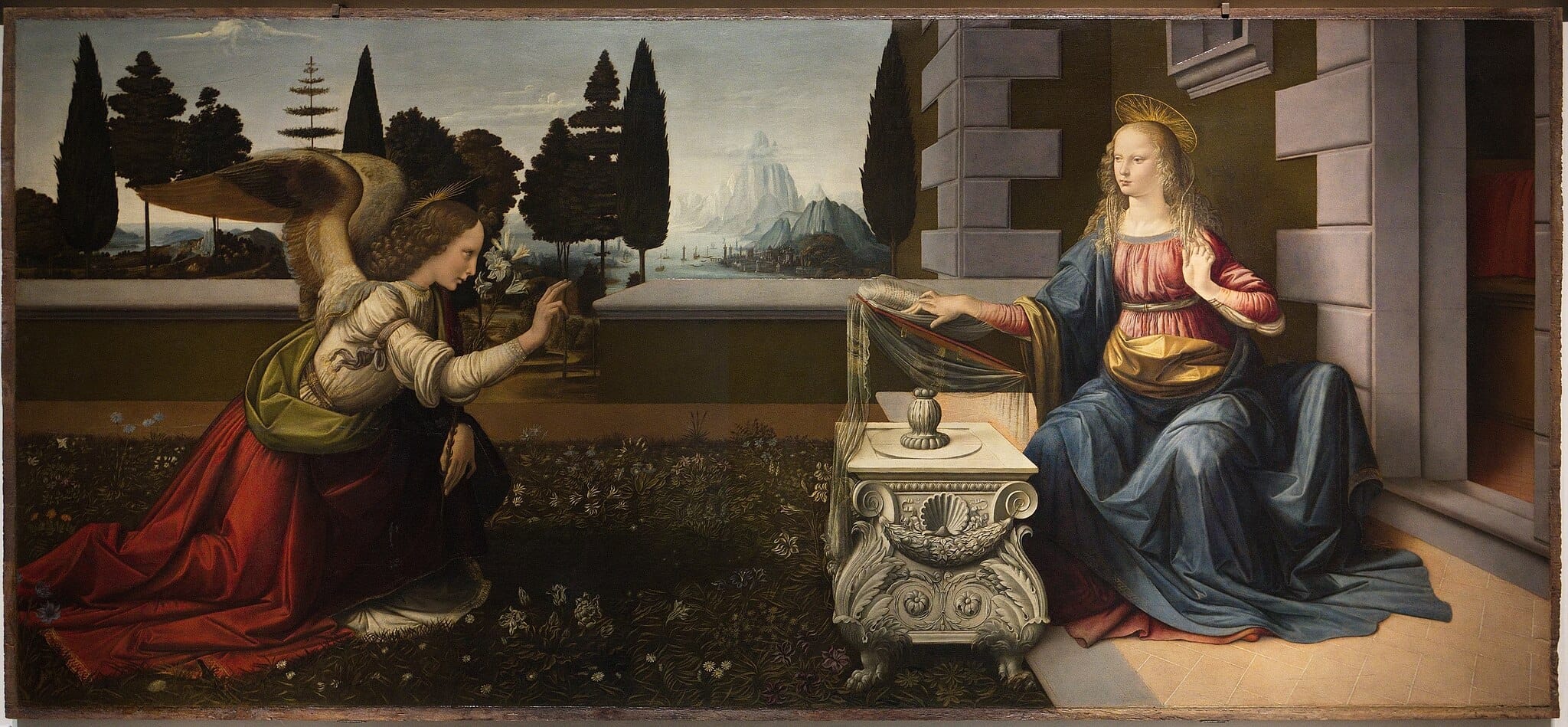
Annunciation
1472
Depicts the Angel Gabriel visiting the Virgin Mary in a cloistered garden as he announces she will bear the Christ child; Mary is shown seated at a lectern, reacting with composed surprise. Significant as an early Leonardo work demonstrating his interest in naturalistic space, delicate atmosphere, and careful study of gesture and light. Look for the detailed botanical elements, the soft modeling of faces, and the carefully rendered perspective of the loggia that draws the eye into the landscape beyond.
Must-see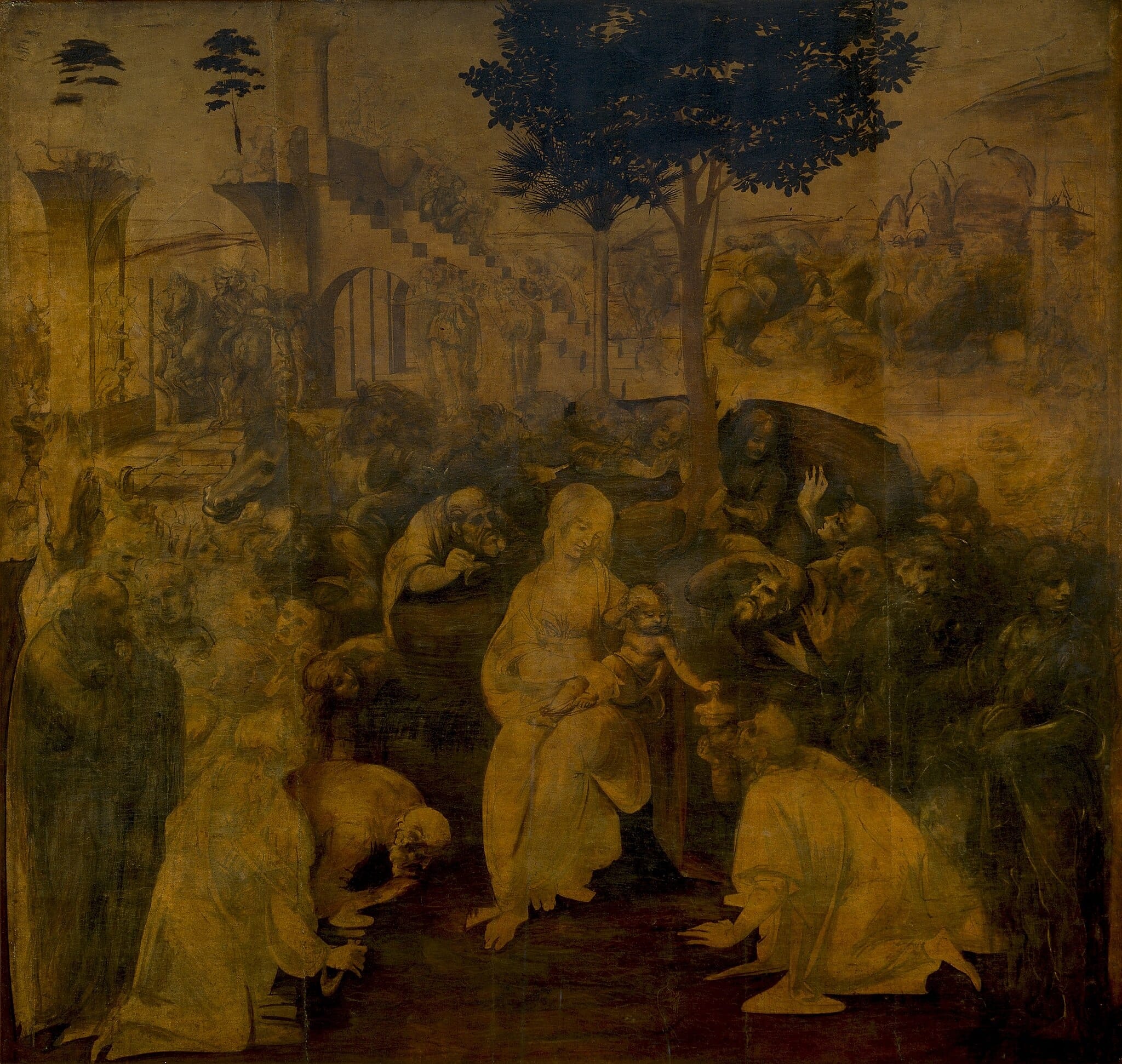
Adoration of the Magi
1481
An unfinished large composition showing the Magi presenting gifts to the infant Jesus while a dense crowd and ruined architecture crowd the scene, creating a dramatic, chaotic foreground around the holy family at the center. Its significance lies in Leonardo’s inventive composition and psychological complexity—he breaks from static altarpiece conventions to explore movement, depth, and ambiguous narrative. Observe the dynamic, gesturing figures, the developing use of aerial perspective in the background, and the many suppressed or only-sketched forms that reveal his working process.
Must-see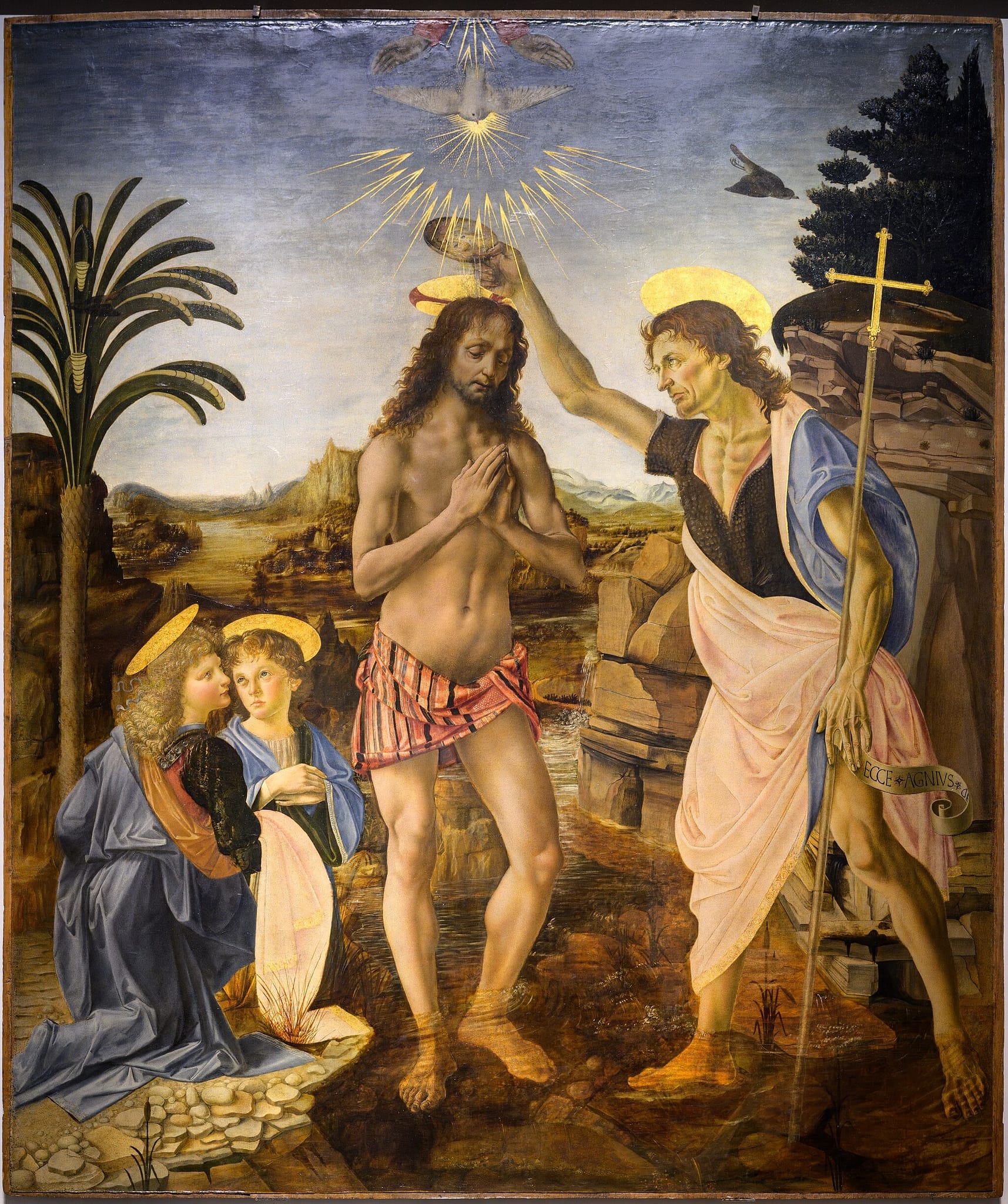
Baptism of Christ
1475
A collaborative work from Verrocchio’s workshop in which the youthful Leonardo painted the delicate angel at the left and refined parts of the landscape while the master worked on the rest; it shows John the Baptist baptizing Jesus in the Jordan, with an angel and a landscape framing the event. Important because it marks Leonardo’s early talent—his angel’s softer modeling and the atmospheric background hint at his later style. Look closely at the graceful, sfumato-like rendering of the angel, the subtle handling of light on the figures, and the serene, receding landscape that contrasts with the more linear elements done by others.