Leonardo da Vinci Paintings in Milan — Where to See Them
Milan matters because it preserves Leonardo’s paintings in their original civic and religious settings: approximately 2 paintings are on permanent display across 2 museums — Museo del Cenacolo Vinciano (Santa Maria delle Grazie) (1 painting) and Pinacoteca Ambrosiana (Veneranda Biblioteca Ambrosiana) (1 painting). What makes the city distinctive is that you can experience his work in situ — one in a monastery refectory and one within a historic library-gallery — offering context and atmosphere you won’t get in a generic gallery.
At a Glance
- Museums
- Museo del Cenacolo Vinciano (Santa Maria delle Grazie), Pinacoteca Ambrosiana (Veneranda Biblioteca Ambrosiana)
- Highlight
- See The Last Supper at Santa Maria delle Grazie — book tickets well in advance
- Best For
- Renaissance art lovers, history buffs, and cultural travelers
Museo del Cenacolo Vinciano (Santa Maria delle Grazie)
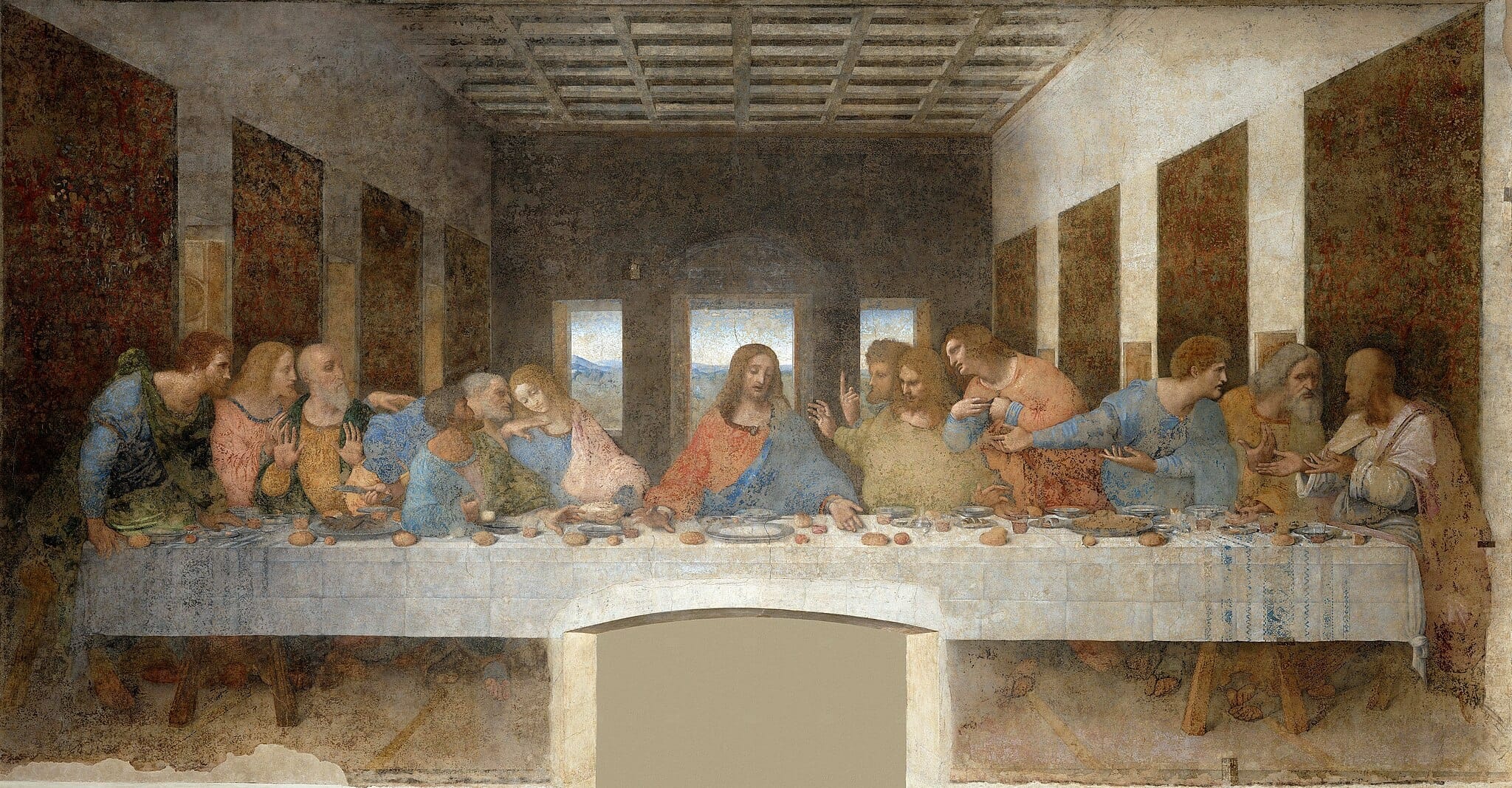
This is the original site and setting of Leonardo’s Last Supper (Il Cenacolo): the painting was executed directly onto the refectory wall of the Dominican convent, so seeing it here preserves the precise architectural and devotional context Leonardo designed. The work’s fragile condition and the long conservation history are part of its meaning — the careful, dimmed lighting, controlled visitor numbers, and visible conservation interventions all reflect how this masterpiece is experienced today and why its survival is central to Leonardo’s legacy.
Pinacoteca Ambrosiana (Veneranda Biblioteca Ambrosiana)
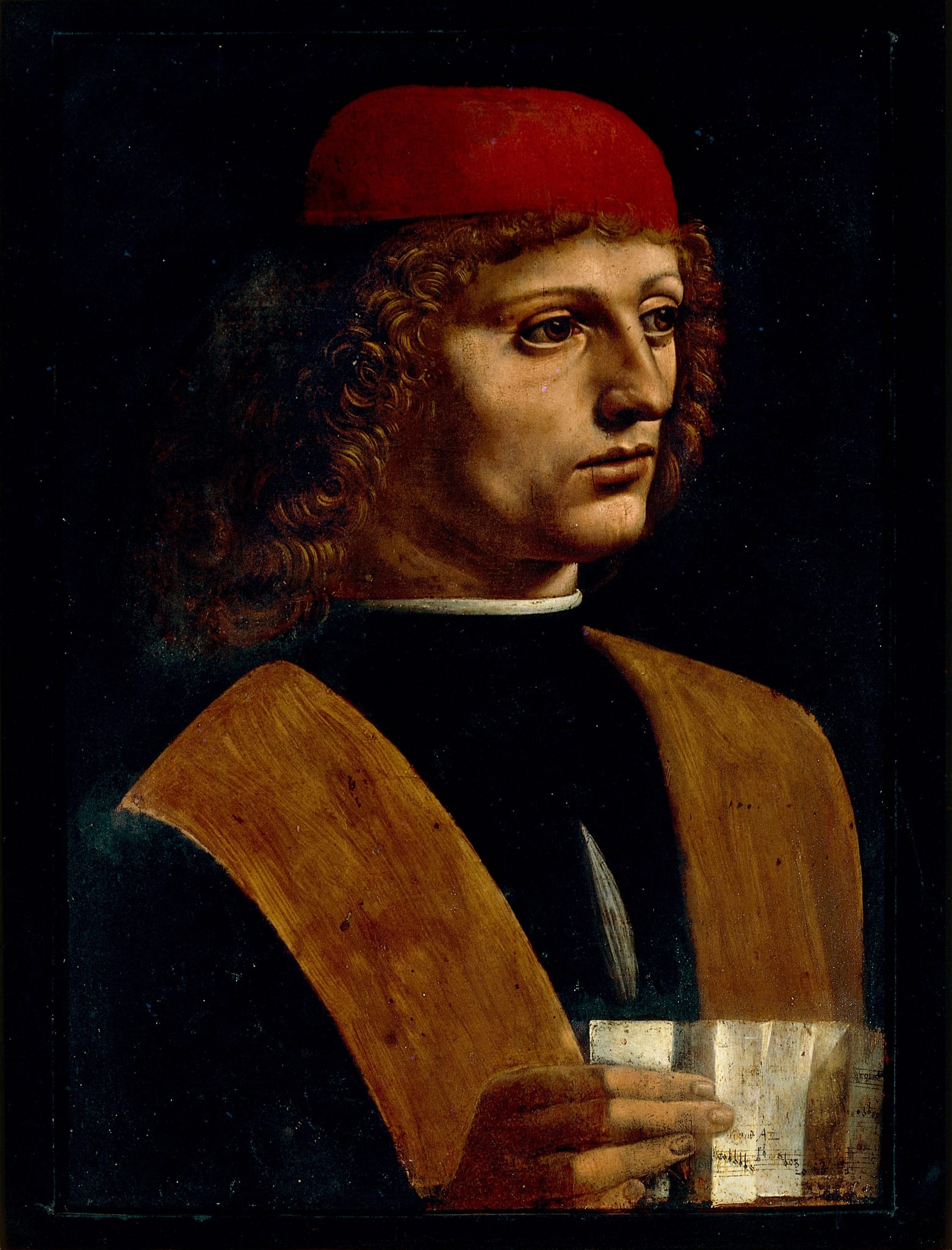
The Ambrosiana holds one of the few paintings commonly attributed to Leonardo, the Portrait of a Musician, and — crucially — it houses the Codex Atlanticus and other Leonardo drawings through the Biblioteca Ambrosiana’s collections, making the institution a primary repository for his studies, sketches, and notebooks. That combination (a rare painted portrait plus extensive manuscript material) allows visitors to move from a finished work to the processual side of Leonardo’s mind — seeing sketches, technical notes and inventions that illuminate his artistic methods and interests.
Portrait of a Musician
1485
A half-length portrait showing a young man in three-quarter view holding a sheet of music, with an intense, focused expression that suggests concentration on musical practice. The work is significant as one of the few surviving Leonardo-attributed portraits that bridges his interest in physiognomy and the depiction of inner life, and it demonstrates his early experiments with realistic hands and textured hair. Viewers should look for the delicate modelling of the face and neck, the detailed rendering of the sitter’s hand and fingernails, and the subtle sfumato around the eyes and mouth that gives the figure psychological depth.
Must-see