How Much Is Femme nue couchée (Reclining Nude / Femme nue couchée) Worth?
Last updated: May 22, 2026
Quick Facts
- Last Sale
- $15.3M (2015, Christie's New York (The Artist's Muse evening sale))
- Methodology
- recent sale
If authenticated as the documented 1862 oil-on-canvas by Gustave Courbet with the Hatvany provenance and in sound condition, the present market value is approximately USD 12,000,000–20,000,000. This band is anchored to the work’s definitive Christie’s sale (Price Realized USD 15,285,000 on 2015-11-09) and adjusted for inflation, exhibition history, provenance premium and current market dynamics.
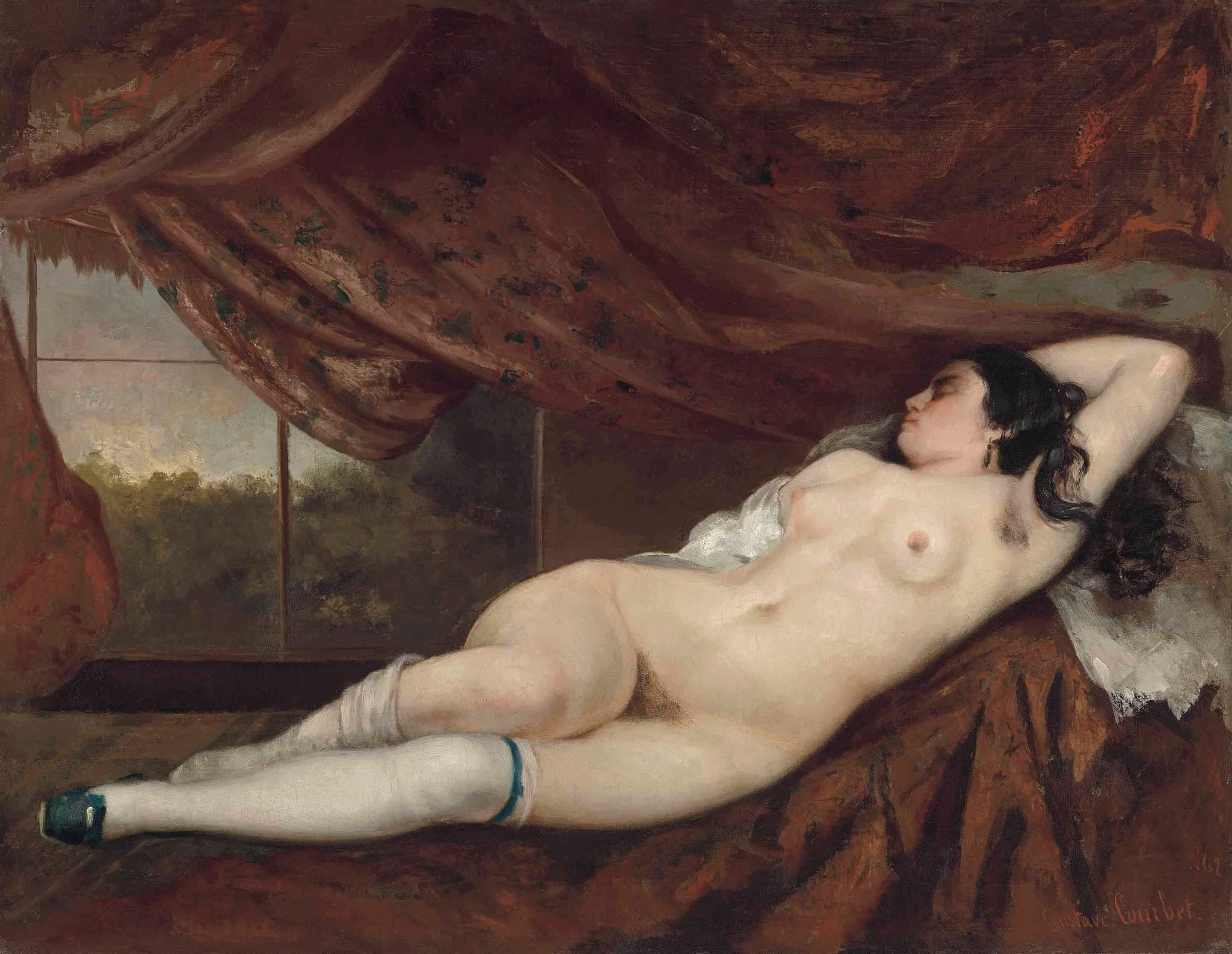
Femme nue couchée (Reclining Nude / Femme nue couchée)
Gustave Courbet, 1862 • Oil on canvas
View more by Gustave Courbet →Valuation Analysis
Anchor and principal basis: The most directly relevant datum is the painting’s public auction record: Christie’s New York sold the work titled Femme nue couchée on 9 November 2015 for a Price Realized of USD 15,285,000. That sale functions as the primary anchor for any present valuation because it is the same documented object with the same Hatvany provenance and exhibition history [1].
Conversion to a current range: Translating the 2015 realized price into a present-market estimate requires consideration of inflation, the intervening market cycle (2019–2025), and buyer appetite for 19th‑century masterworks. Adjusting the 2015 figure for typical inflation and weighing the mixed auction climates of 2023–2025 produces a practical working range of roughly USD 12.0M (a conservative floor reflecting potential condition issues, absence of immediate institutional interest or sale in a softer market) to USD 20.0M (an upper band reflecting museum-quality condition, fresh-to-market presentation, strong promotion and competitive bidding on a well-catalogued, securely-provenanced work).
Upward / downward drivers: The principal upward drivers are pristine condition, an unambiguous catalogue-raisonné entry and active institutional interest (museum loans typically lift buyer confidence). The exceptional restitution and exhibition history (Hatvany restitution and public display) that helped produce the 2015 premium remain powerful value enhancers. Downside risks include unresolved attribution doubts, significant restoration or structural issues, incomplete provenance documentation, or legal/title uncertainty—any of which can reduce realizations materially [2].
Sale strategy and practical note: If you hold the work and it is authenticated as the 1862 Courbet with matching provenance, the recommended route is to present it to a major evening sale department (Christie’s/Sotheby’s) or pursue a targeted private treaty sale to a major collector/institution, supported by a full condition report, catalogue-raisonné confirmation and technical imaging. Absent clean documentation and technical/authenticity confirmation, expect offers to sit well below the lower bound of this range.
Conclusion: The USD 12M–20M band is a reasoned, conservative-to-opportunistic valuation anchored to the 2015 realized price while reflecting current market nuance. For a definitive, transaction-ready figure obtain recto/verso photographs, dimensions, a professional condition report, provenance paperwork and catalogue-raisonné confirmation; once provided those items the range can be narrowed toward a precise reserve/recommended ask.
Key Valuation Factors
Art Historical Significance
High ImpactGustave Courbet is a central figure of 19th‑century Realism and reclining nudes occupy an important place within his figurative production. While not as singularly famous as L'Origine du monde (1866), a high-quality reclining nude dated 1862 demonstrates Courbet’s mature handling of paint, modeling of flesh and compositional confidence in his mid-career. For institutions and informed private collectors, a securely attributed, well-executed Courbet nude from this period is materially significant: it illustrates the artist’s approach to realism and modern subject matter and fills a collecting niche that museums and advanced collectors prize. That intrinsic art-historical value places such paintings in a high-impact valuation category.
Provenance & Restitution History
High ImpactThe painting’s documented provenance — ownership by collectors such as Berthier and Marcell Nemes, subsequent possession by Baron Ferenc Hatvany, wartime disappearance and later recovery/restitution to Hatvany’s heirs — is a double-edged but ultimately value-enhancing factor. Clear restitution and a recovery narrative materially raise market confidence and can create competitive bidding (as seen in the 2015 auction). Verified, public provenance reduces legal/title risk and is a premium driver for major buyers and institutions. However, any residual uncertainty about title or incomplete paperwork would materially reduce marketability and price, so full provenance documentation is essential.
Condition & Technical Authenticity
High ImpactCondition and technical confirmation are decisive. Structural issues (weak canvas, heavy lining), overpaint, previous restorations or major varnish discoloration can depress value substantially; conversely, well-preserved paint surface and conservative, well-documented conservation support top-market results. Technical studies (X‑ray, infrared reflectography, dendrochronology where applicable, and pigment analysis) that confirm period materials and Courbet’s hand will convert the sale-anchor into market certainty. The presence or absence of a clear, matching signature and stretcher/verso labels also affects buyer confidence. Obtain a current conservator’s report before sale to narrow the estimate and to advise on appropriate sale format.
Exhibition & Literature
Medium ImpactExhibition history and documentary citations increase demand and price. This painting’s public display history (including loan to major retrospectives) and any catalogue‑raisonné entry substantially improve its market standing. Works with major museum loans or chapter-level treatment in scholarship attract institutional bidders and often cross the seven‑figure threshold. Absence from scholarly literature or lack of a catalogue entry weakens the work’s attractiveness to museums and conservative buyers. For this painting, published exhibition history tied to the Hatvany restitution was a clear factor in the 2015 sale premium; replicating that institutional interest will favor a top-end result.
Market Comparables & Demand
Medium ImpactThe concrete comparable is the 2015 Christie’s sale (Price Realized USD 15,285,000), which provides the primary valuation anchor. Broader Courbet market activity since then shows most works trading in the low-to-mid six-figure band, with only occasional seven-figure results for museum-quality pictures. Current demand is driven by institutional programs, scholarship and the quality/freshness of material on the market. Given the 2015 outlier and mixed market conditions 2023–2025, the selected USD 12M–20M band reflects both the anchor and the realistic distribution of buyer interest in today’s auction/private-sale environment.
Sale History
Christie's New York (The Artist's Muse evening sale)
Gustave Courbet's Market
Gustave Courbet occupies an important and collectible position within 19th‑century French painting: he is widely collected by museums and private connoisseurs of Realism. The artist’s market is top‑heavy — a small number of museum-quality works can achieve multi‑million prices while the majority of lots trade at mid‑market levels (low‑ to mid‑six figures). Courbet’s auction record (the 2015 sale of Femme nue couchée) established a high‑water mark, but the general market has not consistently produced multiple comparable blockbusters since. Institutional exhibitions, catalogue raisonné validation and clean provenance remain the primary drivers of premium prices.
Comparable Sales
Femme nue couchée (Reclining Nude / Femme nue couchée)
Gustave Courbet
Exact same documented painting (1862). World‑auction‑record for Courbet; includes exceptional provenance (Hatvany restitution) and exhibition history — primary anchor for valuation.
$15.3M
2015, Christie's New York (The Artist's Muse evening sale)
~$19.1M adjusted
Le Guitarrero
Gustave Courbet
Same artist, recent sale of a high‑quality mid‑market Courbet oil (Jan 2023). Useful as a mid‑market ceiling for attractive but non‑blockbuster Courbets — shows typical high‑five/low‑six‑figure realized prices.
$580K
2023, Christie's New York
~$614K adjusted
Le Ruisseau de Puits Noir
Gustave Courbet
Recent regional sale (June 2024) of a small/medium Courbet landscape — represents the frequent mid‑market band for many Courbet lots and helps establish the market floor for well‑attributed but less exceptional works.
$105K
2024, Christie's London
~$108K adjusted
Le Château de Chillon, Lake Geneva
Gustave Courbet
Medium‑format Courbet sold Dec 2023 (reported in GBP and converted); another recent example of non‑masterpiece Courbet pricing in the low‑six‑figure range — helps calibrate typical realizations vs. the 2015 outlier.
$128K
2023, Christie's London
~$135K adjusted
Current Market Trends
From 2023–2024 the broader auction market softened; selective recovery emerged in 2025. For 19th‑century Realism demand is strongest for authenticated, well‑provenanced works and those tied to institutional programming. Sellers should prioritize documentation and targeted sales at major houses or private treaty to maximize outcomes.