How Much Is L'Origine du monde (The Origin of the World) Worth?
Last updated: May 22, 2026
Quick Facts
- Methodology
- comparable analysis
L'Origine du monde is a museum-held cultural icon (Musée d'Orsay, accepted by the State by dation) and is effectively off-market. In a hypothetical, unrestricted sale I estimate a reasonable band of $100–150M (working midpoint toward the low‑end), reflecting an icon premium above Courbet's auction ceiling but tempered sharply by French patrimony and limited direct comparables.
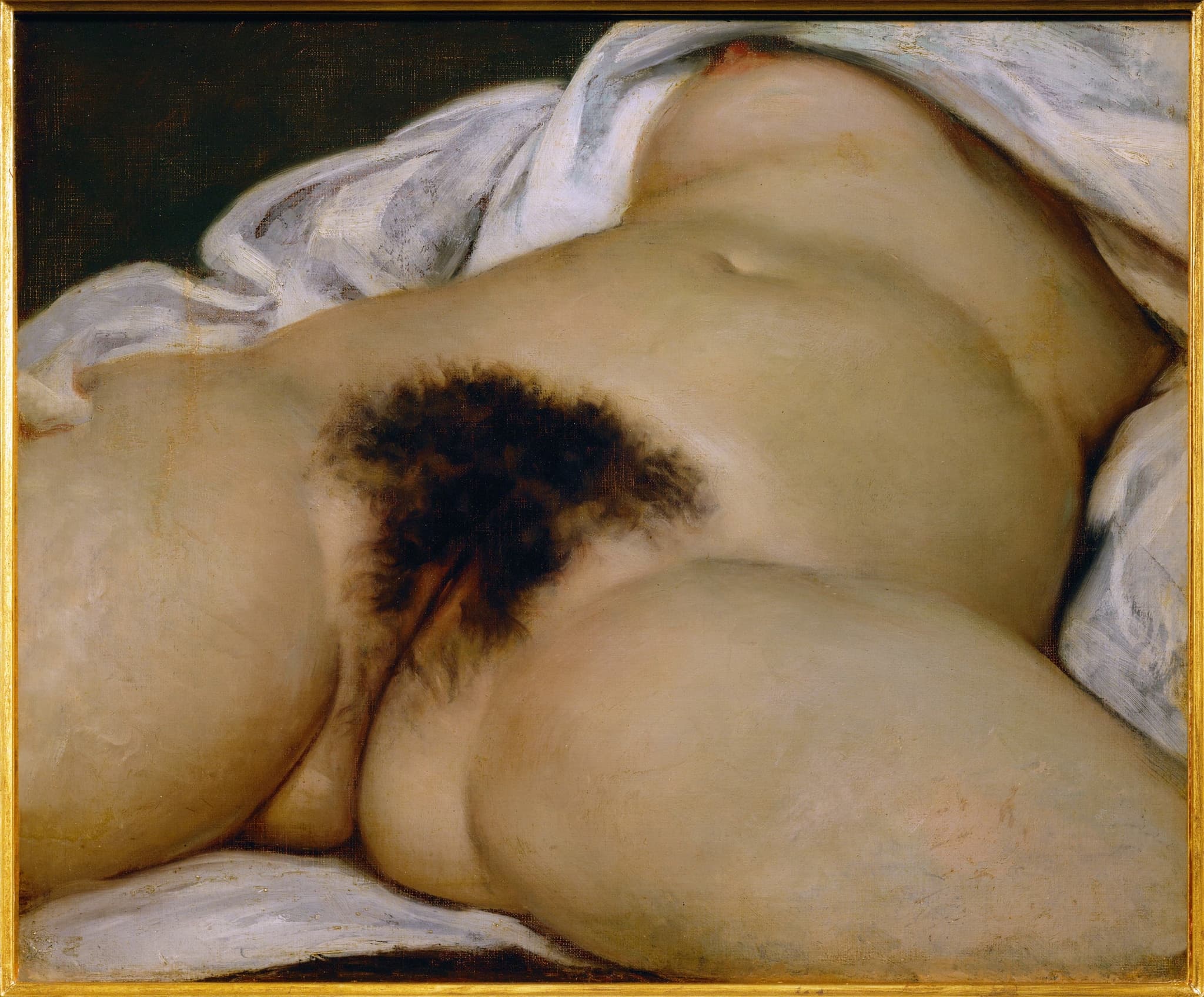
L'Origine du monde (The Origin of the World)
Gustave Courbet, 1866 • Oil on canvas
View more by Gustave Courbet →Valuation Analysis
Valuation conclusion: L'Origine du monde is accessioned to the French State and displayed at the Musée d'Orsay; it has not undergone modern public auction and was accepted by dation in 1995, which materially constrains export and sale [1]. Because there is no direct modern price discovery for this specific canvas, the valuation below is a hypothetical open‑market assessment derived from a systematic comparable analysis and adjusted for legal and market frictions.
The primary empirical anchor is Courbet's documented public‑auction ceiling and recent market activity. The best public auction reference for a Courbet nude is the Christie’s sale realised in 2015 (Femme nue couchée, reported US$15,285,000) and a pattern of mid‑six to low‑seven figure results for many museum‑quality Courbets [2]. These anchors establish a conservative baseline. Separately, trophy sales of iconic nudes or portraits by other artists (Modigliani, Klimt, Picasso) demonstrate that a single culturally unique figural work can, in exceptional circumstances, far exceed its artist’s normal ceiling—though those are imperfect comparables because of different market stature.
Methodology: I used a two‑step comparable_analysis: (1) take Courbet’s observed auction performance and recent market evidence as the baseline; (2) apply a premium for the painting’s singular global recognisability, exhibition and provenance quality, and museum‑level importance. That premium is then reduced to account for the most salient negatives—French patrimony/export constraints, the absence of direct high‑value Courbet sale precedents, the painting’s modest physical size, and potential buyer/institutional sensitivity to subject matter. The result is a hypothetical band of $100–150M: $100M as a conservative premium case and $150M as an extreme trophy outcome achievable only with exceptional buyer competition and fully permissive legal circumstances.
Drivers and risks: Upward drivers include unmatched cultural notoriety in Courbet’s oeuvre, clean provenance culminating in dation, and sustained scholarly and public visibility. Downward or limiting forces are decisive: dation and patrimonial law materially restrict transfer/export and compress the pool of eligible buyers; Courbet’s public‑auction history offers few direct precedents to support a much higher market floor; and market sentiment for high‑profile, explicit nudes can vary by jurisdiction and institution. These risks both reduce the practical likelihood of a sale and increase valuation uncertainty if a sale were attempted.
Practical implications: This estimate is hypothetical. To refine it materially you must confirm legal encumbrances and export permissions, obtain a full conservation/condition report, and conduct confidential market testing with leading auction houses and potential institutional buyers. Structured sale mechanisms (domestic transfer with ministerial approval, guaranteed/private treaty) would heavily influence final outcome and could push the price toward either boundary of the stated band.
Notes: bracketed citation markers reference the Musée d'Orsay accession/provenance record [1] and the principal Courbet public‑auction anchor used in this analysis [2].
Key Valuation Factors
Art Historical Significance
High ImpactL'Origine du monde is arguably Courbet's single most famous and culturally resonant work. Its historical role in debates about realism, censorship and modern figuration elevates it well above an ordinary Courbet canvas regardless of size. Iconic status amplifies demand beyond the usual specialist market, attracting museums, institutional curators and top collectors for reasons that extend beyond attribution or condition. That symbolic premium is the primary rationale for valuing the painting in the trophy bracket rather than strictly by artist auction history.
Provenance & Exhibition History
High ImpactThe painting’s provenance (commissioned, passage through reputable dealers and collectors, long‑term ownership by Jacques Lacan, and formal acceptance by the French State via dation) is exceptionally strong and well‑documented. Institutional exhibition and scholarship have maintained public visibility and academic validation. Strong provenance reduces attribution risk and supports museum‑level valuations; however, the same provenance (dation to the State) also creates transfer restrictions that materially affect liquidity and potential bidders.
Market Comparables & Auction Record
Medium ImpactCourbet’s verifiable public‑auction ceiling is substantially lower than the $100M+ trophy tier (a commonly cited modern anchor is a c.2015 Courbet nude at Christie’s realised in the mid‑single digits of millions). Direct Courbet comparables are scarce and generally in the mid‑six to low‑seven figure range, which argues for conservatism. Nevertheless, analogues from other artists show that unique cultural icons can dramatically outstrip artist norms, so a significant upward premium is supportable in theory but remains speculative in practice.
Legal / Patrimonial Constraints
High ImpactAcceptance by the French State via dation subjects the work to patrimonial protections and likely export restrictions. These legal encumbrances narrow the market to domestic buyers or require exceptional ministerial permissions for export, removing many potential international bidders and dampening the competitive tension that drives trophy prices. This is the single most material limiter of realisable market value in practice and a core reason the painting is unlikely to appear on the open international market.
Physical Characteristics & Condition
Medium ImpactThe painting is relatively small and executed oil on canvas; while size is not decisive for cultural icons, it can influence comparative valuations and the perceived impact of the work in institutional settings. Condition and conservation history—if any restoration is required—would affect insurability and market confidence. Absent material condition issues, the artwork’s small scale is more than offset by iconography, but a negative condition report would materially reduce realizable value.
Sale History
Gustave Courbet's Market
Gustave Courbet occupies an important, specialist position in the market as the preeminent 19th‑century French Realist. Most Courbet works trade in the mid‑six to low‑seven figure range depending on subject, scale and provenance. Public auction records for Courbet are well below the very top Impressionist/Modern names; the artist’s best documented auction results sit in the low tens of millions, making high‑end Courbet sales exceptions rather than the rule. Market demand is strongest for museum‑quality, well‑provenanced canvases with exhibition potential.
Comparable Sales
Femme nue couchée
Gustave Courbet
Direct same‑artist, same‑genre (female nude) auction result — the best documented public‑auction anchor for Courbet in the modern record.
$15.3M
2015, Christie's New York
~$20.9M adjusted
La Trombe
Gustave Courbet
Recent Courbet auction sale (2025) showing current demand/realisation levels for mid‑quality/mid‑market Courbet works; useful to gauge market depth at the non‑trophy tier.
$965K
2025, Sotheby's New York
Nu couché (Reclining Nude)
Amedeo Modigliani
Iconic reclining nude by a market‑dominant artist that realised a trophy price — serves as an upper‑bound benchmark for culturally famous nudes (illustrates potential top‑end demand in exceptional circumstances).
$170.4M
2015, Christie's New York
~$233.5M adjusted
Portrait of Adele Bloch‑Bauer I
Gustav Klimt
High‑profile private sale of a culturally significant portrait/figure painting — useful as a precedent for how exceptional provenance/importance can drive prices well above an artist's normal auction ceiling.
$135.0M
2006, Private sale (reported; purchaser Ronald Lauder / Neue Galerie)
~$217.3M adjusted
Nude, Green Leaves and Bust
Pablo Picasso
Major canonical artist's nude that achieved a trophy result (2010) — a useful comparative to understand buyer appetite for iconic figural works even when artist/period differ.
$106.5M
2010, Christie's New York
~$158.7M adjusted
Current Market Trends
The contemporary market (2024–2026) has seen contraction at the extreme top end and selective strength in specialist segments. 19th‑century Realist works remain dealer and museum‑driven; private treaty channels and guaranteed transactions are increasingly central for high‑value pieces. Patrimonial and regulatory constraints, particularly in France, add an extra layer of friction for cross‑border trophy transactions and reduce international buyer breadth for culturally significant national holdings.