How Much Is Le Sommeil (The Sleepers) Worth?
Last updated: May 22, 2026
Quick Facts
- Methodology
- comparable analysis
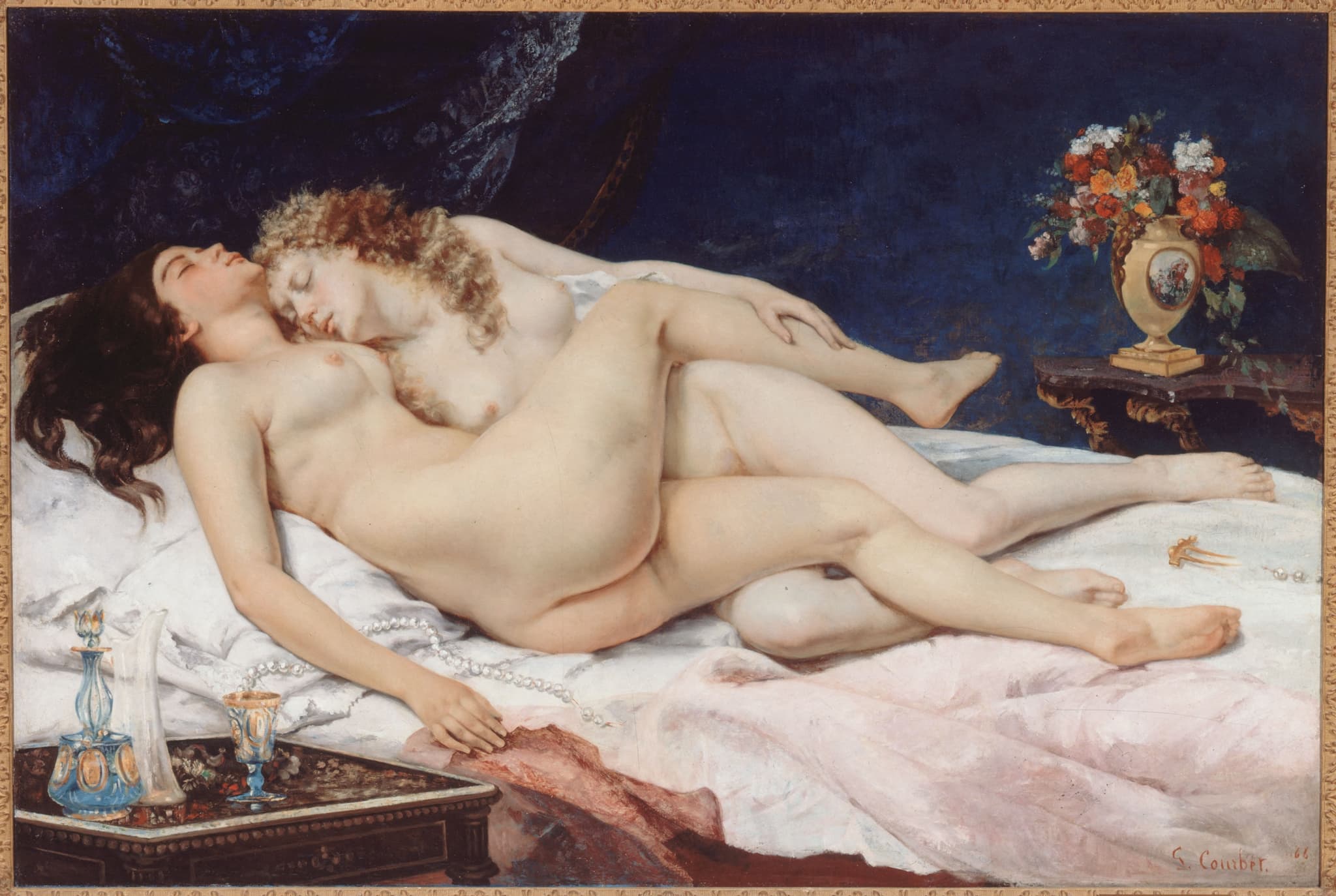
If offered on the open market with museum‑quality condition, clean title and committee authentication, Gustave Courbet’s Le Sommeil would likely command between USD 8,000,000 and USD 25,000,000. This is a hypothetical market valuation: the work is held by the Petit Palais (acquired 1953) and deaccession/export constraints make an actual sale unlikely without substantial legal/administrative steps.
Valuation Analysis
Valuation conclusion (hypothetical market sale): Based on auction comparables, the painting’s art‑historical profile and typical buyer behaviour for Courbet, I estimate a market range of USD 8,000,000–25,000,000 for Le Sommeil if it were available with an unencumbered title and in excellent condition. This estimate is derived by benchmarking the modern auction ceiling for Courbet reclining nudes and the pattern of recent mid‑market Courbet sales and buy‑ins, while adjusting for the work’s rarity and subject matter [1][2].
Court/house record and ceiling: the most relevant market ceiling is the modern Christie’s New York sale for a comparable Courbet reclining nude (Femme nue couchée), which realised USD 15,285,000 in 2015; that result sets a realistic top band for premium erotic figure works by Courbet in a public auction context and supports pricing toward the mid‑teens or low‑twenties in optimal sale conditions [2]. At the same time, recent mid‑tier sales (for example Sotheby’s La Trombe, 2025) show active demand in the sub‑$1M band for more common subject matter and underscore the steep value gradient across Courbet’s oeuvre [3].
Key conditionalities: the high end of the range (mid‑teens to ~$25M) requires a catalogue‑level canvas: large scale, pristine condition, Comité/Catalogue Raisonné confirmation, exemplary provenance and strong pre‑sale institutional/museum interest. Any significant conservation issues, contested attribution or legal encumbrances would rapidly depress realizations and could make competitive bidding weak or non‑existent. Provenance history (Khalil‑Bey → Faure → private collectors → Paul Vallotton → Petit Palais) strengthens scholarly value but also means the work has been museum property since 1953 — an important saleability constraint [1].
Market appetite and practical barriers: erotic Courbets attract collector attention but command a narrower buyer pool (private collectors, some institutions). Moreover, municipal museum ownership in France makes deaccessioning and export legally and politically complex; practically, this painting is effectively off‑market absent an extraordinary deaccession and regulatory approvals. Thus the presented value is a theoretical market price under the assumption of clean transferability and optimal presentation to the market. For a formal reserve or insurance appraisal, technical condition reports, Comité authentication and a full provenance dossier would be required prior to a definitive presale estimate.
Confidence: low–medium. Comparable sale data and the painting’s prominence justify the band given above, but museum ownership, potential legal constraints and the absence of a modern public sale introduce material uncertainty. Recommended next steps are targeted provenance confirmation, committee verification and a conservation/technical dossier prior to engaging an auction house for a formal pre‑sale opinion [1][2][3].
Key Valuation Factors
Art Historical Significance
High ImpactLe Sommeil sits among Courbet’s most discussed erotic canvases and is closely linked — by provenance and conception — to the artist’s frank studies of the nude. While not quite as culturally iconic as L’Origine du monde, the painting is nonetheless a major subject work within Courbet’s oeuvre: it represents his realist handling of the figure and the 19th‑century challenge to academic modesty. This status amplifies collector and institutional interest because subject works of this caliber are rare to market and have outsized scholarly value. The painting’s notoriety increases competition among informed private collectors but can also constrain institutional buyers.
Provenance & Exhibition History
High ImpactDocumented provenance — initial commissions for Khalil‑Bey, later ownership by Jean‑Baptiste Faure and passage through reputable dealers to the Paul Vallotton gallery before acquisition by the Petit Palais in 1953 — materially supports attribution and value. Inclusion in key exhibitions and catalogue raisonné citations would further lift market confidence. Continuous, reputable provenance tends to compress risk premia and supports top‑end pricing; conversely, gaps, unclear transfers or claims would produce steep discounts or market refusal. The museum accession is a double‑edged driver: it proves institutional validation but sharply reduces liquidity.
Condition & Technical Authentication
High ImpactTechnical condition and authentication are decisive. A clean technical dossier (X‑ray, infrared, pigment analysis) and Comité Gustave Courbet confirmation are prerequisites for premium pricing. Major restorations, relining, severe craquelure, or later overpaint will reduce buyer appetite and force downward adjustments. Where technical work confirms original paint and high‑quality execution, works of this subject and scale attract competitive bidding. Absence of a modern technical report will substantially increase the buyer’s risk discount in any sale appraisal.
Market Comparables & Auction Record
High ImpactComparable auction evidence sets both ceiling and market slope. The modern record for a Courbet reclining nude (Christie’s, 2015) establishes a practical top band in the mid‑teens of millions; more recent mid‑market Courbet sales clustered well below $1M demonstrate strong internal price stratification. Comparable analysis therefore compresses plausible outcomes into a wide but defensible band — strong works can hit the mid‑teens while ordinary or encumbered examples fetch much less. Auction appetite is selective and depends on provenance, condition and institutional interest.
Legal & Institutional Constraints (Deaccession/Export)
High ImpactBecause Le Sommeil is in the Petit Palais collection (acquired 1953), French municipal and national patrimony rules, export license regimes and political scrutiny make deaccessioning and sale both rare and administratively burdensome. Even where deaccession is procedurally possible, reputational and public‑interest obstacles can reduce buyer competition or restrict markets (e.g., no export to certain jurisdictions). These constraints materially depress the practical marketability of the work and therefore its realisable value unless a credible, lawful path to transfer is established.
Sale History
Le Sommeil (The Sleepers) has never been sold at public auction.
Gustave Courbet's Market
Gustave Courbet is a major 19th‑century French realist with a mature, selective secondary market. His strongest, museum‑quality paintings can realize multi‑million dollar prices (auction ceiling in the mid‑teens in recent memory), but the majority of lots trade well below seven figures. Collector demand favors works with committee authentication, exemplary provenance and institutional exhibition history. Courbet’s market is stable but discriminating: well‑documented masterpieces outperform, while less certain or frequently offered works face buy‑ins and discounts.
Current Market Trends
From 2023–2026 the Courbet market has been steady but selective: institutional exhibitions and retrospectives have increased interest, but buyers remain cautious. Few works reset the auction ceiling; many mid‑to‑large lots face buy‑ins absent exceptional provenance and committee confirmation. Overall demand is concentrated for rare, catalogue‑level canvases and works with clean, exhibition‑grade histories.