How Much Is A Lady with a Squirrel and a Starling Worth?
Last updated: May 8, 2026
Quick Facts
- Last Sale
- $17.5M (1992, Private sale to the National Gallery, London)
- Methodology
- comparable analysis
For a securely attributed, well‑provenanced and well‑conserved autograph portrait by Hans Holbein the Younger (NG6540), a realistic market window today is approximately US$15–45 million. If authorship or condition is disputed (workshop participation, heavy restoration, or provenance gaps) the value falls dramatically — typically into the US$1–7 million band or below US$1 million for later copies.
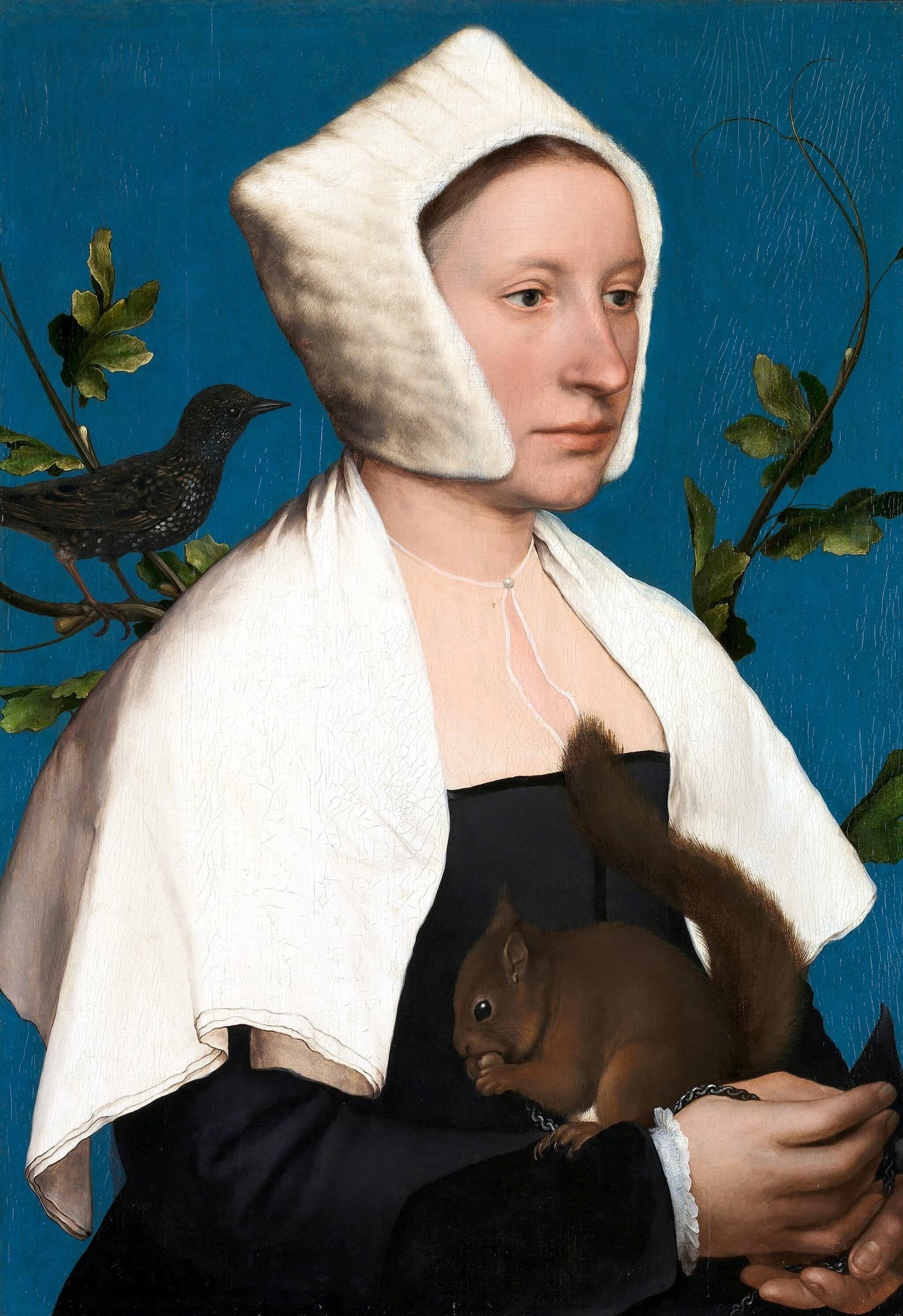
A Lady with a Squirrel and a Starling
Hans Holbein the Younger • Oil and tempera on oak
View more by Hans Holbein the Younger →Valuation Analysis
Conclusion and headline valuation: Based on the painting’s documented 1992 private acquisition by the National Gallery, London, its published technical study, and market comparators for Holbein panels and high‑end private treaty sales, the realistic market estimate for A Lady with a Squirrel and a Starling as an accepted autograph Hans Holbein the Younger is US$15–45 million today [1][2][3].
How the range was derived: the lower bound (≈US$15M) represents a conservative auction/competitive‑bidding outcome that discounts for market liquidity risk, export/permit constraints, and the limited buyer pool for Old Master portraits. The upper bound (≈US$45M) reflects an institutionally driven private‑treaty scenario: adjust the 1992 private purchase (reported c. £10m / ~US$17.5m at the time) for inflation, scarcity of autograph Holbeins in private hands, and the premium seen when museums or motivated collectors compete for a fresh‑to‑market masterpiece [3][4]. The 1992 acquisition is a direct anchor; larger canonical Holbein works sold privately (e.g., the reported Meyer/Darmstadt Madonna transaction) show the ceiling for the artist well above typical auction numbers [4].
Key drivers and risks: attribution certainty is the single largest value driver — secure technical evidence of Holbein’s hand (dendrochronology consistent with an early‑16th‑century oak panel, infrared reflectography indicating Holbein‑characteristic underdrawing, period pigments) materially increases buyer confidence and would push a sale toward or above the midpoint of the range [2]. Provenance and exhibition history (the painting’s documented early modern ownership and its high‑profile 1992 institutional purchase) reduce transactional risk and support demand [1]. Conversely, major restoration, significant overpaint or unresolved authorship questions would cut value sharply, dropping a comparable lot into the workshop/follower market where realised prices are typically orders of magnitude lower.
Practical sale route and market context: most high‑value Holbein panels transact by private treaty between institutions or well‑capitalised collectors; open auction results are rare and often lower where attribution is qualified. Therefore, the most likely path to the upper part of the range is a discreet, brokered sale to a museum or major collector following updated technical documentation and provenance clearance [3][4].
Recommended next steps to tighten valuation: obtain a current condition/conservation report and the full technical dossier (dendrochronology report, IRR, X‑ray, pigment analysis); solicit formal opinions from Holbein specialists and the major Old Master departments at Sotheby’s/Christie’s; and run a confidential market test with likely institutional buyers. With those inputs the estimate can be narrowed substantially and priced for either a private‑treaty placement or an auction consignment.
Key Valuation Factors
Art Historical Significance
High ImpactThis small portrait, conventionally identified as Anne Lovell, is a high‑quality example of Holbein's Tudor portraiture and constitutes an important surviving panel from c.1526–28. Although not a monumental altarpiece, its significance lies in Holbein’s refined execution of likeness, costume detail and symbolic elements (the squirrel and starling), which make it of direct scholarly and curatorial interest. Works with an identifiable sitter and Holbein’s secure autograph status attract strong institutional demand because they fill narrative gaps in early Tudor portraiture and Holbein’s career. That cultural and academic relevance elevates the painting’s market desirability beyond what its physical size alone would suggest.
Attribution Certainty / Technical Evidence
High ImpactTechnical confirmation is decisive. The National Gallery’s published technical bulletin reports materials and underdrawing consistent with Holbein’s practice; dendrochronology, infrared reflectography and pigment analysis that corroborate a first‑quarter 16th‑century origin materially increase buyer confidence. When those analyses are current and publicly documented, institutions are far more likely to compete, pushing prices upward. In contrast, unresolved authorship or ambiguous technical results (suggesting major workshop participation) lower the buyer universe to dealers and private collectors and often reduces value by an order of magnitude or more.
Provenance & Exhibition History
High ImpactA continuous, well‑documented provenance (early modern ownership, 18th‑century sale records, long residence in aristocratic collections, and the 1992 acquisition by the National Gallery) significantly reduces title and attribution risk. Exhibition and literature history compounds this effect: works that have been published, exhibited and studied are more liquid and command premiums because museums and trusted private buyers can rely on established scholarship. Gaps, especially a poorly documented 20th‑century chain, would be a meaningful negative factor and would necessitate further provenance research before a top‑level valuation could be sustained.
Condition & Conservation
Medium ImpactCondition influences value directly: an original, stable oak panel with minimal retouching preserves both aesthetic and technical integrity and supports top estimates. Heavy overpainting, unstable paint layers, or aggressive earlier restorations materially lower market value and may make an otherwise authentic Holbein unattractive to institutions. A recent, full conservation report is required to convert theoretical value into an actionable asking price; in practice, serious condition issues can subtract tens of percent from the high‑end estimate and push a work into the workshop/follower market.
Market Demand & Scarcity
High ImpactAutograph Holbein panels in private hands are extremely scarce; most canonical works are held by major public collections. Because the buyer pool for top Holbein works is therefore small (museums, sovereign‑wealth clients and very wealthy private collectors), scarcity creates a strong upside when a securely attributed work becomes available. The flip side is low liquidity: an owner cannot expect a brisk open market sale. The specific sale route (confidential private treaty to an institution vs. headline auction) often determines whether a work attains the lower or upper part of the estimated range.
Sale History
Sir William Hamilton sale (recorded £47 5s)
Private sale to the National Gallery, London
Hans Holbein the Younger's Market
Hans Holbein the Younger is one of the pre‑eminent Northern Renaissance portraitists; however, most of his securely attributed autograph panels are held in museums and royal collections, which makes market offerings extremely rare. When genuine Holbein paintings do come to market they tend to transact privately and attract institutional bidders, which can push prices into the multi‑million to tens‑of‑millions range for works judged autograph and in good condition. Conversely, workshop, follower, and copy attributions are common and sell at much lower levels; therefore attribution certainty and scholarly endorsement are critical determinants of market value.
Comparable Sales
A Lady with a Squirrel and a Starling
Hans Holbein the Younger
The subject painting’s own last major private sale / museum acquisition — primary market benchmark and direct evidence of institutional willingness to pay.
$17.5M
1992, Private sale to the National Gallery, London (reported)
~$41.9M adjusted
Meyer (Darmstadt) Madonna
Hans Holbein the Younger
Top‑end privately brokered Holbein sale (reported >€50m) — establishes an upper market ceiling for major, museum‑quality Holbein masterpieces; less directly comparable by scale/subject but crucial for understanding top demand.
$72.0M
2011, Private treaty sale (reported buyer Reinhold Würth)
~$107.5M adjusted
Portrait of Desiderius Erasmus
Hans Holbein the Younger (and workshop)
Recent auction result for a Holbein‑attributed portrait (catalogued as Holbein & workshop) — useful public auction benchmark for portrait-type lots, showing lower realized prices when attribution/authorial status is qualified.
$1.4M
2022, Christie's Old Masters (London)
~$1.6M adjusted
Portrait of Sir Thomas Wyatt the Younger (Follower of Holbein)
Follower of Hans Holbein the Younger
Day‑sale example of a follower/workshop Holbein portrait — brackets the low end of the market for Holbein‑type imagery when autograph status is absent.
$420K
2024, UK auction (day sale) — follower/workshop lot
~$440K adjusted
Current Market Trends
The Old Masters / Northern Renaissance market remains selective: top, museum‑quality works with clean scholarship and provenance attract strong demand and can produce high private‑sale results, while lower‑tier workshop and follower material trades softly. Recent exhibitions and renewed scholarship have increased interest in Holbein, but liquidity remains limited and institutional buyers dominate headline transactions.
Sources
- National Gallery — A Lady with a Squirrel and a Starling (NG6540) — collection entry
- National Gallery Technical Bulletin — Hans Holbein's A Lady with a Squirrel and a Starling (technical study)
- Washington Post — contemporary reporting on the 1992 acquisition
- The Spectator — coverage of the reported Meyer/Darmstadt Madonna private sale (market high‑end comparator)