How Much Is Portrait of Anne of Cleves Worth?
Last updated: May 8, 2026
Quick Facts
- Methodology
- comparable analysis
For a confirmed autograph 1539 oil portrait of Anne of Cleves by Hans Holbein the Younger in museum condition and with secure early provenance, my valuation range is $100–150 million. This is a hypothetical market valuation reflecting scarcity, private‑sale trophy precedent, and institutional demand; any downgrade in attribution, provenance or condition reduces value steeply.
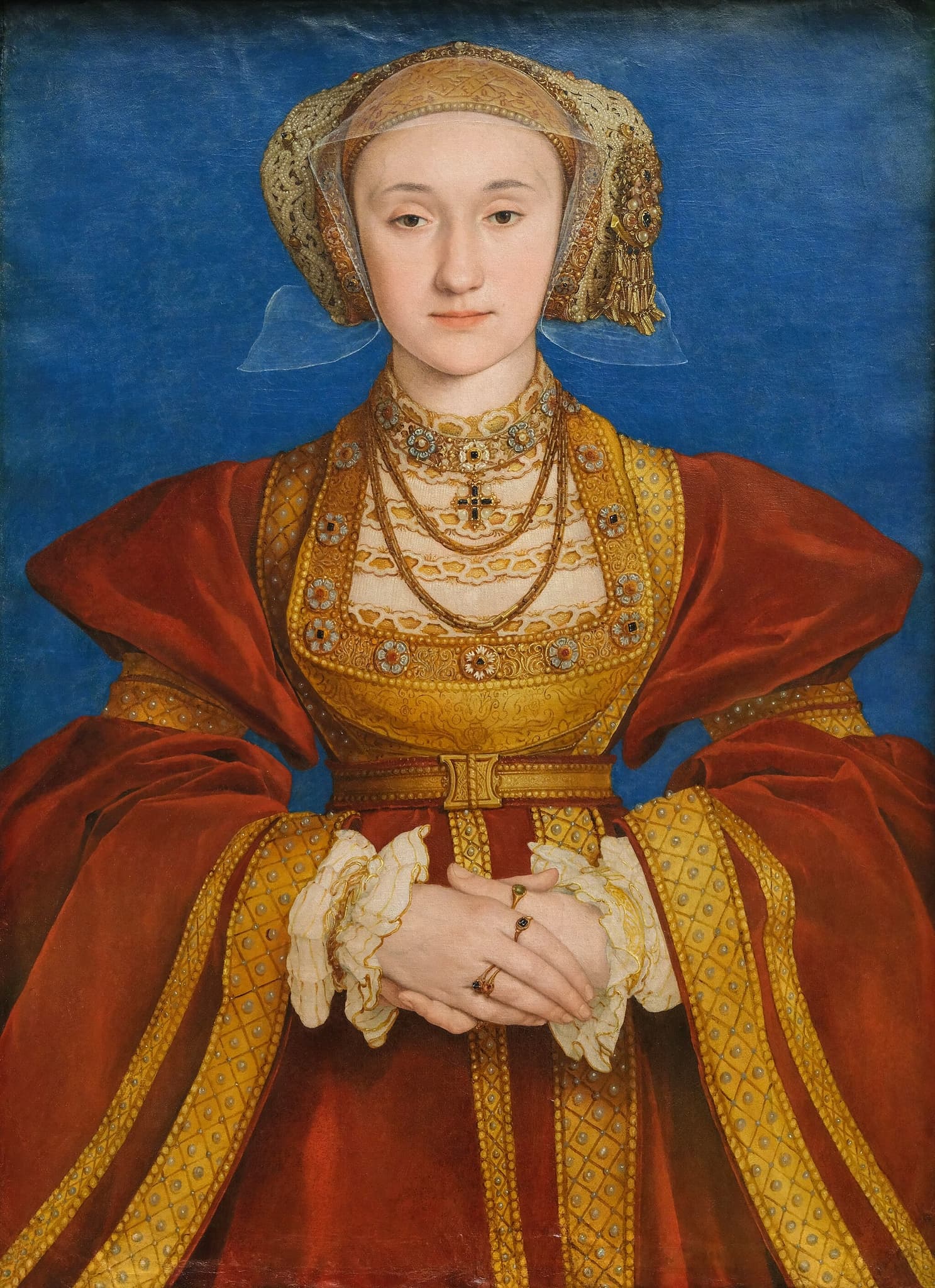
Portrait of Anne of Cleves
Hans Holbein the Younger • Oil and tempera on parchment mounted on canvas
View more by Hans Holbein the Younger →Valuation Analysis
Final valuation (scope): The range above applies only to a fully authenticated, autograph oil portrait of Anne of Cleves of the 1539 Tudor commission type, in stable, museum‑quality condition with verifiable early provenance. Major Tudor Holbein oils of this historical importance are effectively museum masterpieces and rarely enter the commercial market; the canonical Tudor Anne of Cleves portrait is represented in state collections and is therefore not a modern auction lot [1].
Comparable basis: The upper‑end figure is driven by private‑sale precedent for top‑tier Holbein works and by the extraordinary rarity of securely attributed Holbein oils. A reported private sale of the Darmstadt (Meyer) Madonna (widely cited at ≈€50m in 2011) demonstrates a private‑market ceiling for museum‑grade Holbein masterpieces and justifies a multi‑tens‑of‑millions baseline that, adjusted for time, market appetite and trophy premiums, supports a $100–150M hypothetical price for a canonical Anne of Cleves in private hands [3]. By contrast, the best recent public auction result for a Holbein portrait with workshop participation was Christie’s 2022 Erasmus (artist + workshop), which realised c. £1.12M (~$1.37M), illustrating the gap between workshop/auction outcomes and private, masterpiece transactions [2].
Key sensitivities: Attribution, provenance and condition are decisive. Technical confirmation (infrared reflectography, X‑radiography, pigment analysis, support and underdrawing studies) and documentary provenance back to the 16th–17th centuries are preconditions for the high estimate. If technical/scholarly work indicates workshop participation, later copy, or if provenance is incomplete, the fair‑market value drops sharply (autograph‑variant mid range $5–30M; workshop/copy typically in the low hundreds of thousands to low millions depending on quality and provenance).
Marketability and likely transaction dynamics: Institutional buyers dominate demand for canonical Holbein portraits; national collections rarely sell such works, so transactions are usually private and driven by wealthy collectors or foundations. Insurance replacement valuations for institutional masterpieces are often treated as effectively inestimable, and private sale negotiation, not public auction, is the likeliest route to realise the high estimate. Market conditions since 2022 favour extremely well‑documented, exhibition‑worthy Old Masters while suppressing prices for ambiguous attributions.
Recommended next steps: Before any firm sale or insurance valuation, commission full technical analysis, a condition/conservation report, and exhaustive provenance research; engage Holbein specialists and the Old Masters heads at major auction houses for confidential appraisal. If you provide images and provenance, I can prioritise the most likely comparables and identify specialists and auction contacts to approach.
Key Valuation Factors
Art Historical Significance
High ImpactThe Anne of Cleves portrait is a primary visual document of a pivotal Tudor diplomatic episode and a key example of Holbein’s court portraiture; a confirmed autograph work of this subject is therefore of exceptional cultural importance. Its connection to Henry VIII’s marriage negotiations and its long visibility in scholarship and museum displays translate directly into institutional demand and philanthropic interest. Because the sitter and context are internationally recognized, the painting carries cross‑market value (historians, national collections, private patrons). That status elevates its capital value above ordinary Old Master portraits and makes it a potential museum highlight or centrepiece in any public collection.
Attribution / Authenticity
High ImpactAttribution is the single most decisive monetary factor. A secure autograph attribution to Holbein—established through connoisseurship and technical evidence (underdrawing consistent with Holbein, pigment and ground analysis, brushwork, pentimenti)—is required to access the trophy price band. Workshop participation or later replication reduces market value dramatically because buyers place a large premium on the hand of the master. Technical analysis outcomes (IRR, X‑ray, XRF, cross‑section microscopy) typically determine whether a work sits in the museum‑quality autograph tier or the more modest workshop/copy categories.
Provenance / Documentation
High ImpactA continuous, early provenance (16th–17th century) and appearance in reputable inventories or early collection catalogues materially enhance price certainty and buyer confidence. The canonical Louvre oil has an early, traceable history which anchors its acceptance as autograph [1]; any comparable work offered for sale must demonstrate similarly strong documentation to realise the upper valuation. Gaps, later discoveries of past owners, or unverifiable claims reduce marketability—collectors and institutions pay significant premiums for papers and exhibition histories that eliminate attribution risk.
Condition and Conservation
Medium ImpactPhysical condition and the nature of the support (many Tudor portraits have unusual mountings and later restorations) affect both saleability and price. Stable, original paint layers with minimal invasive restoration support higher estimates; significant abrasions, inpainting, or an unstable parchment or panel lower buyer willingness to pay and increase required conservation outlay. Condition reports that identify necessary conservation work or irreversible losses will reduce the achievable market price and complicate institutional acquisition.
Market Rarity and Liquidity
High ImpactAutograph Holbein oils of this calibre are extremely scarce and mostly held by national collections, which creates a high value ceiling but limited liquidity. That scarcity produces a trophy market dynamic: when masterpieces do enter private channels they attract institutional interest and deep‑pocket collectors, enabling very high private sale prices. However, auctions rarely reflect these ceilings because most available Holbein‑attributed works are workshop/copy material and sell at significantly lower levels. The two‑speed market—strong for top masterpieces, softer for the remainder—explains the broad valuation spread.
Sale History
Portrait of Anne of Cleves has never been sold at public auction.
Hans Holbein the Younger's Market
Hans Holbein the Younger is a blue‑chip Old Master whose autograph oil paintings are highly prized and scarce; most of his highest‑profile Tudor portraits are held in national and museum collections. Public auction comparables are few and often involve workshop participation—Christie’s 2022 sale of a Holbein portrait with workshop involvement (Erasmus) is the recent public high for a portrait context, while private treaty sales of securely attributed Holbeins have set much higher ceilings. For market purposes, securely attributed, exhibition‑ready Holbeins command trophy valuations while workshop and after‑work material trade at modest levels.
Comparable Sales
Darmstadt (Meyer) Madonna
Hans Holbein the Younger
Top-tier autograph Holbein oil sold privately in 2011; demonstrates the market ceiling for museum-quality Holbein panels. Different subject (Madonna) but comparable in artist, period, technique and rarity.
$70.0M
2011, Private sale (reported; widely cited €50m figure)
~$96.3M adjusted
Portrait of Desiderius Erasmus
Hans Holbein the Younger (with workshop)
Recent high-profile public auction result for a Holbein-associated portrait (artist + workshop). Portrait format and public-market context make this a useful auction-floor comparable, though workshop participation reduces pure-autograph equivalence with the Louvre Anne of Cleves.
$1.4M
2022, Christie's London
~$1.5M adjusted
Portrait of Erasmus (after Holbein) — regional/online auction example
After Hans Holbein the Younger
Illustrates the market for workshop copies/followers/after-Holbein portraits; useful if the object being valued is a workshop or later copy rather than an autograph Holbein oil or signed studio piece.
$28K
2023, Regional/online auction (example Oct 2023)
~$29K adjusted
Current Market Trends
The Old Masters market is currently two‑speed: exceptional, well‑documented masterpieces still attract strong bidders and institutions, while mid/low‑tier lots face softer demand. Since 2022 there has been greater selectivity; for Holbein this amplifies the premium for secure autograph attributions and robust provenance, and it penalizes ambiguous or heavily restored works.
Sources
- Musée du Louvre — Portrait of Anne of Cleves (Hans Holbein the Younger), collections entry (INV 1348)
- Christie’s press release — Old Masters evening sale: Portrait of Desiderius Erasmus (Holbein & workshop), 9 Dec 2022
- Press coverage on reported private sale of the Darmstadt (Meyer) Madonna (Holbein), c.2011 (example: TagesWoche)
- Victoria & Albert Museum — Holbein portrait miniature and portrait‑miniature collection context
- Smithsonian Magazine — Conservation/restoration coverage of Holbein Tudor portraits (example article)