How Much Is Portrait of Erasmus of Rotterdam Worth?
Last updated: May 8, 2026
Quick Facts
- Methodology
- comparable analysis
Assuming a securely attributed, museum‑quality autograph portrait of Desiderius Erasmus by Hans Holbein the Younger in good condition with strong provenance, I estimate fair market value at $30–$100 million. If attribution, condition, or provenance cannot be established, expect values to drop sharply into the single‑digit millions or lower.
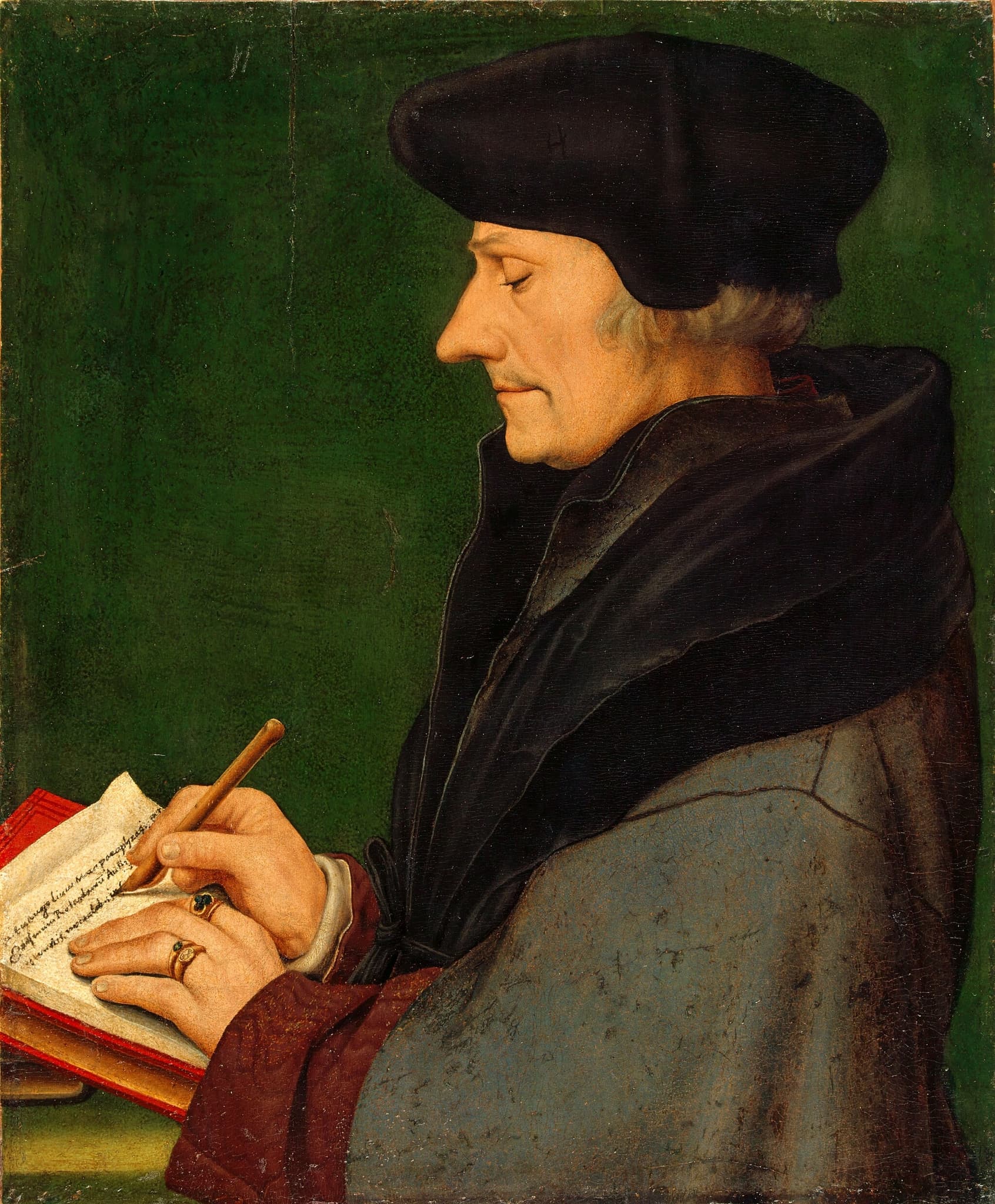
Portrait of Erasmus of Rotterdam
Hans Holbein the Younger, 1523 • Oil and tempera on wood
View more by Hans Holbein the Younger →Valuation Analysis
Valuation basis and headline range: This estimate assumes the object is an autograph Hans Holbein the Younger portrait of Desiderius Erasmus (c.1523), in stable structural and surface condition and supported by a documented, reputable provenance. Under those assumptions the fair market range is set at $30,000,000–$100,000,000. If the panel is judged to be by Holbein’s workshop, a later copy, heavily restored, or lacks clean legal title or documentation, market value will fall materially — often to low single‑digit millions or below.
The public‑auction record for Erasmus‑type panels is limited and skewed toward workshop or follower examples. A closely comparable small half‑length Erasmus sold at Christie’s London in December 2022, catalogued as “Hans Holbein the Younger and Workshop,” and realized roughly $1.37m, illustrating current market pricing for workshop/variant panels rather than autograph Holbeins [1]. By contrast, canonical autograph Erasmus portraits are held by major institutions (the 1523 pilaster‑type long‑term loan to the National Gallery, plus examples in the Louvre and the Met), which anchor scholarly value but are seldom tested in the market and therefore imply a much higher private‑sale ceiling [2].
Primary value drivers: attribution certainty is decisive — technical examinations (dendrochronology of the panel, infrared reflectography to reveal underdrawing and compositional pentimenti, pigment and binder analysis, and x‑radiography) together with specialist connoisseurship determine whether this is Holbein’s hand. Provenance and exhibition/publication history (continuous title, catalogue raisonnés, major museum loans) materially increase buyer confidence and price. Condition and conservation history (panel stability, paint loss, extent of historic overpainting or restoration) further determine marketability and the buyer pool.
Market context matters: the Old Masters auction sector softened after 2022, compressing liquidity for mid‑market lots, but recent museum exhibitions and renewed scholarship for Holbein and Tudor portraiture have heightened institutional interest and collector appetite [3]. Because the finest Holbein Erasmus portraits are essentially institutionally anchored, a legitimately attributed panel entering the market would likely be offered privately or in a highly curated single‑owner sale to allow museums and leading collectors to participate — a route that tends to preserve or increase realized prices relative to open auction placement.
Next steps to validate this estimate: obtain high‑resolution recto/verso photography and labels; commission dendrochronology, IRR, x‑radiography and pigment analysis; compile complete provenance documentation; and seek in‑person opinions from Holbein specialists and Old Masters specialists at top houses. If those steps confirm autograph status and good condition/provenance, pursue a private or curated sale; if not, plan for an Old Masters auction placement in the workshop/after category. This valuation is an evidence‑driven market opinion and should be confirmed by the technical and curatorial work described above.
Key Valuation Factors
Art Historical Significance
High ImpactDesiderius Erasmus was one of the most important humanists of the 16th century and Holbein’s Basel portraits of Erasmus are central to both Holbein scholarship and Northern Renaissance portraiture. An autograph c.1523 portrait of Erasmus is therefore of exceptional cultural and scholarly value — a work desirable to national collections and major museums. Because the most authoritative Erasmus portraits by Holbein are already museum‑held, any authenticated autograph panel offered to the market would attract intense institutional interest and command a substantial premium relative to workshop copies or later reproductions.
Attribution Certainty
High ImpactAttribution is the single most important determinant of market value. Technical testing (dendrochronology, infrared reflectography, x‑radiography, pigment/binder analysis) combined with expert connoisseurship determines whether the painting is by Holbein’s hand or by the workshop/follower. Upgrading a work from 'workshop' to 'autograph' commonly multiplies value many times; conversely, downgrades collapse buyer confidence and price. A clear, technical and scholarly consensus in favor of autograph status is therefore essential to achieve the top valuation band.
Provenance & Exhibition History
High ImpactComplete, reputable provenance and documented exhibition and publication history materially increase sellability and price. Continuous title through respected collections, references in 18th/19th‑century sale catalogues, and loans to major museums reduce legal and attributional risk and broaden the buyer pool to include institutions. By contrast, ownership gaps, wartime transfers or undocumented acquisitions introduce restitution and legal risk that suppress market value and can deter institutional buyers.
Condition & Conservation
High ImpactThe panel and paint surface condition heavily influence value. Structural issues (split or badly warped panel), extensive paint loss, heavy overpainting, or unstable varnish will reduce marketability and price even when attribution is secure. A transparent, professional conservation report and a history of minimal, reversible treatment supports higher valuations; major restorative interventions or loss of original surface will significantly lower the achievable price and may restrict buyers to private collectors rather than institutions.
Market Comparables & Rarity
Medium ImpactAutograph Holbein paintings are rare in the private market because major examples reside in museums; this scarcity supports a high potential ceiling for authenticated works but also raises valuation uncertainty. Recent auction comparables (a 2022 workshop Erasmus at Christie’s realized ≈$1.37m) reflect workshop‑level pricing; historic high prices for Holbein drawings suggest a higher possible ceiling for securely attributed material, but cross‑medium comparisons are imperfect. The limited number of true comparables increases reliance on technical and provenance evidence when setting a final market price.
Sale History
Christie's London, Old Masters Evening Sale
Various major auction houses (reported)
Hans Holbein the Younger's Market
Hans Holbein the Younger is a canonical Northern Renaissance portraitist whose securely attributed paintings are scarce in the private market and concentrated in major museum and royal collections. This scarcity drives strong institutional demand for authenticated works, but public‑auction comparables are limited and often reflect workshop or follower attributions. Holbein drawings have historically achieved high prices and remain important market indicators, but painting valuations depend primarily on attribution, condition and provenance. The market is therefore selective: top‑quality, well‑documented Holbeins command premium prices, while workshop and after‑Holbein items sell at much lower levels.
Comparable Sales
Portrait of Desiderius Erasmus (half-length, oil on limewood)
Hans Holbein the Younger and Workshop
Same sitter/subject and directly comparable small half-length panel; attributed to Holbein and workshop — the best recent public auction comparable.
$1.4M
2022, Christie's London, Old Masters Evening Sale
~$1.4M adjusted
Holbein drawing(s) — high-price auction(s) reported in the mid-1980s
Hans Holbein the Younger
Autograph Holbein drawings have historically achieved the artist's higher auction prices; different medium but useful as a top-of-market benchmark for securely attributed Holbein material.
$2.0M
1984, Various major auction houses (reported 1980s sales)
~$6.7M adjusted
Portrait of Desiderius Erasmus (1523, 'Renaissance pilaster' version)
Hans Holbein the Younger
Canonical autograph, large 1523 version — the primary scholarly/museum benchmark for attributions and quality, though not a sale; vital for judging significance and expected market ceiling.
Price unknown
1970, National Gallery, London (long-term loan from Radnor/Longford Castle)
Portrait of Erasmus (half-length type, Robert Lehman Collection)
Hans Holbein the Younger
Museum-held half-length comparable in type and scale to auctioned small panels; useful for technical/quality comparisons when assessing attribution.
Price unknown
1970, Metropolitan Museum of Art, Robert Lehman Collection (acc. no. 1975.1.138)
Recent record sale by a major Northern Renaissance master (market context)
Lucas Cranach the Elder
Different artist but indicates the ceiling for exceptional Northern Renaissance works in the market — useful to understand demand for top-tier works of the period.
$14.4M
1970, Reported recent auction (benchmark for Northern Renaissance demand)
Current Market Trends
The Old Masters market softened in 2023–24 with lower auction liquidity and fewer blockbuster lots, compressing mid‑market activity. At the same time, major museum exhibitions and renewed scholarship for Holbein and Tudor portraiture have increased institutional demand for securely attributed works. For Holbein material this produces selective demand: museums and a small group of deep‑pocket collectors will compete for exceptional, well‑documented pieces, while workshop/after works face a tighter buyer pool and reduced realized prices.