How Much Is Portrait of Henry VIII Worth?
Last updated: May 8, 2026
Quick Facts
- Methodology
- extrapolation
If an undisputed, autograph full‑length Portrait of Henry VIII by Hans Holbein the Younger were to appear with unequivocal technical and scholarly confirmation, I estimate market value at approximately $50–150 million. This range reflects the painting’s exceptional cultural importance, extreme scarcity of Holbein autographs, and likely institutional competition; attribution, condition and provenance will decisively determine the final price.
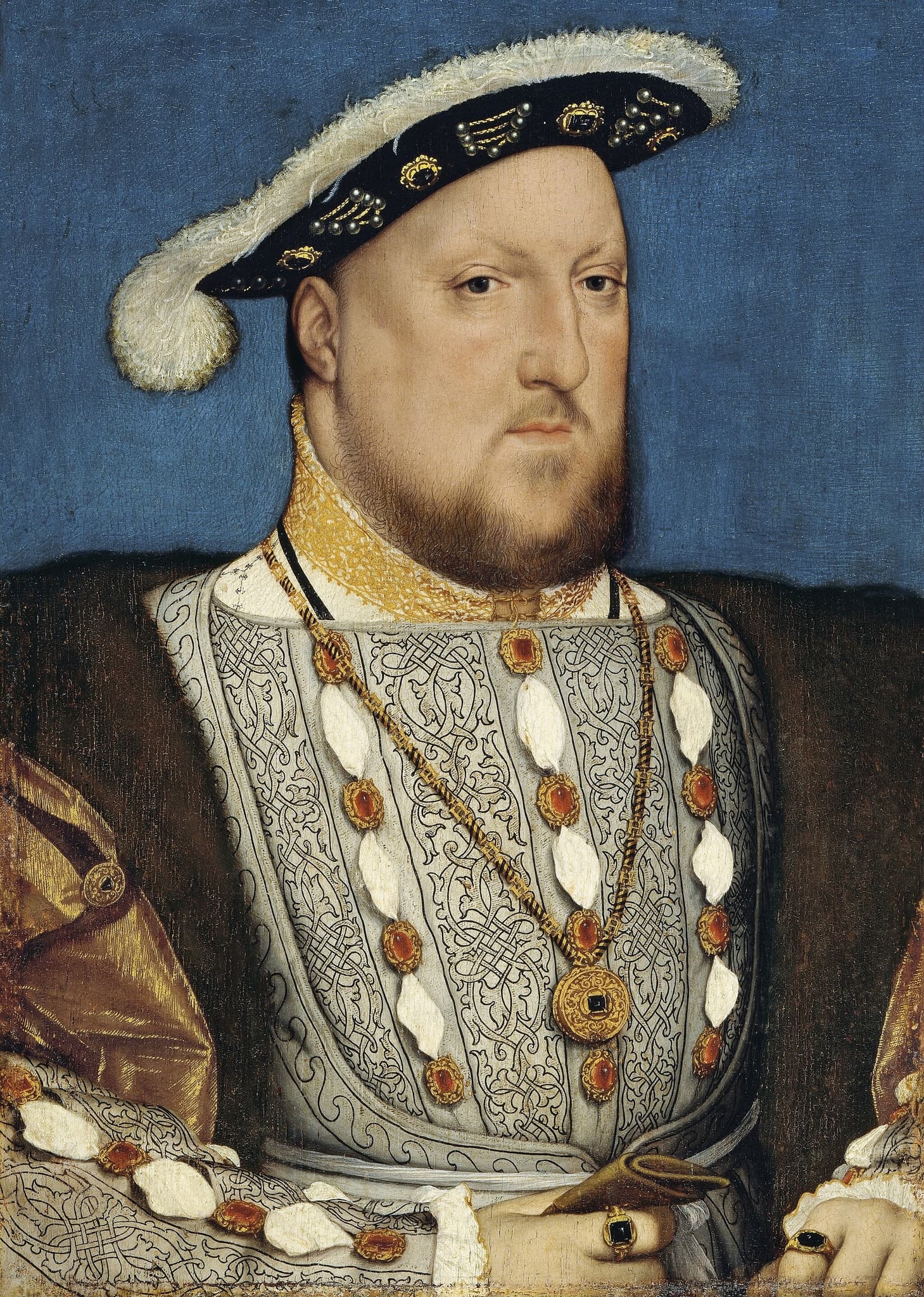
Portrait of Henry VIII
Hans Holbein the Younger • Oil and tempera on oak (versions vary)
View more by Hans Holbein the Younger →Valuation Analysis
Valuation conclusion: For a fully authenticated, museum‑quality, autograph full‑length Portrait of Henry VIII by Hans Holbein the Younger I estimate a market range of $50,000,000–$150,000,000. That range is intentionally broad: the work would be a once‑in‑a‑generation Old Master discovery and would attract very strong institutional and private demand, but there is no direct modern sale precedent for the lost Whitehall original to fix a precise market price.
The approach is necessarily extrapolative. Recent public auction evidence for Holbein oil paintings is thin: a small Holbein/workshop portrait (Desiderius Erasmus) realised £1,122,000 at Christie’s in December 2022, confirming healthy demand for securely‑attributed Holbein material but underscoring the lack of a comparable full‑length royal sale [1]. The canonical Whitehall mural that popularised the full‑length Henry VIII composition was destroyed in 1698 and only workshop copies and later replicas circulate in collections, so there is no direct transaction record for an autograph, full‑length panel [2].
To set the estimate I weighted (a) the painting’s singular cultural and iconographic importance, (b) the scarcity of Holbein autographs in private hands and the consequent probability of institutional competition, and (c) market comparables—small autograph/workshop Holbeins, high‑quality workshop versions, and extreme Old Master rediscoveries that define an upper market ceiling. The low end ($50M) reflects a conservative market response even with strong attribution but some uncertainty or condition issues; the high end ($150M) reflects a scenario of indisputable autograph attribution, excellent condition or restorability, and active bidding from national institutions and deep‑pocket private collectors.
This valuation is highly contingent. A downward reclassification to “workshop” or “later copy” would collapse the estimate into the much lower bands (typically low six figures to low millions). Conversely, incontrovertible technical evidence (period oak panel dendrochronology consistent with the 1520s/1530s, Holbein‑consistent ground and paint stratigraphy, infrared reflectography revealing characteristic underdrawing) combined with documentary provenance would cement the attribution and justify the upper range. Legal clarity (clear title, no restitution or export encumbrances) is also essential to realise this value.
Recommended next steps: immediate confidential technical testing (dendrochronology, IRR, X‑radiography, pigment/cross‑section analysis), a detailed conservation report, and rapid engagement with leading Holbein specialists and Old Masters departments at the major houses and national collections. If testing and connoisseurship support autograph status, a controlled, confidential outreach to likely institutional buyers and a calibrated auction/ private treaty strategy with guarantees will maximise realisation.
Bottom line: a genuinely autograph full‑length Holbein Henry VIII would be blockbuster headline material—value in the tens to low‑hundreds of millions—whereas any finding of workshop or later date reduces market value dramatically. Proceed only after rigorous technical and provenance work.
Key Valuation Factors
Art Historical Significance
High ImpactHolbein’s full‑length Portrait of Henry VIII is among the most emblematic images of Tudor monarchy and British visual culture. If autograph, the painting would not only be central to Holbein’s oeuvre but a national cultural asset with enormous exhibition and scholarly value. Institutional appetite for such an item is intense because of its rarity, capacity to anchor blockbuster exhibitions, and the reputational benefit to public collections. That intrinsic significance elevates buyer willingness to pay well above typical Old Master comparables; museums and wealthy private collectors will factor public access, loan potential, and legacy into purchase decisions, pushing the painting into the market’s top tier.
Attribution Certainty
High ImpactAttribution is the single most decisive variable. A confirmed autograph attribution requires converging evidence from connoisseurship and technical analysis: oak panel dendrochronology consistent with the Tudor period, infrared reflectography showing Holbein‑like underdrawing, paint stratigraphy matching known Holbein technique, and pigments consistent with early 16th‑century practice. Any ambiguity—strong workshop contribution, substantial later repainting, or anachronistic materials—will reduce value sharply. The market premium for unambiguous autograph status is large because buyers pay not just for quality but for certainty of authorship; rigorous testing and respected scholarly sign‑off are essential to command the upper estimates.
Provenance & Legal Title
High ImpactA clear, early provenance that ties the picture into Tudor‑era or early collection records materially increases marketability and value. Documentary links (inventories, early sale records, collection catalogues) reduce attribution doubt and legal risk and are highly prized by institutions. Conversely, gaps in provenance, potential restitution claims, or unresolved export controls can deter buyers or trigger legal contingencies that suppress price. For a work of national cultural importance, clean title and exportability are prerequisites for institutional acquisition and substantially affect the realistic realisable price.
Condition & Conservation
High ImpactPhysical condition strongly influences both the technical attribution process and market value. Structural panel issues (worming, split boards, severe warping), extensive overpaint, or large losses that obscure Holbein’s hand reduce bid confidence and require costly restoration. Conversely, stable support, recoverable original paint, and minimal intrusive restoration preserve attribution signals and exhibitionability. A high‑quality conservation report that documents original layers, later interventions and restorability is essential; condition can move the valuation by multiples depending on whether original material is recoverable and presentational quality is sufficient for museum display.
Market Liquidity & Comparables
Medium-high ImpactMarket liquidity for Holbein autographs is very limited: most best‑quality Holbeins are museum‑held and rarely trade, so transactions are infrequent and volatile. Recent auction comparables (small Holbein/workshop panels) sell in the mid‑six‑figure to low‑seven‑figure range, and workshop full‑length examples trade in lower millions; later copies typically realise from thousands to low six figures. The paucity of direct comparables creates price uncertainty but also allows a unique discovery to command exceptional premiums. The likely buyer pool—national museums and elite private collectors—is deep but selective, and sale strategy must reflect this concentrated demand profile.
Sale History
Portrait of Henry VIII has never been sold at public auction.
Hans Holbein the Younger's Market
Hans Holbein the Younger occupies a top tier in Northern Renaissance portraiture but is unusual in the market because a large portion of his canonical works are held in public and royal collections. Autograph oil panels by Holbein rarely appear at auction; when they do, rigorous scholarship and technical backing are prerequisites for strong prices. The market demonstrates consistent institutional interest, strong scholarly attention, and selective private demand; however, liquidity is low and prices are highly attribution‑sensitive, producing wide valuation bands for works with contested authorship.
Comparable Sales
Portrait of Desiderius Erasmus
Hans Holbein the Younger and Workshop
Directly by the same hand/period (Holbein) — small panel portrait (half‑length) with secure auction provenance; the strongest modern public auction benchmark cited in the research for Holbein/Workshop material.
$1.4M
2022, Christie's, Old Masters Evening Sale, London
~$1.5M adjusted
Salvator Mundi
Leonardo da Vinci
Not the same artist but a real‑world precedent for the market ceiling when a unique, undisputed autograph Old Master rediscovery appears; useful to calibrate the extreme upside (what a once‑in‑a‑generation masterpiece can achieve).
$450.3M
2017, Christie's, New York
~$486.3M adjusted
Representative: follower/after‑Holbein full‑length 'Portrait of Henry VIII' (aggregated examples)
After Hans Holbein the Younger (follower/workshop copy)
Aggregate/representative example drawn from the research band for followers and later copies — these typically realize from a few thousand to low six figures depending on size, condition and provenance; useful as a mid‑band follower/comparison.
$150K
2018, Aggregated regional/specialist/online sales (representative example)
~$165K adjusted
Portrait of Henry VIII (manner of Holbein) — Stowe House sale (historic)
Manner of Hans Holbein the Younger
Documented 19th‑century sale (90 guineas) of a 'manner of Holbein' Henry VIII — historically interesting but of limited weight for modern valuation beyond illustrating long‑standing secondary‑market trade in copies.
$459
1848, Christie's, Stowe House sale (historic)
~$19K adjusted
Current Market Trends
The Old Masters market remains a niche of relative resilience: institutional demand for museum‑quality works persists even as overall auction turnover has softened. Recent Holbein exhibitions and scholarship have raised visibility and academic rigor, which benefits authentic, well‑documented pieces but reduces speculative buying. Private treaty sales and guarantees increasingly manage risk for exceptional works; rediscoveries can still set headline prices, but buyers are cautious and require strong technical and provenance evidence.
Sources
- Christie's — Old Masters Evening Sale: Portrait of Desiderius Erasmus (Holbein and workshop), price realised £1,122,000 (Dec 8, 2022)
- Portrait of Henry VIII — summary (history of the Whitehall mural and surviving copies)
- Royal Collection Trust — Remigius van Leemput copy after Holbein (Whitehall mural copy often displayed at Hampton Court)