How Much Is Portrait of Sir Thomas More Worth?
Last updated: May 8, 2026
Quick Facts
- Methodology
- comparable analysis
If authenticated as an autograph Hans Holbein the Younger oil-on-oak portrait of Sir Thomas More, the painting is estimated at USD 20,000,000–60,000,000 based on scarcity, sitter significance and private-market ceilings for top Holbein works. If reattributed to Holbein’s workshop or to a later copy, the value falls dramatically (typically mid-five-figure to low-seven-figure ranges).
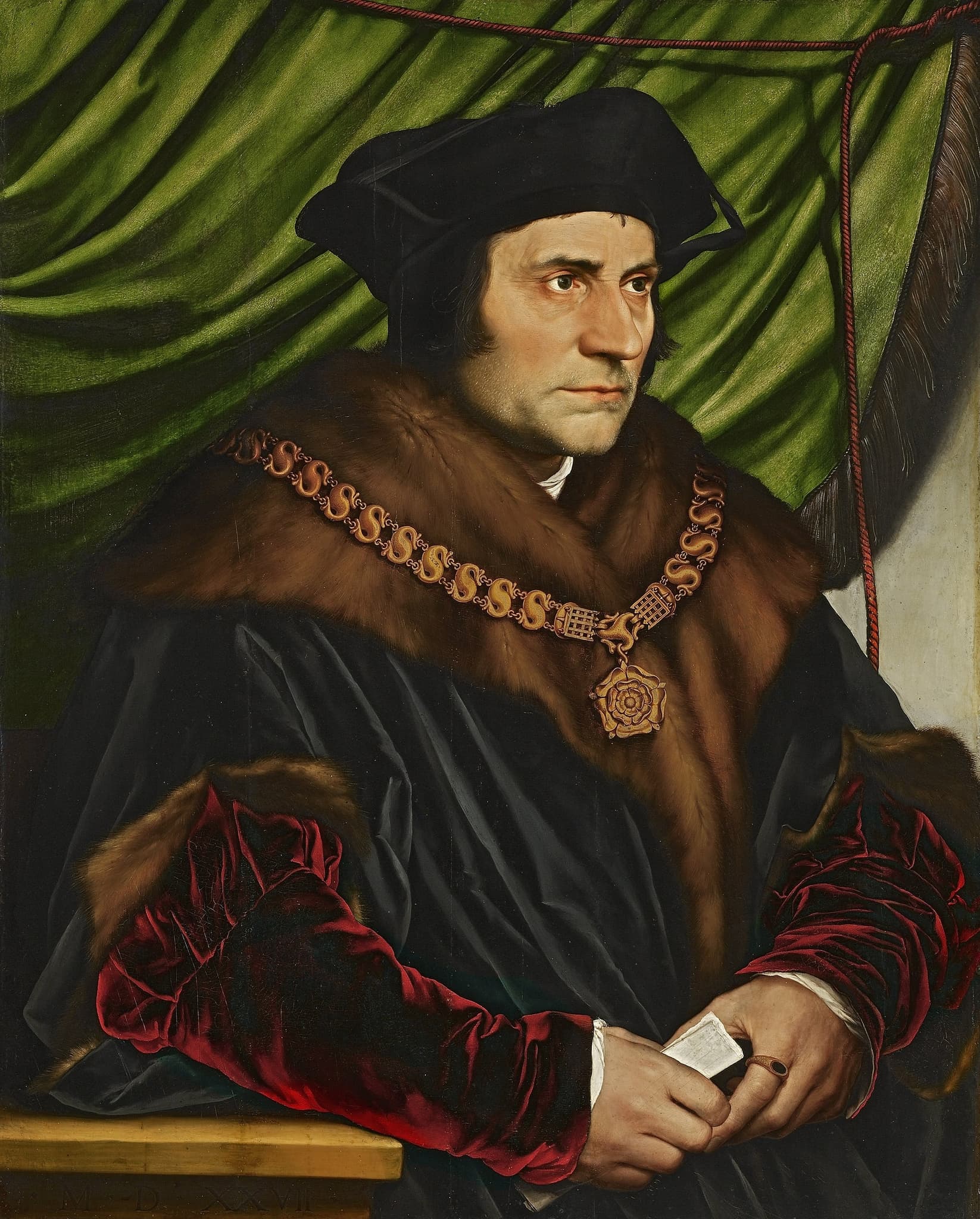
Portrait of Sir Thomas More
Hans Holbein the Younger, 1527 • Oil and tempera on oak
View more by Hans Holbein the Younger →Valuation Analysis
Valuation conclusion: Assuming the painting is an authenticated, autograph Hans Holbein the Younger oil-on-oak portrait of Sir Thomas More, accepted by leading Holbein scholars and supported by a continuous provenance and technical dossier, my market estimate is USD 20,000,000–60,000,000. This range reflects the painting’s potential status as a museum‑class masterpiece; in exceptional circumstances (pristine condition, flawless provenance and intense institutional/collector competition) the market ceiling could reach USD 80–100M or higher.
Rationale: Holbein’s autograph paintings are extremely scarce; portraits of major Tudor figures are institutional prizes and command outsized premiums because supply is limited and buyer competition is global. Public‑sale comparables for Holbein‑attributed or Holbein+workshop portraits are substantially lower—e.g., Christie’s sold a Holbein and workshop portrait of Erasmus in Dec 2022 for c. £1.12M (≈US$1.37M) — illustrating how workshop or mixed‑attribution pieces trade at auction [2]. By contrast, private treaty transactions for indisputably autograph Holbeins have established the high ceiling for the artist (reported multi‑tens‑of‑millions for major panels) [3]. Given these data, an authenticated autograph portrait of Sir Thomas More would command a premium reflecting both rarity and sitter significance.
The painting commonly discussed under this title is held in the Frick Collection, having been acquired from M. Knoedler & Co. on 9 January 1912 and catalogued in the Frick’s holdings; curatorial files and provenance notes are essential documentation to review [1]. That said, longstanding scholarship has debated whether the accepted "original" is the autograph Holbein or a close later copy/retouch; many authors consider the autograph prototype lost and the surviving panel(s) to show workshop or family‑commission copies. Because attribution is the single largest value driver, the present estimate is conditional on the work being judged autograph.
Due diligence that would materially change value: Dendrochronology of the oak support to establish an earliest felling date, pigment and binding analysis to confirm 16th‑century materials, infrared reflectography and X‑radiography to reveal underdrawing and pentimenti characteristic of Holbein’s method, and a full conservation assessment. Independent written opinions from recognized Holbein specialists and published exhibition history would normally be required before serious institutional purchasers would bid at the top of the range.
Conclusion and caveat: If technical and connoisseurial evidence supports a secure autograph attribution, the painting belongs in the trophy bracket for Old Masters and the USD 20–60M estimate is defensible; exceptional cases could push the ceiling to USD 80–100M+ under private treaty. If instead the work is confirmed as studio/Lockey copy or later copy, the commercial value falls to a dramatically lower band (roughly USD 100,000–2,000,000 for high‑quality workshop pieces and much less for later copies). I recommend assembling a technical dossier and obtaining at least two independent specialist opinions before marketing or insuring at the higher figures.
Key Valuation Factors
Art Historical Significance
High ImpactA securely attributed Holbein portrait of Sir Thomas More would be among the most important Tudor‑period portraits available to the market. More is a central historical and intellectual figure of 16th‑century England and Holbein is the principal painter of that courtly circle; the combination elevates this work to museum‑class status. Institutions prize canonical sitter‑portraits for exhibition, scholarship and prestige, and private buyers prize them for rarity and cultural capital. Because canonical Holbein oils are rare in private hands, a confirmed autograph Sir Thomas More would attract intense institutional and collector interest and command a significant premium relative to ordinary Old Master portraits.
Attribution/Authenticity
High ImpactAttribution is the decisive value driver. If leading Holbein scholars, supported by technical analysis (dendrochronology, IR reflectography, pigment/binder testing and underdrawing evidence), accept the work as autograph, it enters the top market tier (hence the USD 20–60M range). If reclassified to 'Holbein and workshop,' 'workshop after Holbein,' or later copy, market value typically drops by an order of magnitude or more. Because both auction and private‑treaty purchasers require scholarly and scientific backing to bid at the top, commissioning a full technical dossier and independent specialist reports is essential before marketing.
Provenance & Exhibition History
High ImpactA continuous documented provenance back to the sitter’s family or early notable collections materially increases market confidence and price. The Frick Collection’s acquisition in 1912 provides a significant modern provenance anchor, but gaps earlier in the chain reduce commercial certainty. Documentary links in inventories, letters, or estate records that tie the panel to More’s household or to early Tudor collections would materially increase institutional demand and could push a sale into the upper range. Exhibition loans and scholarly publication likewise improve marketability and institutional appetite.
Condition & Conservation
High ImpactCondition affects both aesthetic and attribution judgments. Original paint layers, limited intrusive restoration, and a stable panel support support higher valuations and clearer attribution. Conversely, 19th‑ or 20th‑century overpainting, heavy restorations, or significant losses will depress price and complicate scientific readings. A full conservation assessment—microscopy, cross‑sections, varnish and retouch mapping—is required. Correct, documented, and reversible conservation work can restore market confidence; untreated or extensively altered surfaces are a significant discounting factor.
Market Scarcity & Demand
High ImpactAutograph Holbein oils are extremely scarce in the private market because major examples are held by national museums; scarcity drives premium pricing when an unquestioned autograph work becomes available. Demand for Tudor portraiture is institutionally led but buoyed by high‑net‑worth private collectors; top pieces often sell by private treaty rather than public auction. Public auction comparables for Holbein+workshop pieces sit in the low‑to‑mid millions, but private sales of undisputed autograph works demonstrate a much higher ceiling. Scarcity combined with sitter prominence therefore supports the estimate range provided.
Sale History
M. Knoedler & Co. (sold to Henry Clay Frick)
Hans Holbein the Younger's Market
Hans Holbein the Younger occupies a top tier among Northern Renaissance portraitists; autograph oil paintings by him are rare and most important examples are museum held. As a result, public auction activity typically consists of workshop attributions, prints and drawings, while undisputed autograph panels move infrequently and often by private treaty. Public auction comparables (Holbein+workshop) realize low‑to‑mid millions, but private treaty sales of confirmed masterpieces have established a multi‑tens‑of‑millions ceiling. Institutions and a small set of deep‑pocket collectors constitute the primary buyer base for trophy Holbein works.
Comparable Sales
Portrait of Desiderius Erasmus
Hans Holbein the Younger and Workshop
Holbein-attributed portrait of a major 16th-century sitter; sold as ‘Holbein and workshop’—useful auction benchmark for works with mixed autograph/workshop attribution.
$1.4M
2022, Christie's, London (Old Masters Evening Sale)
~$1.5M adjusted
‘Jersey’ portrait of Katherine Parr (16th-century Tudor portrait)
Attributed variously (Tudor‑period portrait)
High‑quality Tudor portrait of a major historical sitter sold at auction (~£3.4M); demonstrates market willingness to pay mid‑single‑millions for museum‑grade Tudor portraits (even when attribution is debated).
$4.4M
2023, Sotheby’s, London (Old Masters sale, July 2023)
~$4.6M adjusted
Meyer / Darmstadt Madonna
Hans Holbein the Younger
Major autograph Holbein oil (altarpiece) reported sold privately for well in excess of €50M in 2011—serves as a private‑treaty ceiling for top‑quality autograph Holbeins and institutional acquisition pricing.
$67.5M
2011, Private sale (reported)
~$95.0M adjusted
Current Market Trends
The Old Masters market (2024–2026) has been selective: mid‑tier auction activity softened while exceptional, well‑provenanced works continued to attract institutional and private interest. For Holbein specifically, scarcity of museum‑quality panels on the market means private treaty sales set the ceiling. Buyers now expect comprehensive technical dossiers and clear provenances before committing to high valuations. Consequently, a museum‑quality portrait of More would still draw strong interest, but successful high‑end placement will depend on rigorous authentication and targeted private/institutional negotiation.
Sources
- Frick Collection – Mapping Provenance: Holbein’s Sir Thomas More (curatorial notes and acquisition record)
- Christie’s press release: Old Masters Evening Sale (8 December 2022) — Portrait of Desiderius Erasmus (Hans Holbein the Younger and Workshop)
- The Spectator — 'Going Private' (coverage referencing reported private sales such as the Darmstadt Holbein)