How Much Is Portrait of Thomas Cromwell Worth?
Last updated: May 8, 2026
Quick Facts
- Insurance Value
- $50.0M (Mid‑point replacement estimate based on extrapolated market valuation and institutional insurance practices)
- Methodology
- extrapolation
If authenticated as an autograph Hans Holbein the Younger portrait of Thomas Cromwell with secure provenance and sound condition, I estimate a market valuation of approximately $20–80 million. This estimate is an extrapolation from workshop/comparable auction results, institutional replacement considerations and the extreme rarity of museum-quality Holbein Tudor portraits.
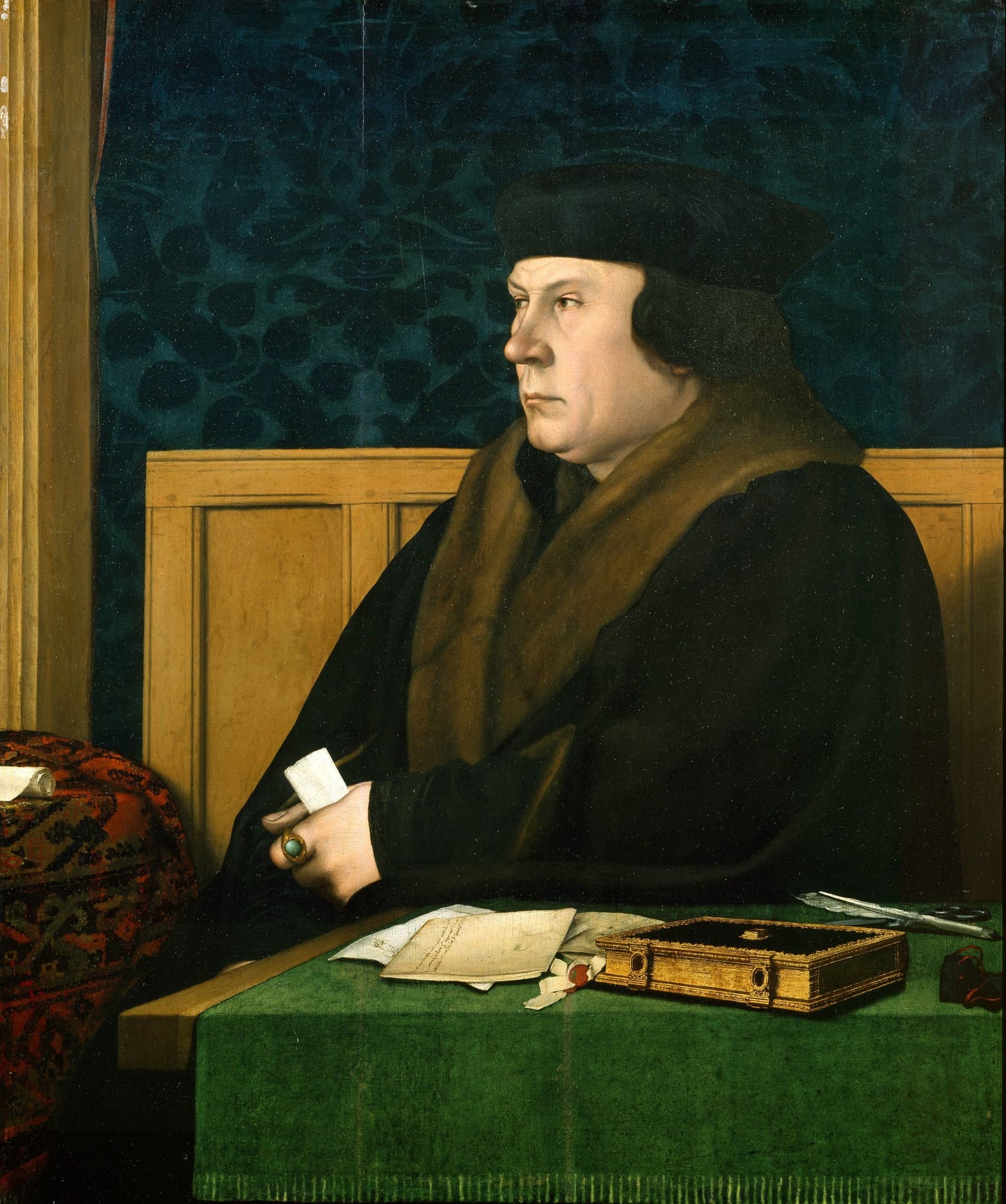
Portrait of Thomas Cromwell
Hans Holbein the Younger • Oil and tempera on oak
View more by Hans Holbein the Younger →Valuation Analysis
Valuation conclusion: For a securely attributed, autograph Hans Holbein the Younger portrait of Thomas Cromwell in good-to-fair condition with demonstrable provenance, I estimate a market value range of $20,000,000–$80,000,000. This result is highly contingent on attribution and technical verification: an authenticated Holbein would sit far above the public auction comparables (which are predominantly workshop or follower works) and command strong institutional interest [1].
Comparables and extrapolation: Public auction comparables are limited and skew toward workshop or studio attributions — for example the Holbein & workshop Erasmus lot at Christie’s (Dec 2022) set a modern benchmark in the low‑seven‑figure band and underscores how attribution affects price realization [2]. Because no securely documented autograph Cromwell portrait has appeared at auction in recent decades (major examples are museum‑held), this valuation extrapolates upwards from high‑quality workshop results and factors in scarcity, historical importance, and likely institutional demand.
Why the range is wide: The 20–80M bracket reflects two structural realities: (1) a confirmed autograph Holbein of an important Tudor minister is extremely rare and would typically be subject to competitive private acquisition or a targeted institutional purchase, driving prices well above workshop lots; (2) the market for Old Masters has softened intermittently (notably in 2024), and realized prices depend heavily on sale channel (private negotiated sale vs. public evening sale), timing, and the presence/absence of export restrictions. Condition, visible pentimenti/underdrawing and provenance steps can swing value materially within the stated range.
Key technical and provenance work required: Before any binding valuation or marketing, commission dendrochronology (oak‑panel dating), pigment/medium analysis, infrared reflectography and X‑radiography to verify period materials and an underdrawing/working method consistent with Holbein. Documentary provenance research and consultation with leading Holbein scholars (catalogue‑raisonné authors and museum curators) are essential. A secure attribution supported by technical evidence typically multiplies a workshop‑level market by an order of magnitude or more.
Sale strategy and institutional dynamics: A truly autograph Cromwell would attract museums and national collections; many institutions prefer private acquisition routes or targeted fundraising rather than competitive public auctions. Export controls (if discovered in the UK) and the painting’s potential cultural patrimony status could further shape market access and price. If attribution tilts to ‘workshop’ or ‘circle’ the value profile collapses toward the USD 200k–2M band; later copies or heavily restored panels would commonly sit under USD 100k.
Recommended next steps: supply high‑resolution recto/verso images and any provenance documentation; commission the technical tests above; and submit the dossier to a Holbein specialist and an Old Masters department at a major auction house or a leading museum for a formal conditional valuation and authentication pathway. With full technical and provenance evidence the estimate above can be narrowed and converted into a marketable reserve or insurance figure.
Key Valuation Factors
Art Historical Significance
High ImpactA securely attributed Holbein likeness of Thomas Cromwell would be of very high historical and scholarly significance: Cromwell was a central figure in Henry VIII’s government, and Holbein’s Tudor portraits are pivotal to English Renaissance art. Such a work would be classed among a small set of canonical Tudor portraiture and would therefore attract strong institutional interest. The painting’s narrative and iconography increase its cultural value beyond pure market dynamics, often prompting museums to pursue acquisition aggressively when a major work appears on the market.
Attribution / Authenticity
High ImpactAttribution is the single most important value driver. An uncontested autograph Holbein attribution (supported by underdrawing, pentimenti, and period materials) would elevate the painting into the multi‑tens‑of‑millions bracket; a ‘Holbein and workshop’ attribution or high‑quality studio piece reduces value to the mid‑six/low‑seven figures. Authentication requires dendrochronology, IRR, X‑ray and pigment analysis plus consensus from Holbein specialists; without this work the lot will be priced and sold as a workshop/copy piece.
Provenance & Exhibition History
High ImpactDocumented provenance, historic inventory references and prior exhibition/publication history materially increase market value and buyer confidence. Connections to old aristocratic collections or early museum records strengthen claims of originality; conversely, gaps or recent surfaced attributions depress price. Provenance that ties a portrait to recognized collections or past scholarly attention can push an institutional buyer to bid well above market comparables for workshop variants.
Condition & Technical Findings
Medium ImpactPanel integrity, overpainting, past restorations, and the survival of original glazes all materially affect value. A painting in good structural condition with original paint and minimal invasive restoration retains more market value; heavy restoration, significant retouching or panel replacement reduce buyer appetite and price. Technical findings that reveal Holbein’s working methods (e.g., characteristic underdrawing and pentimenti) can partially mitigate condition concerns by confirming an autograph hand.
Market Demand & Institutional Interest
High ImpactDemand is concentrated among major institutions, national collections and a small pool of high‑net‑worth collectors focused on Old Masters. Because canonical Holbein works are rare in private hands, any authentic Tudor portrait triggers immediate institutional interest and potential export/export‑license complications. Market cycles and the availability of capital in the Old Masters sector modulate final prices; private sales or negotiated institutional acquisitions tend to maximize value versus open auction where provenance doubts may depress bids.
Sale History
Portrait of Thomas Cromwell has never been sold at public auction.
Hans Holbein the Younger's Market
Hans Holbein the Younger occupies a top tier among Northern Renaissance portraitists; his Tudor court portraits are central to his market standing. Major autograph Holbein paintings are uncommon in the trade because many key works are museum‑held, so public auction comparables are scarce and often reflect workshop attributions. When securely attributed, Holbein works command high institutional interest and premium valuations, but realized prices are highly dependent on the rigor of technical authentication and provenance.
Comparable Sales
Portrait of Desiderius Erasmus
Hans Holbein the Younger and Workshop
Sold as 'Holbein and workshop' at a major Old Masters evening sale — directly comparable on attribution category (autograph + workshop participation), Northern Renaissance/Tudor context and market channel; good benchmark for high-quality workshop-level Holbein portraits.
$1.4M
2022, Christie's London (Old Masters Evening Sale)
~$1.5M adjusted
Portrait of Henry VIII
Workshop of Hans Holbein the Younger
Workshop Holbein Tudor court portrait sold from a major aristocratic collection — comparable by period, subject matter (Tudor sitters) and workshop-level attribution; shows that high-quality workshop/atelier Tudor portraits can approach low‑seven-figure levels at major houses.
$1.5M
2015, Sotheby's London (Castle Howard provenance lot)
~$2.0M adjusted
Portrait of Thomas Cromwell (in the manner of Holbein)
Follower / In the manner of Hans Holbein the Younger
Regional sale of a later copy/‘in the manner of’ Cromwell portrait — directly relevant for the low end of the market (copies/followers) and demonstrates the large price gap between workshop-level and later-copy attributions.
$4K
2015, Morphets (regional saleroom)
~$6K adjusted
Current Market Trends
The Old Masters market softened notably in 2024 with fewer blockbuster consignments and lower aggregate sales at the very top. That said, scarcity of autograph Holbein panels combined with episodic institutional demand preserves the potential for strong private sale outcomes. Attribution clarity, conservation visibility and timing relative to institutional acquisition budgets are decisive in converting rarity into high realized prices.