How Much Is No. 5, 1948 Worth?
Last updated: February 8, 2026
Quick Facts
- Last Sale
- $140.0M (2006, Private sale)
- Methodology
- extrapolation
Current fair-market value for Jackson Pollock’s No. 5, 1948 is $220–300 million on a private-sale basis, reflecting its canonical 1948 drip status and extreme scarcity. In a top-tier auction with a third-party guarantee, we would expect $150–250 million depending on condition, timing, and marketing. The estimate extrapolates from Pollock’s $61.2m auction record and the ~$200m private sale of Number 17A.
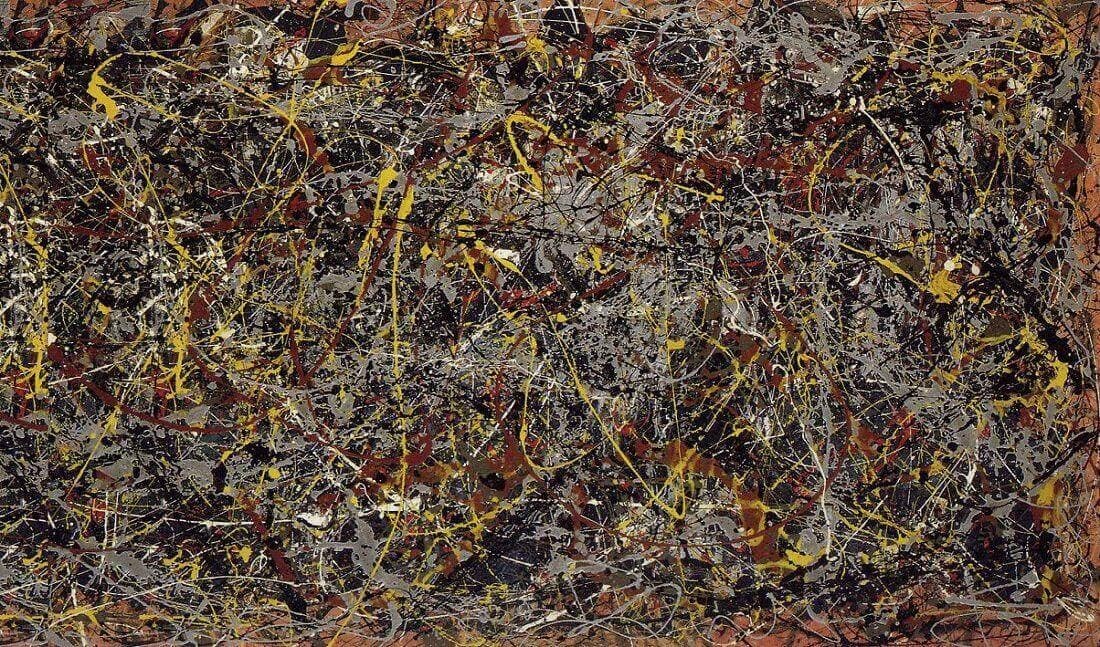
No. 5, 1948
Jackson Pollock, 1948 • Oil, enamel, and aluminum paint on fiberboard
Read full analysis of No. 5, 1948 →Valuation Analysis
Estimate: $220–300 million (private-sale basis). This valuation for Jackson Pollock’s No. 5, 1948 synthesizes masterpiece status, extreme scarcity, and hard price signals. The painting’s market profile was cemented by the widely reported ~$140 million transaction in 2006, a watershed moment that broadcast its trophy caliber to a global audience [1]. As a canonical large-scale 1948 drip, it sits at the apex of Pollock’s practice, with most comparably important examples permanently housed in museums; this scarcity concentrates demand and supports a premium.
Comparable anchors: price discovery hinges on two pillars: the artist’s current public auction record—$61.2 million for Number 17, 1951 (Sotheby’s, The Macklowe Collection, 2021) [2]—and the modern private benchmark near $200 million for Number 17A (1948; reported 2015) [4]. Public sales of late‑1940s drips have clustered in the mid‑$50 millions, including Number 19, 1948 at $58.36 million (Christie’s, 2013) [3] and Number 31, 1949 at $54.205 million (Christie’s, 2022) [5]. The structural gap between public and private pricing at the very top, together with No. 5’s unmatched name recognition, justifies an extrapolated valuation above 17A in today’s market.
Auction vs. private: we set a current private-sale indication at $220–300 million. In a well‑timed auction with a third‑party guarantee and global marketing, we would expect an all‑in outcome in the $150–250 million range. The upper band aligns with observed capacity for instantly recognizable 20th‑century icons, exemplified by Warhol’s Shot Sage Blue Marilyn at $195 million in 2022 [6]. Private channels can surpass auction prints via bespoke matchmaking and reduced execution risk, especially for works of this stature.
Key sensitivities: a current, independent condition assessment (particularly the structural stability of the fiberboard support and any historic restorations), completeness of provenance and catalogue raisonné inclusion, and recent exhibition and literature visibility are decisive. Adverse findings would compress the range; conversely, pristine condition, marquee loan history, and impeccable documentation would bias the outcome to the top end. On balance, No. 5’s date, scale, and cultural mythos place it among the very few postwar paintings capable of transacting north of $200 million today, with the 2006 report and the 2015 17A benchmark providing the clearest market anchors [1][4].
Key Valuation Factors
Art Historical Significance
High ImpactNo. 5, 1948 is a canonical large-scale drip from Pollock’s pivotal 1947–50 breakthrough, a period that redefined postwar painting and cemented Abstract Expressionism on the world stage. Works from 1948 mark the full maturation of his poured technique and are among the most taught, reproduced, and institutionally anchored pictures in 20th‑century art. Within Pollock’s oeuvre, No. 5 is one of the most widely recognized images, frequently referenced alongside MoMA’s One: Number 31, 1950, the Met’s Autumn Rhythm, and the NGA’s Blue Poles. Its art-historical primacy has been reinforced by decades of scholarship and high-profile media attention, making it a bellwether for the category and a quintessential trophy for top collectors.
Rarity and Supply
High ImpactLarge-scale 1947–50 drips of this caliber are extraordinarily scarce in private hands; the majority reside in major museums and will not re-enter the market. That scarcity materially elevates price because it compresses choice at the very top: collectors seeking an unmistakable, textbook Pollock often find only one or two viable options in a decade, if any. No. 5 is not only a prime-year drip but also one of the most referenced and instantly identifiable compositions, which adds a name-recognition premium on top of baseline rarity. This supply dynamic is a central driver of our range, as the few close substitutes (by date, scale, and quality) are either institutionally locked or privately held with low likelihood of sale.
Market Benchmarks and Comparables
High ImpactWe triangulate from Pollock’s public auction record of $61.2m (Number 17, 1951; 2021), late‑’40s public anchors around $54–58m (Number 31, 1949; Number 19, 1948), and the widely reported ~$200m private sale of Number 17A (1948) in 2015. These datapoints establish both depth of demand and the persistent public‑private spread for true trophies. Given No. 5’s superior fame and equal-or-better art-historical standing relative to 17A, our range extrapolates above that 2015 benchmark to today’s dollars. Cross-category markers (e.g., Warhol’s $195m Marilyn in 2022) further confirm capacity for instantly recognizable masterpieces, supporting our $220–300m private-sale indication and a $150–250m auction expectation under optimal conditions.
Condition, Support, and Provenance
High ImpactAt this value level, condition is determinative. No. 5 is executed on fiberboard, a support that requires specific attention to surface adhesion, planar stability, and any historical restorations. A current, independent condition report is essential; clean findings would underpin the upper half of the range. Provenance is exceptionally strong (artist/gallerist to Alfonso A. Ossorio; later S. I. Newhouse Jr.; David Geffen), and the work’s extensive publication and media profile enhance its desirability. Conversely, any structural concerns, disputed authorship issues, gaps in documentation, or encumbrances would compress value materially. Museum loans and fresh scholarly engagement would be incremental positives, improving buyer confidence and pricing power at the top end.
Sale History
Private sale
Widely reported private transaction at approximately $140 million; seller David Geffen; buyer unconfirmed; David Martínez publicly denied ownership.
Betty Parsons Gallery, New York
Original sale from Pollock/Betty Parsons to Alfonso A. Ossorio.
Jackson Pollock's Market
Jackson Pollock is a blue-chip pillar of postwar art with an exceptionally thin supply of prime-period paintings. His current public auction record is $61.2 million (Number 17, 1951; Sotheby’s, Macklowe Collection, 2021), while late‑1940s drips have fetched $54–58 million publicly (e.g., Number 19, 1948 at $58.36m in 2013; Number 31, 1949 at $54.205m in 2022). Critically, private sales set a far higher ceiling: Number 17A (1948) was widely reported around $200 million in 2015. Demand is global and concentrated among UHNW collectors and leading institutions, with persistent appetite for A+ late‑1940s works. Given limited turnover at the top, pricing is determined by masterpiece quality, condition, and provenance, with trophy results often secured privately.
Comparable Sales
Number 17A, 1948
Jackson Pollock
Best proximate comp: same artist and year (1948), large-scale, A+ drip from Pollock’s breakthrough period; widely reported ~$200m private price establishes modern private benchmark for a top Pollock.
$200.0M
2015, Private sale
~$271.6M adjusted
Number 19, 1948
Jackson Pollock
Same artist and year as No. 5; classic late‑’40s drip on a smaller scale; top public auction anchor for a 1948 Pollock.
$58.4M
2013, Christie's New York
~$80.7M adjusted
Number 31, 1949
Jackson Pollock
Prime-year drip (1949) with strong auction result in 2022; evidences current market depth for late‑’40s Pollock drips.
$54.2M
2022, Christie's New York
~$59.6M adjusted
Number 17, 1951
Jackson Pollock
Artist’s current public auction record; while from the 1951 black‑pour series (different palette/approach), it sets the public ceiling for Pollock at auction.
$61.2M
2021, Sotheby's New York
~$72.7M adjusted
Untitled (circa 1948)
Jackson Pollock
Late‑’40s Pollock on paper; not the same medium/scale but a recent datapoint showing robust demand for prime‑period works in 2024.
$15.3M
2024, Phillips New York
~$15.6M adjusted
Current Market Trends
The broader market experienced a top-end reset in 2024 amid risk-off sentiment and thinner marquee supply, followed by a selective rebound in late 2025 focused on blue-chip Modern/Postwar masterpieces. Private sales have grown in share as sellers favor discretion and execution certainty, while public auction outcomes above $50m remain highly curated and reliant on third‑party guarantees. Within Abstract Expressionism, depth of bidding persists for prime-year icons with ironclad provenance, but buyers are disciplined and condition-sensitive. The top tier remains K‑shaped: best‑in‑class works command outsized premiums and can clear $150m+, while average examples face price resistance. Supply scarcity is the primary constraint on new records in this category.
Study print
Study this painting as a print
Pair the full artwork with a museum-style study sheet focused on one meaningful detail.
Sources
- Los Angeles Times: Jackson Pollock painting sells for record $140 million (2006)
- The Art Newspaper: Sotheby’s Macklowe auction hits $646m; Pollock sells for $61m (2021)
- Christie’s: Post-War & Contemporary Art Evening Sale results (Number 19, 1948; 2013)
- CNN: Ken Griffin buys Pollock’s Number 17A for about $200m (2015, reported 2016)
- Christie’s: 20/21 May 2022 Marquee Week sale results (Number 31, 1949; $54.205m)
- The Art Newspaper: Warhol’s Shot Sage Blue Marilyn sells for $195m (2022)