How Much Is Number 17, 1951 Worth?
Last updated: May 7, 2026
Quick Facts
- Last Sale
- $61.2M (2021, Sotheby's, New York (The Macklowe Collection sale))
- Methodology
- comparable analysis
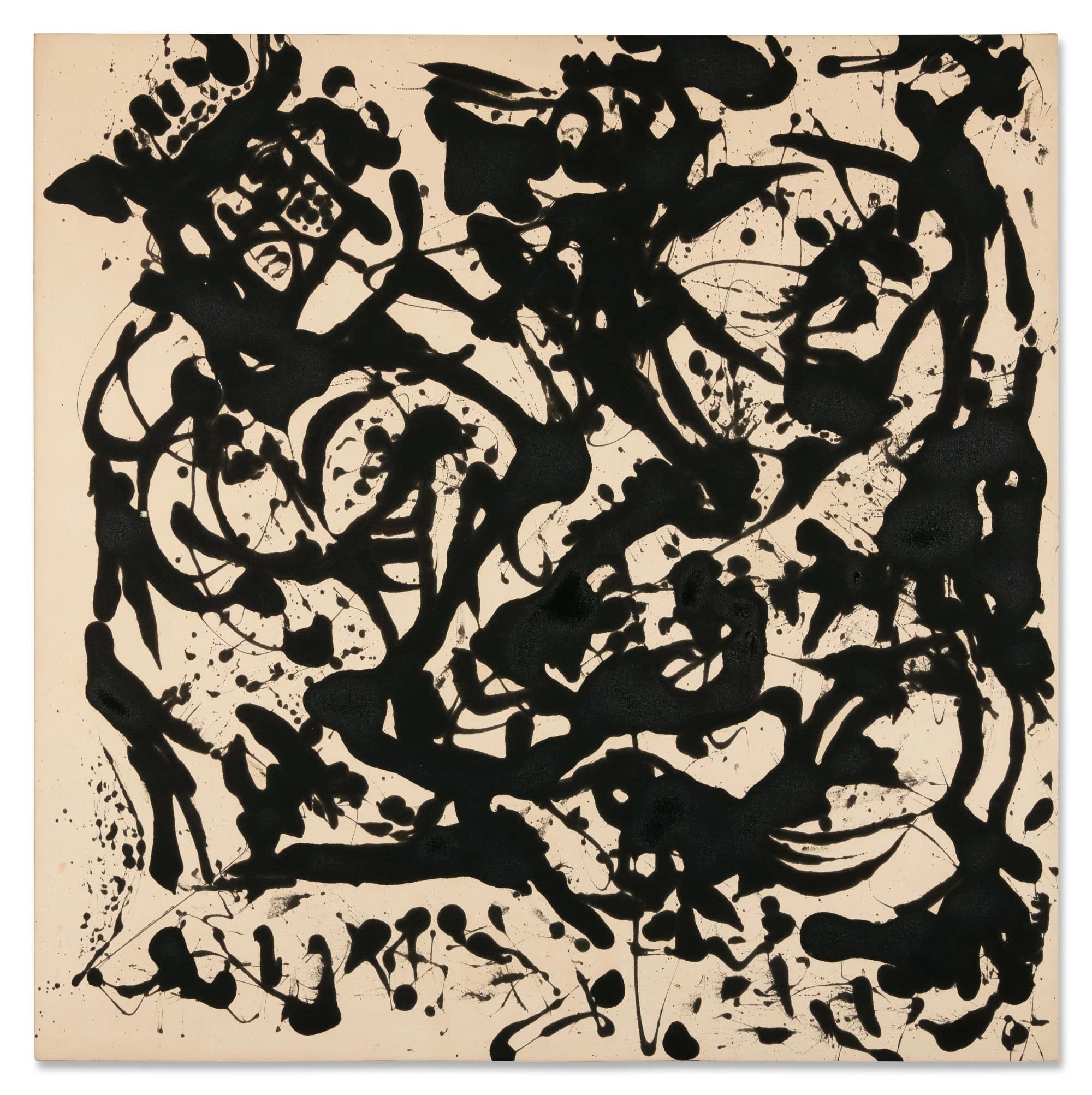
Anchored to the verified Sotheby’s auction of Jackson Pollock’s Number 17, 1951 (Nov 15, 2021: $61.16M with premium), the defensible current-market estimate for this exact painting is USD $60–85 million. This range assumes similar provenance, catalogue‑raisonné status and market‑ready condition; material issues or alternative sale mechanisms (private treaty, institutional sale) could move the result outside this band.
Valuation Analysis
Valuation conclusion: Using the verified Sotheby’s result for this exact canvas (Nov 15, 2021: $61,161,000 with buyer’s premium) as the primary anchor, and surveying comparable marquee Pollock outcomes and recent market dynamics, I estimate a present‑market range of USD $60–85 million for Number 17, 1951 under conventional evening‑sale conditions [1][2].
Approach: The analysis is a comparables‑driven valuation that treats the 2021 public auction as the authoritative benchmark and adjusts for observable market movement, scarcity of equivalent quality offerings, and the documented provenance/exhibition pedigree. Secondary public auction comparables (e.g., Christie’s marquee results) and the pattern of large but often unverified private trades inform the upper‑end scenario but are not primary anchors [3].
Why this band: The low end (~$60M) closely tracks the recorded 2021 outturn and reflects a reasonable near‑term re‑offer in a market that remains selective. The high end (~$85M) represents an upside scenario: a fresh‑to‑market evening sale, flawless condition and intense bidding from multiple institutions/blue‑chip collectors. Reported private sales of other canonical Pollocks indicate that negotiated transactions can exceed public auction ceilings considerably; however, these are often confidential and variably reported, so they are treated as indicative ceilings rather than primary comparables.
Key assumptions and sensitivities: This valuation assumes (a) clean title and catalogue‑raisonné confirmation, (b) market‑ready condition comparable to the presentation at the 2021 sale, and (c) sale in an international evening auction without atypical guarantees that distort competitive bidding. Significant negative findings in condition, gaps in provenance, or sale in a lower‑visibility venue would justify discounts well below the low estimate. Conversely, competitive private buyers or strategic institutional interest could push the final price materially above the high estimate.
Practical next steps: Before any binding transaction I recommend obtaining the full Sotheby’s condition report or an updated conservation assessment, securing catalogue‑raisonné and provenance documentation, and soliciting engagement from top international houses (Sotheby’s/Christie’s/Phillips) to test the evening‑sale market. If confidentiality or tax considerations are paramount, obtain comparative bids through trusted dealer networks for private treaty pricing — these can produce materially different outcomes than public auction benchmarks.
Bottom line: The Sotheby’s 2021 sale is the single best public datum and supports a well‑grounded current valuation band of USD $60–85 million for Number 17, 1951, subject to verification of the painting’s present condition and title documents [1][2][3].
Key Valuation Factors
Art Historical Significance
High ImpactNumber 17, 1951 belongs to Pollock’s mature drip‑painting period and exemplifies the action‑painting vocabulary that defines his reputation. Works of this phase are repeatedly cited in major scholarship and retrospectives and are considered central to mid‑century American modernism. Collectors and institutions prize canonical examples for their innovation, scale and compositional authority; such recognition translates directly into market premium and sustained collector interest. Because Number 17, 1951 is documented in authoritative literature and has an exhibition history, its art‑historical stature exerts strong upward pressure on valuation and supports trophy‑level pricing.
Provenance & Exhibition History
High ImpactClear museum provenance, early gallery representation and a recorded catalogue‑raisonné entry materially reduce buyer risk and expand the pool of potential purchasers. Institutional ownership or major exhibitions increase market confidence, shorten due diligence timelines, and allow auction houses to present the work as 'museum‑quality,' which typically lifts estimates and bidding competitiveness. The documented chain for this painting (as stated on the Sotheby’s lot) is a principal reason it achieved a trophy result in 2021 and underpins the upper end of the present estimate band.
Condition & Conservation
Medium ImpactCondition is a decisive, mutable variable for Pollock drip canvases. Issues such as surface instability, historic varnishes, embedded particulates or prior invasive restorations can reduce both aesthetic integrity and marketability. A recent professional condition report confirming stability and minimal intervention preserves auction appeal; by contrast, evidence of structural repair or significant overpainting will necessitate a discount. This valuation assumes 'market‑ready' condition consistent with the 2021 presentation; any adverse conservation findings should prompt a re‑pricing exercise.
Comparable Sales & Auction Precedent
High ImpactThe primary market anchor is the verified Sotheby’s Nov 15, 2021 sale of this exact canvas for $61.16M (with premium). Complementary marquee results—Christie’s $58.36M (2013) and other evening sale Pollock outcomes in the $50M+ range—establish a consistent public auction band for museum‑quality drip paintings. Reported private transactions suggest a significantly higher ceiling for a tiny subset of masterpieces, but those figures are not uniformly verifiable and are treated cautiously. Collectively, these comparables justify the mid‑to‑high tens‑of‑millions valuation band provided here.
Sale History
Sotheby's, New York (The Macklowe Collection sale)
Christie's, New York
Christie's, New York
Reported private sale (widely cited)
Jackson Pollock's Market
Jackson Pollock occupies blue‑chip status in the Post‑War market: his canonical drip paintings are among the most collectible and price‑resilient works from mid‑20th‑century American art. Public auction results for marquee evening offerings consistently sit in the multi‑tens of millions, and a small number of reported private transactions indicate substantially higher private‑sale ceilings for rare masterpieces. The market is concentrated and selective—works with impeccable provenance, publication and exhibition records garner the most competitive bidding and institutional interest, while lesser‑documented or compromised examples trade at materially lower levels.
Comparable Sales
Number 17, 1951
Jackson Pollock
Identical work — same painting offered at public auction with strong museum provenance, catalogue‑raisonné entry and full condition/provenance documentation; the primary public-market benchmark.
$61.2M
2021, Sotheby's, New York (The Macklowe Collection sale)
~$73.7M adjusted
Number 19, 1948
Jackson Pollock
Same artist and canonical period (late 1940s); this was the public auction record for Pollock before the Macklowe sale and is a close high‑end auction comparable in significance and market reception.
$58.4M
2013, Christie's, New York (Post‑War & Contemporary evening sale)
~$81.8M adjusted
Number 31 (major Pollock drip work)
Jackson Pollock
Another marquee evening‑sale Pollock achieving a trophy price in the $50M+ range — useful to show consistency of top‑end auction demand for museum‑quality drip paintings.
$54.2M
2022, Christie's, New York (marquee sale)
~$60.5M adjusted
Number 17A, 1948 (reported private sale)
Jackson Pollock
Reported private purchase (widely reported sale of a canonical Pollock to a major collector) — shows private‑sale ceiling for top canonical works; figure is not publicly documented and should be treated as indicative rather than invoice‑verified.
$200.0M
2016, Private sale (widely reported)
~$272.1M adjusted
No. 5, 1948 (reported private sale)
Jackson Pollock
Historic, widely cited private‑sale headline often used as a market ceiling for Pollock; again, figure is reported in the press and not supported by public auction documentation.
$140.0M
2006, Private sale (widely reported, 2006)
~$226.7M adjusted
Current Market Trends
The Post‑War/Abstract Expressionism market has been bifurcated: top, museum‑quality works continue to attract deep‑pocketed buyers, while the mid and lower tiers face more selective demand. After a soft patch in 2023–2024, marquee sales showed signs of recovery in late‑2025, but auction houses remain cautious and use guarantees more frequently. Macroeconomic volatility and buyer concentration at the top end remain core near‑term influences on realized prices.